
Mas des Caprices — Genuine & Full-flavored Organic Red Wine from Mediterranean France
Fitou, a wild and remote subzone on the Languedoc-Roussillon border, is the very first granted appellation in that region. It consists of two small enclaves within Corbières: Fitou Maritime, a clay-limestone band around the saltwater lagoons on the coast, and Fitou Montagneux, a patch of mountainous schist fifteen miles inland. It’s in the former terrain, in the village of Leucate, on the north shore of L’étang de Leucate, where Mireille and Pierre Mann have been steadily building their estate, 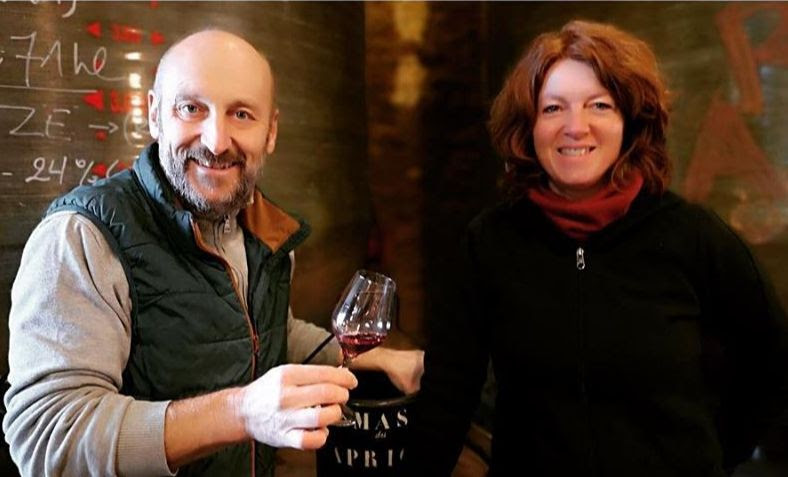 Mas des Caprices, into one of the top producers in the region.
This is a rugged land kissed by both the mountains and the Mediterranean Sea. High yields are impossible to achieve here. Indeed, many of the wines from this region are produced with similar (or even smaller) yields to the most sought after wines from Bordeaux and Burgundy.
The couple, both children of Alsace winemakers, ran a restaurant near the city of Colmar for 10 years. While they loved providing their patrons fresh local products, they felt the need for greater challenges. So they decided to rebuild their lives closer to the earth. In 2003 they moved to southern France and began reinventing themselves as winemakers.
Their passion was evident from the start. The duo eventually settled on the Mediterranean coast and quickly made a name for themselves by producing tasty, genuine wines. Certified organic in 2009, their guiding philosophy is meticulous work in the vineyard while respecting nature with the goal of producing wines that are both expressions of their unique environment and utterly delectable. Forget pudding, the proof of the wine is in the drinking.
Special prices based on purchase of 6-pack (mix-and-match).
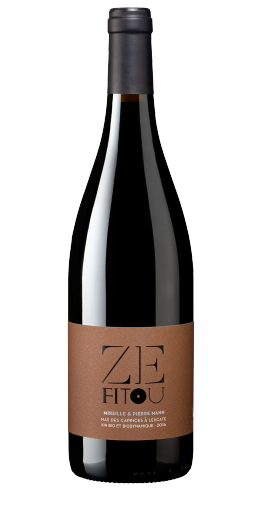 ~$27 “ZE” (Fitou 2016) Dry Red
A blend of 40% Carignan, 35% Grenache, and 25% Mourvèdre from the windswept Leucate cliff. Fruit, both ripe and fresh, provides the foundation for this crowd-pleasing red. Maturation takes place for nine months, mainly in concrete vats, with around 20% aging in old barrels. Exceptionally floral on the nose, a sip seduces the palate with velvety tannins and silky berry salad. Pop a bottle for pizza, shawarma, or game night with friends.
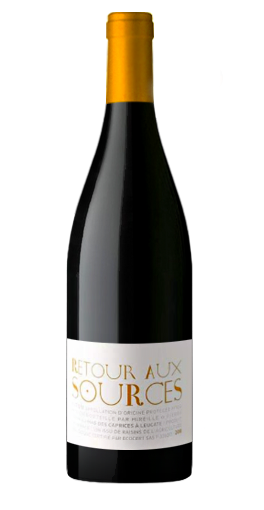 ~$33 “Retour aux Sources” (Fitou 2016) Dry Red
45% Carignan, 25% Mourvèdre, 20% Grenache, and 10% Syrah from the Fitou maritime hillsides where pink schist and limestone mix. Maturation takes place for nine months, with roughly 70% of the wine in concrete vats and the rest in old barrels. Bold ripe fruit, excellent structure, and heady aromas of ripe fruit and herbs make a wine ideal for hearty vegetable dishes like ratatouille and olive tapenade.
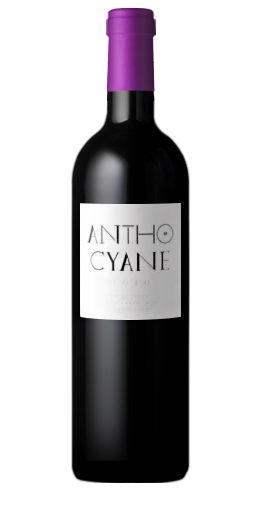 ~$33 “Anthocyane” (Fitou 2015) Dry Red
The tête de cuvée from Mas des Caprices is composed of 47% Mourvèdre, 36% Carignan, and 17% Grenache from the estate’s most noteworthy parcels on the limestone plateau of the Leucate peninsula. The wine is matured for close to 16 months in both barrel and demi-muid. It is a broad-shouldered, concentrated wine that still shows finesse. Lovely aromas of bursting ripe black fruit and delicate spice will pair exceptionally well with slow-braised meats and creamy starches.
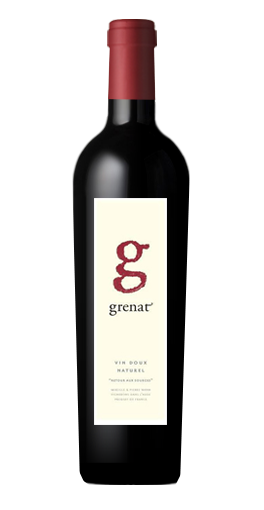 ~$26 “g grenat” (Rivesaltes Grenat 2015) 500ml Sweet Red
The Rivesaltes designation is for the “Vin Doux Naturel” wines that are fortified during fermentation to leave natural residual sugar. Grenat defines a particular Rivesaltes that is both a vintage wine and must be produced with at least 75% Grenache Noir. “g grenat” is actually 100% Grenache Noir that is fresh and full of jellied fruit with a hint of cocao. It has just enough tannin and acidity to avoid being syrupy yet maintaining a softness and ease. It makes a fine dessert on its own or paired with dried fruit, salted nuts, and fresh cheeses.
- - -
Posted on 2020.01.23 in France, Saturday Sips Wines, Languedoc-Roussillon | Read more...
Coume del Mas – Among the Best Dry and Fortified Wines in Southern France’s Côte du Roussillon
The Côte Vermeille (vermillion coast) is a 13 mile long stretch of beaches, small bays, creeks, and coves nested along the coastline of southern France on the border of Catalunya. This romantic yet rugged land is where the Massif des Albères, the eastern extremity of the Pyrenees, tumbles into the blue waters of the Mediterranean. The massif’s red rock gives the region its name, and the schist composition of the rock is one of the elements that endow the region’s wines with their earthy, mineral frame, forcing the vine roots deep into the earth to seek moisture and nutrients.
The seaside towns of Collioure and Banyuls-sur-Mer are situated within the small footprint of the Côte Vermeille. Both are centers of the region’s wine production with terraced vineyards carved into the foothills rising up behind them. This is no easy place to be a wine producer. Most of the vineyards are cut into steep slopes and are organized by stone walls and drainage canals that surround them and help to resist erosion. The 37 acres of vineyards at Coume del Mas mainly reside on slopes so steep not even a horse can reach the top, let alone a tractor. 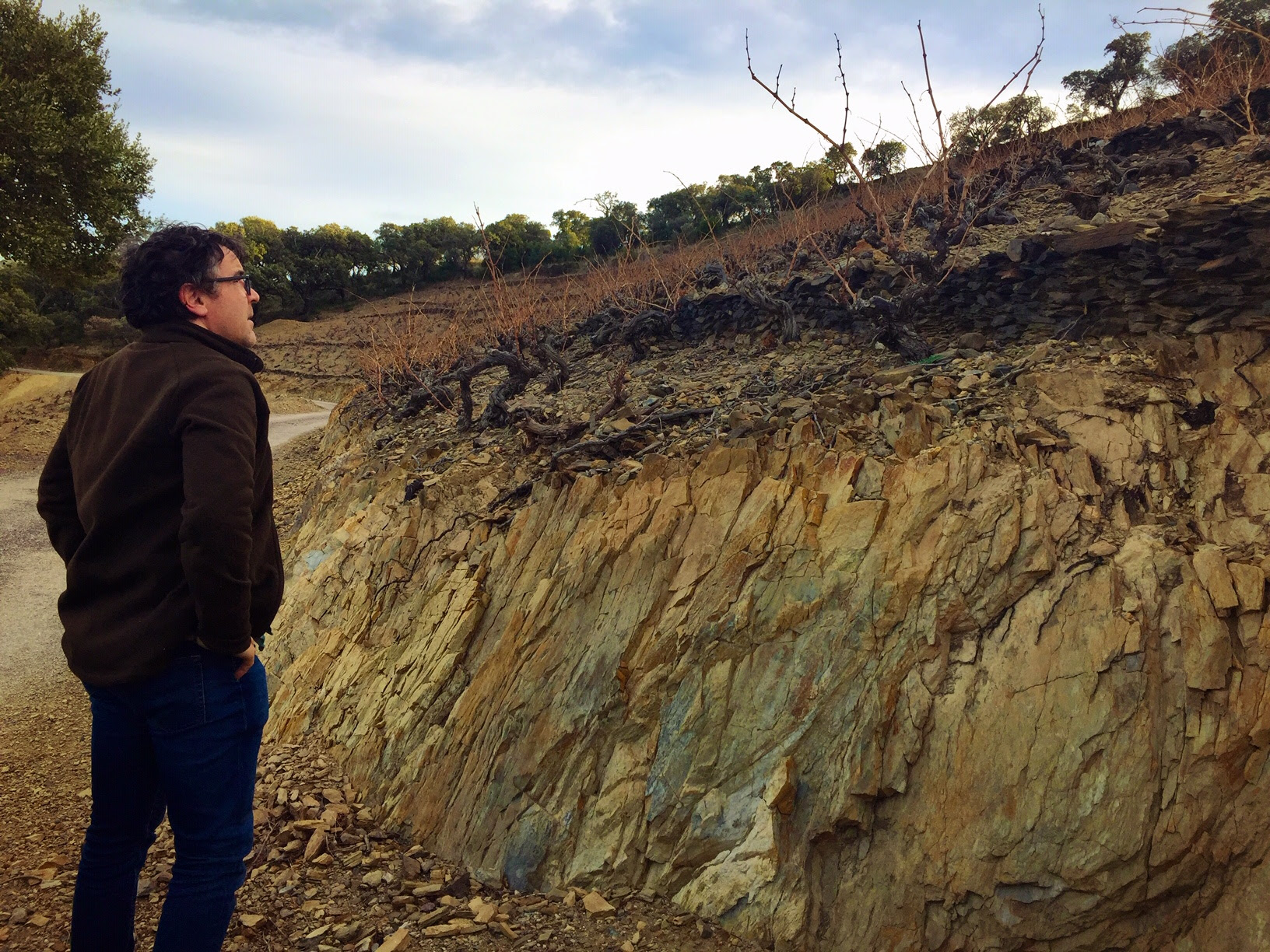 Tending and harvesting the vines is done by hand both as a tradition and by necessity. There, the studious vigneron is intimate with every vine and plot of soil.
Coume del Mas was created by Philippe and Nathalie Gard in 2001. The couple produce two types of wines from this challenging terroir: The dry wines, both red and white, of Collioure, and the somewhat Port-like Vin Doux Naturel wines of Banyuls that are fortified during fermentation to leave natural residual sugar. The landscape yields concentrated fruit from the local grape varieties of Grenache, Mourvèdre, and Carignan. While this fruit is the backbone for these enchanting and distinctive wines, it is the Gard’s careful work in the vineyard and winery that ensures balance and finesse in each bottle. Today, the couple is recognized as one of the leading producers in the region.
Special prices based on purchase of 6-pack (mix-and-match).
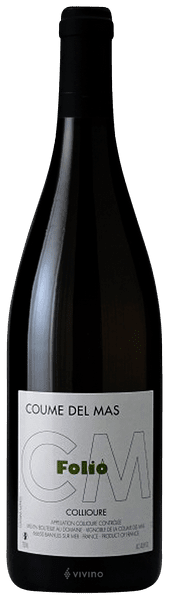 ~$34 “Folio” (Collioure 2017) Dry White
90% Grenache Gris and 10% Grenache Blanc from schist soils, “Folio” is fermented with indigenous yeasts and ages on its lees for six months in barrel. Low yields produce a wine that is rich, yet clean and elegant. Herbal and fruit blossom aromas precede a sip of medium-bodied peach fruit to finish with a bit of lime peel. It is a classic Mediterranean white that will pair exceptionally well with rich seafood and poultry dishes.
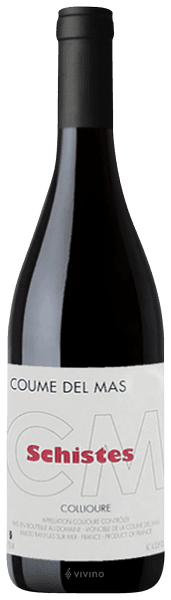 ~$34 “Schistes” (Collioure 2017) Dry Red
100% old vine Grenache from 30 different parcels reveal the unique terroir of Côte Vermeille. The fruit is hand-sorted, destemmed, and crushed into stainless steel tanks where fermentation takes place. The wine macerates on its skins for about five weeks before it is pressed and aged for nine months in tank. The result is a medium-bodied wine redolent of cherry liqueur, licorice, and crushed stone that is quite versatile at the dinner table paired with everything from spicy stir-fry to hunks of red meat.
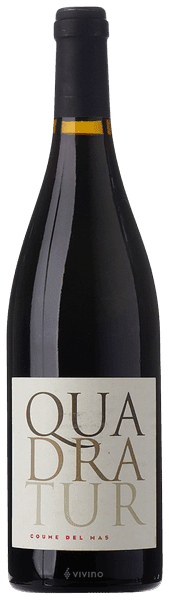 ~$49 “Quadratur” (Collioure 2016) Dry Red
A classic blend of 50% Grenache, 30% Mourvèdre, and 20% Carignan from the highest altitude, low yielding old vines on the Coume del Mas estate. Rigorous sorting and a long maceration extracts maximum aromatics and flavor before aging takes place for 12 to 14 months in barrel. Raspberry and black cherry fruit mingle with exotic spices over a medium to full-bodied frame. It is a firm wine, capable of pairing with the heartiest fare, yet also possesses wonderful layers of depth.
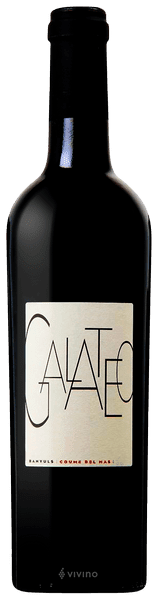 ~$29 “Galateo” (Banyuls 2017) 500ml Sweet Red
Produced from 100% old vine Grenache grown on prime sites near the sea. The cooling effect of the winds accentuate the fruit character. The wine is fortified on skins to reduce oxidation before aging in oak casks for a minimum of six months. Spiced plums, cherry preserves, milk chocolate, and violets fill your senses before a sip reveals a balanced juiciness that’s not cloyingly sweet nor obviously dry. A perfect accompaniment with fresh fruit and mild cheeses or merely as an apéritif.
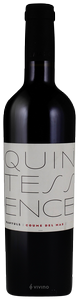 $45 “Quintessence” (Banyuls 2015) 500ml Sweet Red
100% Grenache from very low yielding old vines on the estates best sites. Severe selection and a long maceration extract intense flavors for this profound and age-worthy cuvée. The wine is fortified on skins to reduce oxidation before aging in oak barrels (50% new) for a minimum of eight months. A Port-like bouquet of ripe blackberries, cedar spice, and anise precedes a full-bodied, ripe character ideal for pairing with intense hard cheeses and pâtés.
- - -
Posted on 2020.01.16 in France, Saturday Sips Wines, Languedoc-Roussillon | Read more...
The Champagne Society February 2020 Selection: Champagne Penet Chardonnet
Penet-Chardonnet “TerroirEscence” (Grand Cru Extra Brut) 2011 Base
Price for The Champagne Society members: $84 (regular price $99)
Longtime Champagne Society members will recognize the name Penet. We’ve previously featured wines from fifth generation winemaker Alexandre Penet’s négociant label of low and 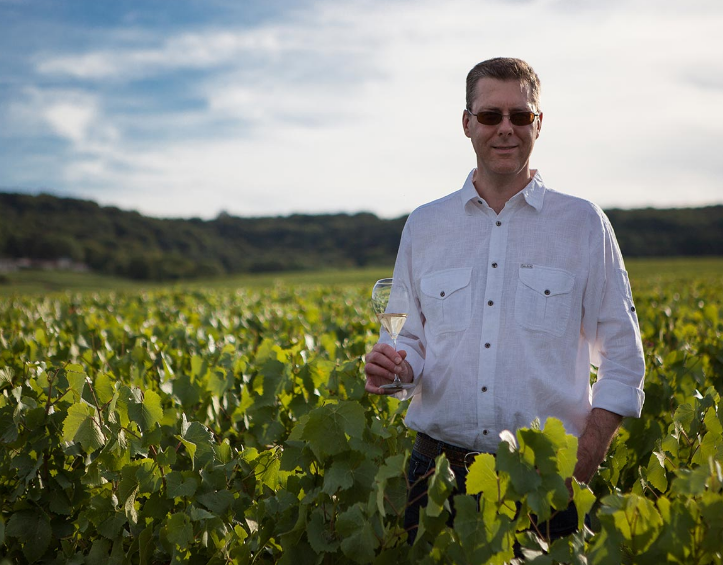 zero dosage Champagnes, as well as wines from his family’s own 14 acres of vineyards. We even had Alexandre help host a strolling dinner and Champagne tasting at a historic Eastern Market fire station loft this past November.
This month’s Champagne Society selection revisits the exceptional cuvée “TerroirEscence” produced from 70% Pinot Noir and 30% Chardonny from a special selection Alexandre’s own Grand Cru parcels in Verzy and Verzenay.
What makes this different from the previously featured bottle is that the base wine is from the more recent 2011 vintage, blended with oak barrel-matured reserve wines. 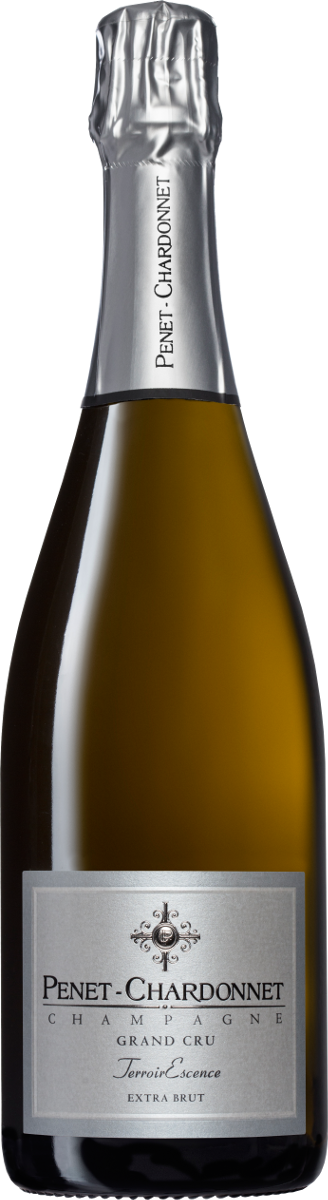 It was bottled on April 20, 2012 and after over six years of aging on lees in the bottle, the wine was disgorged on December 19, 2018. The dosage is 5.6 grams per liter. Less than 8,000 bottles are produced and each bottle is individually numbered. The wine represents the essence of Penet’s terroir while perfectly expressing the producer’s style of richness, complexity, and minerality.
From an early age, Alexandre assisted his grandfather Emile and then his father Christian in the art of making champagne. Yet as a young man, Alexandre decided to make his own way in the world, first as an engineer, and then eventually earning an MBA from the University of Chicago Business School. But the siren song of Champagne called him back to the family estate where he, along with his wife Martine, have created a range of distinctive, top quality Champagnes produced to exacting standards. Wines that combine character, freshness and low dosage. Indeed, Alexandre is a believer in both limiting dosage and not allowing malolactic fermentation so as the expression of terroir can be fully realized.
- - -
Posted on 2020.01.12 in France, The Champagne Society | Read more...
Loire Valley Cabernet Franc from Bernard Baudry – Fruit, Terroir, Balance
Bernard Baudry is easily one of Chinon’s best producers. Born into a winemaking family, Bernard studied oenology in Beaune and began his professional life as a vine-tending consultant at 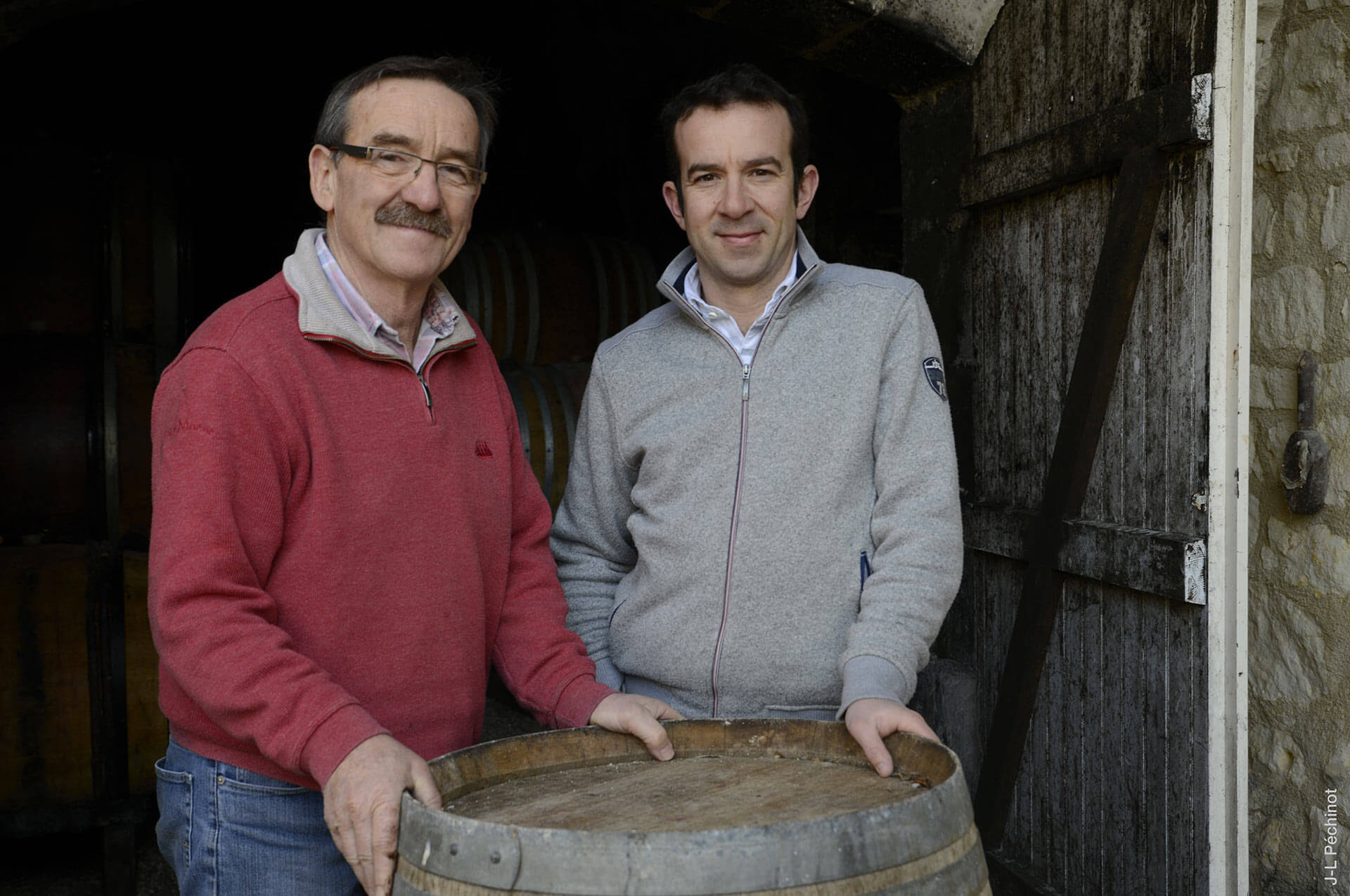 the Tours laboratory. In 1975 he decided to start his own estate with five acres of vines in the village of Cravant-les-Coteaux. Today the estate is 79 acres and Bernard’s son, Matthieu, works with his father to continue producing the consistent, high-quality wines for which the domaine is celebrated.
The Baudry vineyards have always been cultivated according to environmentally friendly methods and have been organically farmed since 2006. To rebalance the organic matter in the soils they maintain their own compost based on cow manure and straw. Yields are controlled by partial disbudding of the vines but the ultimate goal is to find the right balance based on vintage conditions where the vines naturally restrict their own yields. Harvest is done 100% by hand and post-harvest all fruit is de-stemmed and placed into gravity-fed vats where fermentation takes place with indigenous yeasts.
With gravel, sand, limestone, silica, and clay across several distinct parcels, the diversity of soils allows the Baudrys to produce singular wines that express their individual terroir through the lens of Cabernet Franc.
 $24.30 “Les Grézeaux” (Chinon 2018)
The Grézeaux vines are the Baudry’s oldest at around 50 years and were one of the first plots that were purchased when the estate was established 45 years ago. They lie on a bed of gravel and clay near the River Vienne which helps to create a wine of concentration. Fermentation takes place in cement vats and then the wine matures for 12 months in oak barrels, 3-5 years old. A sip reveals dense fruit followed by soft tannins. The nose is all full of crushed berries, wet slate, and fresh-cut flowers.
$21.60 “Le Domain” (Chinon 2018)
The fresh and structured “Le Domaine” is a mix of fruit from 70% of sandy plateau over limestone and 30% gravel vineyards. Average age of the vines are 30 to 35 years old. The wine sees a two-week fermentation in cement vats, then fifteen months of aging in unlined cement or oak vats. Bottling occurs two springs after harvest with no filtration. This cuvée can age five to 10 years.
$18 “Les Granges” (Chinon 2019)
Les Granges is a superb example of a juicy, round and easy-drinking Chinon meant to be consumed young. It is produced from vines planted between 1985 and 1988 in mixed gravels and sands on recent alluvial terraces. The wine sees a two-week fermentation in cement vats, then seven to ten months aging in cement vats.
*The listed prices are for a purchase of 6 bottles or more, any combination of wines listed on website.
- - -
Posted on 2020.01.09 in France, Saturday Sips Wines, Loire | Read more...
New Vintage of A Favorite Corbières
Maxime Magnon Rozeta (Corbières 2016) RED
Special 6-pack Price: $205 (~$34/bottle)
We’ve been bringing in young star winemaker Maxime Magnon‘s gorgeous expressions of Corbières from reclaimed old-vine plots in high-altitude vineyards for several years now. A native of the Burgundy region, he studied under some of the most respected winemakers in the Northern Rhône and Beaujolais. 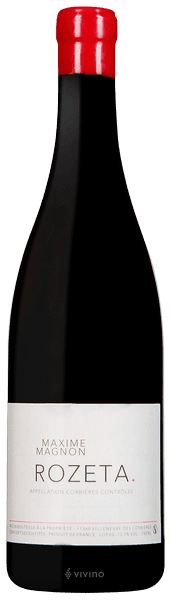 Influenced by the Beaujolais school (cold maceration, whole cluster fermentation, and minimal use of sulfur) Maxime has studiously harnessed this approach to produce wines that not only speak of the land from where they come but also made in a way which emphasizes purity of fruit and immediate drinkability, unique in Corbières where weight and extraction are the norm.
Maxime’s style and philosophy couldn’t be more apparent in the 2016 vintage of “Rozeta,” a field blend of Carignan, Grenache, and Cinsault from vines of 50-60 years in age. A glassful exudes heady aromatics of strawberry jam and pink floral arrangements that rise above subtler scents of fennel frond and dusty earth. A sip is concentrated red fruit on a fine frame of coiled energy that unfolds over the course of a lengthy, mineral finish. Its deft balance will pair with nearly any protein you put against it but it might be ideal with Julia Child’s Roast Chicken.
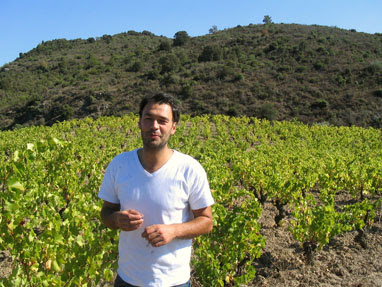 Stylistically Maxime Magnon‘s wines may be quite different than his illustrious friend Didier Barral from the nearby appellation of Faugères but he shares a similar naturalist philosophy with Didier. Maxime cultivates his vines with respect for nature and the soil – although what stands for soil in his vineyards is mostly just pure rock and Mediterranean shrubland. He’s certified organic, but also incorporates biodynamic practices into his vineyard management. A mule and several cattle serve for weed control and fertilization.
Maxime mainly farms in Hautes Corbières, a sub-appellation within A.O.C. Corbières that borders Fitou, and sits at a higher elevation with very rocky terrain. The vines are all trained in the ancient gobelet style. Aging of “Rozeta” is done in second-hand, Burgundian barrels sourced from a producer in Chassagne-Montrachet.
New-Release Cuvée Also Available from Maxime Magnon
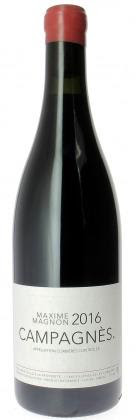
~$43 Maxime Magnon “Campagnes” (Corbières 2016)
Maxime Magnon’s tête de cuvée “Campagnès” is a single vineyard field blend of about 95% hundred-year-old Carignan vines co-planted with Grenache, Syrah, Grenache Gris, Macabou, and Terret from soils of clay and limestone on a slope above the river Berre. All grapes are co-fermented prior to aging in second-hand, Burgundian barrels sourced from a producer in Chassagne-Montrachet. “Campagnès” is the most concentrated and age-worthy wine in Maxime’s line-up. It will reward the patient drinker for a decade or more when properly stored.
- - -
Posted on 2020.01.03 in France, Saturday Sips Wines, Languedoc-Roussillon | Read more...
Featured Wines
- Notebook: A’Boudt Town
- Saturday Sips Wines
- Saturday Sips Review Club
- The Champagne Society
- Wine-Aid Packages
Wine Regions
Grape Varieties
Aglianico, Albarín Blanco, Albillo, Aleatico, Alicante Bouschet, Altesse, Arbanne, Arcos, Aubun, Auxerrois, barbera, Beaune, Bonarda, Cabernet Franc, Cabernet Sauvignon, Caino, Caladoc, Calvi, Carcajolu-Neru, Carignan, Chablis, Chardonnay, Chasselas, Chenin Blanc, Corvina, Corvinone, Cot, Erbamat, Ferrol, Fiano, folle Blanche, Frappato, Friulano, Fromenteau, Fumin, Garganega, Garnacha, Gewurztraminer, Godello, Grenache, Grolleau, Jacquère, Juan Garcia, Lambrusco, Lladoner Pelut, Loureira, Macabeo, Macabou, Malvasia, Malvasia Nera, Marsanne, Melon de Bourgogne, Mencía, Merlot, Mondeuse, Montanaccia, Montepulciano, Morescola, Morescono, Moscatell, Mourvèdre, Muscadelle, Nero d'Avola, Palomino, Parellada, Pecorino, Petit Meslier, Petit Verdot, Pinot Auxerrois, Pinot Blanc, Pinot Gris, Pinot Meunier, Pinot Noir, Poulsard, Prieto Picudo, Rondinella, Rose, Roussanne, Sangiovese, Sauvignon Blanc, Savignin, Semillon, Souson, Sparkling, Sumoll, Sylvaner, Syrah, Tannat, Trebbiano, Trebbiano Valtenesi, Treixadura, trepat, Trousseau, Ugni Blanc, vaccarèse, Verdicchio, Vermentino, Viognier, Viura, Xarel-loWines & Events by Date
- September 2025
- August 2025
- July 2025
- June 2025
- May 2025
- April 2025
- March 2025
- February 2025
- January 2025
- December 2024
- November 2024
- October 2024
- September 2024
- August 2024
- July 2024
- June 2024
- May 2024
- April 2024
- March 2024
- February 2024
- January 2024
- December 2023
- November 2023
- October 2023
- September 2023
- August 2023
- July 2023
- June 2023
- May 2023
- April 2023
- March 2023
- February 2023
- January 2023
- December 2022
- November 2022
- October 2022
- September 2022
- August 2022
- July 2022
- June 2022
- May 2022
- April 2022
- March 2022
- February 2022
- January 2022
- December 2021
- November 2021
- October 2021
- September 2021
- August 2021
- July 2021
- June 2021
- May 2021
- April 2021
- March 2021
- February 2021
- January 2021
- December 2020
- November 2020
- October 2020
- September 2020
- August 2020
- July 2020
- June 2020
- May 2020
- April 2020
- March 2020
- February 2020
- January 2020
- December 2019
- November 2019
- October 2019
- September 2019
- August 2019
- July 2019
- June 2019
- May 2019
- April 2019
- March 2019
- February 2019
- January 2019
- December 2018
- November 2018
- October 2018
- September 2018
- August 2018
- July 2018
- June 2018
- May 2018
- April 2018
- March 2018
- February 2018
- January 2018
- December 2017
- November 2017
- October 2017
- September 2017
- August 2017
- July 2017
- June 2017
- May 2017
- April 2017
- March 2017
- February 2017
- January 2017
- December 2016
- November 2016
- October 2016
- September 2016
- August 2016
- July 2016
- June 2016
- May 2016
- April 2016
- March 2016
- February 2016
- January 2016
- December 2015
- November 2015
- October 2015
- September 2015
- August 2015
- July 2015
- June 2015
- May 2015
- April 2015
- March 2015
- February 2015
- January 2015
- December 2014
- November 2014
- October 2014
- September 2014
- August 2014
- July 2014
- June 2014
- April 2014
- March 2014
- February 2014
- January 2014
- December 2013
- November 2013
- October 2013
- September 2013
- August 2013
- July 2013
- June 2013
- May 2013
- April 2013
- March 2013
- February 2013
- January 2013
- December 2012
- November 2012
- October 2012