Southwest Reformation: Bold Winemakers Revive Historical Vineyards and Reimagine Appellations in France’s Most Stunningly Diverse Wine Region + Southern Transformation in Châteauneuf-de-Pape
The struggle between new and old, youth and authority, innovation and tradition are part of the human drama; in France’s fertile southwest, this clash of cultures has produced marvelous results along with a few setbacks. Some young vignerons have adopted the same techniques that aspirational winemakers have tried in Bordeaux and found that many of them go wrong in their home terroir; some of the issues have been associated with an overall decline in the number of wine drinkers, in France especially. According to Fabien Jouves, from a venerable Cahors farming family, “To make great wine you have to drink great wine, and a lot of vignerons here don’t drink much wine at all.”
But we prefer to dwell of the success stories: Growers who have learned to fine-tune their agricultural practices, paying closer attention to east-facing parcels that are subject to gentle morning sun, less overt new oak in the aging, less extraction. New paradigms are being discovered along with ancient, untended vineyards, and the result is an engaging, postmodern phase of enology in the Southwest, from which we have assembled some top producers.
The Southwest: France’s Hidden Corner
How France’s fifth-largest winegrowing region remains one of its least known (and mostly underappreciated) is another mystery. Tucked away between the Pyrénées mountains in the South, Bordeaux in the north and the Atlantic Ocean to the west, France’s ‘Hidden Corner’ has twice as many vineyards as Burgundy and boasts some of France’s most beautiful countryside with vineyards scattered across rolling fields and picturesque river valleys.

Roughly divided into four sub-regions, each area has its own personality and unique wine profile: Bergerac and Dordogne, which specializes in dry white blends, full-bodied reds and sweet dessert wines; the Pyrénées, known for rustic Tannat, the variety that dominates the area’s most renowned appellation, Madiran; Garonne and Tarn, famous more for breathtaking scenery that top shelf wine and Lot, home to the incomparable Malbec-based ‘Black Wines’ of Cahors.
Cahors: ‘Lot’ Runs Through It
(The Cradle of Malbec)
While the Colorado River was busy carving out the Grand Canyon, a similar, if slightly less dramatic geological phenomenon was happening in Southwest France, where the Lot River was at work creating the Lot Valley, where, instead of leaving behind a big hole, there are steeped terraces ideal for vine cultivation. The terroir of Cahors is loosely defined by the differing soil types and the exposures created by these terraces.

The Plateau, referred to ‘les Causses’, lies at an elevation of nearly a thousand feet; it contains the Kimmeridgian limestone also found in Chablis and parts of Champagne. In addition, this area holds layers of iron rich clays with sporadic patches of rare blue clay, lending structure and energy to the wines. Below that, the Fourth Terrace, at an average elevation of 788 feet, offers a mix of limestone scree and ancient alluvial soils from the river, creating wines with bright red fruit and rustic earthiness. The Third Terrace is closer to the river, and at an average elevation of 558 feet it is primarily composed of clay, sand and the famous ‘galets roulés’ which imbue the wines with bold, black fruit and supple tannins, adding roundness in the way that Merlot softens Cabernet Sauvignon in Bordeaux.

Domaine Cosse et Maisonneuve
Cahors
Individually, their pedigrees are impressive: Matthieu, Domaine Cosse et Maisonneuve’s winemaker, is a graduate of the Institute of Enology in Bordeaux, and Catherine, the oenologist, holds a BTS viticulture and oenology from Blanquefort. Together, Matthieu and Catherine make magic. In 1999, they took over a 12-acre estate of old Malbec vines in Prayssac, a short distance from Cahors, and set out to make wines intended to transcend the rustic image of Cahors. Their first vintage was ‘Les Laquets’ and they shortly expanded the range to include separate cuvées intended to reflect the identity of the different terroirs of the estate.

Catherine Maisonneuve and Matthieu Cosse, Domaine Cosse et Maisonneuve
Says Catherine: “Wine is the ambassador of a terroir and a winemaker is the interpreter. Thus, to obtain perfect grapes that will clearly express the qualities of the Cahors terroir, everything in the vineyard must be natural.”
As such, they are certified organic by Ecocert and farm their vineyards biodynamically with a plan to become Demeter certified as well. Everything done in the vineyard aims at building of balanced soils to produce optimal conditions for ripening the grapes and making harmonious, aromatically complex and precise wines. Today, Domaine Cosse et Maisonneuve totals 42 acres planted predominantly to Malbec, with small amounts of Merlot and Tannat.
All plots are situated in primary locations on the gravel and clay Third Terrace above the Lot River.

6. 2021 Domaine Cosse et Maisonneuve ‘La Fage’, 2021 Cahors ($26)
Still in the bloom of youth, ‘La Fage’ has nose lush with macerated black currant, blackberry and plum. The mouth-coating tannins may require a little more time to settle in, but it is on its way—cellar this wine or drink it tonight with a well-marbled piece of beef.
 7. Domaine Cosse et Maisonneuve ‘Le Combal’, 2021 Cahors ($23)
A beautiful example of the ‘new’ Cahors—a finer-grained and elegant Malbec which sacrifices none of the variety’s iron-scented power and structure of traditional Cahors, but focuses on fruit. Black currant and cherry shine through notes of pipe smoke, clay and bitter herbs with tannins that are woven through without a sense of dominance.
 5. Domaine Cosse et Maisonneuve ‘Cheval en Tête’, 2022 VdF Southwest-Cahors Blanc ($18)
70% Ugni Blanc, and a 30% blend of Chardonnay and Sauvignon Blanc. The wine shows bright grapefruit-infused bitters along with floral and honey notes, finishing with a slight smokiness that resolves in a citrus bite.
Jurançon: Acid Trip in the Far South
Overlapping climates and cultures leads to some odd dichotomies. For example, whiffs of Bordeaux can be scented on the breeze far south of the genuine boundary; in Jurançon, even modest farmhouses are still called ‘châteaux,’ and the weather is similar to that of Graves, but raised up a notch in intensity.
“We’re twenty-five miles from ski slopes and fifty from Biarritz (a luxurious seaside tourist destination),” says Jurançon winemaker Charles Hours to explain the unique terroir of the region. “We are hot and humid, yet produce wines that are alive with acidity. Jurançon, in fact, is a worthy model for fighting climate change.”
Jurançon is known for white wines, dry and sweet, but unlike Graves, where Sémillon and Sauvignon Blanc rule, the principal Jurançon grapes are Gros Manseng and Petit Manseng, capable of producing fresh, aromatic, and potentially long-lived wines. The terrain undulates, and most Jurançon vineyards are situated on the upper slopes of the valleys and on the top of the hills where vines confront three soil types: In the northeast, the terroir is dominated by Poudingue de Jurançon (Puddingstone), a pebbly limestone mix often showing as a stony clay topsoil. The southern section is mainly layers of sedimentary rock know as ‘flysch’ alternating between layers of sandstone or limestone and sand or clay, while the appellation’s western limits is a mix of both Poudingue and flysch.

In terms of style, Jurançon lay claim to three: Dry white (sec), sweeter white labeled simply Jurançon and a requiring residual sugar level of 40 gram/liter, and extremely sweet white made from late-harvested grapes (Vendanges Tardives). All are based around two grapes, Petit and Gros Manseng, with the former providing finesse and the latter volume. These two grapes must make up at least half of any Jurançon or Jurançon Sec blend and are the only two permitted varieties in Jurançon Vendanges Tardives—a wine capable of rivaling some of the top-name labels in Sauternes and Barsac.
These are all wines that check all the boxes in what white wine drinkers look for—balanced acidity, memorable aromatics and an ability to mature and become more complex, adding notes of gingerbread and dried apricot. Why Jurançon’s versatile styles are not more celebrated, even by the wine-loving public, is a bit of a mystery. Why the Manseng sisters, Gros and Petit, do not enjoy more prominence on the varietal stage is equally perplexing.
The good news, of course, is that these wines remain ripe for discovery.
Clos de la Vierge
Jurançon Sec
Venerable with gravitas. No two words better summarize the recent past of Clos de la Vierge, where, from the walled acres of Gros Manseng, Anne-Marie Barrère crafted exquisite wine for over fifty years, relying on vines planted by her father in 1945. The clos is a marvelous sight as it snakes up the steep, sunny hillside in curving rows that allow for the maximum sun exposure. The product has been described as ‘… like drinking liquid minerals, bursting in every direction with icicles of gold and silver, then green-gold. Of course, there was fruit, which leaned into tart tropical along with sweet citrus, but the wine was more about sensation.’

Madame and Anne-Marie in the cellar, with Etti, the dog
Barrère retired at 95, and the current proprietor and winemaker is Lionel Osmin, a unique character unto himself. Lionel Osmin & Cie began with a group of friends who shared a passion for wines from France’s occasionally overlooked southwest. With this in mind, they created a quality wine-broking house based on these wines following the example of other regions such as Burgundy or the Rhône.
Says Osmin: “The result is a range of wines whose characteristics are faithful to the region and which are made to share the joy of discovering the vines and wines that are enjoyed and loved.”
 1. Clos de la Vierge ‘Le Carré de Peès’, 2023 Jurançon Sec ($23)
* ‘Carré’ means ‘square’ and refers to a plot of favored vineyard similar to a climat or lieu-dit. It appears on many Jurançon labels. The wine is a confident and comforting blend of peach, lanolin and sweet spices showing a creamy palate tinted with grilled pineapple and citrus zest. Mineral-driven throughout, there is a distinct salinity on the finish.
Clos Cancaillaü
Jurançon Sec, Jurançon
When Lionel Osmin purchased Clos de la Vierge, he also took over Close Cancaillaü; another exceptional terroir that faced the Pyrénées and was filled with vines between 40 and a hundred years old.

Clos Cancaillaü

Lionel Osmin
 2. Clos Cancaillaü ‘Au Lavoir’, 2022 Jurançon Sec ($32)
100% Petit Manseng from 40-80 year old vines in Lahourcade and Cuqueron. Dry wines crafted from grapes historically devoted to dessert wines often share some of the intense notes of cream and honey, with the sweetness hovering in the wings, present but intentionally repressed. This is a note of complexity that makes this versatile wine shine. The crisp acidic backbone carries notes of pears, lime curd and apple.
 3. Clos Cancaillaü ‘Le Dernier Carré’, 2016 Jurançon ($32)
A tropical cornucopia with honeyed mango, pineapple and a touch of butterscotch developing as the wine continues to evolve and mature.
 4. Clos Cancaillaü ‘Crème de Tête’, 2017 Jurançon ($28)
A dessert-style wine made from 100% Petit Manseng, traditionally crafted by allowing the grapes to dry on mats before fermentation. This straw-wine method concentrates flavors and evaporates much of the water, leaving tiny quantities of rich, nectar-like juice. The resulting wine is drenched in honey and saffron, with notes of candied pear and dried apricot behind a balancing zing of citrus.
Hidden Gem
Clos Joliette
Jurançon
All that is gold does not glitter and all that glitters is not gold, but ‘Cépage Petit Manseng, Barrique No. 2,’ a remarkable elixir known only to a discerning few, is both. It is produced in minute quantities from ungrafted Petit Manseng vines planted in 1929 on a terraced amphitheater 85 miles south of Sauternes. At its point of origin, Maurice Migné cleared a single hectare of forest in Jurançon’s Chappelle de Rousse, a complex terroir of rounded stones, silica, limestone, and clay with a subsoil rich in iron. Bertrand de Lur Saluces (Château d’Yquem’s director for over fifty years) said that the Joliette estate farmed the only terroir on earth that could rival his own.
For much of the estate’s century-long history, this wine was only made in select vintages and was sold privately to friends and a handful of restaurants.
When Lionel Osmin purchased the now-neglected vineyard, he struck a deal that allowed him to also buy the private stock from 1993 to 2009; he singled out the best old vintages and released the best of these for sale. Critics were, needless to say, blown away.

Clos Joliette
What distinguishes vintage Joliette from other wines made in this style is that the grapes for each cuvée were picked at various stages of maturity, so the portfolio ranges from nearly dry to fully moelleux depending on the year, and even the barrel. Lionel Osmin categorized each ‘unicorn’ lot by color-coding their wax capsules to indicate residual sugar.
Among the more remarkable benefits of the remarkable Jurançon climate is that to produce late-harvested wines, hang-times can (and do) extend into December and beyond, by which point frost and intense sun has shriveled the grapes nearly to the raisin stage.
 Clos Joliette ‘Yellow – Cépage Petit Manseng, Barrique No. 2’, 2018 Jurançon ($620)
The yellow cap indicates residual sugars between 10 and 30 gram/liter. The grapes were treated with minimal intervention throughout vinification, bottled without fining or filtration, having enjoyed six years aging long aging in oak barrels sourced from Sauternes’ Château de Fargues. The wine displays a depth that is rare to encounter anywhere; it’s loaded with toasted nuts, beeswax and honey, vanilla and dried stone fruit.
Golden Treasures
Domaine Cauhapé
Jurançon
“Cauhapé’s approach is special,” says grower and winemaker Henri Ramonteu. “It involves a unique dialogue with nature to express the quintessence of the typical and forgotten grapes of our unique Jurançon appellation.”
Cauhapé vineyards spreads over more than a hundred acres of steep hillsides. With a south, south-east exposure and differing altitude between the parcels of vines (the highest 400m) the vines benefit from optimum climatic conditions.

Henri Ramonteu (center), Domaine Cauhapé
Says Ramonteu, “We cultivate five local grape-varieties. Petit Manseng contributes to the making of great sweet wines and equally to great dry wines. Gros Manseng and Courbu bring finesse and fruit. Camaralet and Lauzet are ancient varieties that we are reintroducing little by little to give birth to a new generation of dry Jurançon wines.”
 Domaine Cauhapé ‘Quintessence du Petit-Manseng’, 2000 Jurançon ($198) 375 ml
100% Petit Manseng harvested the second half of December after three or four sortings, from a south-facing vineyard where the soil is silicate with 39% clay. The wine is 100% barrel-fermented in new oak and sees two years aging. The finished produce reflects the praline and orange notes vibrant with acidity and a lengthy finish that show hints of bitter chocolate.
 Domaine Cauhapé ‘Quintessence – Folie de Janvier’, 2000 Jurançon ($270) 375 ml
The last grapes for this wine are picked after the January frosts, and yet the wine itself is crafted to maintain freshness. Yields are restricted to six hectoliters per hectare (Château d’Yquem’s yields range from eight to 10 hectoliters per hectare) and the grapes are treated to extensive sorting before being fermented on new wood. The wine displays honey, orange marmalade, nougat, roasted apple with spice notes of white pepper.
RECENT ARRIVAL
Southern Transformation
Domaine de Panisse
Châteauneuf-du-Pape
Fresh air is always welcome in any southerly, somewhat hidebound appellation, and no one better to bring it in to Châteauneuf-du-Pape than siblings Marilou and Axel Vacheron and partner Antoine Robert. In 2020, the trio took over the 15th century Panisse farmhouse in the far northeast corner of the appellation, where they sensed (correctly) that the terroir had not yet reached its full potential.
The property was filled with Grenache, Syrah, Mourvèdre and Cinsault vines that had been planted in the 1920s. In fact, Panisse’s oldest-vine parcel, located in lieu-dit ‘La Janasse,’ is reserved for its rarest blend.

Axel (center) and Marilou Vacheron with husband Antoine Robert (left) at Domaine de Panisse
“Grapes are harvested by hand in small crates,” says Marilou Vacheron, “and currently, we bring them to the cellars at Le Clos du Caillou, just five minutes to the south, to be vinified. Grapes are fermented on indigenous yeasts in temperature-controlled tanks—stainless steel, cement or tapered wooden casks, then aged in demi-muids or barrels for approximately 15 months. We bottle unfined and unfiltered, with minimal added sulfites.”
The current place of vinification is fitting; it’s a family affair. Caillou owner Sylvie Vacheron is the mother of both Marilou and Axel; both were trained by Caillou winemaker Bruno Gaspard.

Winemaker Bruno Gaspard and Sylvie Vacheron
Domaine Vacheron, whom we have written about affectionately, is one of the most influential and elite estates in Sancerre. At the helm, Jean-Dominque and Jean-Laurent Vacheron currently farm 84 acres of Sauvignon Blanc and 27 acres of Pinot Noir, most in top terroirs including the Les Romains vineyard. Recently, they the property has begun acquiring vines in the most Guigne Chèvre, En Grands Champs, Paradis and Chambrates, among the most sought-after , silex-heavy lieux-dits in Sancerre.
Extending the Vacheron influence beyond the Loire, Jean-Denis Vacheron and his wife Sylvie, (the daughter of Le Clos du Caillou manager Claude Pouizin) began to run Caillou in 1995. Tragically, Jean-Denis Vacheron died in an accident in 2002.
The purchase of Panisse required a leap through more hoops than a wedding band: “It was difficult to acquire the estate as several important families in Châteauneuf-du-Pape also wanted to buy it,” says Marilou. In the end, SAFER (the French land management agency) chose Marilou, 27, and her brother Axel, 24, because of their youth.

Regarding the property’s terroir, Antoine Robert adds, “The surrounding area—with cypress and pine trees, fields of lavender and olive trees—helps to maintain a rich biodiversity which feeds the soils and keeps vineyards healthy. What’s more, the mix of terroir here, with sand and clay and large quartz stones, is particularly drought-resistant, a necessary trait amid ever warmer growing seasons.”
 8. Domaine de Panisse ‘Le Mas’, 2021 Châteauneuf-du-Pape ($56)
55% Grenache, 20% Syrah, 20% Mourvèdre, 5% Cinsault. ‘Le Mas’ refers to the fifteenth century farmhouse. The wine displays all the nuance and depth of a classic CdP; ripe black cherries, licorice, wild rose, brown spices with ginger and white pepper on the finish.
 Domaine de Panisse ‘Le Mas’, 2021 Châteauneuf-du-Pape ($119) 1.5 Liter
A magnum of the same wine, capable of aging longer and more gracefully over what could conceivably be decades.
Vintage 2021: Year of the Vignneron
Châteauneuf-du-Pape saw a difficult vintage in 2021. 18 different grapes are permitted under the Châteauneuf-du-Pape AOP regulations, and it is fair to say that some varieties fared better than others. This is where art of blending reaches its apogee, and where we find that the variance of vintage may create a number of unexpected masterpieces when winemakers are required to dig deeply into their tool-box to build a presentable product.
2021 was such a vintage, and as such, it has been referred to as ‘The Year of the Vigneron.’
Of 2021 at Domaine de Panisse, Axel Vacheron reports, “Following a very mild winter, spring began with a frost episode on the night of April 7 to 8, killing young buds and slowing down the vine’s growth cycle. The season remained cool and then gave way to a summer marked by episodes of heat as well as some precipitation, including a good shower in early August, which spared the vineyard from water stress. Finally, the cool summer nights coupled with the spring frost created a heterogeneous yield between the plots, but whose health remained intact. In the fall, however, the harvest was slowed down by significant storms that led us to modify our practices and make decisive choices to meet the demands of a very trying vintage. The result is fresh and enjoyable wines in their youth, making 2021 a vintage reminiscent of those of the 90s, and with good aging potential.”
- - -
Posted on 2025.05.27 in Châteauneuf-du-Pape, Cahors, France, Wine-Aid Packages, Southern Rhone, South West | Read more...
Higher Grounds: Showcasing the Versatility of Gamay in the Hilly Uplands of Beaujolais’ Lesser Known Cru Villages of Chiroubles, Côte-de-Brouilly, and Brouilly.
3 Memorial Weekend Holiday Packs Picks
Memorial Day is a time to reflect on mortality as well as to celebrate the rebirth of warmth and leisure time. No wine captures the complexity emotions better than Beaujolais, which can be light and lyrical as well as profound and nuanced. These are ideal wines with which to celebrate Memorial Day, the gateway to summer and the joy of transcendence.
- 7-Bottle Chiroubles Sampler Pack $234
- 7-Bottle Côte-de-Brouilly Sampler Pack $264
- 4-Bottle Brouilly Sampler Pack $134
The Beaujolais Underground: A Veritable Mosaic of Soil
The biggest error a Beaujolais neophyte makes is an expectation one-dimensional predictability. To be fair, the mistake easy to make based on the region’s reliance on Gamay, a grape that elsewhere may produce simple and often mediocre wine.
In Beaujolais’ wondrous terroir, however, it thrives.
In fact, this terroir is so complex that it nearly defies description. But Inter-Beaujolais certainly tried: Between 2009 and 2018, they commissioned a colossal field study to establish a detailed cartography of the vineyards and to create a geological snapshot of the exceptional richness found throughout Beaujolais’ 12 appellations.

Beaujolais may not be geographically extensive, but geologically, it’s a different story. The region bears witness to 500 million years of complex interaction between the eastern edge of the Massif Central and the Alpine phenomenon of the Tertiary period, leaving one of the richest and most complex geologies in France. Over 300 distinct soil types have been identified. Fortunately, Gamay—the mainstay grape, accounting for 97% of plantings—flourishes throughout these myriad terroirs. In the south, the soil may be laden with clay, and sometimes chalk; the landscape is characterized by rolling hills. The north hosts sandy soils that are often granitic in origin. This is the starting point wherein each appellation, and indeed, each lieu-dit draws its individual character.
There are ten Crus, the top red wine regions of Beaujolais, all of them located in the hillier areas to the north, which offer freer-draining soils and better exposure, thereby helping the grapes to mature more fully.

Courtesy of Wine Scholar Guild
Unearthing Potential: Beaujolais’ Lesser-Known Villages
Beaujolais is a painter’s dream, a patchwork of undulating hills and bucolic villages. It is also unique in that relatively inexpensive land has allowed a number of dynamic new wine producers to enter the business. In the flatter south, easy-drinking wines are generally made using technique known as carbonic maceration, an anaerobic form of closed-tank fermentation that imparts specific, recognizable flavors (notably, bubblegum and Concord grape). Often sold under the Beaujolais and Beaujolais-Villages appellations, such wines tend to be simple, high in acid and low in tannin, and are ideal for the local bistro fare. Beaujolais’ suppler wines generally come from the north, where the granite hills are filled with rich clay and limestone. These wines are age-worthy, and show much more complexity and depth.
The top of Beaujolais’ classification pyramid is found in the north, especially in the appellations known as Cru Beaujolais: Brouilly, Chénas, Chiroubles, Brouilly, Côte-de-Brouilly, Fleurie, Juliénas, Morgon, Moulin-à-Vent, Régnié and Saint-Amour.
Not all Beaujolais Crus are created equal, and some have proven more ‘brandable’ than others. Morgon, Moulin-à-Vent and Fleurie have all found main-character energy on this Gamay-red carpet. But it is generally in the appellations without as much surface celebrity that some of the best bargains can be found. This week we’ll highlight three of them: Chiroubles, Brouilly, and the AOP-within-an-AOP, Côte-de-Brouilly along with the game-changing winemakers they have fostered. Among the more amazing wines in this collection are those from Gamay vines that are approaching, or have surpassed, the century mark.
Chiroubles: Terroir Lifted by Altitude
When a single grape variety is called upon to express itself in multiple personalities, elevation takes on special significance. As the highest of Beaujolais’ ten Crus, Chiroubles produces wine with unique charms, combining delicacy and elegance with a crisp spine of acidity—features that arise from an increase of solar rays, greater temperature fluctuations, scarce water resources and more dramatic weather patterns. Chiroubles’ beauty is the face of challenge.
With a scant eight hundred acres under vine, Gamay finds a special affinity for the steep, sandy slopes of eroded granite, which stores and reflects daytime heat to help balance the fierce diurnal shift. Meanwhile, good drainage ensures that the vines focus on the production of high-quality berries rather than leaf growth.

Chiroubles’ vineyards were first established by Benedictine monks during the Middle Ages, and the region (officially delimited as an AOP in the 1930s along Brouilly and Moulin-à-Vent) was home to Victor Pulliat, whose work in root grafting helped save the French wine industry from extinction during the phylloxera scourge of the 19th century.
Seven-Bottle Côte-de-Brouilly Sampler Pack for $234
Domaine Steeve Charvet
Cru Chiroubles
Steeve (not a typo) Charvet is the sixth generation of Chiroublesois to cultivate Gamay vines in the appellation; his father Armand began to bottle wine and sell it directly from the property and through trade fairs. Steeve took over in 2010.
“I have been passionate about viticulture since I was little and I am in love with nature,” he says. “So, the profession of winemaker was an obvious choice for me. I respect a human-scale production and its environment, to date I have twenty acres. My wines come exclusively from my vines, I do not buy grapes or wine, only the grapes from my vines are vinified.”

Steeve Charvet, Domaine Steeve Charvet
Steeve considers himself an ‘anti-fashion’ winemaker who makes it a point of honor to be as non-interventionist as possible and to allow the maximum potential of each vintage to express itself. This methodology, admittedly, has pitfalls: “Nature can sometimes be cruel, such as during periods of frost, hail, or severe drought, while it can also be generous with welcome rain and ideal sunshine. We must know how to let it be and harvest what it gives us. Our vines are obviously not irrigated, and it is the water from the sky and the sunshine that play a role in the vintage effect.”
 1 Domaine Steeve Charvet, 2021 Chiroubles ($28)
Not to overuse the alliterations, but plum, peony and pink peppercorn all perfume this charming, entry-level Chiroubles. As is his usual M.O., Charvet ferments on indigenous yeasts, and aging occurs in concrete tanks and old Burgundy barrels to emphasize the purity and character of the Gamay grape.
Domaine de La Grosse Pierre
Cru Chiroubles
Like Steeve Charvet, Pauline Passot comes from a winemaking family in Chiroubles, but unlike Steeve, she was not initially drawn to the profession. She studied marketing, and ultimately became a sommelier at the Michelin star restaurant Pierre Orsi in Lyon. It was there that she realized that her family wines from Chiroubles stood head-to-head with many of the pricier and more exclusive wines of France, and that there was an opportunity for her to improve even upon that. Winemaking studies in Beaune were followed by stints at several wineries, including Lafarge.

Pauline Passot, Domaine de la Grosse Pierre
“In 2016, I oversaw my first harvest,” she says,”and from there worked my way into the now fifteen acres on fermage (rented) from my parents. One of my first steps was to begin conversion to organic methods, but using traditional viniculture: Fermentation is in a mixture of steel and 600-liter casks, there is little destemming, little extraction and a low fermentation temperature. I believe that it is precise attention to detail that makes a wine shine.”
After several poor years for Beaujolais Nouveau, Pauline is the most highly acclaimed rans of Beaujolais growers creating serious terroir-driven wines.
 2 Domaine de La Grosse Pierre ‘Claudius’, 2022 Chiroubles – La Grosse Pierre ($29)
Sourced from high-altitude vineyards nearly a hundred years old, this bright and elegant Chiroubles is flecked with crunchy red berries, violets and a hint of spice. A nice wine to serve with a slight chill on a summer’s day.
 3 Domaine de La Grosse Pierre, 2023 Chiroubles – La Grosse Pierre ($30)
‘La Gross Pierre’ is Pauline Passot’s largest holding, a ten-acre, east-facing lieu-dit boasting the classic pink granite terroir of the region, where vines average 45 years in age. The wine shows sweet cranberry, spring strawberries and velvety tannins.
 4 Domaine de La Grosse Pierre ‘Pauline Passot’, 2020 Chiroubles – Grille Midi ($43)
‘Grille-Midi’ is Passot’s flagship lieu-dit, a parcel of vines that extends into Fleurie and is considered one of the top vineyards in Beaujolais. Vinification is classic whole-cluster open carbonic, aged in neutral demi-muids and bottled without filtering and minimal sulfites at bottling. An elevated expression of old-vine Beaujolais, the wine shows bright, ripe fruit balanced by acidity.
Domaine de Vernus
Cru Chiroubles
In literature, a character study is a critical examination of a single character to understand not only their significance to a given narrative, but as a way of better understanding the work as a whole. This week, we will undertake a similar focus on a lone, but phenomenal Beaujolais winemaker (Guillaume Rouget of Domaine de Vernus) in order to see how a single talented vigneron can exemplify the moods, the changes, the whims of a region where a diverse terroir remains committed to a single grape variety, Gamay.

Guillaume Rouget with father Emmanuel Rouget, Domaine Emmanuel Rouget in Vosne-Romanée and Flagey-Echézeaux
Rouget certainly comes with a proper pedigree: The grand-nephew of Henri Jayer (the Burgundian innovator known for making some of the most critically acclaimed and expensive Pinot Noirs in the world), he was trained to the vine from childhood, first by his father Emmanuel Rouget and then at the École des Vins de Bourgogne in Beaune. When he decided to join forces with Domaine de Vernus owner Frédéric Jametton in Régnié-Durette, it was to pursue a shared goal: Producing elegant, racy wines that display the intense fruitiness of Gamay along with age-worthy structure that can develop complexity over time alongside the best Burgundies. Guillaume is in charge of the entire production chain, from cultivation through all phases of vinification, ultimately taking part in the marketing of the estate’s wines. A true renaissance man in Beaujolais, his handling of various top Crus may not be ‘Beaujolais Nouveau,’ but it is very much the new Beaujolais.
 5 Domaine de Vernus, 2019 Chiroubles ($27)
From the highest-altitude vines in Beaujolais with an average age of 63 years in the Verbomet lieu-dit and 36 years in Châtenay, both featuring terroir built on shallow granitic soil. The back-breaking work required to harvest on the steep slopes of Chiroubles produces an airy, intensely perfumed wine with silky notes of black cherry, plum and raspberry with a pronounced minerality and electric acidity.
Mélanie et Daniel Bouland
Cru Chiroubles
Daniel Bouland has been called reclusive and solitary—he has also been called the best artisanal vigneron in Beaujolais. When collectors compare him to more flamboyant regional names like Foillard and Lapierre, it is always favorably, at least in part because of his obsessive respect for micro-terroirs—in French, ‘pur’ terroir. Working with fewer than twenty acres of impeccably cultivated vines in the Morgon lieux-dits of Corcelette, Bellevue and Les Delys, plus small parcels in Chiroubles and Cote de Brouilly, Bouland’s wines are approachable upon release, but created with such a backbone that his terroir’s mineral nuances will continue to become more pronounced with five or more years in the cellar.

Daniel Bouland, Mélanie et Daniel Bouland
With the success of Cuvée Mélanie, named for Daniel Bouland’s daughter, Bouland has added her name to current bottlings beneath the name ‘Mélanie et Daniel Bouland’, possibly in advance of the younger Bouland ultimately taking charge.
 6 Mélanie et Daniel Bouland, 2022 Chiroubles – Châtenay ($41)
When the name Châtenay appears hyphen-linked to Chiroubles, it refers to a specific granitic terroir within the Chiroubles appellation near the Morgon border. Typical of wines from this area, it exhibits aromas of black cherries, blackberries, orange bitters, violets and sweet spices.
Guy Breton
Cru Chiroubles
Guy Breton took over the family domain from his grandfather in 1986—up until then, the family had been selling their fruit to the large cooperative wineries which dominated the region. The rise of imported yeast cultures to impart flavor and aroma, the use of high-tech carbonic maceration and the widespread commercialization of Beaujolais Nouveau played hell with the region’s reputation, and to much of the wine world, Beaujolais came to be seen as one-dimensional, lacking any expression of the native terroir.

Guy Breton
Following the example of traditionalist Jules Chauvet, Guy and three other local vignerons initiated a ‘back-to-nature’ movement, calling for called for a return to the old practices of viticulture and vinification. This began with old vines and refusing to use synthetic herbicides or pesticides. They harvested late and sorted rigorously to remove all but the healthiest grapes, adding minimal doses of sulfur dioxide or none at all, and refusing both chaptalization and filtration.
“The end result allows my wine to express itself naturally,” he says, “without make-up or plastic surgery: rustic, spicy, loaded with schist minerals and at the same time, refreshing and deep-down delicious.”
 7 Guy Breton ‘Cuvée Léa’, 2020 Chiroubles ($39)
Guy Breton loves to vinify in a style that is light, bright and juicy—as such, the high-altitude, steep, decomposed granite slopes and old vines of Chiroubles are well suited. From three, recently acquired acres of 60-year-old vines, ‘Cuvée Lea’ shows floral, succulent aromatics bursting with notes of forest berries, and so delicate on its feet that it serves as a user-friendly counterpoint to some of the more structured Cru wines from Beaujolais.
Côte-de-Brouilly: At the Summit
Mont Brouilly is the icon that defines this Beaujolais Cru, and as cream rises to the top, the most elegant and nuanced wines of the region are found on the upper slopes of the mountain. These are captured in the Côte-de-Brouilly AOP, which is surrounded by lower-lying vineyards of the larger appellation, Brouilly.

The slopes of Mont Brouilly are littered with bluestone. This distinctive blue-green rock, known as diorite, is a major factor in the wines’ flavor profile, contributing to liveliness, structure and mineral character. Unlike granite, which covers about a quarter of Brouilly terroir, bluestone has a better capacity to absorb rain and limit erosion. Unlike granite, bluestone is not siliceous and does not disintegrate into sand; it tends to produce clay, which also improves water retention. Not only that but there are also noticeable differences between diorite wines from the mountain’s cooler north side, often marked by licorice notes. The south side of the mountain produces richer fruit wines, so if a winemaker is fortunate enough to have plots on different sides of the hill, she can play as a palette to build nuanced assemblages.
Atop the mountain, the chapel Notre-Dame aux Raisins, was built in the vain hope of protecting the vineyard powdery mildew, frost and hail that had ravaged it in 1850 and 1852.
Seven-Bottle Côte-de-Brouilly Sampler Pack for $264
Julien Duport
Cru Côte de Brouilly
In Julien Duport’s family, winemaking skipped a generation. Although his grandparents planted and farmed Gamay in the Côte-de-Brouilly, his father became a pompier—a fireman. At the age of 21, having completed an undergraduate degree in enology at the local Bel Air college and working with winemaker Laurent Martray and others, Julien took over the family acres, and rather than dousing flames, opted to set the world of Beaujolais on fire.
His near obsessive passion for tradition is infused throughout his process. He farms with a horse and plow, and throughout this time-consuming effort, he meditates. Like his grandfather, he ferments in cement tanks using native wild yeasts, following which the wines enjoy a long élevage in neutral barrels and large foudres and are then bottled without any filtration or fining.

Julien Duport
He says, “I believe these wines are a historical throwback to the time when Beaujolais growers used to sell their wine in barrels, long before carbonic maceration became the trendy winemaking technique that has now usurped the rich and interesting wines of the past.”
‘The past’ meets the present in La Boucheratte, Julien’s schist-flecked vineyard where the Gamay vines were planted 102 years ago.
“This site was tended by horse up until 1985 and then again when I took control,” he explains. “It’s incredible that vines this old are producing at all anymore, and all the more incredible when you taste La Boucheratte. Part of the intensity comes from the windiness of the site, which leads the Gamay skins to get tough and thick and filled with tannin. Rather than coaxing an extraction of this site, I attempt to unearth the fleshiest representation of Gamay possible. I reject the homogenization of Beaujolais in general and Côte de Brouilly in particular.”
 1 Julien Duport, 2020 Côte-de-Brouilly – Brouilly ($29)
Avoid confusion going in: ‘Brouilly’ is a lieu-dit on the slopes of the mountain quite entirely within the Côte-de-Brouilly AOP, not Brouilly. This vineyard of 60-year-old vines distinguishes itself with a dose of blue schist in the pink granite soils. (Schist is made up of compressed sheets of clay formed by the plate movements when the mountain was formed). The wine shows resin-like aromatics with vibrant spiced red- and blue-fruit character.
 2 Julien Duport ‘La Sueur au Front’, 2020 Côte-de-Brouilly ($49)
Translated literally, ‘La Sueur au Front’ means ‘sweat of the brow,’ but the assurance is that the reference is not to the content of the bottle but from the fact that the vineyard is on a 45% slope and requires an inordinate amount of labor to harvest. The bluestone terroir produces a spicy character, and the elevation leaves an acidic astringency balanced by the fruit.
 3 Julien Duport ‘La Boucheratte’, 2020 Côte-de-Brouilly ($38)
100% Gamay on a steep slope of bluestone from vines planted in 1900, 1920, 1940 and 1948. The tiny parcel has western exposure between 800 and 1200 feet in elevation. Semi-carbonic maceration followed traditional maceration lasting 17 days, then aged for 18 months in neutral barrels. The wine maintains a bit of youthful intensity, indicating that it will continue to mature effortlessly. The size and weight of the wine is astonishing.
Mélanie et Daniel Bouland
Côte de Brouilly
 4 Mélanie et Daniel Bouland ‘Cuvée Mélanie’, 2022 Côte-de-Brouilly ($41)
The cuvée is from 70-year-old vines, and demonstrates the rich, suave tannins that show pedigree, both for early drinking and further growth in the cellar. The wine is pure and sappy with black cherry and summery herbs, but shows a smoky top note almost reminiscent of a Rhône.
Guy Breton
Côte de Brouilly
 5 Guy Breton, 2020 Côte-de-Brouilly ($39)
Textbook Breton, who favors an early harvest, cool fermentation, shorter maceration, neutral oak aging, and a unique fermentation technique Many practitioners of semi-carbonic maceration allow the juice at the bottom of the tank to sit with the remaining grapes, whose skins impart more tannin and density to the juice. Guy, in contrast, removes this juice and transports it to another tank in order to give the final wine less concentration and tannin. The wine is ethereal and juicy with black and blue berries.
Jean-Paul Brun Terres Dorées
Côte de Brouilly
With a name from a fairy tale (‘House in the Land of the Golden Stones’), Domaine des Terres Dorées is a 150-acre vineyard located in Charnay, just north of Lyon. Owner/winemaker Jean Paul Brun is a champion of ‘old-style Beaujolais.’ And by ‘old’, he means an era before pesticides and herbicides, and especially, a time when native yeasts alone were used to ferment.
He says: “Virtually all Beaujolais is now made by adding a particular strain of industrial yeast known as 71B. It’s a laboratory product made in Holland from a tomato base, and when you taste Beaujolais with banana and candy aromas, 71B is the culprit. 71B produces a beverage, but without authenticity or charm.”

Jean-Paul Brun, Domaine des Terres Dorées
Brun also insists that Beaujolais drinks best at a lower degree of alcohol and that there is no need to systematically add sugar to the must (chaptalize) to reach alcohol levels of 12 to 13%.
“My Beaujolais is made to be pleasurable,” he maintains. “Light, fruity and delicious, not an artificially inflated wine that is only meant to shine at tasting competitions.”
“The emphasis is not on weight, but on fruit,” he adds. “Beaujolais as it once was and as it should be.”
 6 Jean-Paul Brun Terres Dorées, 2021 Côte-de-Brouilly ($23)
100% Gamay, but treated much like Pinot Noir in Burgundy, in this case with concrete tank fermentation starting with a ‘pied de cuve,’ where a small quantity of grapes are picked a couple of weeks before harvest to kick-start the fermentation process. There’s a lot of cherry here, with dark berry compote loaded with brisk acidity and minerality.
Alex Foillard
Côte de Brouilly
If you are not familiar with Beaujolais’ acclaimed Club de Cinq—the ‘Gang of Five,’ you should be: They are credited with re-introducing sustainable, biodynamic viticulture to the region, eschewing the use of pesticides at a time when they were deemed invaluable to successful grape growing. Influenced by the writings of Jules Chavet, a Beaujolais negociant (who was less concerned with health risks and more that the application of synthetics upsets the natural balance of the terroir), the gang included Joseph Chamonard, Marcel Lapierre, Jean-Paul Thèvenet, Guy Breton, and Jean Foillard (and sometimes Yvon Métras).
Alex Foillard is the son of Jean. Bolstered by this early exposure to the world of wine—specifically to the principles of sustainable farming and low-intervention—the younger Foillard studied agriculture at the Lycée Agricole in Montpellier, then earned a degree in viticulture and enology in Beaune while simultaneously interning at a well-respected domain in Nuits-Saint-Georges, in Australia and yet another with a producer in Japan.

Alex Foillard
At 24, Alex purchased a few acres in Brouilly and Côte-de-Brouilly, successfully diversifying the Foillard cellars, which until then had been pure Morgon with a bit of Fleurie. Although these new vineyards were not certified organic, Alex immediately began working them according to organic principles, 2016 marking his first harvest.
He says, “I like to think that my father’s soul is best reflected in these solo cuvées: I seek to make wines with seductive aromatic components, silky textures. This is achieved through whole-cluster fermentation with natural yeasts, no fining or filtration, and no additives of any kind save for a minute sulfur dose at bottling.”
 7 Alex Foillard, 2019 Côte-de-Brouilly ($45)
From vines between 30 and 60 years old grown on 30, 60 years grown on schist and granite and a light layer of sand. It shows brambly fruit, pomegranate and spice atop a crisp foundation with all the crunchy intensity of the Côte-de-Brouilly.
Brouilly: A Cru with a View
Nestled along slopes of a dormant volcano, Brouilly is the most southerly of the Beaujolais Crus. The proximity of the volcano has left the area saturated with rare blue diorite, a phenomenon that leaves the soil thin and stony—an ideal underbelly for deeply rooted, low yielding Gamay vines with an excellent concentration of flavor. The best vineyards of Brouilly are planted on the south-east-facing side where the vineyards are protected from winds from the nearby Beaujolais hills by Mont Brouilly itself, and are instead subject to early morning sunlight.

Rather than bluestone, Brouilly features granite as the main substratum. There are five limestone hills on the eastern side of the appellation, which on the whole (especially compared to Côte-de-Brouilly) is relatively flat, extending southward to the very end of the Crus and the beginning of the largest area devoted to Beaujolais-Villages.
Wine is too complicated for simple rules, but in general, the wines of Brouilly are less serious than those of its sister appellation on the mountain. Brouilly produces a lot of fun, light, fruity bistro wine meant for drinking young.
Four-Bottle Brouilly Sampler Pack for $134
Alex Foillard
Brouilly
1 Alex Foillard, 2019 Brouilly ($45)
From a three-acre plot of fifty-year-old vine, the wine envelops the silky curtain that is a hallmark of Foillard with plenty of sun-drenched Gamay liveliness and a sold mineral core.
Julien Duport
Brouilly
 2 Julien Duport ‘Les Balloquets’, 2021 Brouilly ($29)
Les Balloquets is a small Gamay lieu-dit planted on a 45% slope of volcanic granite soil with amethyst and quartz and an eastern exposure. These vines are more than a century old. Duport relies on traditional Beaujolais winemaking, semi-carbonic and 15-18 days of maceration, then 18 months aging in neutral barrels. Amazing extraction and inky depth are hallmarks of these ancient vines; the wine shows dark spicy plum notes and beautifully mature tannins.
Domaine Romain Jambon
Cru Brouilly
‘Jambon’ means ham, and his friends call him ‘Slice,’ but beyond that, it’s all about the wine. His seventeen vineyard acres sits on an invisible line between Brouilly and Côte de Brouilly, but a stint in New Zealand as a winemaker gave him valuable experience, but convinced him to produce Beaujolais using Burgundian methodology.

Romain Jambon, Domaine Romain Jambon
“I de-stem in their fashion and till the soils to push the roots deeper,” he says. “Gamay is an easy varietal to cultivate; it can be made into fresh, new wines or make great wines for cellaring like Pinot Noir.”
Since his original purchase Romain has added another six acres previously belonging to his mother, including a small plot of Beaujolais-Villages. He continues to limit the use of weed killers throughout his terroirs, which are predominantly sandy loam covering a shallow bedrock of diorite and granite with pebbles, sand, clay and silt.
 3 Domaine Romain Jambon (Vin des Potes), 2022 Brouilly – Pierreux ($32)
Le Vin des Potes means ‘the wine of mates,’ and is a collaboration between best friends Yoan Tavares and Basile Passe who work hand-in-hand with various winemakers to create blends with their own signature. This is one such collaboration with Romain Jambon. 100% Gamay from 60-year old vines and semi-carbonic maceration showing sour cherry, oolong tea, violet and white pepper.
Pierre-Marie Chermette
Cru Brouilly
When a winemaker tries to bottle something for everyone, he/she is not always successful. The father, daughter and son team of Martine, Pierre-Marie and Jean-Etienne Chermette of Domaine du Vissoux are the exception to prove the rule, producing high quality white, red and Beaujolais rosé from crus such as Brouilly, Fleurie, Moulin-à-Vent, Saint-Amour, Crémants de Bourgogne as well as hand crafted fruit liqueurs, cassis and vine peach with ginger.

Jean-Étienne, Pierre-Marie and Martine Chermette
In 2002, Martine and Pierre-Marie Chermette acquired the La Rochelle plot in Moulin-à-Vent, a high-altitude lieu-dit with pink granitic soils and ideal south/southeast exposure. From this beautifully situated vineyard, the family wrests wines that live up to their reputation as a beacon of Beaujolais excellence, able to broadcast the region’s terroirs with authority: Old vines, diligent but traditional vinification and élevage in foudre are the rudiments of their approach.
 4 Pierre-Marie Chermette Vissoux, 2020 Brouilly – Pierreux ($30)
A textbook-perfect Brouilly from south-facing vines planted on granite scree. The lieu-dit name ‘Pierreux’ comes from the French word for stones, illustrating the make-up of the soil. The wine undergoes traditional Beaujolais processing, half-carbonic maceration with two pump-overs per day; 10 to 12 days of maceration in concrete tanks follow with no chaptalization, natural yeasting and bottling using a minimum of sulfur. The wine is crisp, fruit-forward and juicy with expressive aromas of ripe raspberries and wild strawberry, savory spice and zesty acidity.
Notebook …
Beaujolais’s Gamay: Complex and Thoughtful Wines with Instant Appeal.
‘The pleasure of now’ seems to be a 21st century operative, and when lighting delivery is the mandatory expectation, Gamay’s ability to deliver the goods within a year or so of bottling have it well-positioned to fill this need. Long appreciated for its hedonistic burst of fresh, grapey quaffability, Gamay’s more brooding face was kept as a guarded secret by the Cru cult, who often turned their noses up at plebian versions and relished in the meatier versions grown in hallowed vineyards.
But these noses should have been placed in the glass. Much of Beaujolais’ signature aromatics come from carbonic maceration, a method embraced (at least in part) by most Beaujolaisien winemakers in all appellations. In this style, intact grape bunches ferment inside their own skins with carbon dioxide used as a catalyst, either introduced or occurring naturally as a byproduct of fermentation. Once the alcohol reaches 2%, the grapes burst and release their juice naturally, whereupon a normal yeast fermentation finishes the job.
Even wines only partially fermented via carbonic maceration show bright fruit with aromas that bounce from the glass. A hybridization of these two faces of Gamay, which some call ‘street carbo,’ has as many varieties as there are experimentative winemakers. The complexity in the top-shelf Beaujolais are the result of superior fruit and—especially among practitioners of ‘Burgundy-style’ Beaujolais—from the oak-aging that is becoming more common.
Either way, the 21st century movement in Beaujolais is a step away from wines that could, even in the most cynical interpretation, be called ‘standardized.’

- - -
Posted on 2025.05.15 in Chenas, Côte-de-Brouilly, Cote de Brouilly, France, Beaujolais, Wine-Aid Packages | Read more...
Half a Dozen Rosés: ($189) In Spite of a Challenging 2024 Growing Season in the Centre-Loire, These Top Sancerre Producers Craft Wines with Remarkable Acidity and Elegance—While Keeping Alcohol Levels in Check. + ‘Amour’ By the Dozen ($89)
Join us for Saturday Sips: Cidre & Rosés
There’s no rest for the weary, but if Mom is enjoying a respite on Mothers’ Day weekend, include a stop at Elie’s where, on Saturday, May 10, we will be pouring samples from the below selection of Loire Valley rosés, emphasizing the bright and refreshing pinks of Sancerre. Come as you are during our business hours.
Elie
Feel free to send Mom her customary dozen roses on Mothers’ Day, but consider a half dozen Sancerre rosés as a delightful lagniappe. This week we’ll think pink with six rosé offerings from some top producers in Sancerre, mostly built upon Pinot Noir, where this complex and energized style encapsulates the promise of the summer to come. These are textbook example of finely wrought Sancerre rosés that will, like Mom, age effortlessly for years.

The Rosé Geography of France: Inland & Oceanic Terroirs vs. the Sunlit Mediterranean
Tastes in wine run hot and cold and so do the climates that produce them. Nearly every commercial vine on earth is grown between 30° – 50° latitude (both north and south), but that range offers an almost endless array of rainfall patterns, cloud covers and wind configurations and such a wide spectrum of environments and that generalization seems pointless.
And yet, anyone qualified to blind taste with authority should be able to tell you very quickly whether the wine comes from cool or warm region simply by gauging the character of the fruit.

In cool climates, where budding occurs late and frosts arrive early, even grapes harvested at optimal ripeness tend to produce lighter, more acidic wines with flavor profiles that lean toward savory herbs and acidic fruits like cranberries and tart cherries. In fact, you’ll find these types of descriptors used for wines made from any number of varieties that have adapted to cooler climates. In contrast, warm weather and extended growing seasons in the world’s southerly vineyards results in jammier, richer wines with less acidity and darker fruit flavors (blackberry and plum), often underscored with exotic aromatics like coffee and chocolate.
Nowhere is this climate divide more obvious than in France, and no style of wine demonstrates it better than French rosé, a wine with many guises. A versatile food wine and a cherished part of French viticulture, crisp, cheerful rosé is produced both in France’s frosty north and cool Continental interior and sultry Mediterranean south with characteristically different, yet equally spectacular results.

A Winegrower’s Vintage: 2024 & 2023 in Centre-Loire are Back-to-Back Years of ‘Unprecedented Climatic Conditions.’
For winemakers, the rain gods are fickle in the best of decades, but in the Loire, the back-to-back vintages of 2023 and 2024 have sorely tested any sense of climatic deism. 2023 could not decide between torrential rain and prolonged heatwaves—conditions under which mildew and acid rot thrive. Although vineyards dodged the frost bullet and bud break sported a large volume of potential grapes, a wet June kicked off the mildew pressure and it was essential for growers to spray against it regularly and at exactly the right moment. Jérôme Billard, winemaker at Domaine de la Noblaie, said, “It is easy to see who was successful at containing the mildew and who wasn’t. There are parcels where there are virtually no leaves left, making it very difficult for the grapes to ripen properly.”
Rather than slinking back with apologies, 2024 decided to double-down on the onslaught by delivering unprecedented levels of precipitation along with hail, frost and rot. Rainfall—twice the annual average—broke records. Adding insult to inundation, temperatures were generally below normal, delaying ripening until mid-September and pushing the harvest back.
Both vintages were dependent on tenacity and commitment in the vineyard. According to the promotional body Centre-Loire Wines, “The quality of these wines relied heavily on the vigilance and adaptability of growers. With support from SICAVAC, the Centre-Loire winegrowers showcased their expertise and determination, turning a year of climatic adversity into a vintage that reflects their skill-sets.”
And yet, despite these natural challenges, many growers remain happy with the vibrant levels of acidity in their wines, although alcohol levels are noticeably lower compared to recent vintages.

Domaine Dominique et Janine Crochet
The steeps slopes of Bué are also home to winemakers Teddy and Cyprien Crochet, who took over from their father Dominique after his untimely passing. Although Teddy spent time as a rugby player, he remains true to his roots, now five generations deep. Cyprien raves about the holdings in Chêne Marchand, Grand Chemarin, Champ Chêne and the steepest vineyards in the La Côte de Bué: “We like to think that the Crochet name is synonymous with the town of Bué,” Cyprien says, “… one of the three greatest villages in Sancerre. We’re equally proud to be producing Sancerre in a winery our father started in a garage—we are true garagistes making ‘vins de garage.’”

Teddy and Cyprien Crochet, Domaine Dominique et Janine Crochet
Established in 1992, Dominique and Janine began with a handful of perfectly situated hillside acres. Today, the domain extends to nearly forty acres hosting more than forty tiny parcels. Grapes are hand-harvested—a Bué necessity, given the steep hillsides—and indigenous yeast is preferred, especially for the reds, which are treated to light clay filtration before bottling.
 1 Domaine Dominique et Janine Crochet, 2024 Sancerre Rosé ($29)
Drawn from the high elevations of the Crochet’s Pinot Noir vines in the village of Bué, where conditions are optimal for slow ripening and the preservation of natural acidity, assuring energy and precision. The wine shows notes of cherry and wild strawberry, but with a stoney backbone and orange zest on the finish.
Domaine Pierre Morin
Gérard Morin took over the family’s vineyards about twenty years ago and, while making some of the most striking wines in Sancerre, he prepared his son Pierre to run the show. Pierre, who once worked the vineyards of Adelaide Hills, saw little in Australia worth emulating in Sancerre. He now helms the estate with an eye toward maintaining a house style typical of Bué (about a mile and a half from the village of Sancerre): rich, aromatic whites and some particularly deep reds that are best matched, according to Pierre, to “an andouillette cooked in the vineyard on vine prunings, ideally for breakfast.”

Gérard Morin, Domaine Pierre Morin
The Morin’s vines are planted on a steep hard-Calcaire amphitheater surrounding the commune of Bué and consist of 17 acres of Sauvignon Blanc and five of Pinot Noir. Yields are held low through spring de-budding (one of Pierre’s few, but significant changes) and all harvesting is done by hand. Fermentation is done by parcel in an air-conditioned chai, in enameled steel vats, with the finished wines left alone on their lees for as long as possible.
 2 Domaine Pierre Morin, 2024 Sancerre – Bué ‘Les Rimbardes’ Rosé ($31)
Les Rimbardes is situated to the east of Bué, nearly to the border of Sancerre. Soils here are heavy with clay, giving the wines more heft. This fruit-forward rosé offers grapefruit, strawberry, Meyer lemon, and tangerine zest aromas intertwined with rhubarb, lemon and hints of caramel.
Pascal & Nicolas Reverdy
The oyster-shell limestone of Sancerre, called Kimmeridgian, forms the base soil beneath the tiny hamlet of Maimbray, located in a valley surrounded by chalk hills of Chavignol and Verdigny. Across 43 acres of this vital terroir, Pascal Reverdy and his wife Nathalie (alongside Nicolas’s widow Sophie) combine tradition with trajectory: Now, sons Victorien and Benjamin shore up the team. Having completed his DNO at Dijon, with stints at Armand Rousseau (Gevrey-Chambertin), Châteaux Léoville Las Cases (St Julien Beychevelle) and Christine Vernay (Condrieu), Victorien returned first in 2019. Benjamin reappeared in the summer 2023, having cut his teeth at Domaine de la Romanée Conti.

Victorien and Benjamin Reverdy, Pascal & Nicolas Reverdy
Pascal, who founded the winery in 1993, explains the family’s mandate: “We are about 70% planted with Sauvignon Blanc and 30% with Pinot Noir. Hard pruning keeps yields low, with vineyard being grassed through, and lutte raisonnée being practiced. Harvesting is by hand and we have built a reputation across white, red and rosé Sancerres, with no oak aging, as well as three special cuvées (Les Anges Lots, La Grande Rue and A Nicolas) which are barrel aged.”
 3 Pascal & Nicolas Reverdy ‘Terre de Maimbray’, 2024 Reverdy Sancerre Rosé ($31)
The ‘Terre’ in the name is ‘blanche’—the ‘white earth’ of Sancerre’s classic terroir. From three acres of 30-year-old Pinot Noir grown in characteristic clay-limestone, direct-pressed and vinified in demi-muids (10%) and stainless-steel tanks (90%), the wine shows a bouquet of ripe strawberries and red grapefruit underpinned by earthy tones that still allows bright acidity to sparkle through.
Domaine de Sacy
In keeping with the theme of these selections—small production, family-owned hamlet wines—miniscule Sacy nestles near Crézancy and Bué; Karine Millet has taken over the family domain. Karine practices polyculture, the historical practice in Sancerre, where cow manure from the farm is used throughout the vineyards and sustainable viticulture, without herbicide or pesticide, is the rule of the day. Her vines average 30 years old, with some approaching half a century.

Karine Millet, Domaine de Sacy
“Our soil is all ‘Terres Blanches,'” Karine says. “This is a late-ripening terroir made of thick clay layers intertwined with flat, white limestone. It’s rich in fossils that have the particularity of whitening while drying in the sun. Terres Blanches terroir gives a strong aromatic concentration, tension and aging potential to the wines as well as a pronounced mineral character.”
 4 Domaine de Sacy, 2024 Sancerre Rosé ($27)
100% Pinot Noir, fermented and aged in stainless steel. The salmon-colored wine shows enticing aromas of wild strawberries and the classic mineral backbone that typifies the wines of Sancerre.
Domaine Claude Riffault
Le Métronome*
*From ‘Our 25 Domaines of the Year,’ Guides des Vins 2020, Bettane+Desseauve:
“When you think of Sancerre, you absolutely have to mention Stéphane Riffault. Measure, attention and reflection forge high-flying and stylish cuvées; each reflecting the personality of its terroir. Everything here exudes excellence.”
When Stéphane Riffault took over Domaine Claude Riffault from his father Claude, he brought with him a tool kit earned in a number of contrasting appellations, having studied and trained with Olivier Leflaive in Burgundy and at Château Angélus in Bordeaux. This broader view informed the core, hands-on education he received from his father at the domain. Among the rather ‘un-Sancerre-like’ methods he brought to the estate was hand-harvesting and extensive sorting before the crush; Stéphane’s wife Benedicte leads the harvest team while Stéphane manages the sorting and press during harvest.
Meanwhile, among the conclusions at which he arrived on his own is that sustainability is key to the future. As such, all 33 of his vineyard acres are organic (Ecocert, 2016) and biodynamic (Biodyvin, 2021).

Stéphane Riffault, Domaine Claude Riffault
All good winemakers seem to be equal parts dirt-farmer and metaphysical philosopher, and Stéphane is no exception: “Being a winegrower and winemaker demands commitment, risk and continual self-questioning,” he maintains. “You have to know how to adapt in order to stay dynamic. Improvement requires perpetual movement, and what drives me is the creation of wines of texture; wines that are singular and true to themselves.”
Although most of the Riffault’s holdings are planted on the soft limestone soil called ‘Terres Blanches’, he farms a handful of parcels on caillottes and silex; thus, he has developed a keen understanding of the qualities that each unique terroir brings to an individual wine. He employs oak moderately to add length to his already-precise, site-expressive and highly delineated bottlings.
 5 Domaine Claude Riffault, 2023 Sancerre Rosé ($40)
La Noue is a six-acre of Pinot Noir grown on clay limestone and marl. Divided into seven plots and ranging in age from 10 to 60 years old it is the source for both Riffault’s Noue Rouge and his rosé. In particular, the rosé is a combination of juice bled off the Sancerre Rouge after a 6-12 hour maceration combined with direct press Pinot Noir. Cherry and citrus dominate the nose, while ripe strawberry notes appear on the palate.
Domaine Thomas-Labaille
Claude Thomas continued to work old vines in Monts Damnés—Sancerre’s greatest vineyard site—until well into his seventies, just as he maintained his standards in the cellar with élevage in old foudres and unfiltered bottlings. He clung to traditions in the hope that his daughter and son-in-law would ultimately take the reins.
This finally happened when Jean-Paul Labaille quit his civil servant job and became a full-time vigneron—although for the previous ten vintages, he had taken his vacation during the harvest to be the assistant winemaker to Claude Thomas. Few changes have happened under the new guard, and the 27 acres of vineyards remain among the best in Chavignol, with a large proportion of old vines. The oldest barrels have been re-placed by newer, mostly second-hand barrels that are 2 to 3 years old. The goal at Thomas-Labaille has always been to avoid any oaky character, but to let the wine breathe as it evolves slowly on its lees.

Jean-Paul Labaille, Domaine Thomas-Labaille
Work in the vineyards still follows Claude Thomas’ time-honored techniques, though through necessity as much as through respect: Monts Damnés is too steep a slope to ever consider machine harvesting—now the norm in the appellation—but the site is so spectacular that it’s worth the trouble. Many of the vines are over 80 years old; a genuine rarity in Sancerre. Given such spectacular raw material it’s no wonder that the resulting wine remains sensational: Rich, fat, round, with layered aromas, and marathon finishes. These are not a typical bistro Sancerres, but graceful wines meant for aging.
 6 Domaine Thomas-Labaille ‘Cuvée L’Authentique’, 2023 Sancerre Rosé ($31)
100% Pinot Noir from sustainably farmed vines grown on the famous limestone soils of Chavignol. Hand harvested and direct pressed natural-yeast fermentation and tank aging; the wine display ‘soil transparency’ with its limestone minerality alongside gooseberry, lime, fresh-cut grass and orange peel.
Domaine Jean Vacheron
Biodynamics, low yields and Burgundian techniques have defined the Vacheron road map since cousins Jean-Laurent and Jean-Dominique Vacheron took over the estate. Having inherited some of the most coveted parcels in Sancerre, the cousins are vinifying parcels by terroir and treating Pinot Noir not as an afterthought, but a focus.
“Vacheron is primarily a ‘silex’ producer,” says Jean-Laurent. “ Silex flint is found primarily in the eastern part of the appellation (across the river in Pouilly Fumé) and almost all our holdings are on this hard minerally soil type. Flint produces vertical, long-aging Sancerre bottlings and our chief aim is to let this shine.”

Jean-Dominique & Jean-Laurent Vacheron, Domaine Vacheron (Hejvin)
The Vacheron cousins current farm 84 acres of Sauvignon Blanc and 27 acres of Pinot Noir. Having begun with vines in the incomparable Les Romains vineyard, they have begun acquiring vines in the most coveted lieux-dits in the appellation, including Guigne Chèvre, En Grands Champs, Paradis, and Chambrates.
Natural winemaking comes naturally, according to Jean-Dominique: “We are certified in both organic and biodynamic practices. No synthetic materials whatsoever are used in the vineyards; and we make our own organic compost. Wines are aged either in large oak cask or French oak barrels, depending on the vintage, and we bottle unfiltered according to the lunar cycle.”
 Domaine Jean Vacheron, 2023 Sancerre Rosé ($57)
This direct-pressing of Pinot Noir grapes from vines between 30 and 50 years old planted on flint, clay and limestone soils displays the essence of elegant green citrus, sweet pink rose, passion fruit and fresh green herbs.
Domaine Roger & Christophe Moreux
Established in 1895, with winegrower roots extending back to the 16th century, work in the Moreaux’s 22 acres has been handed down across many generations. Today, following the retirement of his father Roger, responsibility rests with Christophe Moreaux.
Located in the tiny hamlet of Chavignol (population 200) along the Upper Loire River where they are renowned equally for their wine and their cheese—Crottin de Chavignol has its own appellation. Wine, however, is the passion of Christophe, who says, “We believe we are in possession of some of Sancerre’s greatest terroirs, the vineyards of Les Monts Damnés and Les Bouffants.”

Christophe Moreaux, Domaine Roger & Christophe Moreux
Moreaux production is a scant 65,000 bottles per year, with about one quarter of it made from Pinot Noir, both red and rosé; it is fermented in stainless steel and aged for six to eight months before release.
 Domaine Roger & Christophe Moreux ‘Cuvée des Lys’, 2023 Sancerre Rosé ($27)
Sourced from 40-year-old Pinot Noir vines grown on clay and limestone soils in the village of Chavignol. Made by the direct press method, fermentation and aging takes place in stainless steel to produce a crisp, fruit driven rosé filled with heady aromas of apricots, cherries, currants, and wild strawberries supported by vibrant acidity.
Domaine Philippe Gilbert
Having felt the pull of the soil, Phillipe Gilbert left his occupation as a successful playwright to take over the family estate in the hamlet of Faucards in the midst of Menetou-Salon. The vineyards are scattered throughout the heart of the appellation in prime sectors of the villages of Menetou-Salon, Vignoux, Parassy and Morogues where the soil is a classic mix of clay and limestone sitting on the famous Kimmeridgian basin.

Philippe Gilbert, Domaine Philippe Gilbert
With the assistance of his colleague, Jean-Philippe Louis, Philippe Gilbert has plunged headlong into the system of biodynamic viticulture and the domain is now certified as an organic producer.
 Domaine Philippe Gilbert, 2023 Menetou-Salon Rosé ($33)
Produced from 100% Pinot Noir, this standout rosé is pressed directly and fermented spontaneously—a rare practice for the category, as most growers want to ensure market-demanded consistency. It spends six months in stainless steel tanks where it natural malolactic fermentation and develops an ethereal nose of raspberries and pink grapefruit behind the crunch of minerality and sizzling acidity.
The Anjou Region: Meanwhile, Down River.
Down the river-road from Sancerre sits Anjou, which (as its name may or may not imply) surrounds the French city of Angers. Although generic Anjou wines are not particularly well-known or prestigious, there are several noteworthy subregional AOPs like Saumur (known for fragrant Cabernet Franc), the crisp Chenin of Savennières and the sweet white nectars of Côteaux-du-Layon.
The appellation covers red, white and sparkling wines, but not still rosés. For the pinks, generally made from Gamay or Cabernet, there are separate appellation; Rosé-de-Loire and Cabernet d’Anjou, a medium-sweet rosé a blend of Cabernet Franc and Cabernet Sauvignon.
Château Soucherie
The Soucherie château itself is an architectural gem, an 18th century castle with an outstanding view of the Layon valley. 20 minutes south of Angers in the heart of the Loire and surrounded by the villages of Rochefort-sur-Loire, Beaulieu-sur-Layon and Saint Lambert du Lattay, the 70 acres of south-facing vineyards are planted on limestone, clay and schist.

Vianney de Tastes, Château Soucherie
Owner Roger Beguinot is assisted by general manager, Vianney de Tastes, who sings the praises of organic ‘agriculture integrée,’ practiced through the domain’s single-vineyard sites, including the 70-year-old vines in Chaume: “All the work of the vineyards is done manually,” he says, “from stripping to budding, from tying to harvesting. For our sweet wines, the grapes are picked selectively, only 100% botrytis and chaptalized. Our white wines are vinified and aged in oak barrels where nothing is left to chance—the origin of the wood (Allier, Tronçais forest, Nièvre, etc.), and the expertise of the cooper is chosen in accordance with the type of wine and the nature of the soil.”
RECENT ARRIVAL
‘Amour’ By the Dozen ($89)
Cidre with a heart of gold, produced in the Cotentin Peninsula using artisanal techniques perfected by Maison Hérout since 1946—show the love by picking up a case, 12 of 330 ml bottles.
This is a good time for a shout out to our cidre importer Jon-David Headrick, whose rural Tennessee roots give him a particularly keen palate for apple cider while his many years in France have taught him how to uncork the best.
 Maison Hérout ‘Amour’, IGP Cidre de Normandie – 4.5% abv – (330 ml)
This is the only non-AOP cidre made by Hérout; it includes fruit that originates just outside the appellation and is exclusively bottled in 330 ml bottles. The juice is aged in a tank and bottled after about four months. Organic and slightly off-dry with the second fermentation occurring in the bottle; the cidre has an appealing low alcohol content. It is redolent of ripe apples in pastry, with hints of orange citrus, forest floor, bitter coffee bean and apricot on the finish.
Marie-Agnès Hérout
Maison Hérout
The Contenin Peninsula, part of the staging area for Operation Overlord (the codename of the Invasion of Normandy) pokes its nose far into the English Channel, and was chosen as a landing site for this very reason. Maison Hérout, known for producing some of the driest and most complex ciders made anywhere, has seen many such incursions—the Hérout family tree goes back to the Vikings, who settled in this area around the ninth and tenth centuries. In fact, many Cotentin village names in the still flaunt Norse roots, like the beautiful Briquebec and Quettetot.

Marie-Agnès Hérout, Maison Hérout
The Hérout estate is located near the town of Auvers, where apples thrive in a lush oceanic climate. The Hérout family began producing cider in the 1940s; today, Marie-Agnès Hérout has taken over the farm and remains true to her heritage by producing some of the finest ciders available from this region. After picking, the apples are grated, macerated, and then pressed with the help of a rack press dating back to 1920, whereupon the juice is left to ferment for four to seven months, often in used Calvados barrels.
Marie-Agnès also continues the family tradition of planting apple trees for future generations and in 2000, began a campaign with the Syndicat de Promotion du Cidre du Cotentin to earn the region’s certification for Appellation d’Origine Contrôlée Cotentin status. In May of 2016, after 16 years of hard work and perseverance, the quest succeeded.
Notebook …
Cidre in Normandy: The Apple of the Region’s Eye!
Normandy, which most of us associate with the D-Day invasion of 1944, gets a failing grade in being French: They tend to love Americans. They also love apples, and harvest nearly half a million a year, many (but not all) destined to be transformed into Norman Cidre. Throughout the regions of Calvados, Eure, Manche, Orne and Seine-Maritime, cidre is king, although the menu also includes world-class apple juice, pectin jelly and phenomenal apple-based pastries. In the 9th century, Charlemagne ordered more apple trees to be planted in the region, which is too far north and too sunshine-challenged for grape cultivation.
The Norman apple harvest begins in mid-September, when ripe fruit begins to fall from trees naturally. More than 200 varieties of apples are legally permitted; the most common is the Frequin Rouge, followed by distinctive Michelin and Muscadet de Dieppe.

Styles: French Cidre Moves Beyond the Apple.
Keeving is Believing: Cidre relies on bittersweet and bittersharp apples rich in pectins and tannins and low in acid. As such, production tends to be a farmhouse undertaking and the art of cidre-making involves a filtering process known as keeving; keeving allows the natural pectin of the apples turn to a jelly-like consistency in cold temperatures over a week, where it rises to the top of the fermentation vessel as the heavy solids filter to the bottom of the tank and the jelly at the top. The remaining juice in the middle of the tank is then slowly fermented at cold temperatures with small quantities of yeast for 3-6 months.
The carbonation may be the result of a Champagne-like process or the artificial introduction of carbon dioxide at bottling.
Cidre de Normandie IGP was formalized in the year 2000; the cider must be made from apples, or a combination of apples and pears, each with its own profile and identity, giving cidre the same sort of unique varietal personality as wine has based on grapes.
Sweetness levels vary from dry to sweet (doux), and color from pale yellow to dark orange or rosé. There are also various technical specifications, including those regarding the types of apple or pear used. Tannin and acidity levels are also regulated. Many regulations vary depending on the category of fruit used, and the style of cider. Sweet ciders must have a minimum of 3.0 percent abv, while drier styles must reach 5.0 percent abv, or 5.5 percent for Cidre Bouché.
And then there is poiré, made from pears only; it differs from generic pear cider in that it’s made from designated varieties grown in Normandy. Pears are thought to have been grown here even before apple trees were cultivated.
Despite Its Ties to Fall, Hard Cidre Screams Summertime Sipper.
Low in octane, effervescent, quaffable and refreshing, cidre offers a great alternative to beer for your outdoor summer tipple. At its most basic, it is fermented apple juice—you can make it yourself with a gallon from the orchard and a pinch of baker’s yeast. But like wine, it appears in multiple guises—tart, sweet, bitter, herbaceous, full of fireworks sparkles like a Roman candle or gently effervescent. The idea that cidre is one dimensional is not borne of experience, but of one-dimensional palates.
A plus for cidre’s place on the summertime table is its food-friendly versatility. Cidre’s acidity and tannin makes it the ideal foil for the grill or smoker—ribs, obviously (pork and apples have an innate affinity)—but virtually any sizzling, fatty cut of flesh will be complimented, and also roasted vegetables—the rootier the better. Cheese is another classic matchup for cidre, and Normandy is as known for its fromage as it is for its apples.
Once a standby in American taverns, the end of Prohibition in 1933 put a permanent dent in the American hard cider industry. Orchards were cut down and replaced by new varieties of sweet, table apples, and it was not until the 1990s that artisan cider makers began to rediscover their red, white and blue heritage.
Of course, France’s flag is also red, white and blue, and diverse cidres offered in this week’s package reflect the diversity from the most heralded ‘cidre centre’ in France; Normandy.

- - -
Posted on 2025.05.14 in Sancerre, Touraine, Rosé de Loire, Anjou, Menetou-Salon, Cidre, France, Wine-Aid Packages, Loire | Read more...
A Portrait of the Wine as a Grape Pauline Lair Paints the Loire in Pure, Vibrant Varietal Wines, Exploring its Diversity and Originality From End to End.
1006 Vins le Loire Package I: Seven-Bottle Sampler $229 (4 Red, 2 White and 2 Sparkling)
Domaine du Bouchot (Pouilly-Fumé) Package II: Five-Bottle All-White Sampler $199
Join Us for Saturday Sips: The Allure of the Loire
There is no official word to define the liminal time during which spring morphs into summer, but it’s happening now. We invite you to celebrate this magical period of transition with some quintessential wines from the Loire, which represents either season with equal charm.
Come as you are and come at any time that’s convenient for you during our business hours on Saturday, May 3 to sample from our Loire library.
Much as we revere a winemaker’s alchemic transformation of fruit into gold, we recognize that certain limitations accompany the quest: A winemaker is handicapped by what is available, and even terroir—the greatest tool in their box—can also be a constraint. A wine merchant suffers fewer restraints, and as a result, may have a wider insight into a region at large.
No one better exemplifies this in the Loire better than our featured merchant, Pauline Lair. From her Loire lair in Angers, Lair’s ‘1006 Vins de Loire’ project—created via personal relationships with growers throughout the 1006-kilometer-long River Loire, is an homage primarily to vineyard work. Labeled by variety, this project is perhaps the most intimate exploration of the nooks and crannies of the variety of Loire terroirs ever undertaken by a single person.

Pauline Lair
Vigneronne Angevine
and Her Project ‘1006 Vins de Loire’
“I like the idea of bringing craftsmanship back to the heart of the city,” says Pauline Lair, referring to the project she conceived in 2020 and realized a scant four months later. “The bakeries that are really successful are the ones where you can see the baker kneading the bread. I wanted to do the same thing with wine.”
Having graduated business school and obtaining a master’s degree in Wine and Spirits, Lair traveled the world, did a stint at a small winery in New Zealand and eventually returned to the Loire to work at the biodynamic Domaine du Closel in Savennières. She now makes wine in a renovated warehouse in downtown Angers. Of this new venture, dubbed 1006 Vins de Loire, she says, “Thanks to lasting partnerships with winegrowers working with respect for the living according to the specifications of organic farming, 1006 interprets the terroirs of Loire valley by selecting and monitoring plots dedicated to its wines throughout the year.”

Pauline Lair
As the longest river in France, the Loire Valley is a good place for such passion. Throughout its course, it delves into a vast array of terroirs and traditions. Originating in the Ardèche, with volcanic soils similar to Beaujolais, the river soils become flinty and filled with every variety of limestone before ending up back in volcanic territory near Nantais.
Pauline Lair works with six winegrowers; six partners with whom she has committed for a minimum of three years and who all respect the specifications of organic viticulture.
“I am in love with Loire,” Lair gushes. “It is what animates me is to craft sincere wines reflecting their terroir of origin. I vinify the grapes of my partners in a natural way. That means thanks to indigenous yeasts, with little or no intervention, without dogma, in order to make it good and alive!”

1006 Vins de Loire, Seven-Bottle Sampler Package $229 – (4 Red, 2 White, 1 Sparkling)
1006 Vins de Loire is Pauline Lair’s special project created via her personal relationships with growers throughout the 1006-kilometer-long Loire river. It is arguably the most intimate exploration of Loire terroirs ever undertaken by a single person.
Shades of Blue: Pauline Paints the Loire
If a single color defines a river, it’s blue, but like the manifold soils that trace a sinuous path along its banks, there are many shades of blue informing Loire’s personality. This concept inspired the names that grace 1006 Vins de Loire labels.
Lair explains in greater detail: “There’s Marine, a Melon de Bourgogne from a plot located in Vertou in Muscadet; Azur, a Chenin from the Carboniferous Ardenay plateau in Chaudefonds-Sur-Layon in Anjou. Indigo is a Gamay from Côtes-du-Forez, tailor-made for the end of the year: In the gray of November, in the cold of the shortening days, this generous and happy vintage warms mouths and hearts. In the kitchen, for a satisfying and comforting dish, Americans talk about ‘comfort food’? Indigo is a comforting vintage that will pair delightfully with those winter dishes served in cast iron casseroles.”

Minuit: Folle Blanche (The Nantais Region)
As rule, Folle Blanche is used in brandy production, most notably in Armagnac, where it is blended with Ugni Blanc and Colombard. Highly susceptible to rot and disease, the grape has fallen out of favor in most of France (even in Armagnac), but retains a stubborn foothold in Pays Nantais, where it is often referred to as ‘Gros Plant.’ It produces acidic, somewhat neutral wine, but with judicious vineyard management and aging on lees, the variety can produce a delicate, refreshing white wine.
The Pays Nantais covers the land surrounding Nantes, the town in Western France where the Loire river enters the sea where soils tend be rocky and volcanic and summers hot and humid. Situated between Anjou to the east and the Bay of Biscay to the west, it is as far as you can travel in the Loire Valley without needing snorkeling gear. It is almost exclusively Melon de Bourgogne country, with Folle Blanche taking up a scant 2% of vineyard space.
 1 1006 Vins de Loire – Pauline Lair ‘Minuit’, 2023 VdF Loire-Nantais ‘Folle Blanche’ ($31) Sparkling White
From the vineyards of Antoine Delaunay in Muscadet, who cultivates on gneiss soils on a single plot with plenty of oceanic influence. The vines are about thirty years old. The grapes are manually harvested, slow pressed and allowed to ferment spontaneously. The wine is made in the style and not disgorged. ‘Minuit’ is the French word for ‘midnight,’ and the wine showcases the bright aromas of preserved lemon and apple peel and finishes with noted minerality.
Azur: Chenin (Anjou)
The revival of dry Chenin, which fell out of favor during the second half of the last century, is part of revolution in wine thinking that has taken place in Anjou. And what better place? Tracing a variety’s roots is difficult; Chenin arose apparently sometime between the middle of the 9th century and the beginning of the 16th century, when a definitive mention of the grape’s names can be found in historical texts. And these same documents leave no doubt that Chenin’s birthplace is Anjou, where it is often associated with late-harvested sweet wines. A new generation is rediscovering the savoriness in dry versions, which often take on a smoky profile reminiscent of struck match, butterscotch and citrus.
Anjou sits just at the edge of a major geological transition in France, and most of the region is characterized by the metamorphic dark schist rocks of the Armorican Massif—the eroded remains of an uplifted Paleozoic mountain chain reduced by weathering to a mere ripple on the surface of the land. Where the dark soils of the end, they are replaced by the white, sedimentary limestone soils and tuffeau of the Paris Basin, the remains of an ancient shallow sea.
 2 1006 Vins de Loire – Pauline Lair ‘Azur’, 2023 IGP Val-de-Loire – Anjou (Chaudefonds-Sur-Layon) ‘Chenin’ ($29) White
Marie and Etienne Dubillot are a brother/sister team of Anjou viticulturists whose focus is Chenin grown in sandy soils over a base of grey/green schist. The vines are around thirty years old; the grapes are manually harvested and slow pressed, allowing for spontaneous alcoholic and malolactic fermentations, then vat aging for six months. This is a polished, lustrous wine filled with the classic Chenin profile flavors of stone fruit and white flowers.
Céleste: Chenin (Anjou)
Loire’s Vouvray and Savennières may be the most well-known Chenin appellations, but the Chenin-focused appellations of Quarts de Chaume and Jasnières are holding their own alongside sparkling Crémants de Loire, in which Chenin often plays an starring role. Anjou, however, is said to offer the perfect Chenin microcosm of the Loire as a whole, likely due to two dominant soil profiles. Anjou Blanc lies toward the west of the appellation, where chalky limestone soils impart a lighter, more energetic expression of Chenin. Anjou Noir refers to the dark volcanic schist soils of the easternmost edge of the Massif Armorican, where Chenin assumes a richer, more full-bodied character.
The concept of Vin de France (VdF) wines was strikingly innovative at the time it was introduced (2010), allowing vintners to blend wines from different regions and new combinations of grape varieties It represented a fundamental shift for a country so tied to geographic classification for its wines, but has become one of France’s biggest selling wine designations. The IGP designation, IGP (Indication Géographique Protégée) is a quality category used for French wine positioned between VdF and Appellation d’Origine Protégée (AOP). The category superseded Vin de Pays in 2009. Most significant in commercial terms is the fact that IGP wines may be varietals and labeled as such.
 3 1006 Vins de Loire – Pauline Lair ‘Céleste’, 2022 IGP Val-de-Loire – Anjou (Puy-Notre-Dame) ‘Chenin’ ($41) White
Thibault Masse cultivates twenty-year-old Chenin vines on limestone soils, primarily for Domaine de la Renière in Puy-Notre-Dame. For the 1006 project, his grapes are manually harvested, slow pressed, with spontaneous alcoholic and malolactic fermentations occurring in barrels, then aged for 17 months. The wine shows citrus, pear, peach and pineapple notes while the finish is crisp with a well-defined acidity.
Majorelle: Grolleau Noir (Anjou)
You may not be familiar with Grolleau by name, but if you’re in love with Loire, you’ve probably consumed some—it’s the third most widely planted red grape in the Valley after Cabernet Franc and Gamay. Its bouquet is often powerful and expressive, based on notes of red fruit such as strawberry and raspberry and white fruits like peach and apricot. Hints of pepper can sometimes be detected. Grolleau does very well in both limestone and granitic soils, but its ultimate behavior depends more on the level of water it gets over a growing season. In shallow soils, yield is naturally limited, but the quality is better.
The story of terroir is first carved into stone, and in the Loire—as in Champagne and Chablis—its foundation is a peculiar geological phenomenon known as the Paris Basin. Surrounded by high-ground massifs, the basin formed following the withdrawal of an inland sea that covered much of central France 70 million years ago. Today, alternating beds of limestone, sand and clay dip toward the city of Paris, their outcrops forming concentric patterns and filling valleys with rocks from the Paleogene and Neogene periods. In Anjou, the subsoil is mainly slate and carboniferous schists admixed with volcanic rock, all originating from the Massif Armorican. Between Angers and Saumur, there is a transition from older bedrock to the west to the sedimentary basin to the east. Each has a specific role to play in the many mineral notes that show up in these wise.
 4 1006 Vins de Loire – Pauline Lair ‘Majorelle’, 2023 IGP Val-de-Loire – Anjou ‘Grolleau Noir’ ($29) Red
Daniel Macault is a forward-thinking Anjou winegrower who cultivates old vine Grolleau Noir in a single plot of sandy silt with a sandstone and schist base. The grapes are manually harvested and allowed to undergo carbonic maceration before aging in concrete for six months. The wine displays vibrant berry notes of cherry, raspberry and strawberry with a hint of black pepper.
Cobalt: Cabernet Franc (Chinon)
Who’s your daddy? Biologically, both Cabernet Sauvignon and Merlot share Cabernet Franc as a parent, and the grape itself displays characteristics inherited by both. In cooler climates, Cabernet Franc shows off graphite and red licorice notes, while in warm regions, it exhibits tobacco and leather aromas. There is also a vegetal edge, which may strike the palate as tasting of green pepper or jalapeño.
In Bordeaux, it is generally a minor component of Cabernet Sauvignon and Merlot blends, although in Pomerol and Saint-Émilion it adopts a larger, more highly-regarded role. Cheval Blanc, for example, is typically around two-thirds Cabernet Franc while Ausone is an even split between Cabernet Franc and Merlot.
With the Loire Valley’s cool, inland climates it becomes a star performer. The appellations of Chinon (in Touraine) along with Saumur and Saumur-Champigny (in Anjou) are important bastions of Cabernet Franc, where the wine is prized for forward aromas of ripe summer berries and sweet spices.
Playwright Francois Rabelais (a local Chinon boy made good) wrote, “I know where Chinon lies, and the painted wine cellar also, having myself drunk there many a glass of cool wine.” That wine was likely red: though capable of producing wines of all hues, Chinon’s focus is predominantly red; last year, white and rosé wines accounted for less than five percent of its total output. Cab Franc is king, and 95% of the vineyards are thus planted. Rabelais’ true stage was set 90 million years ago, when the yellow sedimentary tuffeau, characteristic of the region, was formed. This rock is a combination of sand and fossilized zooplankton; it absorbs water quickly and releases it slowly—an ideal situation for deeply-rooted vines. The typical, quintessential Chinon wine is tannic, leafy, berry-scented.
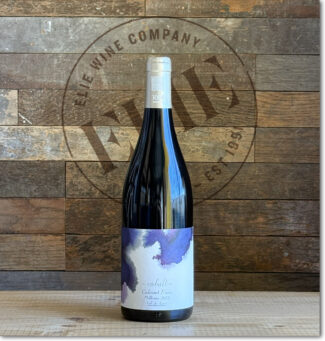 5 1006 Vins de Loire – Pauline Lair ‘Cobalt’, 2022 IGP Val-de-Loire – Chinon ‘Cabernet Franc’ ($41) Red
Pascal and Mathieu Avril of Domaine de Touraine in Chinon are a father and son team that grows Cab Franc on the historic clay-limestone terroirs of Marçay. After a manual harvest and short maceration, the grapes are destemmed and allowed spontaneous alcoholic and malolactic fermentation, then vinified in barrels and aged for 17 months. The wine represents a classic Chinon Cabernet Franc; silky and elegant with pronounced springtime berries on the nose and a palate that broadens out with baked cherry and white pepper.
Persan: Pineau d’Aunis (Touraine)
Pineau d’Aunis is the comeback kid: Once the favorite of King Charles III, exported as the first ‘claret’ to the English court in the 13th century, it fell out of favor to Cabernet Franc as a sickly big brother highly susceptible to bunch rot, irregular yields and overly sensitive to soil conditions. By 1973, only a few dozen acres remained. But local growers in Touraine feared the grape’s extinction and began to put redoubled effort not only in reviving the variety, but making it possible, using its drawbacks—late ripening, primarily—to their advantage. Since excellent reds could not be reliably produced from the grape in every vintage, off vintages ended up in rosé, where the slightly underripe grapes suits perfectly, making crisp, thirst quenching, and great with food pairing.
Land at bargain basement prices in the Garden of France? Touraine, bolstered by the presence of the SAFER group (which controls the sale of agricultural land) is so welcoming to newcomers that it seems an obvious destination for new artisanal winemakers looking to make their mark. This is not a new phenomenon; the AOP has been attracting a new waves of natural winemakers since the 1990s. In fact, so flexible has the region been for young iconoclasts leaning toward experimentation that a new dilemma has arisen: How to find the ideal style and substance to best showcase Touraine’s remarkable terroirs? Ancient varieties like Pineau d’Aunis have retained a foothold while standbys like Sauvignon Blanc are being shifting to supporting roles.
 6 1006 Vins de Loire – Pauline Lair ‘Persan’, 2023 IGP Val-de-Loire – Touraine (Coteaux du Vendômois) ‘Pineau d’Aunis’ ($29) Red
Domaine Brazilier traces his winegrowing family seven generations in the Coteaux du Vendômois. This plot of Pineau d’Aunis is located at Thorigné la Rochette where the soils are flinty clay soils on a bedrock of Turonian chalk. Grapes are hand-harvested, whole-cluster macerated and 30% direct pressed over 11 days. Spontaneous alcoholic and malolactic fermentation occur, then the wine is aged for nine months in concrete tanks. The wine is somewhat reminiscent of Pinot Noir in structure and weight, with moderate alcohol and tannins. The bright acidity also brings a welcome crispness. But the color is much darker than Pinot and the wine displays a characteristic spiciness behind a kirsch and confit undertow.
Indigo: Gamay Saint-Romain (Upper Loire)
Ever since Philippe de Bourgogne cast Gamay from the bosom of Burgundy six centuries ago, the variety has been derided and even despised outside its spiritual home, Beaujolais. Folks who were soured by the sweet and fruity Nouveau cult may bring that prejudice into Touraine, but that would be a mistake: Although once in the shadow of Anjou Gamay, select vignerons in Touraine have made monster strides with Gamay over the past couple decades and these wines now edge out the Gamays of Anjou in depth and complexity. They tend to be medium-bodied with a musky tone that share center stage with aromas of fern and capers intermingled with flinty minerals and plummy notes.
The Upper Loire—far to the south of the lower appellations of the region—is half-a-country away from the oceanic influences of the upper, maritime regions. Vineyards in the Upper Loire generally experience a continental climate. Côtes du Forez, is the exception, being the closest to the northern edge of the Rhône Valley and experiencing a mild Mediterranean influence around harvest time when the dry and warm Foehn wind arrives. Vines are strategically planted on east-facing slopes to maximize the sun and protect from the rain shadows of Puy de Dome, Puy de Sancy, Monts de la Madeleine and the Monts du Forez.
 7 1006 Vins de Loire – Pauline Lair ‘indigo’, 2023 VdF Loire (Côtes du Forez) ‘Gamay Saint-Romain’ ($29) Red
Jean-Marc Rondel of Domaine du Poyet in the Côtes du Forez is a co-op winegrower, dedicated to Gamay St-Romain grown on soils of granite sands on a base of volcanic rocks. The grapes are 100% destemmed and 95% age in concrete tank with 5% in barrels for eight months. Rich, ruby-red and exuberant, the wine is luscious with sour cherry, blueberry compote, raspberry, and a hint of vanilla framed by medium tannins and lively acidity.
RECENT ARRIVAL
Pouilly-Fumé: The Centre-Loire’s Other Sauvignon Blanc Star
When the red-headed step-child is a sun-kissed blonde, it may get more notice. Scarcely ten miles distant from AOP Sancerre, Pouilly-Fumé has always had its own starstruck fans who prefer the appellation’s meaty smokeshow to the more austere Sauvignon Blancs of Sancerre. Same grape, similar cool, continental climate and limestone-clay hills slashed with bands of clay-flint silex—although Pouilly-Fumé flavor profiles tend to emphasize the flintiness.
Wherein lies the difference? They may seem subtle, but are magnified when exploited by a winemaker’s know-how. First, elevation: Sancerre is grown on slopes while Pouilly-Fumé vines are grown on flatlands, so the harvest happens earlier as grapes reaches optimum ripeness sooner. Sancerre generally undergoes shorter lees-aging (usually 3-4 months) while Pouilly-Fumé remains on its fine lees for around 6-8 months, depending on vintage. Lees, the fine sediment of dead yeast cells on the bottom of the barrels, give extra texture and complexity to wine.

But the real reason that Fumé never really reached the cult-status of Sancerre may be mundane and down to sheer happenstance: Priced slightly lower, Sancerre became a bistro favorite and as such, it’s fame was secured. And it is also possible that entry-level consumers confused Pouilly-Fumé with similarly named, but Chardonnay-based, Pouilly-Fuissé from Mâcon.
In any case, now that we’ve tugged Fumé from the smoke and into the spotlight, enjoy the marvelous incarnations of Antoine Gouffier.
Domaine du Bouchot
Named ‘The Discovery of the Year’ by La Revue du Vin de France in ‘The Guide of the Best Wines of France 2022,’ we hope that Domaine du Bouchot becomes your discovery of the week.
When his roots in the Nièvre came calling, 30-year-old Antoine Gouffier took heed. In 2018, he took over Domaine du Bouchot’s 26 acre estate from the widely respected Rachel and Pascal Kerbiquet. Located on the southwestern side of the municipality of Saint-Andelain, the estate had developed a reputation for earth-friendly winemaking. Gouffier followed the Kerbiquet’s tradition of sulfur-free vinification with native yeasts. Certified organic by Demeter the following year, Gouffier has begun a conversion to biodynamics.
Domaine du Bouchot is a tiny property in St. Andelain in the southern part of Pouilly Fumé, close to the Loire River, and formerly run by Rachel and Pascal Kerbiquet who describe themselves as ‘organic activists.’

Antoine Gouffier, Domaine du Bouchot
In 1985, the couple planted two plots on old farm land that once specialized in wheat, but where the Kimmeridgian limestone soil was ideal for vines. Facing southwest, the two plots—the ‘Côte des Pres’ and ‘Fouinelles’ vineyards—are now 35 years old. In 1995, they planted two more parcels, ‘Vaurigny’ and ‘Papillons,’ on Portlandian soils.
In 2018, Antoine Gouffier purchased Domaine du Bouchot, and considers Rachel and Pascal Kerbiquet to be his mentors. Of course, Antoine’s knowledge of the area was already profound as his family—the Minets—own the neighboring vineyards. He believes in minimal intervention, using indigenous yeast and (primarily) stainless steel for fermentation. He is also experimenting with amphorae while producing three different Pouilly-Fumés, a Pouilly-sur-Loire made from 100% Chasselas and a VdF called Orange, a 100% Sauvignon vinified on the skin during five months.

Domaine du Bouchot, Five-Bottle All-White Sampler Package $199 (Add Magnum $299)
Antoine Gouffier has set out on a biodynamic course to showcase orange wine made from Sauvignon Blanc and to revitalize interest in Pouilly-Fumé and Loire’s somewhat less ubiquitous grape variety, Chasselas. This package shows just that.
 1 Domaine du Bouchot ‘Orange’, 2022 VdF Loire-Centre ($45) Orange
* Heralded by many producers as one of the best vintages of the decade, 2022 was a warm and sunny year throughout the Loire that resulted in perfectly healthy fruit with excellent balance.
‘Orange’ wine, of course, refers to its color, not its place of origin. It’s an ancient technique as well as a current fad—white wine produced from white grapes (in this case Sauvignon Blanc) that have been allowed prolonged skin and stem contact, thereby extracting the characteristic amber tint and a unique flavor profile, which often involves slight oxidation. Bouchot’s example shows nutty, smoky currant, lime zest and briary nettle—its aromatic pungency coincides with a silken-textured, very pure palate.
 2 Domaine du Bouchot ‘Terres Blanches’, 2023 Pouilly-Fumé ($34) White
* 2023 saw variable weather conditions in the Loire encompassing both rain and heatwaves, and producers worked hard to hold back mildew and acid rot; it was a challenging vintage.
The first organic wine from the appellation, the grapes clusters saw full sunlight when possible by leaf removal. The name pays homage to the white Kimmeridgian limestone that lends a beautiful minerality to this wine. Harvested at full ripeness and fermented on indigenous yeasts, the wine has no added sulfites and is bottled with only light filtration. It shows citrus blossom, supple peach and crushed seashells and a long, saline, fresh lemon finish.
 3 Domaine du Bouchot ‘Mon Village’, 2022 Pouilly-sur-Loire ($38) White
As a Pouilly-sur-Loire, this wine is not Sauvignon Blanc, but 100% Chasselas. The harvest is done by hand, the yeasts are indigenous and the wine is made with as little pumping as possible. Aged on its fine lees in temperature-controlled stainless-steel tanks, the wine is bottled in the spring after a very light filtration. It is light, tidy and focused showing quince, apples, apple peel and carambola, while hints of lime blossom, chamomile and dried herbs buzz in the background.
 4 Domaine du Bouchot ‘Caillottes’, 2022 Pouilly-Fumé ($38) White
‘Caillottes’ refers to shallow, rock-filled soils capable of creating pronounced aromatics; wines from vineyards with caillottes are often the first wines ready to drink, and may have less potential for bottle aging. This one shows a fresh nose of grapefruit sorbet and green grass with hints of blossoms and minerals. A silken, almost creamy mouth-feel counters the vibrant acidity.
 5 Domaine du Bouchot ‘MCMLV’, 2022 Pouilly-Fumé ($44) White
MCMLV refers to 1955, the year this acre of Sauvignon vines were planted. The southeast facing vineyard is situated on a slope of well-drained marl which yield concentration. The grapes are harvested by hand and vinified after two days of skin-contact followed by 18 months of maturation, half in wooden cask and half in stainless steel tank. Bottled at the estate during a waning moon. The wine shows floral and fresh green herb notes behind the ripe gooseberry and citrus nose leading to a complex, dense and long finish.
 Domaine du Bouchot ‘MCMLV’, 2022 Pouilly-Fumé ($105) White MAGNUM (1.5 Liter)
A magnum-sized version of the above wine.
Notebook …
Tasting the Differences: Sancerre is Like Spring, Pouilly-Fumé Like Summer
What a difference a river bank makes—or does it? Although situated on opposite sides of the same river (Sancerre on the left bank of the Loire and Pouilly-Fumé on the right), enough distinctions exist in their styles to have earned each its own AOP— white Sancerre in 1936 and Pouilly-Fumé in 1937. But it is not always easy to tell them apart in blind tastings—both are dry white wines made from Sauvignon Blanc from appellations only ten miles apart, and both express linear purity and ability to age with grace. Although the soils are slightly different, with more flint in Fumé and more limestone in Sancerre, the characteristic gun smoke that gives Fumé its name also appears with some regularity in Sancerre. The primary differences may be the intent of the winemaker.
Sancerre generally is leaner of body preserves the vibrant acidity of the grape alongside, with refreshing and crisp lime flavors alongside notes of green grass. In short, it has a profile one might associate with spring.
The flinty character of silex soil allows for an accumulation of heat, leading to early ripening. Pouilly-Fumé tends to be a rounder wine, richer in body and displaying flavors that toward more stone fruits and ripe apples, along with the classic smoky notes. It is a wine more easily identified with the summer.

- - -
Posted on 2025.05.01 in Coteaux-du-Loir, Pouilly-Fumé, Cour-Cheverny, Vouvray, Touraine Azay-le-Rideau, Montlouis-sur-Loire, Bourgueil, Chinon, Menetou-Salon, Saint-Nicolas-de-Bourgueil, Muscadet, Sancerre, Savennières, Saumur-Champigny, Coteaux-du-Layon, Touraine, Quarts-de-Chaume, Rosé de Loire, Coteaux-du-Loir, Anjou, Cheverny, France, Saturday Sips Wines, Wine-Aid Packages, Loire | Read more...
Raising the Stakes Catalunya’s Young Producers Turn to Indigenous Varieties and Single-Vineyard Expressions to Reveal the Soul of the Region in Spain’s Northeast + In-Store, All-Day Saturday Tasting
Homage to Catalonia: Join Us for Saturday Sips to Celebrate “La Diada de Sant Jordi’
‘La Diada de Sant Jordi’ falls on April 23 in the Catalan holiday calendar, a day of books and roses, and it is a great reason to resume our all-day, in-store Saturday Sips. Among the themes we will be exploring in weeks to come is ‘vinecology’—the agricultural and techno-fixes that will alter the world of wine as profoundly as global climate change is altering traditional (and non-traditional) wine growing areas.
The New Catalunya
To a wine novice, France may seem to be a bottomless morass of rules and regulations, appellations and multi-syllabic, hyphenated names.
Spain suffers from the opposite misinterpretation: It is often oversimplified.
When the conversation turns to Spanish wine, many people are lost after the word Rioja is mentioned. They may have a surface familiarity with Cava based primarily on price, but may not be aware that Freixenet (the top-selling brand) is even Spanish.
The truth is, heavy, overly-oaked Riojas and inexpensive Cava have long been efficiently sellable standards that animated the American market, and even Spanish consumers may not be familiar with the spectacular array of styles and varieties that make their nation every bit the equal of the world’s other wine producing countries.
Not only that, but Spain produces more wine than any other country after Italy.
The Spanish wine renaissance of recent decades may be playing out best in Catalunya—the ‘land of castles’—a fascinating autonomous community in the northeast corner of the Iberian Peninsula. For many years, like much of Europe, young people moved away from an agricultural life in pursuit of cosmopolitan prospects.

Recently, however, the flight has reversed course and young people intent on creating artisan wines are finding new opportunities in an ancient culture. They are moving away from the trend-driven varieties that gained a foothold during the 1990s (Merlot, Cabernet and Syrah) and many are focused on an array of local grapes like Xarel·lo, Macabeu, Garnatxa Blanca and Parellada along with indigenous reds like Garnatxa, Monastrell and Trepat. Styles are also moving away from heavy wood-soaked Rioja and toward freshness, acidity and finer structure. And a growing number of smaller Spanish producers have rejected industrial farming in favor of organic and biodynamic practices in hopes of a sustainable future where this time, their own children may decide to stick around.
(Climate) Change is Afoot in Catalunya
With apologies to Professor Higgins, the rain in Spain is not only dodging the plains, it’s playing havoc up and down the entire Mediterranean coast, extending from Spain to North Africa and Sicily as well. Last year, this persistent drought ranked among the ten most costly climate disasters in the world, and in real time, Catalunya is undergoing the worst drought in a century, with water reserves at 16% of capacity. Hotels are filling swimming pools with seawater and those whose livelihoods are tied to agriculture are wondering what the intensity of this summer will bring; last year, fruit growers threw out entire crops in order to use their diminishing water supplies to save their trees. Even traditionally dry-farmed industries like olive production and wine growing are crippled by these severe heat waves, and farmers who irrigate have it even worse, since by law, they are the first ones to relinquish water rights.
Adaptation to the climate crisis is happening throughout Catalunya; there is no other choice. But to date, much of it is improvised and tends to take place only when the worst has already happened. Like the old Inuit following the caribou, modern winemakers are being forced to follow the thermometer, and this has led to an exploration of vineyard space in regions that were once too cold to produce reliable harvests.
Counter or Adapt
With equal apologies to Jim Morrison and The Doors: Girl, when your vineyards becomes as hot as a funeral pyre, take it higher. The most delicious irony in changing weather patterns may be that regions once considered too cold for vines are warming to the point that they can produce quality wines. In Catalunya, vineyards at the foothills of the Pyrenees are being planted at altitudes up to 4,000 feet. “Twenty-five years ago, it would have been impossible,” says Miguel Torres Maczassek of Familia Torres. “At higher elevations, peak temperatures are not necessarily much cooler, but intense heat lasts for shorter periods and nighttime temperatures are colder than at lower altitudes. This increased diurnal shift (the temperature swing over the course of a day) helps grapes to ripen at a more even pace, over a longer period of time, than where temperatures remain relatively stable.”

But pushing altitudes also creates challenges: Soils, particularly on slopes, are generally poorer, water is scarcer and unexpected weather events like frosts and hailstorms are always a threat. Whereas this may ultimately result in better wine overall, the challenges for winemakers are prodigious. In the northeast of Spain, including coastal vineyards, the response has been two-fold: Adapt current vineyards to the ‘new normal’ by replanting to more heat-tolerant varieties, or eke out space at higher elevations to take advantage of the plus-side of a global negative.
The Vigneron’s Dilemma
It’s no secret that grape vines have been known to produce the best wines where the challenges are greatest. Vines placed under natural stress, struggling to find water and nutrients, tend to produce fruit that is more vibrant in flavor and balanced in acid with smoother tannins. Sites that are flat, well-irrigated and sunny have long been considered ‘no-brainer terroirs’ that overproduce and under-perform. This is where bulk grocery-store wine generally originates.
When challenged by drought, producers of this industrial-style wine reach into pockets deeper than the aquifers, and they will survive. The small winegrower, faced with mounting losses and plummeting harvests, are like the vines themselves: Sooner or later, they simply wither away.
And it is not just dryness. In Penedès, 2020 brought two times the rain of a normal year, which was followed by three years of drought. The unpredictable nature of climate change takes an emotional toll on the winemakers as well as a financial one. The dilemma they face is often less about a desire to change and more about the clock: It is well-established that vineyards stationed at higher altitudes are able to retain more water and produce higher-quality grapes, and that some varieties are more drought-resistant than others. But starting over in new regions takes time, and as climatic conditions worsen, sadly, time is a resource that many wineries simply do not have.
Back to Roots: Indigenous Grapes
Ironically, most Americans are very familiar with French grape varieties even though they rarely appear on French wine labels. California is largely responsible for this phenomenon, an appellation that in its youth was less sold on terroir and more on identifying and exploiting popular flavors. That has changed, of course, but variety almost always figures prominently on California labels, even those that also tout a given patch of land.
Following this trend as a means of increasing market share, Spain tore out many thousands of acres of indigenous grapes in favor of flavor-of-the-month. Graced by an ideal climate under which many these varieties thrived, a move back to the roots (literally) of winemaking has prompted the revival of those grapes that grew in Spain initially. To a neophyte, these names may look like the typist had his finger on the wrong row of keys, but each of them—Tinta del Pais, Ull de Llebre, Cencibel, Pedro Ximénez et al.—have their own unique profile and create wines unparalleled elsewhere in the world.
Penedès Wine: Uphill, Wealth of Indigenous Grape Riches
About an hour south of Barcelona, nestled splendidly between the mountains and the sea, Penedès is the most active growing region in Catalunya. The area contains some of the oldest wine-growing appellations in Europe and produces consistently and reliably thanks to a variety of terroirs. The region is best known for Cava, Spain’s answer to Méthode Champenoise sparkling wine, generally made from the trio of indigenous grapes: Macabeu, Parellada, and Xarel·lo, occasionally enhanced with Chardonnay, Pinot Noir, Garnatxa, and Monastrell. All of these are permitted in various concentrations for Cava blends.
Roughly divided into three subzones, the mountainous Alt-Penedès produces the highest quality wine, followed by Baix Penedès in the low-lying coastal areas, and Penedès Central, which is responsible for most of the region’s bulk production.

Although the area has been making wine since the days of the Phoenicians, Penedès’ modern era began in 1960 when its DO designation was granted, and—largely through the efforts of Miguel Torres—the region as a whole began to upgrade production methods, including temperature-controlled fermentation in stainless steel tanks and experimentation with non-indigenous grape varieties such as Merlot and Cabernet Sauvignon. Since then, although quality has skyrocketed among all the wines of Penedès, the region remains known primarily for its sparkling wines, making the highly regarded, oak-aged reds and crisp, vibrant whites (especially those made with the Cava standby Xarel·lo) part of a remarkable journey of discovery.
Más de la Pansa
Wine is a Culture.
“For me, wine is culture,” says Imma Soler. “Wine represents the territory, its people and also its way of thinking. It also tells us about traditions, respect and love for the land. It tells us stories and gives us the possibility to discover the gastronomy of each area. And, above all, the dignity and respect for the farmer. Without a doubt: Wine is passion and a way of life.”
Soler—whose wines radiate the same energy as her ‘solar’ name—started Mas de la Pansa in 2016, intent on championing grapes native to Catalunya, tending to her family’s old-vine Macabeu and Parellada in Alt Camp, and especially, the Trepat vines in neighboring Conca de Barberà.

Imma Soler, Mas de la Pansa
“Trepat is a red-wine grape used most conspicuously in the sparkling rosado Cavas, but may appear in blends along with Garnacha and Tempranillo,” Imma explains. She goes on to share an interesting story about the horse depicted on the label of her Trepat bottling: “This is a tribute to Vermell, the horse that saved the life of my father when he was only three years old. My grandfather was working in the field when Vermell stopped in his tracks and refused to continue the row. He wouldn’t do it because at his feet he saw the little boy, my father.”
As seen through this poignant label, Mas de la Pansa is not just a wine project; it is a way for Imma to connect her roots while honoring the family legacy and to contribute to the preservation of the landscape and wine culture of the Tarragona regions. Each bottle is a story of love for the land, work well done and the passion for an authentic and uncompromising wine.
 Mas de la Pansa ‘Macabeu’, 2019 Catalunya ($43) White
Made entirely from Macabeu grown in Vila-Rodona, Alt Camp, harvested September 19, 2019 and bottled April 28, 2020. The vineyard was planted in 1960 on a northern slope on clay-calcic soils with pebbles on the surface. Goblet training of the old vines make the yields made smaller by dry conditions throughout the growing season. The grapes macerated and fermented for 15 days in a stainless-steel tank at low temperature; there was no pressing, but rather, the maceration was drained and the fermentation was finished without skin contact, whereupon the wine rested on the lees until bottling. The wine shows notes of creamy custard, apple, pear crumble and hawthorn blossom with a rich, waxy note.
745 bottles made.
 Mas de la Pansa ‘Parellada’, 2019 Catalunya ($43) White
Parellada is a variety cultivated throughout Penedès, where, in exceptional locations, the white-skinned grapes pick up a distinctive pinkish hue. Soler drew from a vineyard planted in 1956, harvesting on October 11, 2019. The table-sorted bunches were destemmed, crushed, and allowed to macerate for five days in stainless steel tanks then pressed. After decanting the resulting must, fermentation took place stainless steel and new, fine-grained, lightly toasted French oak barrels. The wine remained on the lees until bottling on April 28, 2020; the wine shows candied stone fruit, dried herbs and nice floral overtones.
1,123 bottles made.
 Mas de la Pansa ‘Trepat’, 2020 Conca de Barberà ($53) Red
The grapes were harvested, table-sorted and allowed to macerate and ferment in stainless steel for 29 days; a daily pigeage was given in order to improve extraction. After a gentle pressing, the wine was transferred into new fine-grain, lightly toasted French oak barrels, where matured until bottling. Light and elegant, the wine shows delicate notes of strawberry and rose petal.
384 bottles made.
L’Enclòs de Peralba
Single Vineyards. Local Varieties.
The terroir-centered approach to winemaking that has animated Burgundian vignerons for centuries has taken route in Spain, where it finds fertile ground, both in the soil and in the souls of the practitioners. In the Penedès, this is exemplified in the work of cousins Leo and Roc Gramona, who are eager to explore the flavors native to the Penedès landscapes prior to the market dominance of Cava. When Leo—who had studied engineering and Roc, who had worked in his family’s 150-year-old winery Gramona—decided to enter the winemaking fray, they wanted to follow their own course. Their terroir-driven passion is reflected in the name L’Enclòs de Peralba—‘enclos’ means ‘walled vineyard’ in Catalan and ‘peralba’ refers to the calcareous rocks found on elevated areas in Sant Sadurní, whose vineyards were the seed of the project.

Leo and Roc Gramona, L’Enclòs de Peralba
Leo explains, “We had our own ideas at Gramona, but with the winery has so much history and trajectory, it is not easy to change. So we started scouting for some of the vineyards we thought had potential for still wine.”
Roc adds, “L’Enclòs de Peralba gives us the freedom to experiment outside the family business, and focus on single parcels of local varieties. Our is aim to create wines that truly showcase the potential of Penedès micro-terroirs by practicing old pruning styles, classifying vineyards, and working with local grape varieties. We are trying to share a philosophy, a culture, and put it in a bottle. This is what Champagne has done, and it’s what we want to do with Penedès landscapes and culture.”
 L’Enclòs de Peralba ‘Vi Fi de Masia’, 2021 Catalunya Penedès ‘Sant Sadurní d’Anoia’ White ($39) White
A rare dynamic blend of Malvasía de Sitges from Cal Manuel and Garnatxa Blanca from Les Camades grown in clay-limestone soils. The grapes are hand-harvested, with the Garnatxa allowed eight hours of pre-fermentation maceration, followed by natural yeast fermentation in concrete eggs. The wine then spends eight months in these eggs, and is only blended at bottling. The Malvasia brings its floral and aniseed notes and bracing acidity to compliment the naturally rich volume and intensity of the Garnatxa Blanca.
Only 100 cases made.
 L’Enclòs de Peralba ‘El Tòfol’, 2021 Catalunya Penedès ‘Sant Sadurní d’Anoia’ White ($47) White
100% Macabeu from the three-acre El Tòfol parcel planted in 1969 and now owned by Leo & Roc Gramona. The grapes are hand-harvested, crushed and macerated for several hours before pressing, followed by natural yeast fermentation in tank, then transferred to 300L French oak barrel to finish fermentation. The wine is beautifully nuanced with citrus and chalk, showing brilliant acidity and aromatics reminiscent of peach and orange peel and a nod to minerality at the finish.
Only 2,500 bottles produced.
 L’Enclòs de Peralba ‘Pistoles’, 2021 Catalunya Penedès Orange ($47) Orange (One Liter)
Orange wine, of course, is an amber-tinted beverage made from white wine grapes that undergo extended skin contact and raised in amphorae. During this process—besides gaining color—the must also acquires tannin and richness. ‘Pistoles’ is a blend of Xarel·lo Vermell and Malvasia from Sitges. It features bitter orange peel and lemongrass, complemented by clover honey and dried apricots.
1,006 bottles filled.
 L’Enclòs de Peralba ‘Vi Fi de Masia’, 2020 Catalunya Penedès’ Sant Sadurní d’Anoia’ Red ($39) Red
The red version of Vi Fi de Masia is a blend of 80% Garnatxa Negra from Gramona’s Mas Escorpí vineyard with 20% Cariñena from a five-acre parcel of vines farmed by Isabel Vidal on a rocky clay-limestone soil. The grapes are hand-harvested, destemmed and undergo a seven-day pre-fermentation maceration followed by natural yeast fermentation in three 500L French oak barrels (1 new) and two 300L French oak barrels (1 new) with twice daily pigeage. The wine displays crunchy, fresh red fruit, cherries, strawberry and red plum with lifted floral notes and a whisper of vanilla on the finish.
 L’Enclòs de Peralba ‘Els Escorpins’, 2021 Catalunya Penedès ‘Sant Sadurní d’Anoia’ Red ($69) Red
Els Escorpins is sourced from a lot of twenty-year old Garnatxa Negra enlivened with 10% Garnatxa Blanca planted in the Gramona’s Mas Escorpí vineyard in Sant Sadurní d’Anoia. The Garnatxa Negra from Mas Escorpí is noted, in particular, for its subtle and delicate red-fruit character, but it is rendered more vivid and vital with the small addition of Garnatxa Blanca.
1,800 bottles filled.
Alemany i Corrió
Tailor-Made with Precision in Field and Cellar.
There are matches made in Heaven and those made in vineyards; credit the latter to the life partnership of Irene Alemany and Laurent Corrio, whose small-batch, low-intervention wines are proving that the Alt-Penedès is among the most exciting places to be making wine today. Great wine is a technical beast, but without the intensity of passion, it loses much of its savor: “Our wine is as soft as a gentle kiss, but one where you end by biting your partner’s lip,” says Irene.
The couple met at the University of Burgundy in Dijon, then apprenticed together in vineyards in France and California. But their future was written in chalk and loam following a visit to Irene’s parents in Lavern in the Penedès; that was when Irene’s father suggested that they consider using the family vines to start their own operation. This treasure trove encompassed several varieties of grapes between 25 and 60 years old. They leapt at the opportunity—their first harvest was in 1999 and their first bottling in 2002. From the beginning, they followed their French training, remaking the classics in their own way, keeping the process as natural as possible while seeking to reflect the expression of the varieties and the character of the terroir to the maximum extent.

Irene Alemany, Alemany i Corrió
In the process, they are credited with producing the first ‘garage’ wines of New Penedès. Their ‘Vi de Garatge’ series may be thought of as ‘tailor-made’ wines relying on precision in both field and cellar.
“What we want to accomplish,” says Irene, “is that when people taste our wines there is something in the soul of the wine that talks to them and will make them remember.”
 Alemany i Corrió ‘Principia Mathematica’, 2023 Vi de Garatge ‘Penedès’ ($30) White
Originating with low-yields from a seven-acre plot where the Xarel·lo vines are over fifty years old, Principia Mathematica was fermented in French oak (10% new) and aged for ten months in foudres/stainless steel. The wine shows a Meursault-esque butteriness beneath crisp white stone fruit, notably apricot, defined by a light toasted-almond undertow.
8,400 bottles made.
 Alemany i Corrió ‘Cargol Treu Vi’, 2022 Vi de Garatge ‘Penedès’ ($31) White
Another pure Xarel·lo beauty; Cargol Treu Vi comes from 75-year-old vines planted on chalky soil, then vinified on wild yeast in 300-liter French oak barrels, 25% new. The wine shows spring flowers, stone fruit and lemon zest behind hints of smoke with a long, salt-tinged finish.
2,100 bottles produced.
 Alemany i Corrió “Pas Curtei’, 2022 Vi de Garatge ‘Penedès’ ($28) Red
New meets old in this 20% Merlot, 60% Carinyena, 20% Cabernet Sauvignon blend from vines between 15 and 70 years old. It fermented destemmed after a five-day cold soak and matured in French oak barrels and a 1,000-liter oak foudre for 14 to 16 months. It shows rose and exotic spice on the nose, with a rich, ripe palate of cherry, blackberry and cassis intermixed with graphite, peat and light smoke.
833 cases produced.
 Alemany i Corrió ‘Sot Lefriec’, 2018 Vi de Garatge ‘Penedès’ ($87) Red
Sot Lefrìec is Alemany i Corrio’s flagship red, made from a hand-sorted blend of 50% Carinyena, 30% Merlot, 20% Cabernet Sauvignon from their oldest vineyards. All grapes are manually harvested and placed in small boxes after vineyard pre-sort. At winery, they are destemmed and undergo cold-soak maceration for more than a month. Malo fermentation takes place in new and single-use oak barrels where the wines rests for 22 months. Mature, robust and intense, it displays of ripe black current, forest floor, mushroom and elegant notes of leather, with a spine of freshness provided by the Carinyena.
125 cases produced.
Uvala (Celler VallDolina)
Sensitive Expression of the Landscape
Based at Can Tutusaus, in the center of the remote village of Olesa de Bonesvalls in the Garraf Natural Park, VallDolina has become a pet project of husband and wife Raimon and Anna Badell, whose award-winning Cava is proudly featured on the shelves here at Elie’s. As a team, Raimon and Anna have replanted ancient terraces in a rocky landscape otherwise dominated by pine trees interspersed with glimpses of the Mediterranean Sea. The oldest vines at VallDolina were planted by Raimon’s father during a last-century’s craze for international grape varieties, and the Merlot remains an outstanding Spanish example of this variety.
The estate and its surrounding pine groves of has stood since 1348, but it was only in 1729 that the country house was rebuilt within the village of Olesa, where the cellar is presently situated. The property comprises several acres of olive groves—resuscitated after years of neglect—and about thirty acres of vines. The rest is a maze of pine and oak forests, dwarf shrubs, brooms, fennel, rosemary, thyme, lavender and dwarf palms.

Raimon Badell
In 1987, seduced by this mysterious land, Joan Badell bottled his first wines and planted his first trained vines. In 1999, his son Raimon, who was then studying oenology, became a close collaborator and opted to turn the estate toward ecological and biodynamical agriculture. In 2006, oenologist Ferran Gil García joined the VallDolina Viticulturists and Winemakers of Can Tutusaus project, and began tending the vineyards. Their joint efforts has made possible the production of a white wine, a rosé, three outstanding reds and three different types of Cava.
“We only work with grapes picked from this estate,” says Raimon, “where vines are situated between 800 and 1500 feet above sea level, bordering the Natural Park of the Massif of Garraf. The vineyards grow on hills with calcareous-clay soil and produce where the climate is distinctly Mediterranean, strongly influenced by the vicinity of the sea.”
Anna adds, “VallDolina identifies with the territory with the aim that our wines offer a sensitive expression of the landscape, with the idea of determining the different tasks following the lunar calendar as our grandparents did and at the same time using agricultural concepts the most environmentally friendly.”
 Uvala ‘Brisat – Xarel·lo’, 2022 Catalunya ‘Natural’ ($33) Orange
‘Brisa’ is a Catalan word meaning ‘pomace’ and ‘Brisat’ refers to the prolonged skin contact this wine underwent through the fermentation process. The wine shows straw yellow with pink highlights; the aroma is gorgeous, filled with citrus, peach, flowers and herbs that follow through the delicate fruity mouth and a pleasant tannins in a long finish.
130 cases produced.
 Uvala ‘Marselan’, 2021 Catalunya ‘Natural’ ($34) Red
Marselan is a red wine grape that is a cross between Cabernet Sauvignon and Grenache, first bred in 1961 by Paul Truel near the French town of Marseilles. The first Spanish Marselan grapes were planted in 1990 and have made a little headway in Catalunya. VallDolina’s version is softly kissed with aromas of bramble fruits (raspberry and blackberry), cassis and ripe cherry accompanied by spicy notes of cinnamon and clove.
130 cases produced.
The Alt Penedès Region
La Vall del Riu Anoia
One of the most celebrated growing regions, the Anoia river valley in the Penedès, has long been seen as having the stuff to create truly great Cava; the soils, formed by sandstone and clay, sit on calcareous bedrock created from marine fossils. This allows for a water reserve that helps vines through dry spells. The river basin, the ‘Conca del Riu Anoia’ produces sparkling wines with a marked mineral and saline character and a very fine mesh of bubbles. Within this small region (surrounding the valley between the Anoia and Foix Rivers in eastern Penedès), new-wave Cava makers have discovered that the individual character of local villages and vineyards are capable of expressing these characteristics in a unique and identifiable way. Combined with tightened regulations—among which are the use of indigenous varieties only, extended lees time and restricted vineyard yields—these new sparkling wines are ideal not only for celebrating landmark dates on your calendar, but are their own celebration of youthful passion and commitment.
Can Sumoi
Returning to Nature
Meet Pepe Raventós and Francesc Escala: A pair of childhood buddies who are living the dream—their own dream, of course, in the backwoods of Catalunya. Having found Can Sumoi (an agricultural farm dating to 1645) in the mountains of the Baix Penedès where they realized their vision and dreams in the remarkable landscape and passion for natural wines.
They purchased the property from an ailing farmer, Josep Mateu, whom they have allowed to live on in the farmhouse where he was born. Having grown up in a culture where hard work was a condition of survival, Mateu is able to appreciate the vigor of the young men to whom the torch has been passed.
The estate sprawls across a thousand acres, of which fewer than fifty are vineyards, planted to Parellada, Xarel·lo and Sumoll. Reaching elevations of nearly two thousand feet, orientation of the vines depends on variety; Parellada, for example, prefers eastern and western exposures. The sea, which can be seen in the east, has left its influence her, and the terroir is filled with marine fossils that are over a million years old. So clear is the atmosphere at this elevation that, on days without wind, you can see Mallorca and the Ebro Delta.

Pepe Raventós, Can Sumoi
Almost 800 acres of the farm is woodland, and as Josep Mateu looks back at his life, he says, “Now that the forest has been gaining ground from the vineyard, between the trunks of the holm oaks you can see the white pines and tall oak trees, the old dry stone walls we built many years ago to facilitate the cultivation of the vines in terraces.”
This return to nature is the cornerstone of Pepe Raventós’ approach to vine cultivation and the natural wines of Raventós i Blanc. He says, “I’m not a great specialist in biodynamics, but I observe the countryside and I see how it responds. If we apply its methodology and in a few years I see that the earth is more alive, more balanced and we are getting better wines, I continue to apply it … of course.”
 Can Sumoi ‘Xarel·lo’, 2023 Penedès ‘Natural’ ($26) White
A striking still-wine example of this unusual variety, generally used in sparkling wine, from vineyards located at 1800 feet on clay-calcareous soils. After the manual harvest, the grapes are destemmed and gently pressed in an inert atmosphere. Fermentation is carried out in stainless steel on yeasts native to the vineyard. Once the alcoholic fermentation has ended, the wine goes through the malolactic fermentation spontaneously, then rests on lees for 3 months, with bâtonnage twice a week. It is bottled without stabilizing or filtering and shows Xarel-lo’s characteristic peach, crisp green apple and toasted almond notes.
 Can Sumoi ‘La Rosa – Sumoll + Xarel·lo’, 2023 Penedès ‘Natural’ ($24) Rosé
An aromatic rosé made from high-altitude Xarel·lo and Sumoll, destemmed, lightly crushed and briefly macerated, with fermentation carried out in stainless steel tanks on indigenous yeasts. A distinct and elegant expression of Mediterranean character with wild strawberry and citrus notes behind a springtime floral bouquet.
 Can Sumoi ‘Sumoll + Garnatxa’, 2022 Penedès ‘Natural’ ($29) Red
Garnatxa by any other name would smell as sweet, and when blended with Sumoll, it offers an intense nose of wild fruits and Mediterranean forest herbs. Made from an equal combination of Sumoll and Grenache, Can Sumoi’s ‘Sumoll Garnatxa’ first sorts grapes harvested from biodynamic vineyards filled with rocky, clay and limestone soils sitting at 2000 feet elevation, one of Penedès’ highest points. The grapes were harvested during September, destemmed and hand (or rather, foot) pressed in an inert atmosphere, then spontaneously fermented in stainless steel tanks for 15 days, then kept in the tanks for a full year, after which it was bottled and aged for a further 6 months without added sulfites before hitting the market. It is light and elegant with the crisp acidity inherent in mountain wines.
Cellers Carol Vallès
Past and Future. Tradition and Innovation.
The family affair that reenforces Cellers Carol Vallès began more than a century ago when Joan Carol’s grandfather bought Can Parellada, an old farmhouse in Subirats in the heart of Penedès. With his partner Teresa Vallès, Joan Carol founded Carol Vallès in 1996 and began to sell the cavas that his family had made with such dedication for years.
“’Parellada and Faura’ bears the surnames of my mother,” Joan say. “’Guillem Carol’ is named in honor of my son. Past and future. Tradition and innovation.”
Teresa adds, “It’s our strong commitment to the traditional method plus unique blends and the long aging that, little by little, have allowed our cellar to earn its reputation.”

Guillem Carol, Cellers Carol Vallès
The estate surrounding Can Parellada covers a relatively small area of 32 acres located about eight hundred feet above sea level. Vineyards grow on calcareous clay soils and are predominately Xarel·lo and Macabeu between 45 years and 70 years old. Smaller plots contain Chardonnay and Parellada.
Currently, son Guillem and his team have taken the Carol Vallès helm, and works with the same concern, passion and values that saw the birth of the project. He says, “I have a strong commitment to the environment, the long aged cavas, a strong commitment to sustainability and wine tourism—the past, as it blends seamlessly into the future.”
 Cellers Carol Vallès ‘Parellada i Faura’ 2021 Cava Reserva Brut-Nature ($22) Sparkling
30% Parellada, 30% Xarel·lo and 40% Macabeu aged on lees for over two years. A fruity and lively cava reflecting prominent notes of peach and lemon peel with apple, butter and peach. 10,000 bottles were filled. Disgorged July, 2024.
Celler Casajou
The Vineyard as the Protagonist.
A common theme found in the stories of young winemakers in Penedès is a return to their roots. Laia Esmel, along with her partner Jaume Vilaseca, did exactly that: “For us it is vital to be connected to the rural essence and nature to make vibrant wines,” Laia says. “That is why, after years of gathering experience traveling and meeting exceptional personalities, we decided to return to the place of our childhood, Sant Jaume Sesoliveres, a rural town in the valley of the Anoia River between Montserrat and the Mediterranean Sea.”
The move came in 2020, so they are still new to the game. “We consider the vineyard to be the protagonist in our adventure,” Jaume shares. “Many times in nature, things seem to be out of order, without explanations and without clear answers. Accepting this reality is the first step to understanding our terroir and working in harmony with it. We strive to produce vintage wines that are an authentic expression of the soils and climate we have. In doing so, we can celebrate the elegance and complexity of nature, even in its apparent lack of order.”

Laia Esmel, Celler Casajou
The winery is split into two projects: Casajou is focused on making precise, elegant Champagne-method sparkling wines. And with their friend Oriol, they are making ‘pétillant naturel’ wines from newly-planted vines under the label Celler Dumenge. Pét-nats are made in a manner that predates the so-called traditional method used in Cava; rather than inducing a second fermentation in the bottle to create the bubbles, as Champagne producers do, makers of pét-nat simply bottle the wine before the initial fermentation has ended.
A Zen-like respect for the natural and almost childlike fascination with viticulture is the thread that runs through Laia and Jaume’s conversations. Laia says, “We believe in giving the grapes all the time they need to become a free wine, and we work at all times to guide them until they are bottled. Pruning, work in the vineyard, soil regeneration, harvest day or spontaneous fermentation; we are aware of every step of the process of making our sparkling wines, interfering only in what is essential to help nature, and not to hinder it.”
Jaume adds, “We consider that bottled wine is the final result of a careful and laborious process. We make sure to give our best at every stage of its preparation. However, once in the bottle, the evolution process continues. We know this doesn’t mean it’s finished, because like a person, wine keeps changing over time. It will go through different phases and have its ups and downs, but despite everything, it will always shine with vitality and complexity. As sparkling wine makers, we pride ourselves on having transported a landscape in a glass.”
 Celler Casajou ‘Vinya la Caldereta’, 2020 La Vall del Riu Anoia ‘Sant Sadurní d’Anoia’ Brut-Nature ($39)
A limited release of just 5,100 bottles, Casajou’s Vinya la Caldereta originates in a four-acre vineyard located on a small south-facing hillside in Sant Sadurní d’Anoia. Dominated by sandy-calcareous soils, it was planted in 1963 to Xarel·lo. This wine is 95% old vine Xarel·lo and 5% Macabeu. Following a manual harvest that began on August 21, 2020, the grapes were pressed and the ‘flower must’ alone was used, representing only 40% of the yield. ‘Flower must’ is a Cava regulation that refers to the first part of the grape pressing process; it is considered the highest quality must, since the Cava Designation of Origin limits the amount of must that can be obtained from each kilogram of grapes. For Laia and Jaume, the remaining must goes into the elaboration of Els Talls. In Caldereta, the two varieties co-ferment in stainless steel tanks with indigenous yeasts and undergo several hours of maceration with the skins. In the traditional method, the wine undergoes a second fermentation in the bottle and rests on its lees until disgorgement. It shows bright orchard fruit complemented by floral undertones and hints of Mediterranean spice.
 Celler Casajou ‘Vinya la Teixonera’, 2021 La Vall del Riu Anoia ‘Torrelavit’ Rosé Brut-Nature ($39)
La Teixonera vineyard is named after a small river near the town of Torrelavit, which itself is a portmanteau of Torre and Lavit—two nearby communes in Alt Penedès that joined forces. The vineyard was planted with Garnatxa Negra, and the current vines are ten years old. This wine, made from 100% Garnatxa Negra, is fragrant with notes of raspberries, earth, and a hint of brine. A total of 1,140 bottles were filled.
 Celler Casajou ‘Els Talls’, 2021 La Vall del Riu Anoia Brut-Nature ($36)
Els Talls represents a co-fermentation of Xarel·lo (80%) from La Caldereta and Garnatxa Negra (20%) from La Teixonera following a year’s maturation. The clay soils of La Teixonera reflect fruit and depth while the calcareous soils of La Caldereta introduce the electric tension of Xarel·lo. Like the origin, the wine is a delightful blend of apple and citrus, A scant 1,320 bottles produced.
Reaching Back into the Past: Méthode Ancestrale (Pet-Nat)
Méthode Ancestrale is worthy of its name; it is the oldest known method of producing sparkling wine. It is also known as ‘rurale, gaillacoise, artisanale, pétillant naturel’ and in some appellations, ‘pétillant originel’, but in brief, it is a technique that involves bottling wine partway through its primary fermentation to trap carbon dioxide gas in the bottle, creating a gentle, bubbly carbonation.
It is similar to, but not identical to the Méthode Champenoise used in Champagne and, by law, for Cava. Ancestral method wines go through a single fermentation and are bottled before the fermentation process is completed, producing a wine with low alcohol gentle carbonation, and muted sweetness; they are generally unfiltered. Champenoise method wines go through a second fermentation in the bottle, which raises its alcohol content and creates its signature bubbles.
 L’Enclòs de Peralba ‘Malvasia de Sitges’, 2022 Catalunya Penedès ‘Sant Cugat Sesgarrigues’ ($39) Pét-Nat
From young Malvasía de Sitges vines planted on clay soils in Cal Manuel, a two-acre parcel planted in 2014. This land is farmed by Josep Massana in Sant Cugat Sesgarrigues; the grapes are hand-harvested, direct pressed and fermented on natural yeast. As a Pét-Nat, it is bottled before fermentation is complete. The wine shows classic notes of toast and creamy yeast notes along with a fresh, pure and citrusy palate with lots of tension, bright acidity and small, well-integrated bubbles. 4,897 bottles produced.
 Uvala ‘Ancestral – Xarel·lo’, 2023 Catalunya Escumòs Mètode Ancestral ‘Natural’ ($25) Pet-Nat
Gold in a bottle; from the pale yellow hue with gilded tones to the rich aromas that evolve and expand with golden nuances. The creamy notes behind the purity of white fruit result from native yeasts, while the unctuous mouthfeel and salty undertones stem from the terroir. 1,032 bottles produced.
 Can Sumoi ‘Ancestral Montònega’, 2023 Catalunya Escumòs Mètode Ancestral Brut-Nature ($27) Pet-Nat
‘Montònega’ is a local name for Parellada, and this sparkling wine is made entirely from this native varietal. Hand harvested, destemmed and softly pressed in the winery, the fermentation process begins in stainless steel tanks and finishes in the bottle. Only indigenous yeast is employed; the must spends 14 days inert and 16 days in the bottle; no sugar is added and the wine is neither stabilized nor filtered. Natural SO2 is 13mg/l. Aged in bottle for 4 months before release and shows crisp, focused minerality with citrus, apple and herbal notes, especially rosemary.
- - -
Posted on 2025.04.22 in Spain DO, Penedes, Wine-Aid Packages, Cava | Read more...
Featured Wines
- Notebook: A’Boudt Town
- Saturday Sips Wines
- Saturday Sips Review Club
- The Champagne Society
- Wine-Aid Packages
Wine Regions
Grape Varieties
Aglianico, Albarino, Albarín Tinto, Albillo, Aleatico, Alicante Bouschet, Aligote, Altesse, Arcos, Aubun, Auxerrois, Barbarossa, Beaune, Biancu Gentile, Bonarda, bourboulenc, Cabernet Sauvignon, Caladoc, Carignan, Chablis, Chenin Blanc, Cinsault, Clairette, Cortese, Corvinone, Cot, Counoise, Dolcetto, Fiano, folle Blanche, Frappato, Fumin, Gamay, Garganega, Garnacha Tintorera, Godello, Graciano, Grenache, Grenache Blanc, Grolleau, Groppello, Jacquère, Lladoner Pelut, Maconnais, Malbec, Malvasia, Malvasia Nera, manseng, Marcelan, Marselan, Marzemino, Melon de Bourgogne, Mencía, Merlot, Mondeuse, Montepulciano, Montònega, Mourv, Mourvèdre, Muscadelle, Muscat, Natural, Nebbiolo, Nero d'Avola, Niellucciu, Palomino, Patrimonio, Pecorino, Pedro Ximénez, Persan, Petit Verdot, Pineau d'Aunis, Pinot Auxerrois, Pouilly Fuisse, Pouilly Loche, Poulsard, Riesling, Rondinella, Rose, Rousanne, Roussanne, Sagrantino, Sangiovese, Sauvignon, Sciacarellu, Serine, Souson, Sylvaner, Syrah, Tannat, Tempranillo, Teroldego, Timorasso, Treixadura, trepat, Trousseau, Ugni Blanc, Viognier, Viura, Xarel-loWines & Events by Date
- September 2025
- August 2025
- July 2025
- June 2025
- May 2025
- April 2025
- March 2025
- February 2025
- January 2025
- December 2024
- November 2024
- October 2024
- September 2024
- August 2024
- July 2024
- June 2024
- May 2024
- April 2024
- March 2024
- February 2024
- January 2024
- December 2023
- November 2023
- October 2023
- September 2023
- August 2023
- July 2023
- June 2023
- May 2023
- April 2023
- March 2023
- February 2023
- January 2023
- December 2022
- November 2022
- October 2022
- September 2022
- August 2022
- July 2022
- June 2022
- May 2022
- April 2022
- March 2022
- February 2022
- January 2022
- December 2021
- November 2021
- October 2021
- September 2021
- August 2021
- July 2021
- June 2021
- May 2021
- April 2021
- March 2021
- February 2021
- January 2021
- December 2020
- November 2020
- October 2020
- September 2020
- August 2020
- July 2020
- June 2020
- May 2020
- April 2020
- March 2020
- February 2020
- January 2020
- December 2019
- November 2019
- October 2019
- September 2019
- August 2019
- July 2019
- June 2019
- May 2019
- April 2019
- March 2019
- February 2019
- January 2019
- December 2018
- November 2018
- October 2018
- September 2018
- August 2018
- July 2018
- June 2018
- May 2018
- April 2018
- March 2018
- February 2018
- January 2018
- December 2017
- November 2017
- October 2017
- September 2017
- August 2017
- July 2017
- June 2017
- May 2017
- April 2017
- March 2017
- February 2017
- January 2017
- December 2016
- November 2016
- October 2016
- September 2016
- August 2016
- July 2016
- June 2016
- May 2016
- April 2016
- March 2016
- February 2016
- January 2016
- December 2015
- November 2015
- October 2015
- September 2015
- August 2015
- July 2015
- June 2015
- May 2015
- April 2015
- March 2015
- February 2015
- January 2015
- December 2014
- November 2014
- October 2014
- September 2014
- August 2014
- July 2014
- June 2014
- April 2014
- March 2014
- February 2014
- January 2014
- December 2013
- November 2013
- October 2013
- September 2013
- August 2013
- July 2013
- June 2013
- May 2013
- April 2013
- March 2013
- February 2013
- January 2013
- December 2012
- November 2012
- October 2012