
Chalk About Champagne: With a Balance Between Fruit, Finesse and Structure, The Sparkling Chardonnays of Côte des Blancs Are Some of The Most Compelling White Wines Made Today.
“I am tasting stars!”
Dom Perignon’s famous quote, reported to have been uttered upon his first taste of Champagne, is likely apocryphal, but the trio of stars that align in a cold, northerly slice of France that sits on the ‘Seuil de Bourgogne’—the threshold of Burgundy—is not. It is the very-real combination of site-selected soil, grape variety and climate that makes Champagne unique in the world, and so it has been heralded ever since that moment in the cellars of the Benedictine Abbey at Hautvillers, whatever it was that the old monk said.
The soil is the result of eons of erosion, which has left low scarps and slopes that dip toward the center of the Paris Basin; the varying nature of the clay, limestone and chalk gives rise to the characteristics of Champagne’s sub-regions and create unique cradles for each of the main grape varieties, Chardonnay, Pinot Noir and Meunier. That said, these grapes are like canaries in the mine of wine production, and highly susceptible to the most minute changes in the atmosphere. The recent past has seen both growers and producers alter their outlook on Champagne making and it is a safe bet that more of the same is in the cards for the future.
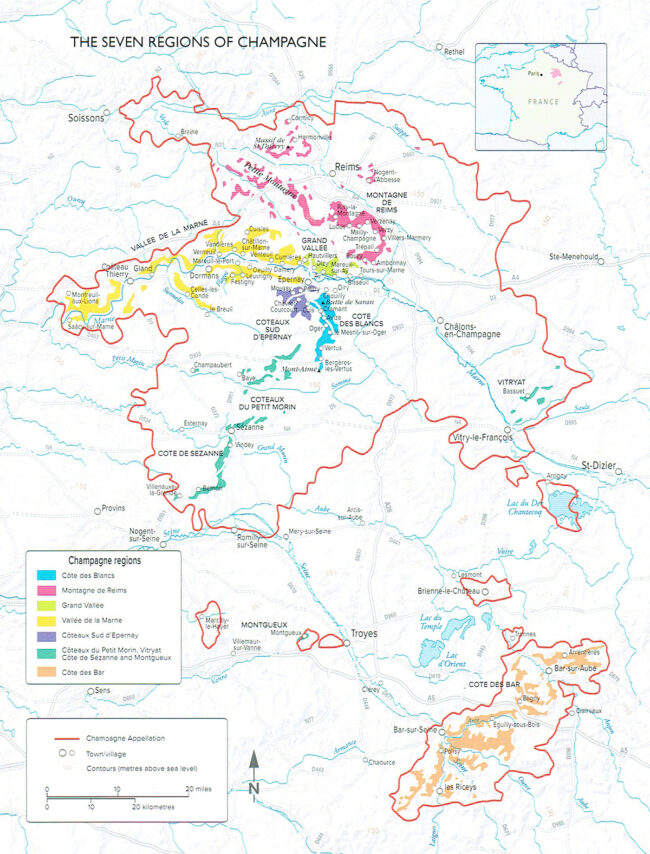
Champagne’s Distinct Sub-regions
Although a single AOP covers all sparkling wine produced in Champagne, there are several distinct sub-regions, each of which was originally associated with a single grape variety. Of course, geography changes throughout the area, so pockets of Champagne’s three main grape varieties (Pinot Noir, Meunier and Chardonnay) can be found in each district.
Ninety-three miles east of Paris, Champagne’s production zone spreads across 319 villages and encompasses roughly 85,000 acres. 17 of those villages have a legal entitlement to Grand Cru ranking, while 42 may label their bottles ‘Premier Cru.’ Four main growing areas (Montagne de Reims, Vallée de la Marne, the Côte des Blancs and the Côte des Bar) encompass nearly 280,000 individual plots of vines, each measuring a little over one thousand square feet.
The lauded wine writer Peter Liem expands the number of sub-regions from four to seven, dividing the Vallée de la Marne into the Grand Vallée and the Vallée de la Marne; adding the Coteaux Sud d’Épernay and combining the disparate zones between the heart of Champagne and Côte de Bar into a single sub-zone. (For details see Notebook, at the bottom of newsletter.)
Single-Vineyard Champagne: The Return To Prominence Of Vineyard and Viticulture
Whereas the ‘art’ of Champagne is often discussed in terms of expert blending—much as color is added in layers to create a portrait—a Cellar Master uses a pallet of flavors to create synergy, a whole that is greater than the sum of its parts. Traditionally, ‘house styles’ have been established over decades (even centuries) and homogeneity—in the best sense of the word—is the goal.
Even vintage Champagne (assembled from a single harvest, though many villages may contribute) should highlight the house approach, since loyal customers expect as much.
So why are site-specific bottlings Champagnes growing popularity? In part because of the rising renown of grower/producers, who are highlighting individual plots of terroir that they themselves have developed. It is trendy (and completely correct) to regard Champagne as wine first and foremost, and as such, individual vineyard expression rather than cookie-cutter (however delicious) house style is simply a new way to view this old standby appellation.
Above all, a single vineyard creates a unique fingerprint of the land beneath the vine, and to a terroir purist, there is no reality more compelling.
The Côte des Blancs
Uninhibitedly Chalky, Chardonnay Thrives Here.
Soil chemistry may be nuanced—acidity combined with alkalinity, macronutrient and micronutrient availability, et al., but its effects on grape growing is profound. The Côte des Blancs sits upon an exceptionally pure chalk bedrock, which combined with mostly east-facing slopes, creates an ideal environment for growing Chardonnay. The resulting wines are unparalleled in poise and finesse.
Even with this overview, the individual villages that pepper the 8000 acres of Côte des Blancs vineyards each bring their own unique gift to the Champagne party. As a result, it is fairly easy to differentiate styles and subtleties between the communes, and broadly, between those of the north and south. Wines from the northern Côte des Blancs villages, with more clay in the chalk, produce richer wines with recognizable weight while those of the south, with lighter topsoils, are piercing, fine-grained wines with a characteristic minerality that is often described as ‘salinity.’

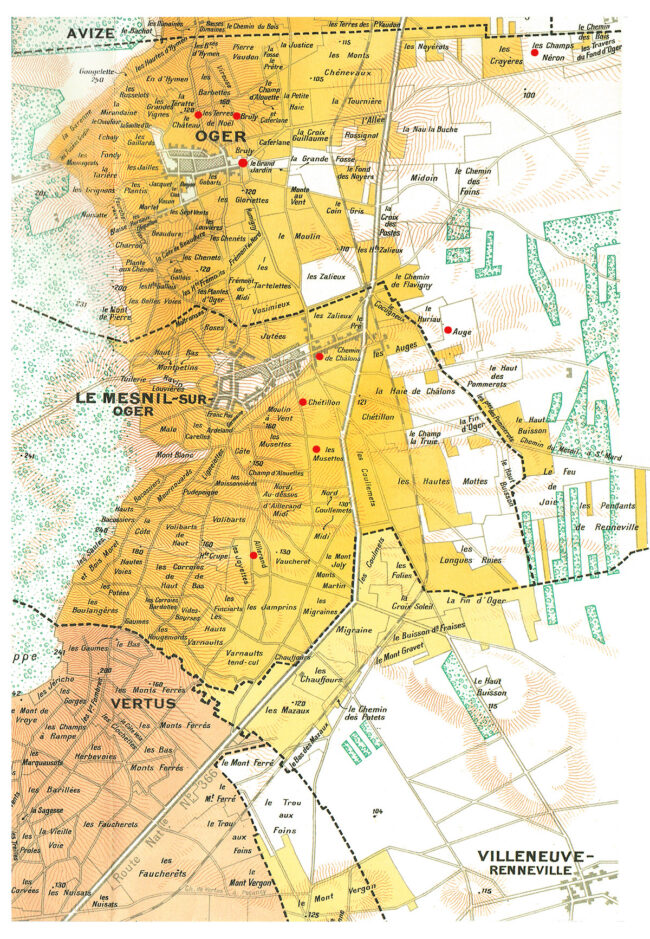
The Grand Cru Villages Of The South: Oger and Le Mesnil-sur-Oger
Oger and its sister commune Le Mesnil-sur-Oger are among the 17 villages that were scored 100% on the now defunct échelles des crus scale, and both have kept their Grand Cru status after the scale was abolished in 2010. Both were promoted from Premier Cru to Grand Cru in 1985 and possess an austerity and potential that very few sites in the entire region possess.
Oger occupies slightly under a thousand vineyard acres on the ‘true’ Côte des Blancs slope south-southeast of Épernay; Le Mesnil-sur-Oger is sightly larger, and both produce exclusively Chardonnay. These wines are renowned for their firm, mineral-driven style which also manages to be elegant and balanced. The differences between the two Grand Crus may be a subject of discussion among fans, but the fact is that most of the variations are the result of producer and vintage as well as the location of the specific vineyard, whether in the slope above and around the villages or below them, on flatter land.
Champagne Domaine Vincey
Until 2014, the Vincey family grew their grapes and delivered them to the local cooperative after harvest, a practice that was the rule rather than the exception in Champagne until fairly recently.
In 2010, Quentin Vincey took over the family’s seventeen acres, and that long-standing tradition fell by the chalky waste side. Today, though he still sells some grapes to small organic houses, he and his wife Marine keep the bulk for themselves. Having converted the property to organic viticulture, the couple claims inspiration from the earth-friendly techniques that have taken much of France by storm, including spraying with essential oils and plant extracts.
“We made our first house-bottled Champagnes in 2014; that year we produced only 4000 bottles, but every year the quantity has increased a little bit,” says Quentin. Marine adds, “We maintain open minds, and learn a lot from tasting wines blind with friends, including wines from other regions.”

Quentin Vincey, Marine Vincey with Martin (cat) and Luna (dog)
Photo: Carine Charlier/Clic & Plumes
Among the best-practices which they now employ is base-wine fermenting in small oak barrels, about eight years old on average, so that the oak does not impart much flavor but is invaluable for allowing micro-oxygenation. “Our Chardonnay, with its high acidity, needs oxygen which it gets through the oak,” says Marine. “We also temper the acidity by picking at a higher sugar level than many other local producers. So, there is never a need to chaptalize.”
The different vineyard plots are kept separate in the barrels during the lees-aging. “We ferment only on natural yeast,” says Quentin. “This is rare in Champagne, where most producers use controlled cultured yeast. We think it offers a smoother taste, although it takes more time to ferment; two months is not unusual.”
Between January and March, the year after the harvest, the couple blind tastes all the barrels. and bottle at the beginning of September, before the new harvest. After a year in barrels, they don’t need to do any filtration, and this further adds complexity. Marine says, “The bottles will stay five years in the cellar before disgorging which is two years longer than the minimum for a vintage Champagne.”
 Champagne Domaine Vincey, 2018 Côte-des-Blancs Grand Cru Oger Brut-Nature ($89)
100% Grand Cru Chardonnay harvested from selected old vines; vinification and fermentation in fût de chêne without malolactic, clarification, filtration and matured on lees for three years. Zero dosage, disgorged January 2022. 4845 bottles produced.
 Champagne Domaine Vincey, 2018 Côte-des-Blancs Grand Cru Oger Brut-Nature ($189) 1.5 Liter
Same as above in magnum; only 200 magnums produced.
 Champagne Domaine Vincey, 2018 Côte-des-Blancs Grand Cru Oger ‘Le Grand Jardin’ Brut-Nature ($117)
The third release of Vincey’s first lieu-dit wine; the grapes come from a small plot directly behind the Maison, where ideal warmth gives the Chardonnay a characteristic profile of tropical fruit with some candied elements and salt.
 Champagne Domaine Vincey, 2015 Côte-des-Blancs Grand Cru Oger ‘Le Grand Jardin’ Brut-Nature ($117)
100% vintage 2015 Chardonnay from an old lieu-dit planted in 1967 with vinification and fermentation in fût de chêne without malolactic, clarification, filtration and matured on lees for three years. Zero dosage, disgorged December 2021. 2024 bottles produced.
 Champagne Domaine Vincey, 2018 Côte-des-Blancs Grand Cru Le Mesnil-sur-Oger ‘Auge’ Brut-Nature ($117)
Auge is a tiny lieu-dit, less than three-quarters of an acre, planted in 1971. 100% 2018 Chardonnay with vinification and fermentation done in fût de chêne without malolactic, clarification, filtration and matured on lees for three years. Zero dosage, disgorged October 2022. 1375 bottles.
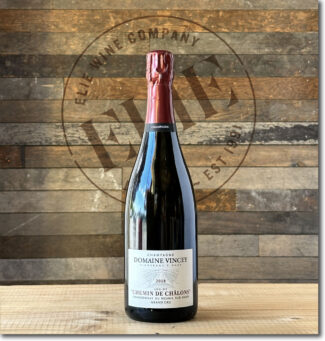 Champagne Domaine Vincey, 2018 Côte-des-Blancs Grand Cru Le Mesnil-sur-Oger ‘Chemin de Châlons’ Brut-Nature ($117)
From a half-acre lieu-dit, fermented on indigenous yeasts and aged for 12 months in oak barrel; bottled without filtration or fining. Zero dosage; disgorged July 2023.
 Domaine Vincey ‘Vieilles Vignes – Oger & Mesnil-sur-Oger’, 2019 Coteaux-Champenois Grand Cru Blanc ($108)
50% Oger Grand Cru, 50% Le Mesnil-sur-Oger Grand Cru old vines; a still wine vinified and aged for 27 months in oak barrels before bottling in December 2021. Only 860 bottles made.
Champagne Pertois-Moriset
When young couples marry, their first order of business is often creating a family. In the case of Yves Pertois and Janine Moriset, who wed in 1951, it was to build a winery. Having both been raised in the business, they set up shop in Mesnil-Sur-Oger and drew fruit from fifty acres of prestigious vineyards split between Côte-des-Blancs and Côte de Sézanne
Today the estate is run by their granddaughter Cécile, who, with her husband Vincent Bauchet, has worked diligently to improve all aspects of the inheritance, technically and ecologically. “The estate works while remaining attentive to the biodiversity that surrounds it,” Cécile maintains. “If the years allow it, no chemical inputs are applied on the vine; the vines are naturally grassed in winter, and in summer the soil is ploughed. All mechanical work is carried out with a 100% electric tractor.”

Vincent Bauchet, Champagne Pertois-Moriset
Vincent adds, “Respecting House legacy, we created a pressing center in 2009. It is equipped with two stainless-steel membrane presses, two thermo-regulated stainless-steel tanks, and a vat room for barrels and big oaks. These facilities contribute to a healthy pressing, a fermentation at controlled linear temperature, a malolactic fermentation deliberately blocked on most of the cuvées, and an aging on fine lees throughout the winter. Our wine is bottled in June/July in order to give the wine time to fully develop in tanks and barrels. The bottles then rest in the cellar, at least 20 months for the main vintages, and much longer other vintages, thus guaranteeing that our wines reflect the unique flavors of their terroir.”
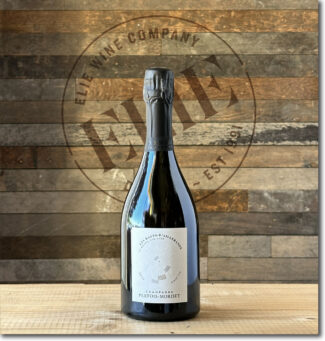 Champagne Pertois-Moriset, 2015 Côte-des-Blancs Grand Cru Le Mesnil-sur-Oger ‘Les Hauts-d’Aillerands’ Extra-Brut ($104)
From two plots of Chardonnay within the lieu-dit Les Hauts-d’Aillerands planted in 1997 and 2010 with southerly exposures. Half the wine was fermented in steel tanks, the rest in oak; fermentation lasted seven months followed by 72 months on lees with a final dosage of 2.5 grams/liter.
 Champagne Pertois-Moriset ‘Spécial Club’, 2016 Côte-des-Blancs Grand Cru Le Mesnil-sur-Oger Extra-Brut ($104)
Pertois-Moriset made this wine to celebrate their return to the Club Trésors de Champagne, a prestigious group of artisan winemakers; it is a blend of their most respected lieux-dits. Vinified 12% in barrels and 88% in stainless steel tanks; 60 months in cellar, and dosed at 2 grams/liter. Production was 6539 bottles, 405 magnums and 50 jeroboams.
 Champagne Pertois-Moriset ‘Spécial Club”, 2016 Côte-des-Blancs Grand Cru Le Mesnil-sur-Oger Extra-Brut ($299) 1.5 Liter
See above; the wine is in magnum.
 Champagne Pertois-Moriset ‘Les Quatre Terroirs’, Côte-des-Blancs Grand Cru Extra-Brut ($66)
100% Grand Cru Chardonnay; the label’s four terroirs are in Le Mesnil-sur-Oger, Oger, Cramant and Chouilly. The wine is 70% vintage, 30% perpetual reserve, vinified in both tank and barrel without malo. The wine spends 36 months on the lees and is dosed at 3 grams/liter.
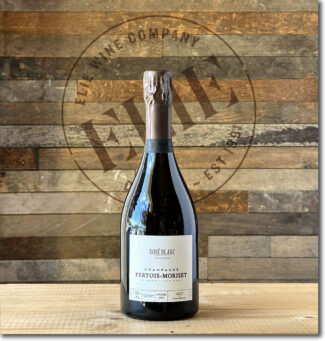 Champagne Pertois-Moriset ‘Rosé Blanc Collection’, Grand Cru Extra-Brut ($72)
92% Chardonnay Grand Cru and 8% Bouzy Rouge Grand Cru Pinot Noir. The wine is 70% vintage, 30% perpetual reserve, vinified in both tank and barrel without malo. The wine spends 30 months on the lees and is dosed at 3 grams/liter.
The Côte de Sézanne: Côte des Blancs Continuum?
The 1500 acre Côte de Sézanne sits a few miles southeast of Étoge in the Côte des Blancs. Chardonnay accounts for around 75% of the vineyard plantings, but there is a significant amount of Meunier and Pinot Noir grown here. Sézanne wines are known for being among the fruit-forward in the region, but critics point out that this is often a trade-off for finesse.
The terroir of the region differs slightly from the Côte des Blancs; unlike the predominantly chalky soils further north, the soils here are mostly clay and a mixture of clay and chalk. Due to the specifics of the terroir, grapes tend to ripen a little earlier than other regions.
 Champagne Pertois-Moriset, 2018 Coteaux-Sézannais ‘Barbonne-Fayel’ Brut ($99)
This mono-village Vintage Champagne from Barbonne-Fayel in the Côte de Sézanne, a village made famous in Ulysse Collin’s ‘Les Maillons.’ 100% Pinot Noir vinified 80% in stainless steel and 20% in foudre with malolactic blocked. The wine spends three years in bottle on lees and is dosed at 3 grams/liter.
 Champagne Pertois-Moriset ‘L’Assemblage’, Coteaux-Sézannais Brut ($263) 3 Liter
50% Pinot Noir and 50% Chardonnay from the slopes of the Marne in the Côte de Sézanne, vinified in stainless steel and blended with 30% reserve wine from oak barrels. The wine is aged for a minimum of 15 months and dosed at 1 gram/liter.
Champagne J.L. Vergnon
In this small 12-acre estate in the heart of the Grand Cru village of Le Mesnil-sur-Oger, Didier Vergnon and his son Clément have worked tirelessly toward organic farming, harvesting only balanced and ripe grapes. They have eliminated both chaptalization and malolactic fermentation, and prefer a low or zero dosage. The brilliant winemaker Christophe Constant has been at their side, both as cellar master and now, as consultant.

Didier Vergnon (standing) with Christophe Constant
Of the property, Didier says, “Our domain extends over several terroirs, the majority in Le Mesnil sur Oger, classified Grand Cru, Blanc de Blancs. We also draw from vineyards in Oger and Avize, and also vines in surrounding Premier Cru villages Vertus and Villeneuve.”
 Champagne J.L. Vergnon ‘Murmure’, Côte-des-Blancs Premier Cru Blanc-de-Blancs Brut-Nature ($63)
100% Chardonnay, half from Vertus Premier Cru, half from Villeneuve Premier Cru, from 30-year-old vines. Fermented and aged in 50% stainless steel, 50% older 400-liter barrels and bottled with zero dosage. Disgorged June 2019.
 Champagne J.L. Vergnon ‘MSNL’, 2010 Côte-des-Blancs Grand Cru Le Mesnil-sur-Oger Blanc-de-Blancs Extra-Brut ($130)
100% Chardonnay from east-facing Les Chétillons and Mussettes vineyard in Le Mesnil-sur-Oger, formerly released under the ‘Resonance’ label. Vinified and aged in steel tanks, aged seven years in the cellar and dosed at 3 grams/liter. Disgorged June 2018. 3222 bottles produced.
 Champagne J.L. Vergnon ‘Rosémotion’, Grand Cru Rosé Extra-Brut ($89)
A scant 2000 bottles of this Grand Cru rosé were produced; 90% Chardonnay from Mesnil s/ Oger, Oger and Avize and 10% Pinot Noir from Mailly Grand Cru. 20% of reserve wine was aged 3 months in oak barrels and 80% of single-year in steel tank. The wine is a delicate Creamsicle color and shows currants and pomelos on the nose, with notes of strawberries, saffron and biscuits reflecting the long aging on lees. Disgorged June 2019.
The Northern Villages Of The Côte des Blancs
Of the notable Cru-level villages in the northern sector of the Côte des Blancs, Cramant covers 870 acres, of which 99.9% are planted to Chardonnay. As the name suggests, Cramant Champagnes are often considered ‘creamier’ than those of nearby Avize, where there is a higher proportion of east-facing slopes. These wines are also more concentrated than those of Cuis, where there is a higher proportion of north-facing slopes and with a more dominating minerality than those in Chouilly.
Chouilly, immediately to the east of Épernay and just south of Marne, is larger at 1300 acres, with slightly more Pinot Noir planted. Champagnes from Chouilly are usually said to be of a rather “rich” style with buttery notes or aromas of tropical fruit, and with less intense mineral character than the Grand Cru neighbors to the south.
The Premier Cru vineyards of Cuis are primarily located around the northern part of the small forested area above the Côte des Blancs slope, with some vineyards just north of the village, partly on flatter ground and partly close to the small forested area between Cramant and Chouilly. Cuis wines tend to be lighter Blanc de Blancs, not in the least due to the more-or-less north-facing slopes. The level of acidity tends to be quite high, where the minerality comes to the fore even more than usual and explains why it is less common to find oaked Cuis-only Champagnes compared to oaked versions from Grand Cru villages.
Champagne Guy Larmandier
The late Guy Larmandier established his 22 acre estate in the heart of Vertus at the southern base of the Côte des Blancs; all the vineyard plots are distributed among the Grand Cru villages of Chouilly and Cramant and the Premier Cru villages of Vertus and Cuis.

Marie-Helene and François Larmandier
Following his death, the House has been managed by his wife, Colette, and their two children, François and Marie-Helene. With an annual production of 90,000 bottles, harvest is conducted manually and the wines are aged a minimum of 36 months on the lees, disgorged on order and receive a minimal dosage so as to emphasize the purity and finesse of the terroir.
 Champagne Guy Larmandier, Côte-des-Blancs Premier Cru Vertus Brut Zéro ($51)
90% Chardonnay and 10% Pinot Noir, aged for 3 years on the lees before disgorgement. The Premier Cru vineyard of Vertus is famous for its Pinot Noir, and it brings to the wine an earthy, red fruit richness. Disgorged July 2019.
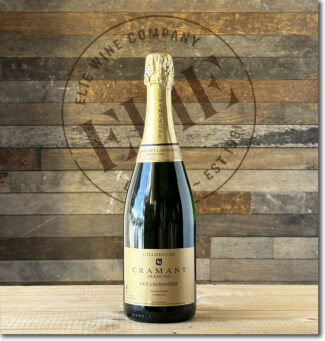 Champagne Guy Larmandier, Côte-des-Blancs Grand Cru Cramant Blanc-de-Blancs Brut Zéro ($65)
From Larmandier’s 8-acre Grand Cru vineyard in Cramant, an epicenter of Chardonnay in Champagne. After the first fermentation, the wine was bottled and aged sur latte for five years before disgorgement; the nose offers fleshy fruit as well as subtle hints of calcareous minerality. Disgorged October 2021.
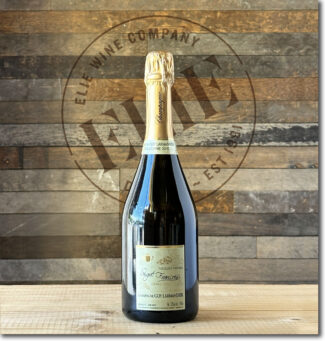 Champagne Guy Larmandier ‘Signé François – Vieilles Vignes ‘, 2010 Côte-des-Blancs Grand Crus Cramant & Chouilly Blanc-de-Blancs Brut Zéro ($99)
Larmandier’s prestige cuvée is produced from their oldest parcels of Chardonnay in the Grand Cru village of Cramant blended with a small amount of fruit from a holding in Chouilly. It spends five years on the lees before disgorgement. The wine’s chalky core shows itself in a clinging, almost salty finish. Disgorged January 2022.
Champagne Pierre Gimonnet
In Champagne, particularly in 2024, you can’t underestimate the value of legacy and old vines. Pierre Gimonnet began bottling estate Champagnes in 1935 with impressive Premier and Grand Cru terroirs from which to mine. In addition to the 33 acres in Cuis, he owned 27 acres of Chardonnay vines in the Grand Cru villages of Cramant and Chouilly, plus another two acres Oger and five in Premier Cru Vertus. Today, his grandson Didier has added Gimonnet also owns an acre or so of Pinot Noir, split between the Grand Cru of Aÿ and Premier Cru of Mareuil-sur-Aÿ.

Famille Pierre Gimonnet
In a region where there is a plethora of younger vines, these legacy vineyards are a key to the kingdom. Says Didier, “70% of our holdings are over 30 years old, of which some 40% are over 40 years old, with 100+ year old vines in the lieux-dits of Le Fond du Bateau, planted in 1911, and Buisson, planted in 1913, both in the Grand Cru village of Cramant.”
Underscoring this, he adds, “Our Spécial Club, for example, is based on Cramant Grand Cru, and includes pi 100+ year old vines in the lieux-dits of Le Fond du Bateau, and Buissons. The Cramant is very expressive and round; the Chouilly is similar in style but slightly less concentrated; Cuis is much more neutral, acid, fresh, aerial: This north-facing village is the coolest in the Côte des Blancs.”
 Champagne Pierre Gimonnet, Premier Cru Cuis Blanc-de-Blancs Brut ($63)
From north-facing vineyards, 2017 fruit is enriched with 27% reserve wine from the 2010 to 2014 vintages. Élevage in stainless steel, sur latte for two years with disgorgement May 2018 and 6 grams/liter dosage. 130,000 bottles made.
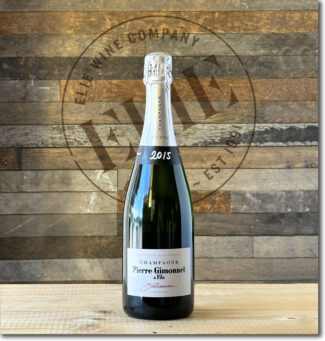 Champagne Pierre Gimonnet ‘Gastronome’, 2015 Premier Cru Blanc-de-Blancs Brut ($72)
As the name suggests, ‘Gastronome’ is designed to be food friendly by being produced under lower pressure, around 4.5 ‘atmospheres’ as opposed to Champagne’s usual 5-6. 51% Chouilly Grand Cru (Montaigu), 18% Cramant Grand Gru (Buissons), 5% Oger Grand Cru (Terres de Noël, Brulis and Champs Nérons), 25% Cuis Premier Cru (Roualles and Croix-Blanche) and 1% Vertus Premier cru. Disgorged in October 2019 with 5 grams/l liter dosage.
 Champagne Pierre Gimonnet ‘Paradoxe’, 2013 Premier Cru Cuis Blanc-de-Blancs Brut ($75)
90% Pinot Noir from Aÿ Grand Cru and Mareuil-sur-Aÿ Premier Cru, 10% Chardonnay from Cuis Premier Cru with élevage in stainless steel; sur latte 71+ months with disgorgement April 2018. Dosed with 6 grams/liter.
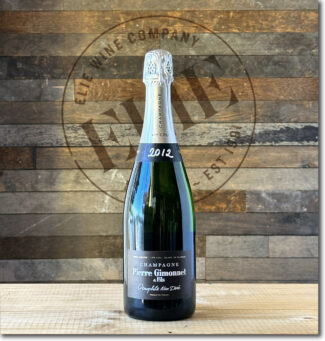 Champagne Pierre Gimonnet ‘Oenophile’, 2012 Côte-des-Blancs Premier Cru Blanc-de-Blancs Brut-Nature ($99)
79% Cramant Grand Cru from 7 lieux-dits, Chouilly Grand Cru (Montaigu and Ronds Buissons), Oger Grand Cru (Terres de Noël and Champs Nérons), 21% Cuis Premier Cru (Croix-Blanche and Roualles) and Versus Premier Cru. Fermented for eight months in stainless, bottled April 2013, disgorged in October 2019 after six years on lees.
Notebook …
Drawing The Boundaries of The Champagne Region
To be Champagne is to be an aristocrat. Your origins may be humble and your feet may be in the dirt; your hands are scarred from pruning and your back aches from moving barrels. But your head is always in the stars.
As such, the struggle to preserve its identity has been at the heart of Champagne’s self-confidence. Although the Champagne controlled designation of origin (AOC) wasn’t recognized until 1936, defense of the designation by its producers goes back much further. Since the first bubble burst in the first glass of sparkling wine in Hautvillers Abbey, producers in Champagne have maintained that their terroirs are unique to the region and any other wine that bears the name is a pretender to their effervescent throne.
Having been defined and delimited by laws passed in 1927, the geography of Champagne is easily explained in a paragraph, but it takes a lifetime to understand it.
Ninety-three miles east of Paris, Champagne’s production zone spreads across 319 villages and encompasses roughly 85,000 acres. 17 of those villages have a legal entitlement to Grand Cru ranking, while 42 may label their bottles ‘Premier Cru.’ Four main growing areas (Montagne de Reims, Vallée de la Marne, the Côte des Blancs and the Côte des Bar) encompass nearly 280,000 individual plots of vines, each measuring a little over one thousand square feet.
The lauded wine writer Peter Liem expands the number of sub-regions from four to seven, dividing the Vallée de la Marne into the Grand Vallée and the Vallée de la Marne; adding the Coteaux Sud d’Épernay and combining the disparate zones between the heart of Champagne and Côte de Bar into a single sub-zone.
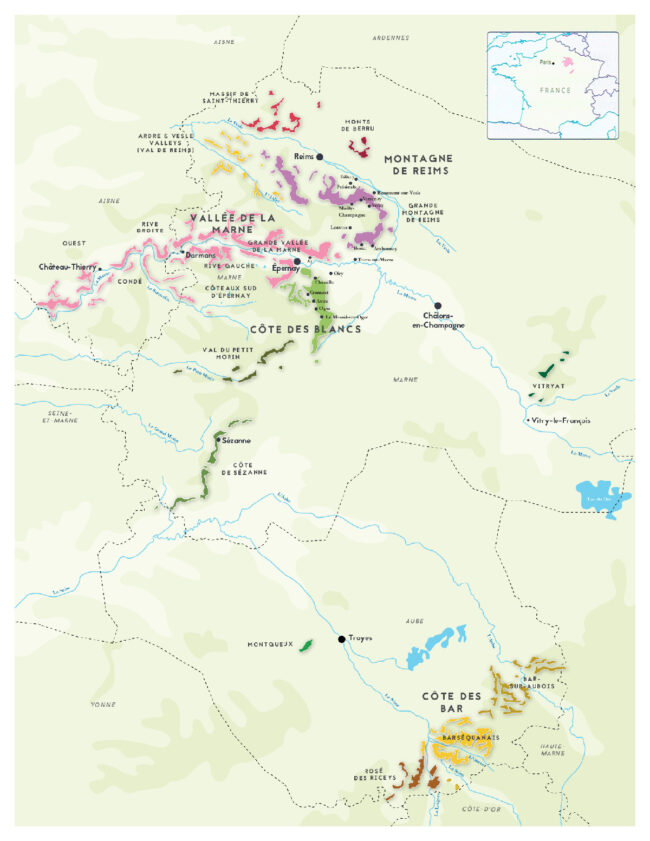
Courtesy of Wine Scholar Guild
Lying beyond even Liem’s overview is a permutation of particulars; there are nearly as many micro-terroirs in Champagne as there are vineyard plots. Climate, subsoil and elevation are immutable; the talent, philosophies and techniques of the growers and producers are not. Ideally, every plot is worked according to its individual profile to establish a stamp of origin, creating unique wines that compliment or contrast when final cuvées are created.
Champagne is predominantly made up of relatively flat countryside where cereal grain is the agricultural mainstay. Gently undulating hills are higher and more pronounced in the north, near the Ardennes, and in the south, an area known as the Plateau de Langres, and the most renowned vineyards lie on the chalky hills to the southwest of Reims and around the town of Épernay. Moderately steep terrain creates ideal vineyard sites by combining the superb drainage characteristic of chalky soils with excellent sun exposure, especially on south and east facing slopes.
… Yet another reason why this tiny slice of northern France, a mere 132 square miles, remains both elite and precious.
- - -
Posted on 2024.05.13 in Crémant du Bourgogne, France, Champagne, Wine-Aid Packages | Read more...
A Year In Burgundy II: Côte de Beaune’s Wines From The Incomparable 2015 Realize Their Potential, And Articulately Express The Distinctive Characters Of The Region’s Diverse Terroirs
In our last newsletter, we looked at Burgundy’s fantastic 2015 vintage as represented by some of the top vignerons in the Côte de Nuit. This week, we head south to Beaune to look at the stylistically-unique red wines of Nuit’s sister region. Beaune. You might expect that, being further south, the red wines of Beaune have a slightly better opportunity to ripen and become plush and rounded, and to some extent that is true: In general, Beaune’s climate is warmer than Nuit’s, and the rainfall is a little higher, allowing the grapes to better weather the late summer heat.
Whereas the top reds from the Côte de Nuits often have greater intensity and a firmer structure, top Côte de Beaune reds are frequently softer and lusher with soaring, earthy flavors laced with minerals and exotic spices. With age, they tend to cling to their fruit longer as tertiary flavors of coffee, hazelnut and forest bracken gradually take center stage.
Some of the domains presented here also have vineyards in Nuit, so if the names are familiar, it’s because these winemakers are border-hoppers whose wines are able to embody the best of the perfumed north and the silken fruit of the south.
2015 Burgundy: Hedonist’s Vintage
No one could better sum up Burgundy 2015 more splendidly than Jacques Devauges of Clos de Tart: “To make bad wine in 2015, one must wake up and say to yourself, ‘I will make bad wine.’”
This is not to say that it was an easy vintage—just a successful one. In fact—if the pun may be forgiven—the challenges ran hot and cold. Frost affected many Grand Cru vineyards early in the season and proved to be a harbinger of wet and cool temperatures in May. In mid-June, the weather became balmy, then hot, then seriously dry. According to Eric Remy at Domaine Leflaive, “Between June to August, we had 35 days when the temperature was above 30 degrees C and 15 days when the temperature was above 35 degrees C.”
The grapes were under hydric stress for most of that time; August brought off and on downpours, effectively saving the vintage, although the harvest window was narrow because potential alcohol levels were creeping up while acidity was dropping. White wine producers harvested end of August and nearly all the red wine producers harvested in the first week of September.
In all, there were many decisions a grower could have made in 2015 because there was so much material to work with. Some of the reds are elegant and ethereal—purposefully made so with light maceration and gentle handling. Others are dense, chewy and full-bodied, reminiscent of wine from warmer climates. Cécile Tremblay of the eponymous Vosne-Romanée domain says, “2015 had the best ripeness at harvest since I started winemaking. There was big quantity of polyphenols and too much of everything – I kept thinking of what to do with it. The big question was: Who am I making this wine for and what is the wine’s drinking window?”
In all, 2015—especially for red wines—has been heralded as having ‘nearly the concentration of 2005 allied with the sensuality of 2010.’
Ten Years After
That the finest Burgundies improve over time is no revelation. What is particularly interesting is that, unlike many age-worthy wines, Burgundy follows a somewhat unique path. There is no ‘peak’, for example—you make that discovery over the years as you sample a specific vintage from given label. There is a sort of ‘sine’ wave with multiple peaks and valleys. If a wine is unfriendly today, don’t assume it has passed its pinnacle—just push it further back in the cellar, and you’ll likely be rewarded.
For every rule in Burgundy, there are countless exceptions, but an experienced cellar master will tell you that after a few years in the bottle (generally between five and eight), when the fruit begins to fade a bit, there is a period when the wine may taste thin and a bit shrill. You might revive the old optimistic tombstone inscription: ‘Not dead, but sleeping.’
If the original wine was from a good vintage and was produced with circumspection, it will reanimate with tertiary notes—the fruit dries out to evoke raisin, fig or prune and more savory and musky aromas emerge as well, evocative of licorice, leather, mushroom, tobacco and dried bracken on a forest floor.
The wines in this collection have just entered this phase where the springtime purple notes have grown into the russet tones of autumn; along with us all, the refreshing, youthful smells of blackberry and cherry cola have matured into the introspective richness of adulthood.
Côte de Beaune
Here is a mnemonic device for remembering which shade of wine is best represented by the two subdivisions of the Côte d’Or, the Côte de Beaune and the Côte de Nuit: Bones are white, and the greatest of the Chardonnay-based white Burgundy (Corton-Charlemagne, Montrachet, et al) are from Beaune. Night is dark, and the greatest Pinot Noir-based reds (La Romanée-Conti, Chambertin, et al) come from the ‘Night Slopes’—the Côte de Nuit.
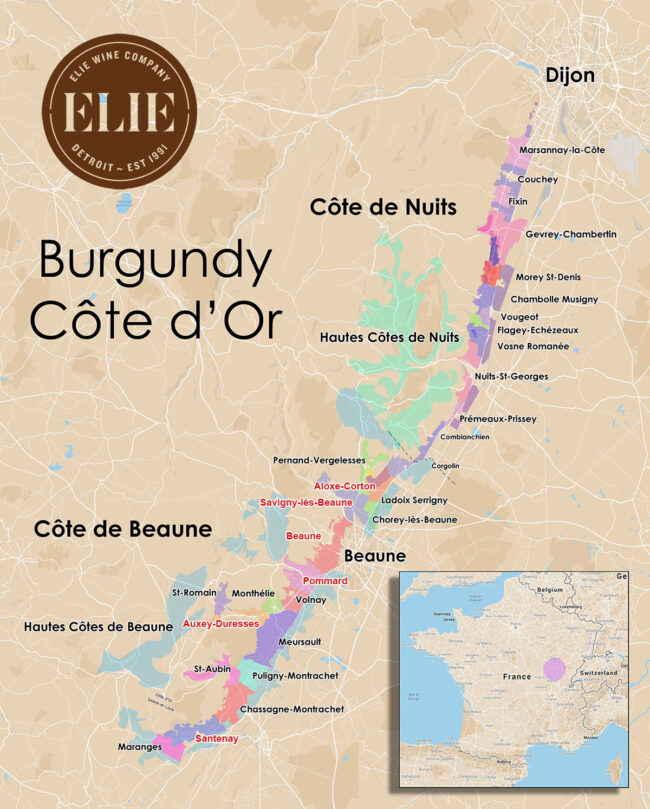
Of course, both regions make wines of either color. The Côte de Beaune is the southern half of the Côte d’Or escarpment, hilly country where, like the bowls of porridge in Goldilocks, the topsoils near the tops of the elevation are too sparse to support vines and, in the valleys, too fertile to produce top quality wine. The Goldilocks Zone (the mid-slopes) are where the Grand and Premier Cru vineyards are found, primarily at elevations between 720 and 980 feet. Drainage is good, and when vines are properly located to maximize sun exposure, the greatest Burgundies thrive and produce, year after year. The lesser, often forgettable Burgundies (generic Bourgogne) comes from the flatlands beneath the slopes; the fact that these wines are also made from Pinot Noir and Chardonnay is indication of why terroir matters. Likewise, the narrow band of regional appellation vineyards at the top of the slopes produce light wines labeled Bourgogne Hautes-Côtes de Beaune.
Aloxe-Corton
The appellation of Aloxe-Corton stands guard near vinous gates of the Grand Crus of Corton and Corton-Charlemagne, enjoying (if not the prestige) many similar growing conditions, producing almost exclusively red wines known for both a depth of color and an intensity of flavor. With vines facing east, the terroir is soil driven, with flint and limestone rich in potassium and phosphoric acid lending supple firmness to the wines, especially those from the appellation’s southern end.
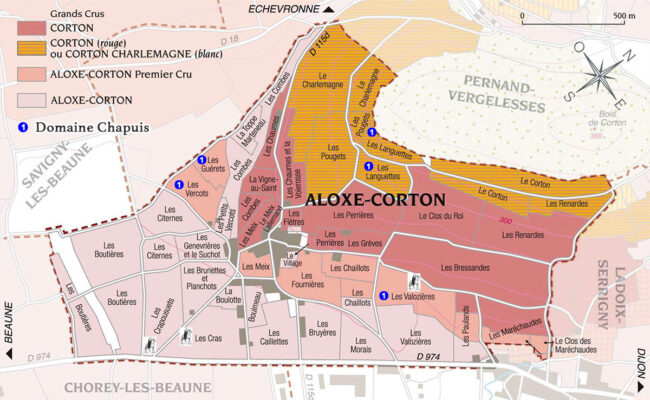
Whereas white wines from the region exist, they are rare. The deep soils are better suited for Pinot Noir; the terroir is a geological cradle for this prima donna varietal. At altitudes averaging 800 feet, the vineyards are planted in reddish earth with flint and limestone debris known locally as ‘chaillots’ mixed in, likewise rich in potassium and phosphoric acid. Such soils favor supple, highly-bred wines, while clay and marl breeds firmness and complexity. Anticipate wild berry notes that intensify with age and evolve into peony and jasmine, brandied fruits, pistachio, prune and truffle.
Domaine Chapuis
Pierre and Claire Chapuis (assisted by their parents Maurice and Anne-Marie) manage almost 30 acres of vineyards, many on the steep slopes of the Corton hillside, where over a century of winemaking knowledge resides. Capitalizing on this heritage, the domain has enlarged and modernized the winery, investing in new equipment and replanting specific plots with more suitable vines. The couple practices lutte raisonnée in an effort to keep the winemaking process as natural as possible.
“Our soil work, fertilization, our phytosanitary strategies are designed to reduce our impact on the environment so that our vines grow within a preserved biodiversity,” says Pierre. “We vinify in the traditional way and all our wines are aged in French oak—12 months for the whites and up to 18 months for the reds. We prefer a low percentage of new barrels, about 10%, which allows us to express the full potential and finesse of our terroirs.”
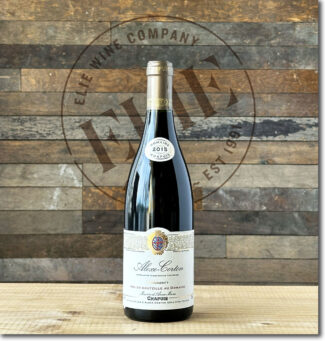 Domaine Chapuis, 2015 Aloxe-Corton ($75)
Despite the majesty of the Corton moniker, Aloxe-Corton produces a unique style of wine, due in part to amphitheater in which they grow, found elsewhere in the Côte. On the Southern side of the appellation, the dark soils are made up of limestone debris while those on the Northern side, the soils are mainly pebbly. A blend of the two, like this one, may be reminiscent of a cross between Nuits-Saint-Georges and Beaune.
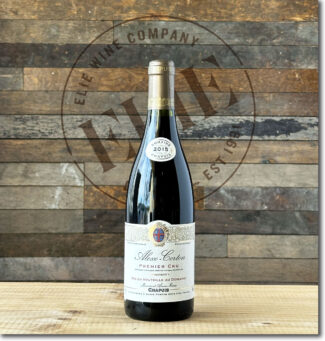 Domaine Chapuis, 2015 Aloxe-Corton Premier Cru ($96)
A blend of three plots where vines average 45 years old: Les Vercots, Les Guérets located in the southern part of the village and Les Valozières in the north, adjacent to the appellation Corton Les Bressandes.
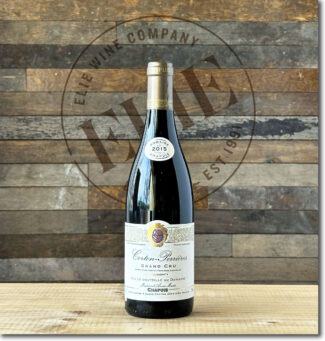 Domaine Chapuis, 2015 Corton-Perrières Grand Cru ($180)
Lying adjacent to Les Languettes at an average altitude of nearly a thousand feet, Corton Perrières is at the northern end of Beaune, where vines mingle with stone quarries and form a unique amphitheater. The wines are known for their finesse, rather than the typically austere Corton red which show as powerful, muscular and chewy.
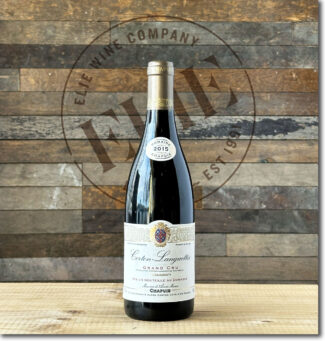 Domaine Chapuis, 2015 Corton-Languettes Grand Cru ($180)
Les Languettes is one of five Corton climats to produce both white and red wines, primarily because here, the soils vary noticeably across 18 acres—specifically in their proportions of limestone to iron-rich marlstone. The former suits Chardonnay (which makes up the majority of plantings); the latter Pinot Noir. The property is walled and divided by a vineyard track located on the upper slopes of the Corton hill. Facing south to south-southeast at just over one thousand feet in elevation, the vineyards are just below the famous tree-line.
Savigny-lès-Beaune
Chances are, you love wines from the Rhine and are passionate about wines from the Rhône, but at first glance, ‘wines of the Rhoin’ may look like a typo. In fact, this small river flows from the cliffs of Bouilland through the commune of Savigny-lès-Beaune, and alluvia from the overflow adds fertility to the lower slopes of the hills of Beaune. With nearly nine hundred acres of vineyard, the appellation is one of Burgundy’s largest.
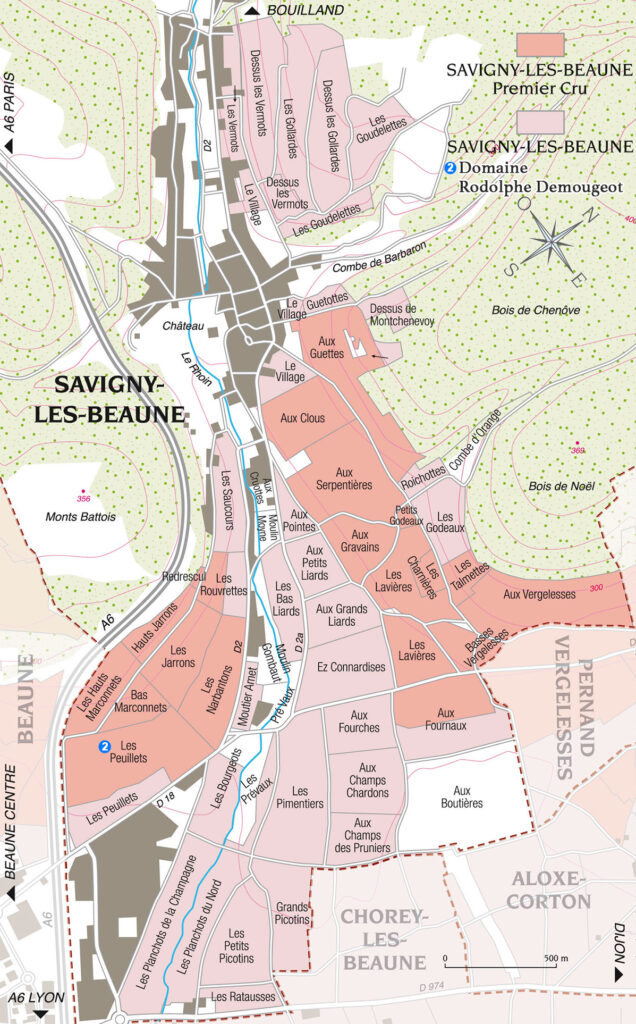
Savigny’s terroir features a gentle gradient that becomes steeper as the altitudes approach 1300 feet, where the geology is similar to that of the great Grand Cru hill of Corton. Favored exposures face the south, where the soils are gravelly and scattered with oolitic ironstone. Near the river valley, the red-brown limestone becomes more clay-rich pebble-filled while the east-facing slopes consist of sand and limestone.
Domaine Rodolphe Demougeot
When Rodolphe Demougeot created his estate in 1992, it was a tribute to his winegrower grandparents, in whose vineyards he worked as a boy and who gave him a taste for winegrowing. He began with nine acres in the Hautes-Côtes de Beaune, in Pommard and Beaune and has grown to twenty acres with plots acquired over the years in the municipalities of Savigny-les-Beaune, Monthelie and Meursault, where Rodolphe has been established since 1998.
But the move away from family tradition took some focus. He says, “I learned how to do ‘perfect’ chemical farming from them and had to deprogram both my vineyards and myself, which took a lot of time—something that evolved into a new sense of self and humility. I needed to learn to be a good farmer first, and then to improve performance in the cellar. I required an unflinching honesty about life and process.”
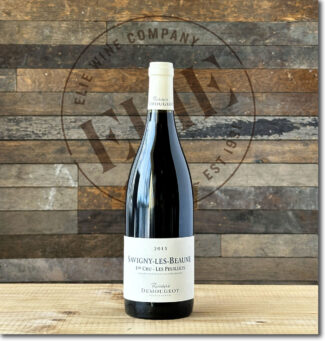 Domaine Rodolphe Demougeot, 2015 Savigny-lès-Beaune Premier Cru Les Peuillets ($95)
Upslope from the lieu-dit Les Bourgeots, Les Peuillets (planted in 1945) sits on a thin layer of high quality clay with limestone underneath, producing fragrant and pure wines with a delicacy that defies its concentration.
Auxey-Duresses
There was a time when the wines of Auxey-Duresses were sold under false premises—the reds were named Volnay and the whites, Meursault. In fact, experts could easily tell the difference. Yet, the differences have begun to evaporate as a new generation of winemaker in the appellation, coupled with a changing climate, has realized that Auxey-Duresses grapes may have the breeding to rival their hallowed neighbors without the need of fraud.
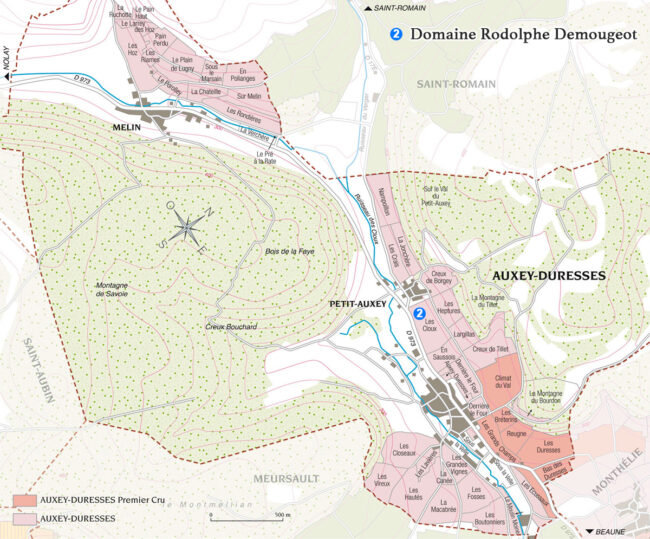
The first obstacle they had to overcome was geography. Unlike Meursault and Volnay, Auxey-Duresses vines cling to a variety of high slopes and have traditionally produced a hard red wine that is frequently sold to négociants for Bourgogne Rouge blends. But with patience, these same grapes, when bottled at estates within the appellation, improve immeasurably and become silken gems that may rival nearby powerhouses at a fraction of the cost.
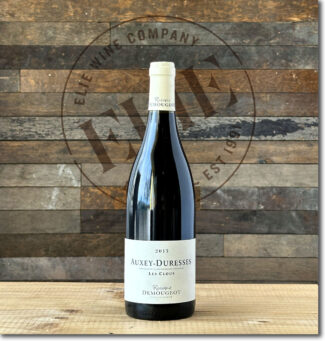 Domaine Rodolphe Demougeot, 2015 Auxey-Duresses ‘Les Clous’ ($88)
Demougeot’s parcel of Les Clous is under an acre; it enjoys direct due-south exposure, ideal for this cooler appellation. The soils are limestone and clay, very well drained due to the ample mix of small and large stones deposited by the small creek that once flowed through this valley. 100% of the grapes are destemmed and fermented on native yeasts in cement and inox vats. Once pressed, it’s settled in a tank overnight and gravity fed into 85% old French barrels.
Beaune
The historical capital of Burgundy, Beaune eponymous appellation includes 42 Premier Cru Climats producing primarily red wine (887 acres of Pinot to Chardonnay’s 143). Village-level wines can be somewhat homogeneous, although from the northern end of the commune they tend to be intense while those from the southern end are smoother and fuller.
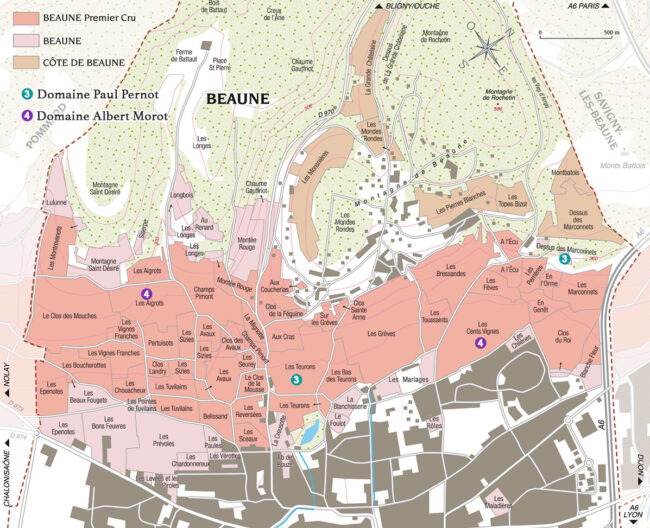
Beaune’s slopes are quite steep and the soil is thin; a breakdown of the terroir is a mouthful and a half: On the lower slopes are Argovian marls and deep soils, white, grey or yellow, tinged with red from the iron in the Oxfordian limestone. Exposures are easterly to due-south at altitudes between 700 feet and a thousand feet.
Domaine Paul Pernot
When Paul Pernot founded his domain in 1959, he centered on 25 acres of vines planted on 200-year-old family land in Puligny-Montrachet. An artisan winemaker, he developed his vineyards with great respect for the soil.
Among the top growers in Puligny, Pernod wines are celebrated for their delicacy and poise while remaining rich, ripe and with the structure to age. The property sells over 60% of its production to négociants, saving only the cream of the crop for its own bottlings. The vineyards and cellar are now managed by Paul’s two sons, Michel and Paul Jr, together with Paul Jr’s son, Philippe, and Michel’s daughter Alvina (who also as her own project). Michel heads up work in the winery, while Paul Jr and Philippe manage the vineyards while Alvina manages the administrative side. They maintain a traditional approach to winemaking with very little having changed at the domaine in the last four decades.
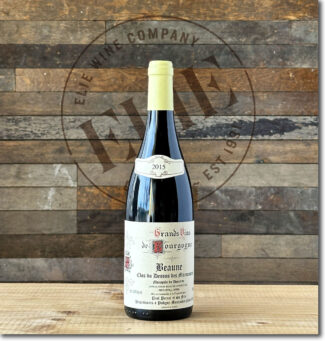 Domaine Paul Pernot, 2015 Beaune ‘Clos du Dessus des Marconnets’ Monopole ($96)
The name of this east-facing, entirely-walled vineyard refers to a German tribe called the Marcomans who once settled near the nine-acre plot. The Chardonnays are situated at the top of the hill where it is windy, and grow in a marl and sandy soil, while the Pinot Noirs are situated mid-slope where they are exposed to more sun. As in most such Burgundian expositions, soil erosion at the top of the plot produces stonier terroirs as it grows more alluvial toward the bottom. The monopole (owned entirely by the family) was planted by Paul between 1957 and 1961 and pre-dates modern clones.
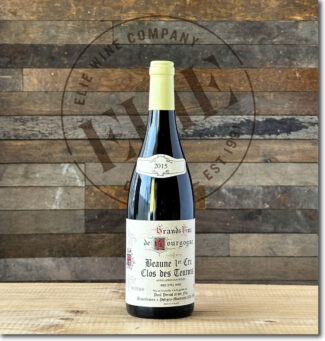 Domaine Paul Pernot, 2015 Beaune Premier Cru Clos des Teurons ($110)
Sun-drenched des Teurons is one of the more highly acclaimed climats in Beaune; it sits high on the slope facing east, and its limestone-rich terroir produces grapes that ripen early and wines that age beautifully.
Domaine Albert Morot
Established by Albert Morot in 1820, Domaine Albert Morot is considered one of the leading properties in the Côte de Beaune. The estate consists of about 20 acres of vineyards, almost entirely in the Beaune Premiers Crus of Les Teurons, Les Gréves, Les Toussaints, Les Bressandes, Les Cent Vignes, Les Marconnets, and La Bataillére.
Geoffrey Choppin de Janvry has been responsible for the wines since 2000, when his aunt Françoise Choppin (great-granddaughter of Albert Morot) retired. While retaining the deep focus on quality started by his aunt in the 1980s, including green harvesting, double sorting during harvesting, and minimizing cellar interventions, Geoffroy has ushered the estate into a new era by gradually implementing organic farming methods.
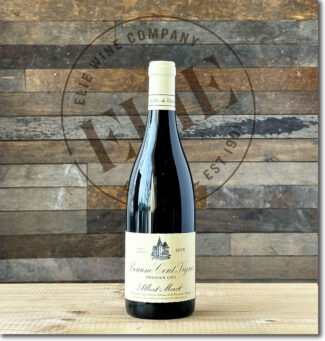 Domaine Albert Morot, 2015 Beaune Premier Cru Cent-Vignes ($110)
The three acre plot of “Les Cent Vignes” (one hundred vines) is located at the bottom of the slope with a southeastern exposure and is composed mainly of loam and clay soils. The vines on this plot were planted in 1958 and are known for producing wines that are remarkable for their color and delicacy of aromas. On the palate the wines combine complexity and mellowness.
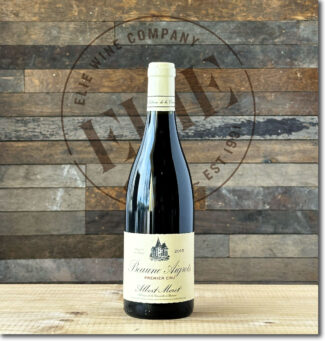 Domaine Albert Morot, 2015 Beaune Premier Cru Aigrots Rouge ($110)
Located next to the celebrated Clos des Mouches vineyard on the middle of the slope, Les Aigrots faces east. The stony soil of this two acre plot is rich in loam and clay, producing full-bodied, generous wines. The vines are between 29 and 37 years old.
Pommard
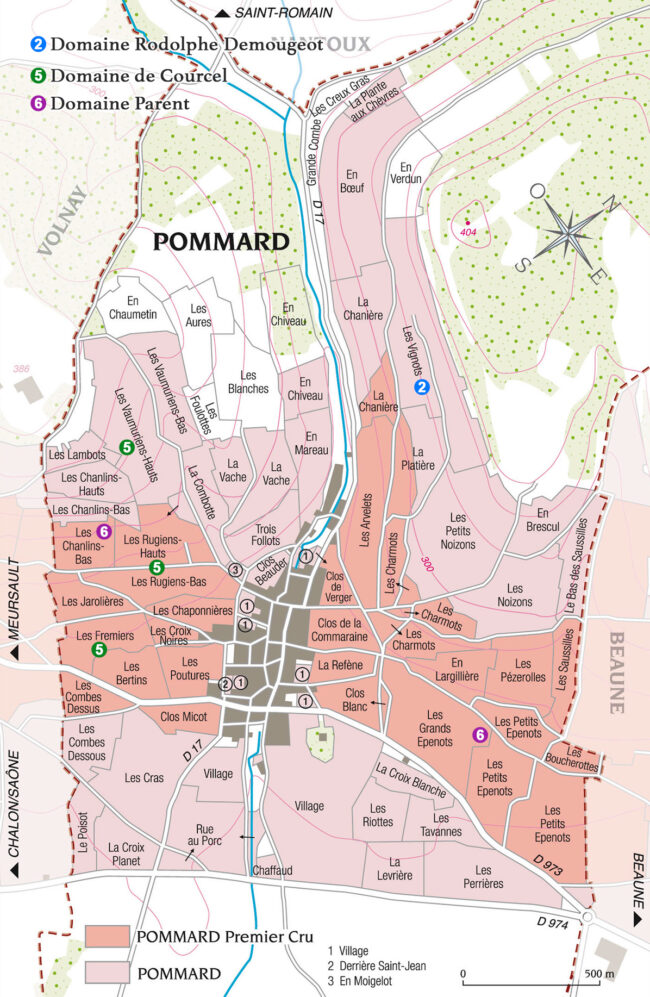
If Burgundy is a volume of poetry, Pommard might be considered its Alfred, Lord Tennyson, offering power and rich structure, a charge of the Light Brigade, only with a substantially safer outcome. Pommard is the beginning of serious Pinot Noir in Burgundy; nothing else is grown and nothing else allowed besides (perhaps inexplicably) a few vineyards of the Lemberger/ Sankt-Laurent cross ‘André.’ Aptly named for Pomona, the Roman god of fruit trees, Pommard’s most muscular wines hail from its mid-slope Premier Cru vineyards which run in a nearly uninterrupted from the commune boundaries of Beaune in the north to Volnay in the south. Even that may belie the quality of these wines; most experts believe that the Les Épenots and Les Rugiens Premier Crus should be promoted to join Corton in its Grand Cru status. Once in line for this prestigious upgrade, the vignerons of the time were wary of the restrictive Grand Cru production laws and declined the offer.
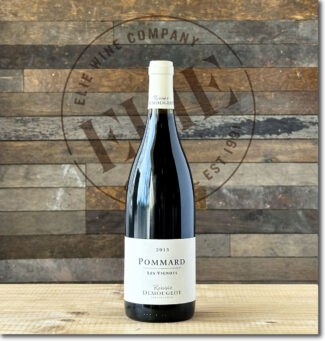 Domaine Rodolphe Demougeot, 2015 Pommard Les Vignots ($120)
Les Vignots is a lieu-dit situated on the upper slope of the combe behind the village of Pommard; it faces south, giving the wines typical Pommard power while its elevation (over a thousand feet) lends high-toned aromas and finesse—especially, a racy mineral edge. The average vine age (fifty years) also lends to the wine’s remarkable concentration.
Domaine de Courcel
“Too often winemakers make a style, not a wine,” says Gilles de Courcel, “which is what many négociants do when they blend wines they buy from different estates.”
For the past four hundred years, the de Courcel family has produced award-winning Pommards from some of the region’s most renowned vineyards. Its reputation is all the more remarkable, considering that the domain never produces more than 30,000 bottles per year.
Essentially built around Premier Cru sites, de Courcel’s 26 acres are peppered across Le Grand Clos des Épenots, Les Rugiens, Les Frémiers and Les Croix Noires. Le Grand Clos des Épenots, which accounts for 50% of the Domaine’s production, and Les Rugiens are in a climat class of their own. The estate is currently managed by Gilles de Courcel, Anne Bommelaer and Marie de Courcel.
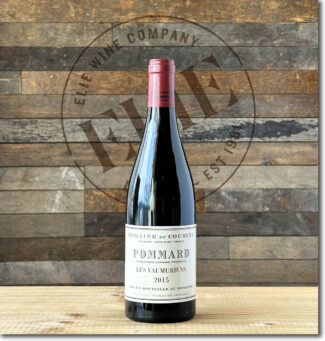 Domaine de Courcel, 2015 Pommard ‘Les Vaumuriens’ ($130)
Vaumuriens is a Village-level appellation located just above Rugiens where soils are white with limestone and fairly thin; with vines around 40 years old, the four-acre vineyard produces spicy wines with aromas leaning towards cassis, but with a slight tropical edge.
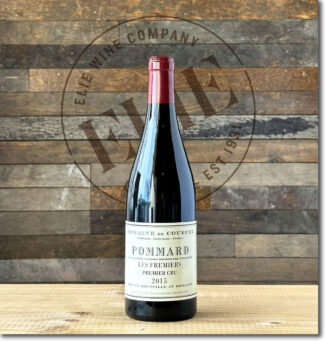 Domaine de Courcel, 2015 Pommard Premier Cru Les Fremiers ($190)
Frémiers is a two-acre climat located south of Pommard, right below Rugiens, at the base of the slope. The red and brown topsoil is rich in both clay and limestone and is deeper than that of the Rugiens; the resulting wines are elegant and sophisticated with fine-grained tannins and pie-spice aromatics.
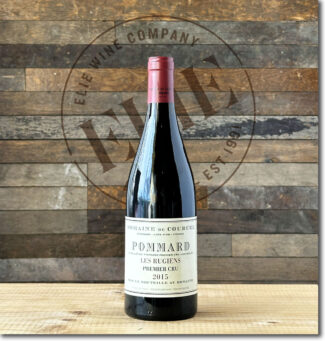 Domaine de Courcel, 2015 Pommard Premier Cru Les Rugiens ($320)
Les Rugiens consists of two parcels, Les Rugiens Haut and Les Rugiens Bas, based on their respectively higher and lower positions near the summit of the Pommard slope. The name comes from the French word ‘rouge’ and refers to the reddish soil in the vineyard, a result of high iron content. As such, these wines tend to be among the most rugged in Pommard and are generally best if cellared for a minimum of ten years.
Domaine Parent
A lawyer by training, meticulous winemaker Anne Parent is the matriarch of Pommard. Passionate not only about her wines but about the role of female vignerons in Burgundy, she founded the Women’s Winemaker Association in Burgundy and was its first president. Along with her sister, Catherine, she took over the Parent estate in 1998, becoming the 12th generation of winemakers in the family.
Parent is one of the great names in Pommard. The 25+ acre domaine boasts some of the finest parcels in the appellation, as well as holdings in Corton, Beaune, Ladoix, and Monthélie. Recent vintages have seen the domaine firing on all cylinders as they have moved towards an organic (certified 2013) and biodynamic approach to viticulture. Anne believes that these techniques help the soil regain its energy, and subsequently produce the most balanced fruit possible. Her aim is to make, “wines with character and personality, but also subtle, complex and sensual,” while maintaining the health of the environment and the people that work the vines.
Anne Parent calls 2015, “A very yum-yum vintage!”
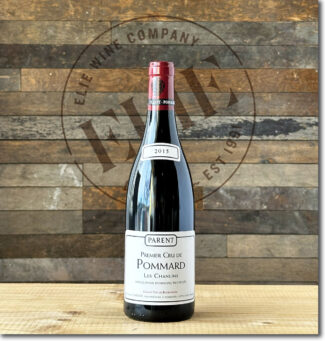 Domaine Parent, 2015 Pommard Premier Cru Les Chanlins ($150)
Les Chanlins is an 80-year-old climat with an ideal location abutting Volnay Premier Cru Les Pitures and Pommard Premier Cru Les Rugiens Haut. Here, limestone-heavy soils combine Pommard’s power with Volnay’s trademark elegance to make Pinot Noir with a sublime combination of grace and intensity. Parent’s is vinified with 5% whole clusters and was matured in 50% new oak.
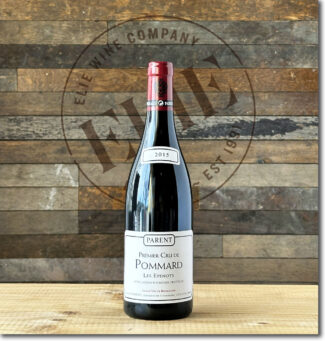 Domaine Parent, 2015 Pommard Premier Cru Les Epenots ($180)
Pommard has no Grand Crus; Épenots—which may be worthy of the status—is one of two parcels under the name Les Épenots (Grand and Petit) situated in the north of the commune on 62 acres of clay and calcareous soil. The word Épenots comes from the French épine, referring to the spiny bushes that once surrounded the vineyard. Parent’s wine is a blend of Grands and Petits Épenots, with half whole bunch and half new wood.
Santenay
Jean-Marc Vincent, president of the Santenay producers association, maintains that the appellation has gotten an undeserved bad rap. It’s a stereotype, he believes, that might be rooted in the fact that Santenay has no Grand Cru vineyards: “And yet, so far in the 21st century, Santenay has produced more than 50 wines rated 90 points or higher in ‘Wine Spectator‘ blind tastings, with retail prices from $30 to well below three figures for our top Crus.”
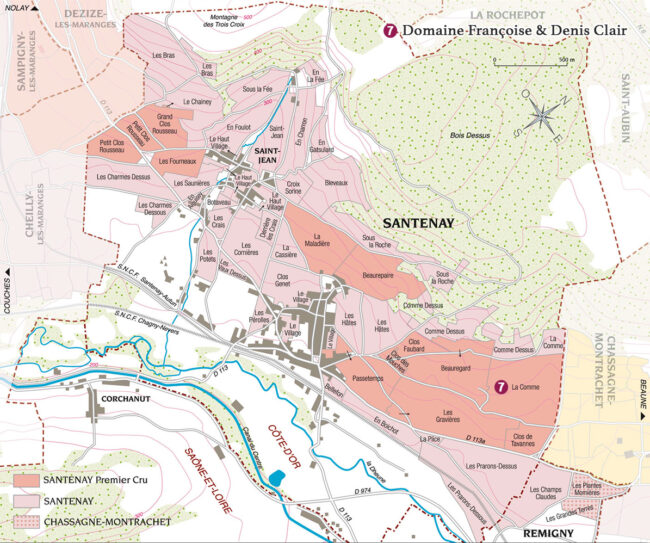
Santenay soils contain less limestone than many of its northerly neighbors, and more marlstone, although proportions vary based on where the vineyard is located—grey limestone can be found up to a height of 1700 feet, while at a thousand feet, oolitic limestone lies over a layer of marl. The ideal exposure for these vineyards is east to southeast.
Although the wines are often referred to as ‘rustic’ rather than ‘elegant’, this is not to say that the wines of Santenay do not capture the poetry of Pinot Noir; Santenay has the soul of Volnay and the body of Pommard. To those who love such earthy, complex Burgundies, Santenay is a marvelously affordable discovery.
Domaine Françoise & Denis Clair
Domaine Françoise & Denis Clair was created in 1986 when Denis set out to bottle his own wine – The Clair family had owned parcels in the Santenay area for generations but sold most of their production to négociants. Initially stretching over only 12 acres of Pinot Noir, today the domaine has expanded to 37 acres, mainly with the acquisition of Chardonnay plots from the best terroirs in Saint-Aubin, where Françoise was born and where the winery is located.
Denis built the domaine’s reputation through seductive red wines. Their son, Jean-Baptiste Clair, joined the family business in 2000 and quickly elevated the production of white wines to the highest levels of quality. The domaine takes great effort to work as organically as possible. The fruit is hand-picked and the wines are fermented by indigenous yeasts. Sulfite addition is minimal. Like most winemakers at the highest level, the aim is to produce wines that speak of the land from which they arise.
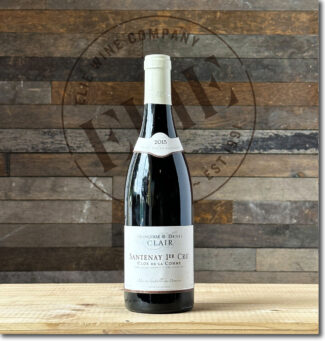 Domaine Françoise & Denis Clair, 2015 Santenay Premier Cru Clos de la Comme ($79)
The best vineyards of Santenay come from the northern end of the appellation, where they border those of Chassagne-Montrachet. Here, the increased proportion of gravel, marl and limestone in the soil adds structure and richness to the grapes, which in turn produce a more powerful wine. Premier Cru ‘La Comme’ faces southeast, allowing grapes that reach full maturity even in cooler vintages and powerhouse reds in warmer ones. The name is the regional form of Combe, because the vineyard is in the extension of the Combe of Saint-Aubin.
Notebook …
Making Sense Of Burgundy: What Makes It So Singular
Above all, terroir is an ideology; a flight of vinous fancy that insists a wine’s taste and aroma reflect its place of origin. This reflection may be subtle or overt, but there’s plenty of science behind it. Terroir includes specific soil types, topography, microclimate, landscape characteristics and biodiversity—all features that interact with a winemaker’s choice of viticultural and enological techniques.
Nowhere is this more in evidence than Burgundy, where the notion of place-identity is sacrosanct. The central role that terroir plays in every hierarchal level is not only part of the culture, but it is based on centuries’ worth of confirmation. Although in loose geological terms the entire appellation sits on an ancient limestone seabed, this unity is shattered into an immense mosaic of thousands of individual ‘climats’ from which the vine draws color and flavor. Some are ludicrously tiny—renowned Romanée, for example, is under five acres—and the secret alchemy of terroir may be diversified throughout a village, a vineyard, and even in vine rows within that vineyard.
Burgundian labels reflect that; the quality-focused grades with which we have become so familiar—Bourgogne, Village, Premier Cru and Grand Cru—each have individual sets of rules regarding yield, grapes and production methods that winemakers are legally required to follow. From there, we may or may not find the name of a climat, a term used interchangeably with lieu-dit. Although the Grand Cru wines are generally considered to be classified on the vineyard-plot level and defined as separate AOPs (with the exception of Chablis Grand Cru), some Grand Crus are in fact divided into several lieux-dits. Echézeaux, for example, includes 10, one of which has two alternative names: Les Cruots is also known as Vignes Blanches. Although it is illegal to use the name of lieux-dits on Grand Cru labels, the law is flouted in Clos de Vougeot and one or two other Grand Crus to consumer-friendly ends.
The Value Of Burgundy, Regardless Of The Price
Burgundy ‘the concept’ has always hovered in the empyrean—even if the best of the physical stuff drifted out of most rational price ranges. More than stately, austere Bordeaux, more than hedonistic Rhône, more than transcendent Champagne, more than ethereal Loire, Burgundy represents beauty and power recombinant; the Athena of wine.
Its value in the perception outstrips its value on the palate; whereas wine prices are set on reputation of terroirs, the poetry of our mental landscapes remains beyond our ability to quantify. It can only be considered by sense, not cents.
In the retail business, we’re charged with vigilance to ensure that the prices we charge is balanced by the products we sell and few places present more of a challenge than Burgundy, the most coveted wine on the planet. The changing climate may have brought more fine Burgundy appellations to market, but there are fewer of the wines themselves—yields are often a trade-off when vineyards are increasingly dry and hot throughout the season and erratic weather produces more and more crop-devastating storms. Prices have risen so sharply that sticker-shock is an inevitable part of Burgundy shopping and the shelf-dressing domains have priced themselves virtually beyond reach.
Still, although the concept of value may be on a sliding scale in Burgundy, relative bargains abound. And in any case, we can ascend straight up the hierarchy, from village wines to Premier Crus to the highly-rarefied domains of the Grand Cru, nothing will ever quite approach the finesse that Burgundy plays on the imagination.
- - -
Posted on 2024.05.01 in Côte de Beaune, Pommard, Beaune, Côte de Beaune, Savigny-lès-Beaune, Aloxe-Corton, Auxey-Duresses, Santenay, France, Burgundy, Wine-Aid Packages | Read more...
Redefining Spanish Wines: Catalunya’s Deeply Rooted, Daringly Innovative Wine Culture In The New Age Four Neo-vignerons (9-Bottle Red, White & Rosé Pack For $285)
All Things Catalunyan: Join Us for Saturday Sips To Usher In “La Diada de Sant Jordi’
‘La Diada de Sant Jordi’ falls on April 23 in the Catalan holiday calendar, a day of books and roses, and it is a great reason to resume our all-day, in-store Saturday Sips. Among the themes we will be exploring in weeks to come is ‘vinecology’—the agricultural and techno-fixes that will alter the world of wine as profoundly as global climate change is altering traditional (and non-traditional) wine growing areas.
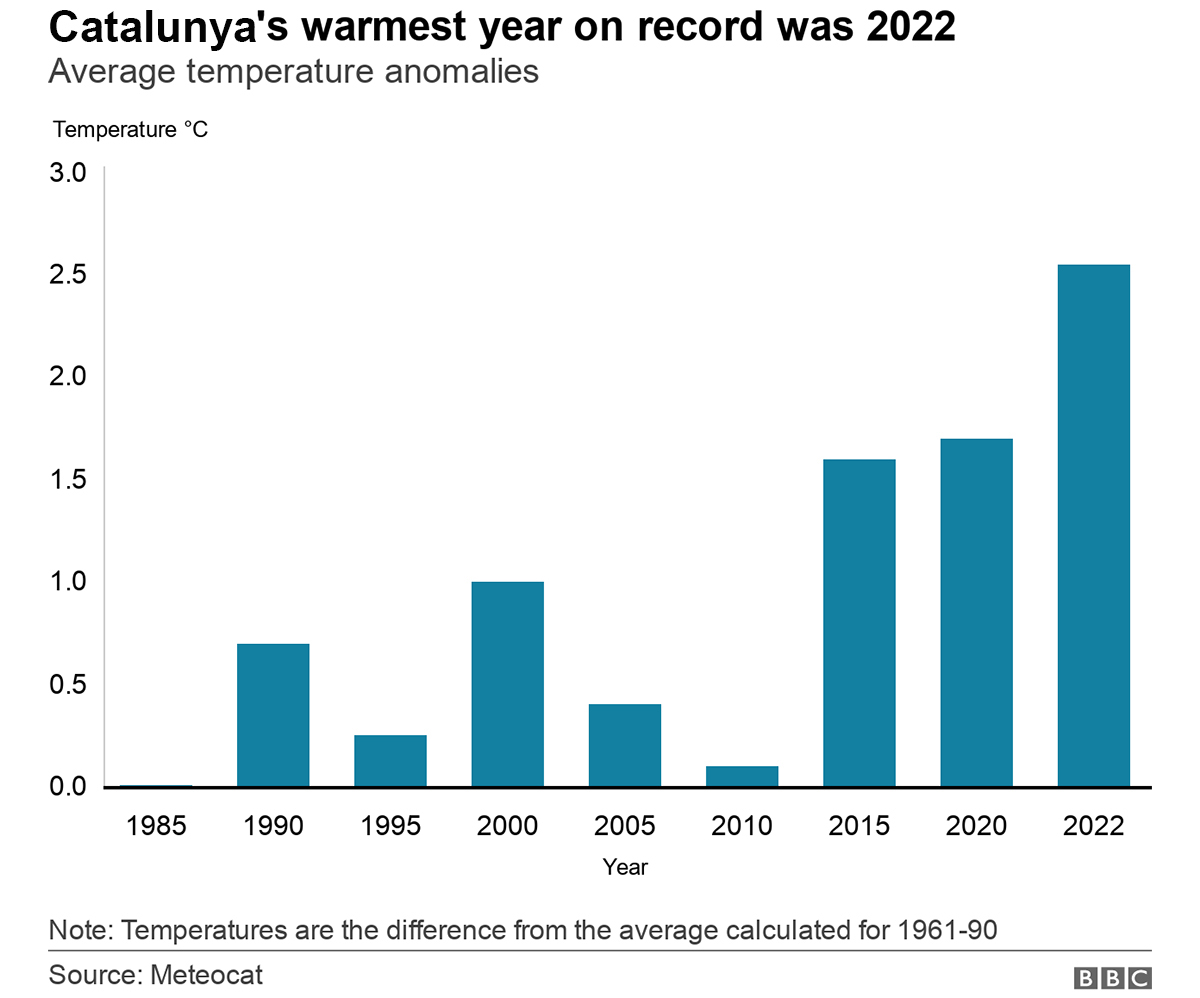
(Climate) Change Is Afoot In Catalunya
With apologies to Professor Higgins, the rain in Spain is not only dodging the plains, it’s playing havoc up and down the entire Mediterranean coast, extending from Spain to North Africa and Sicily as well. Last year, this persistent drought ranked among the ten most costly climate disasters in the world, and in real time, Catalunya is undergoing the worst drought in a century, with water reserves at 16% of capacity. Hotels are filling swimming pools with seawater and those whose livelihoods are tied to agriculture are wondering what the intensity of this summer will bring; last year, fruit growers threw out entire crops in order to use their diminishing water supplies to save their trees. Even traditionally dry-farmed industries like olive production and wine growing are crippled by these severe heat waves, and farmers who irrigate have it even worse, since by law, they are the first ones to relinquish water rights.
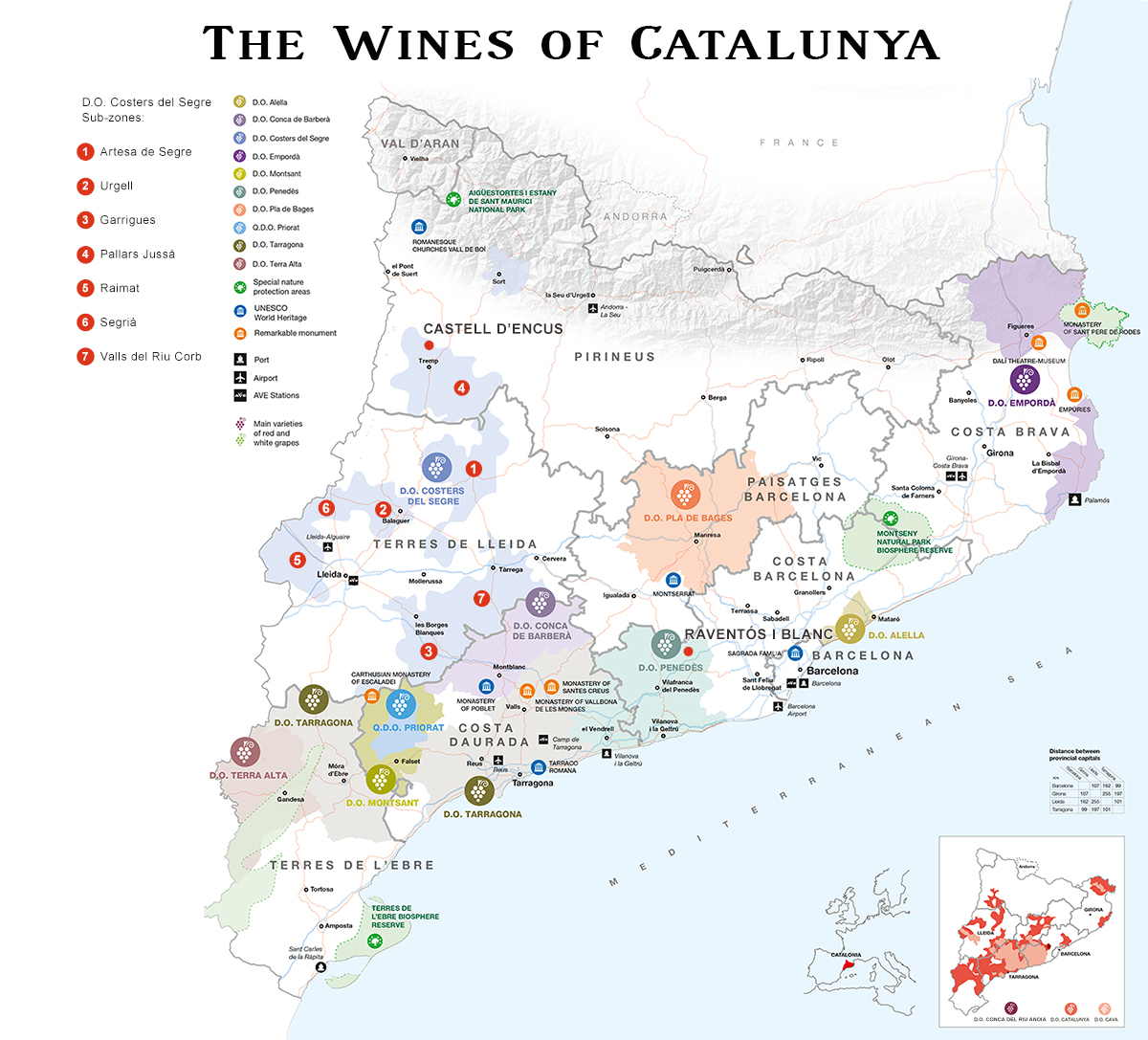
Adaptation to the climate crisis is happening throughout Catalunya; there is no other choice. But to date, much of it improvised and tends to take place only when the worst has already happened. Like the old Inuit following the caribou, modern winemakers are being forced to follow the thermometer, and this has led to an exploration of vineyard space in regions that were once too cold to produce reliable harvests.
The Vigneron’s Dilemma
It’s no secret that grape vines have been known to produce the best wines where the challenges are greatest. Vines placed under natural stress, struggling to find water and nutrients, tend to produce fruit that is more vibrant in flavor and balanced in acid with smoother tannins. Sites that are flat, well-irrigated and sunny have long been considered ‘no-brainer terroirs’ that over-produce and under-perform.
When challenged by drought, producers of this industrial-style wine reach into pockets deeper than the aquifers, and they will survive. The small winegrower, faced with mounting losses and plummeting harvests, are like the vines themselves: Sooner or later, they simply wither away.
And it is not just dryness. In Penedès, 2020 brought two times the rain of a normal year, which was followed by three years of drought. The unpredictable nature of climate change takes an emotional toll on the winemakers as well as a financial one. The dilemma they face is often less about a desire to change and more about the clock: It is well-established that vineyards stationed at higher altitudes are able to retain more water and produce higher-quality grapes, and that some varieties are more drought-resistant than others. But starting over in new regions takes time, and as climatic conditions worse, sadly, time is a resource that many wineries simply do not have.
Counter Or Adapt
With equal apologies to Jim Morrison and The Doors: Girl, when your vineyards becomes as hot as a funeral pyre, take it higher. The most delicious irony in changing weather patterns may be that regions once considered too cold for vines are warming to the point that they can produce quality wines. In Catalunya, vineyards at the foothills of the Pyrenees are being planted at altitudes up to 4,000 feet. “Twenty-five years ago, it would have been impossible,” says Miguel Torres Maczassek of Familia Torres. “At higher elevations, peak temperatures are not necessarily much cooler, but intense heat lasts for shorter periods and nighttime temperatures are colder than at lower altitudes. This increased diurnal shift (the temperature swing over the course of a day) helps grapes to ripen at a more even pace, over a longer period of time, than where temperatures remain relatively stable.”
But pushing altitudes also creates challenges: Soils, particularly on slopes, are generally poorer, water is scarcer and unexpected weather events like frosts and hailstorms are always a threat. Whereas this may ultimately result in better wine overall, the challenges for winemakers are prodigious. In the northeast of Spain, including coastal vineyards, the response has been two-fold: Adapt current vineyards to the ‘new normal’ by replanting to more heat-tolerant varietals, or eke out space at higher elevations to take advantage of the plus-side of a global negative.
Penedès
Uphill, Wealth Of Indigenous Grape Riches
About an hour south of Barcelona, nestled splendidly between the mountains and the sea, Penedès is most active growing region in Catalunya. The region contains some of the oldest wine-growing appellations in Europe, and produces consistently and reliably thanks to a multitude of terroirs. The region is best known for Cava, Spain’s answer to Méthode Champenoise sparkling wine, generally produced from the trinity of indigenous grapes, Macabeu, Parellada and Xarel·lo, occasionally fattened-up with Chardonnay, Pinot Noir, Garnatxa and Monastrell. All are permitted in various concentrations for Cava blends.
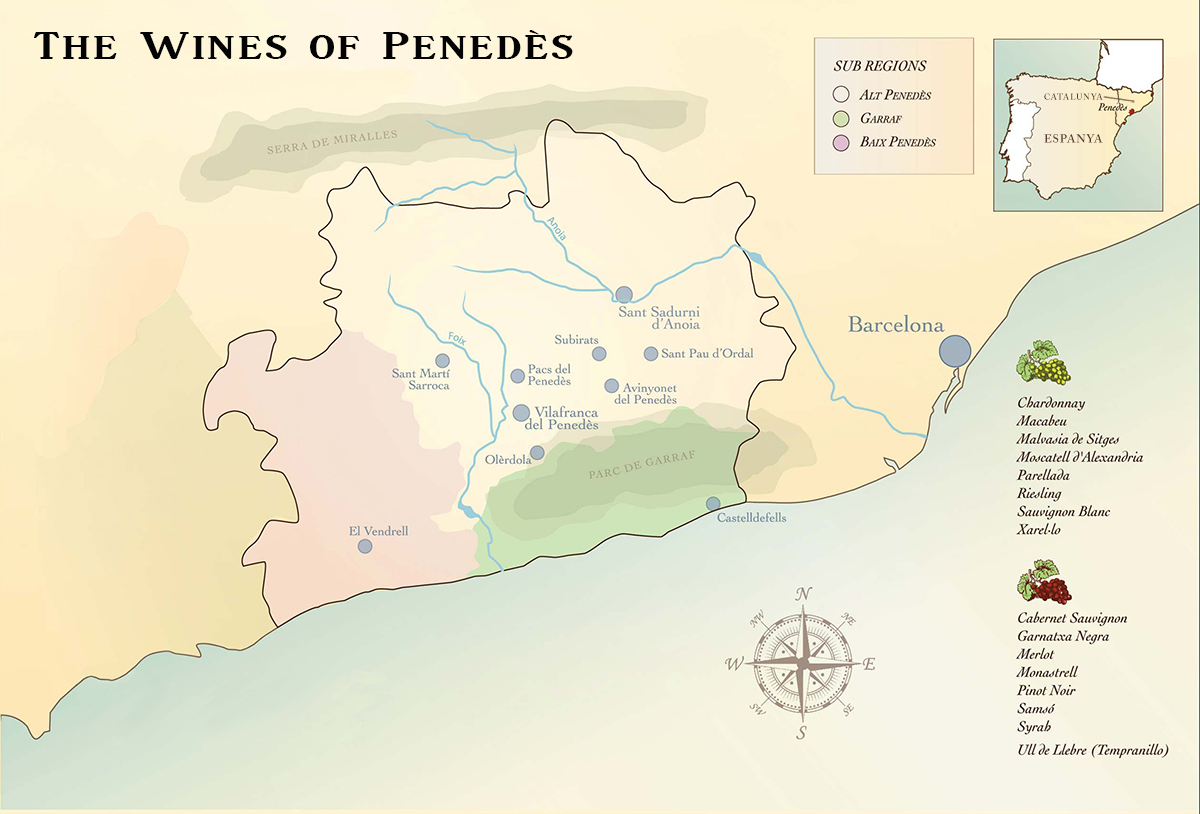
Roughly divided into three subzones, the mountainous Alt-Penedès produces the highest quality wine, followed by Baix Penedès in the low-lying coastal areas and Penedès Central, responsible for most of the region’s bulk production.
Although the area has been making wine since the days of the Phoenicians, Penedès’ modern era began in 1960 when its DO designation was granted, and—largely through the efforts of Miguel Torres—the region as a whole began to upgrade production methods, including temperature-controlled fermentation in stainless steel tanks and experimentation with non-indigenous grape varieties such as Merlot and Cabernet Sauvignon. Since then, although quality has skyrocketed among all the wines of Penedès, the region remains known primarily for its sparkling wines, making the highly regarded, oak-aged reds and crisp, vibrant whites (especially those made with the Cava standby Xarel·lo) part of a remarkable journey of discovery.
VallDolina
The name ‘VallDolina’ is a description of the landscape surrounding Can Tutusaus, an estate which has stood amid these pine groves since 1348. ‘Dolinas’ are depressions formed in areas rich in limestone soils while ‘vall’ is Catalan for valley. In 1987, seduced by this mysterious land, Joan Badell bottled his first wines and planted his first trained vines. In 1999, his son Raimon, who was then studying oenology, became a close collaborator and opted to turn the estate toward ecological and biodynamic agriculture.
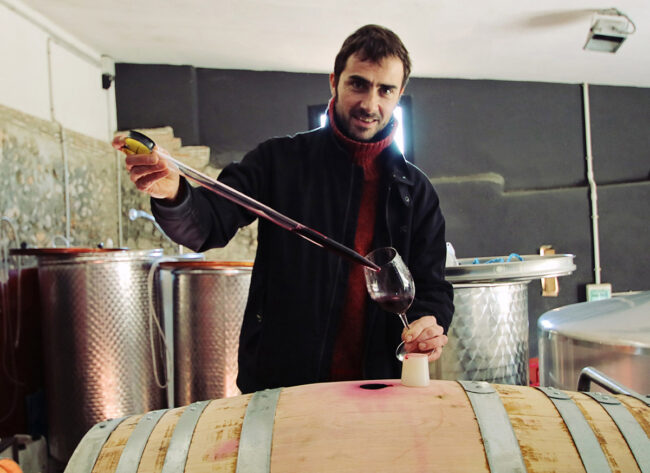
“Bottling the land,” is the way that Raimon Badell describes his interpretation of winemaking. “We only work with grapes picked from this estate,” he says, “where vines are situated between 800 and 1500 feet above sea level, bordering the Natural Park of the Massís del Garraf. The vineyards grow on hills with calcareous-clay soil and produce where the climate is distinctly Mediterranean, strongly influenced by the vicinity of the sea.”
Raimon Badell
As a team, Raimon and his wife Anna have replanted the ancient terraces set in a property otherwise dominated by pine trees interspersed with glimpses of the Mediterranean Sea. The oldest vines at Tutusaus were planted during a last-century’s craze for international grape varieties, and the Merlot remains an outstanding Spanish example of this variety.
Anna adds, “VallDolina identifies with the territory with the aim that our wines offer a sensitive expression of the landscape, with the idea of determining the different tasks following the lunar calendar as our grandparents did and at the same time using agricultural concepts the most environmentally friendly.”
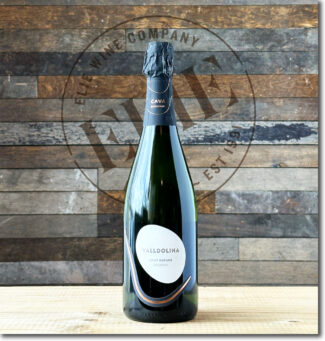 1 VallDolina, 2020 Cava Reserva Brut-Nature ($19) Sparkling
The three traditional Cava varieties, 38% Xarel·lo, 32% Macabeu, 22% Parellada with 8% splash of Chardonnay sourced from estate-owned, organically certified vineyards with red clay and limestone soils. Vinified and fermented in stainless steel tanks, with secondary fermentation inside the bottle and 24 months on lees before disgorgement.
Alemany i Corrio
There are matches made in Heaven and those made in vineyards; credit the latter to the life partnership of Irene Alemany and Laurent Corrio, whose small-batch, low-intervention wines are proving that the Alt-Penedès is among the most exciting places to be making wine today. Great wine is a technical beast, but without the intensity of passion, it loses much of its savor: “Our wine is as soft as a gentle kiss, but one where you end by biting your partner’s lip,” says Irene.
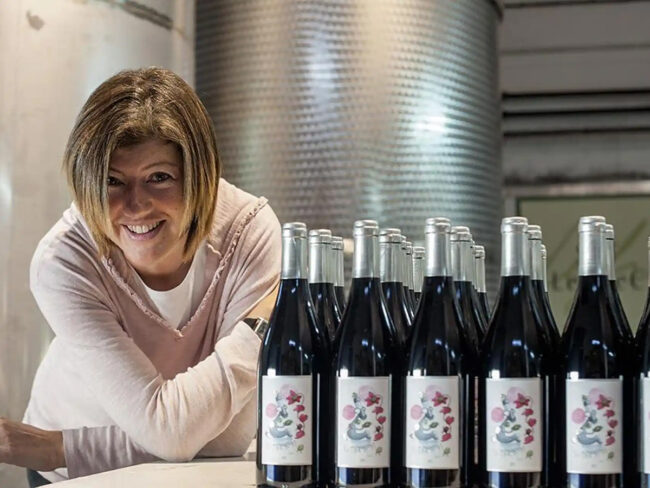
Irene Alemany
The couple met at the University of Burgundy in Dijon, then apprenticed together in vineyards in France and California. But their future was written in chalk and loam following a visit to Irene’s parents in Lavern in the Penedès; that was when Irene’s father suggested that they consider using the family vines to start their own operation. This treasure trove encompassed several varieties of grapes between 25 and 60 years old. They leapt at the opportunity—their first harvest was in 1999 and their first bottling in 2002. From the beginning, they followed their French training, remaking the classics in their own way, keeping the process as natural as possible while seeking to reflect the expression of the varieties and the character of the terroir to the maximum extent.
In the process, they are credited with producing the first ‘garage’ wines of New Penedès. Their ‘Vi de Garatge’ series may be thought of as ‘tailor-made’ wines relying on precision in both field and cellar.
“What we want to accomplish,” says Irene, “is that when people taste our wines there is something in the soul of the wine that talks to them and will make them remember.”
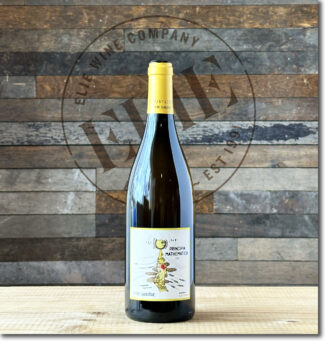 2 Alemany i Corrió ‘Principia Mathematica’, 2022 Vi de Garatge ‘Penedès’ ($30) White
100% Xarel·lo – Originating with low-yields from a seven-acre plot where the vines are over fifty years old, Principia Mathematica was fermented in French oak (10% new) and aged for ten months in foudres/stainless steel. The wine shows a Meursault-esque intensity beneath crisp white stone fruit, notably apricot, defined by a light toasted-almond undertow. 665 cases produced.
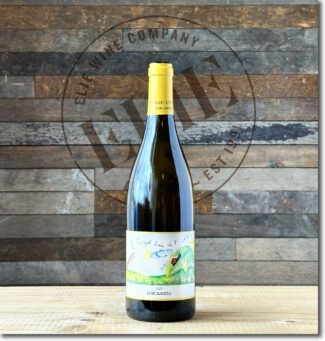 3 Alemany i Corrió ‘Cargol Treu Vi’, 2021 Vi de Garatge ‘Penedès’ ($31) White
Another pure Xarel·lo beauty; Cargol Treu Vi comes from 75 year old vines planted on chalky soil, then vinified on wild yeast in 300 liter French oak barrels, 25% new. The wine shows spring flowers, stone fruit and lemon zest behind hints of smoke with a long, salt-tinged finish. 175 cases produced.
Can Sumoi
Into a rarified atmosphere of Catalunyan pride and passion and secessionist spirit, Pepe Raventós has embellished the canvas with his own unique set of colors. Born to the vine and enamored of the bosky hills and sprawling vineyards of Catalan wine country, Raventós spent his childhood picking grapes at Sant Sadurní d’Anoia. Sant Sadurní is, of course, the home of more than eighty Cava producers and wine is cornerstone of the local economy. It’s also where 21 generations of Pepe Raventós’ family have lived, dating back to the 15th century.
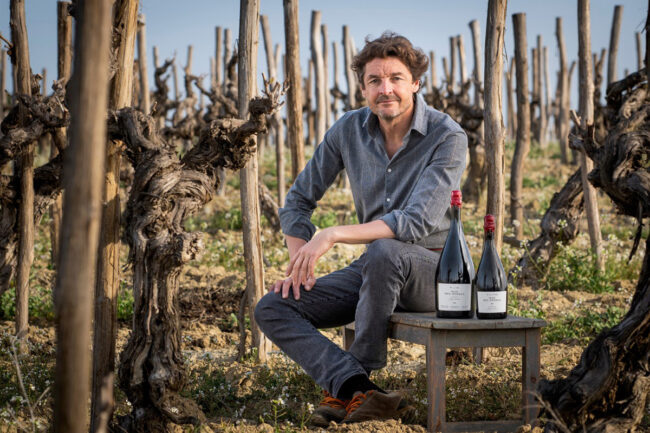
Pepe Raventós
At two thousand feet above sea level (in the Serra de l’Home range) Can Sumoi is the highest estate in the Penedès; Mallorca and the Ebro Delta are visible from the rooftop of the winery’s 350-year-old farmhouse. Below, 50 acres of vineyards sprawl across limestone-rich soil between stands of oak and white pine, which to the ecology-driven Raventós, share equal importance with the vines. “Forests,” he says, “protect the biodiversity of the estate; they are the green lungs of the world.”
The wines of Can Sumoi are also green insofar as they are produced using Certified Organic methods; vineyards are tended with natural compost, free of pesticides and with minimal intervention; a herd of sheep and goats is allowed to graze semi-freely among the vines. Certain esoteric biodynamic techniques may sound strange to laymen (such as timing vineyard activity to the phases of the moon) but to Raventós, they make perfect sense: “When the moon is ascendant, plant fluids concentrate more towards the roots of plants, and that’s when you want to do the pruning—so you don’t damage the plant.”
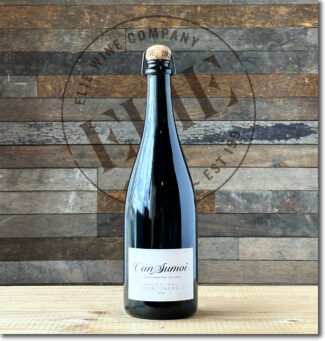 4 Can Sumoi ‘Montònega’, 2021 Espumoso ‘Ancestral’ Brut-Nature ($27) Sparkling
Montònega is a pink-berried clone of Parellada capable of producing excellent monovarietal sparkling wines, particularly when cultivated in the high-altitude Pla de Manlleu of Penedès. The wine is Pet-Nat, meaning that it is made via the traditional method without additives, stabilization or filtration. The wine is dry and savory with delicate aromas of apple skin and citrus.
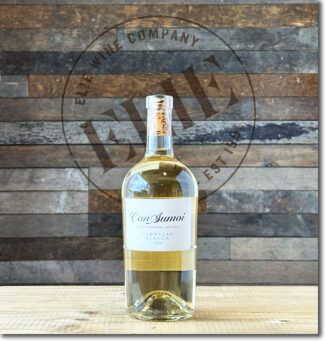 5 Can Sumoi ‘Garnatxa Blanca’, 2022 ‘Penedès’ ($28) White
This golden-hued mutation of the dark-skinned Garnatxa Negra originated in northern Spain. Can Sumoi’s is drawn from vineyards in the Serra del Montmell, nearly two thousand feet above sea level where the soils are stony and limestone-based. The wine shows apricot and lychee as well as green fruits like honeydew and pear, but the herbal quality is a defining feature.
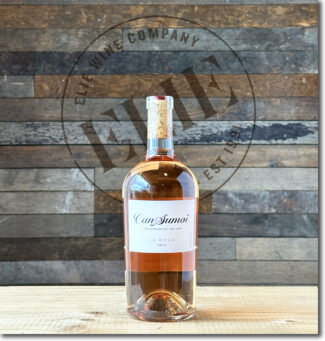 6 Can Sumoi ‘La Rosa’, 2022 Penedès ($26) Rosé
An aromatic rosé made from high-altitude Xarel·lo and Sumoll, destemmed, lightly crushed and briefly macerated, with fermentation carried out in stainless steel tanks on indigenous yeasts. A distinct and elegant expression of Mediterranean character with wild strawberry and citrus notes behind a springtime floral bouquet.
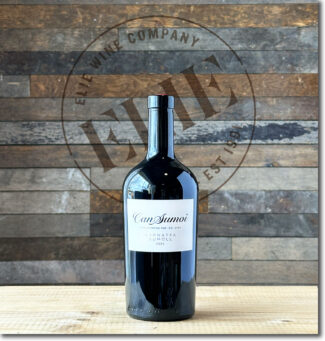 7 Can Sumoi ‘Garnatxa – Sumoll’, 2021 ‘Penedès’ ($28) Red
Mountain grapes from the highest estate in the Penedès, showing boysenberry, cinnamon and pomegranate while combining rusticity with an essential elegance that is, like salinity, a Can Sumoi trademark.
Priorat
Goliath Into David
In the ever-popular Godzilla trope, the beast periodically rises from slumber and emerges from unforgiving depths to make his presence … well, obvious.
For most of the 20th century, sleepy Priorat remained below the same sort of radar, with vineyards struggling up steep slate hills southwest of Barcelona, content (for the time being) to leave production to cooperatives, who largely made cheap, indifferent wine.
Priorat’s first rage from the obscure into the noteworthy came in the late twentieth century, when young winemakers recognized the potential of the unique Priorat soils—stuff that the Catalans call ‘llicorella’. They found this stony brown slate, occasionally sparkling with quartzite, filled with old-vine Garnatxa and Carinyena that was capable of producing muscular wines of largesse and longevity, and the first wave of truly presentable Priorat wines hit the wine world like a tsunami.
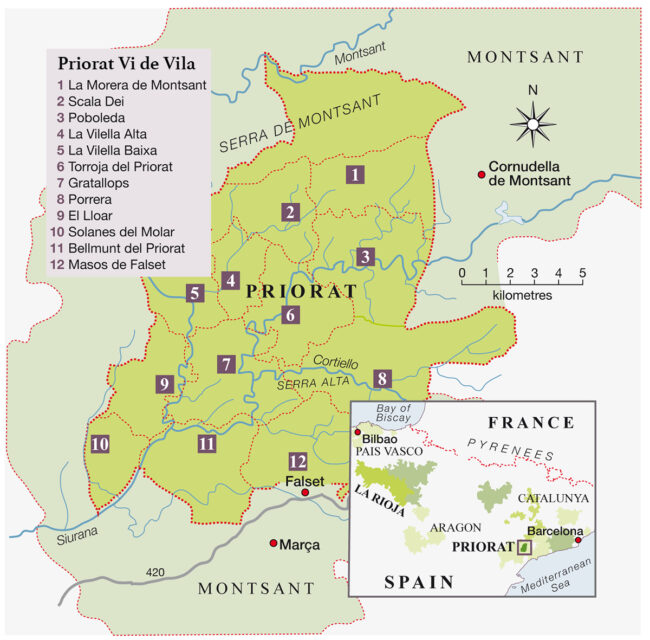
Around 2010, winemakers began to question this style; as tastes changed, such oak-heavy blockbusters lacked the most vital element toward which wine fashion was leaning: Freshness and finesse. In yet another rediscovery of identity and potential, Priorat winemakers began to change their techniques, employing Burgundian methods in part to find floral tones and mineral undercurrents in the classic indigenous grapes, and transforming the gargantuan to the graceful; Goliath, perhaps, into David, or Godzilla into the sleek and streamlined dragons of Greek mythology.
Along with this evolution, the concept of terroir has come to the forefront, with DOQ Priorat exploring a new category, Vi de Vila, in which wine from 12 areas may add the name of the local village to their labels, bringing a sense of identity into an appellation that spent most of its history being somewhat unidentifiable.
Ona
A native Spaniard, born, raised and educated in Barcelona, Núria Garrote i Esteve has dedicated many years to pursuing wine from an elite Franco-Iberian group of trailblazers. Through her partnership with several extraordinarily innovative Catalunyan winemakers, she has assembled a few special collaborative cuvées named after her daughter, Ona. The original labels were written in Ona’s own five-year-old hand, and each wine has a story to tell.
“There are as many points of view articulated through wine and cultivation techniques as there are good wines,” Núria says. “My producers are as different from each other as their farms.”
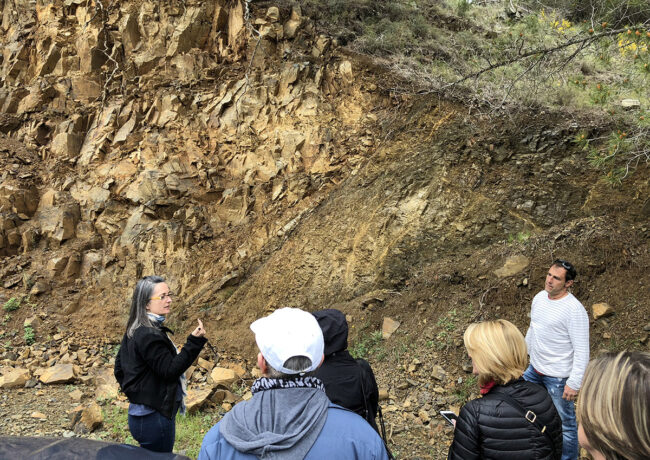
Masos de Falset hillside composed of ‘Llicorella’ consisting of reddish-black slate with small particles of mica quartz, different layers of soil filled in by clayey soil. Clos Petitona winemaker Blai Ferré i Just, right
Among Núria’s Ona-producing partners is Blai Ferré, their first collaboration was in 2013. Blai fell in love with winemaking while a teenager working the fields with one of Priorat’s leading producers, Alvaro Palacios. He then purchased a handful of acres, much of it former vineyard land that had been abandoned, and set to work planting drought-adapted rootstocks and adopting a style of under-extraction to better nurture these wines so that the dazzling minerality of Priorat’s smoky schist can shine through.
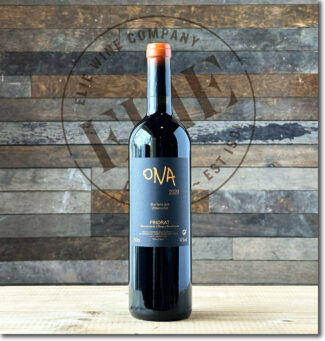 8 Ona, 2020 Priorat ($22) Red
A blend of 40% Garnatxa, 40% Syrah and 20% Carinyena 20% grown on Blai Ferré’s 12 acres; the wine is aged in stainless steel and shows ripe cherry and plum misted in smokiness, spice with wet-stone minerality on the finish. About 5000 bottles produced.
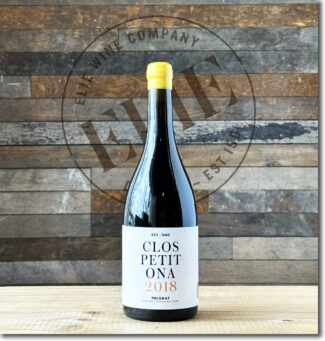 9 Clos Petitona, 2018 Priorat – Masos de Falset ($74) Red
Clos Petitona (Little Ona) is produced from a single plot located in the village of Falset, and is typical of the extreme slopes of the region, terraced against the ravages of time. It was planted in 1949 with equal parts Garnatxa Negra and Garnatxa Peluda vines, with a south-east orientation and a surface area just under four acres. Due to the age of the vines, yields are extremely low, giving the wines superb concentration and structure.
Like the plot itself, Petitona is equal parts traditional Catalan Garnatxa and a variety known as Garnatxa Peluda—‘Hairy’ Garnatxa—because the vine leaves are covered in fine hairs that make it drought resistant. Perfumed rather than floral, the wine shows an earthen nose with baking spice and especially, a touch of licorice-ash, allowing the llicorella soil to live up to its name.
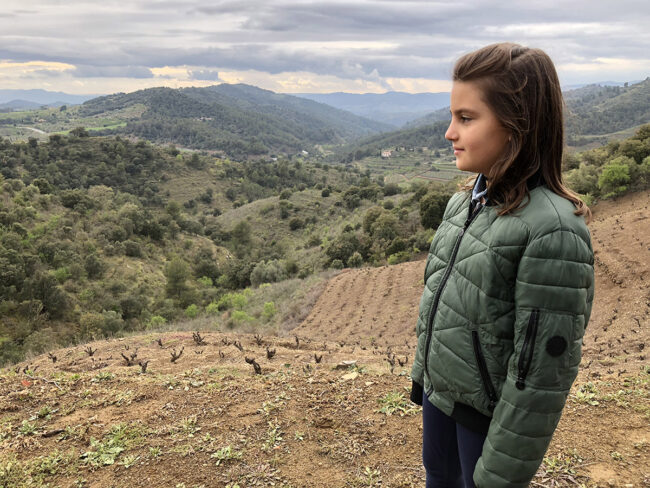
Clos Petitona, Priorat – Vi de Vila ‘Masos de Falset’
Costers-del-Segre
Higher Grounds, Resurrecting Ancient Land
Gradually moving into the modern spotlight, Costers del Segre is a Spanish Denominación de Origen for wines produced in the Catalan province of Lleida. The name is derived from the Segre river which flows from the Pyrenees mountains and reaches the Ebro River south of Lleida. The region grew to prominence as a result of a single estate, Raimat, located near the DO’s westernmost point. Raimat is Spain’s largest privately-owned winery and is considered to be one of its most inventive.
Somewhat unique in the annals of appellations, Costers del Segre was created from four separate sub-zones within a larger region; three further sub-zones were identified in 1998. Altitudes range from 800 feet to 2400 feet, and the influence of the Pyrenees offers a continental climate but the proximity of the Mediterranean reduces the risk of frost when the vines are most vulnerable. The days are warm but the nighttime temperatures are low, ensuring that the grapes retain an excellent spine of acids and structure.
Old vine plots of bush-trained Garnatxa and Macabeu can be found scattered through the region but most of the activity in the last two decades has been new plantings, especially of international varieties in innovative, wire-trained vineyards.
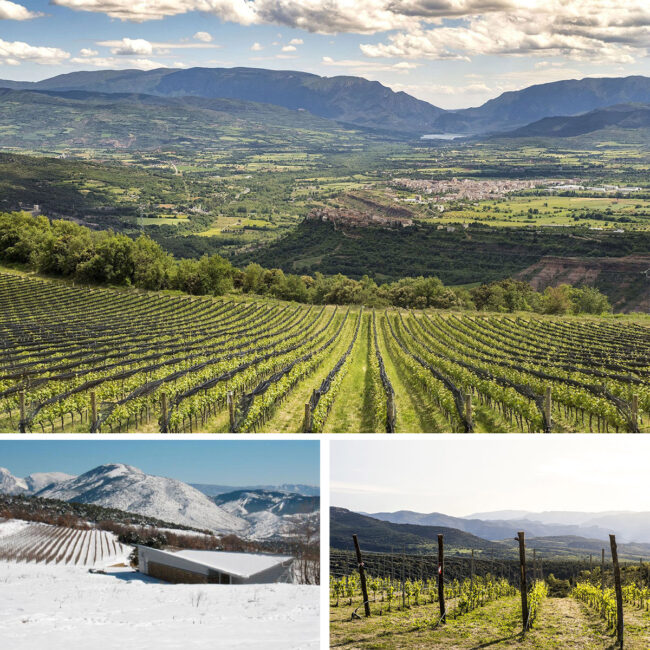
Castell d’Encus, Talarn, Lleida
Castell d’Encus
“Our philosophy is that of an organic vineyard, without herbicides, insecticides or fungicides that are not included in organic practices.” – Raül Bobet
Above all, Castell d’Encus is an experiment, and one that has been approached with all the precision and insight of a research scientist. The goal, from the outset, was to discover the methodology behind reflective, subtle, non-explosive and low-alcohol wines with aging potential at an altitude where even the old-time winemakers claimed that grapes could not thrive.
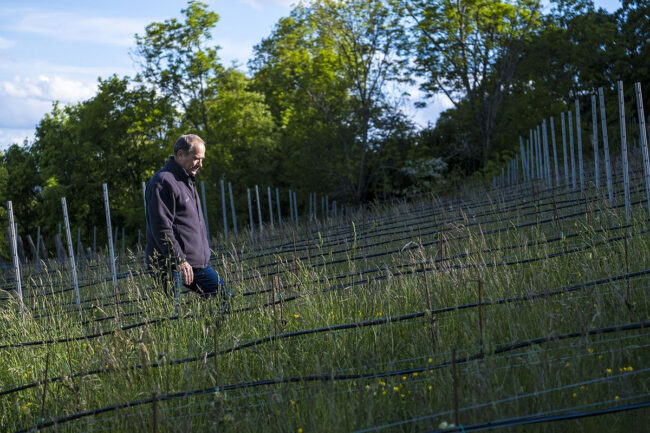
Raül Bobet
But the grand experiment has a more ecological edge, and according to Bobet, “It was vital to us to pair an excellence in mountain winemaking with environmental protection. We want to channel new actions to increase biodiversity and create awareness as an example that everyone can get involved in taking care of the Earth. From our situation, we carry out actions in order to reduce the human impact on the land, the vineyard and the environment, without using herbicides or fungicides. We take advantage of the force of gravity and geothermal energy for certain tasks in the winery.”
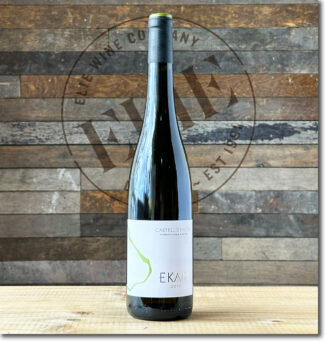 Castell d’Encus ‘Ekam’, 2019 Costers-del-Segre ‘Pallars Jussà’ ($45) White
85% Riesling and 15% Albariño sourced from a cool, southwest-facing plot in the Pallars Jussà comarca, located between the Lleida Plain and the Pyrenees. Ekam means ‘divine unity’ in Sanskrit and offers an intense bouquet of kiwi, grapefruit, peach and ripe green apple and light kerosene notes which will develop and mature with age. Fermented in 2500 and 5000-liter tanks at low temperature, it is ‘trocken’, or dry. 2500 cases made.
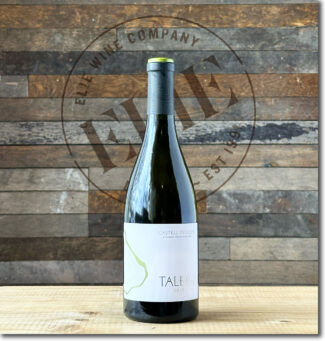 Castell d’Encus, 2018 ‘Taleia’ Costers-del-Segre ‘Pallars Jussà’ ($48) White
95% Sauvignon Blanc, 5% Semillon; this classic Bordeaux lowland blend as interpreted by Raül Bobet’s mountain sensibilities: Fermented on native yeast in a combination of medieval stone vats, French oak and stainless steel, a time on the lees adds richness and complexity. The wine presents notes of vanilla from the barrel-time, which melds wonderfully with the fruit’s essential quince, apricot, lime and straw flavors. 1700 cases made.
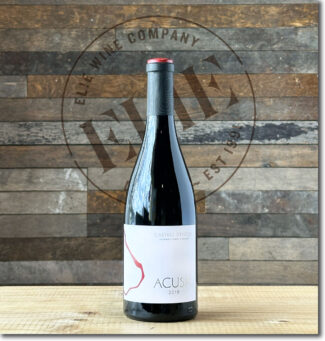 Castell d’Encus ‘Acusp’, 2018 Costers-del-Segre ‘Pallars Jussà’ ($66) Red
Hand-harvested using small, 10 kg crates, this 100% Pinot Noir wine, drawn from high-density vines, was fermented in a combination of stainless-steel tanks and in the open-air stone vats. It underwent secondary, malolactic fermentation in French oak barrels and has a light, silky mouthfeel with modest tannins and acidity behind savory, earthy aromatics accented by scents of white peaches, lilac and bright citrus, raspberry and chalk. 1500 cases made.
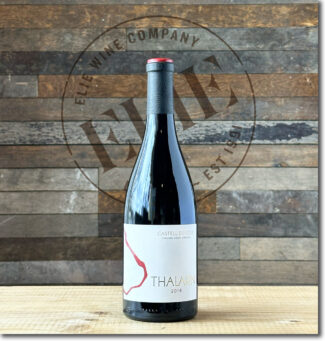 Castell d’Encus ‘Thalarn’, 2018 Costers del Segre ‘Pallars Jussà’ ($63) Red
100% hand-harvested Syrah fermented in the 12th century carved stone vats on the property, the remainder in new French wood and stainless-steel vats. 100% of the wine underwent malolactic fermentation in French oak barrels, where it then aged for 12 months. The wine shows notes of chocolate and plum with a lighter hints of tobacco, blackberry jam and a dusting of cinnamon, with licorice on the finish.
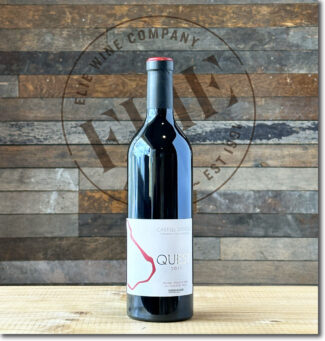 Castell d’Encus ‘Quest’, 2017 Costers-del-Segre ‘Pallars Jussà’ ($66) Red
‘Quest’ is the heart of the matter—the question itself: Can Bordeaux varieties produce at such elevations? The answer is yes, as this elegant blend of 55% Cabernet Sauvignon, 20% Merlot, 15% Cabernet Franc and 10% Petit Verdot demonstrates. 100% fermented in the estate’s famous stone vats, Quest displays a nicely concentrated profile with bright summer fruit and the hint of green pepper that is often a hallmark of cool climate reds. The tannins are finely-grained and linger with the acidity, showing great potential for cellaring. 360 cases made.
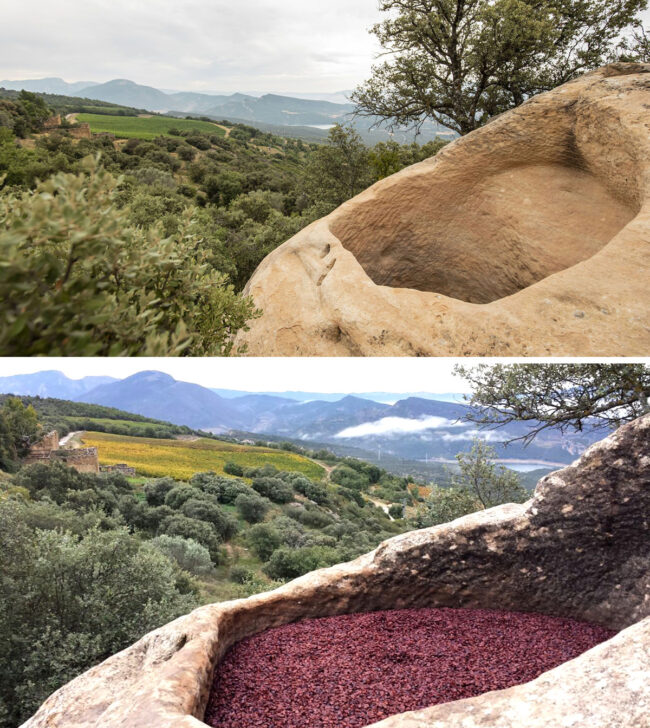
12th Century Stone Vats (Fermenters)
- - -
Posted on 2024.04.23 in Saturday Sips Wines, France, Penedes, Priorat DOQ, Wine-Aid Packages, Catalunya, Costers del Segre | Read more...
A Year In Burgundy: The Incomparable 2015 Côte de Nuits Wines Realize Their Potential, And Articulately Express The Distinctive Characters Of The Region’s Diverse Terroirs
What do you get when you blend an ideal vintage with top terroirs and then let the wine mature within a perfect setting for nearly a decade?
You get the ideal expression of Pinot Noir in all its textural plenitude, aromatic complexity and sapid savoriness.
The wines in this collection represent the glory that our finest producers were able to coax from the iconic 2015 vintage in the Côte de Nuit, and although many of them drank well upon release, it is only with bottle age that such wines are able to offer their genuinely incomparable insight into the character of the land and the families which have translated this into wine.
The Value Of Burgundy, Regardless Of The Price
Burgundy ‘the concept’ has always hovered in the empyrean—even if the best of the physical stuff drifted out of most rational price ranges. More than stately, austere Bordeaux, more than hedonistic Rhône, more than transcendent Champagne, more than ethereal Loire, Burgundy represents beauty and power recombinant; the Athena of wine.
Its value in the perception outstrips its value on the palate; whereas wine prices are set on reputation of terroirs, the poetry of our mental landscapes remains beyond our ability to quantify. It can only be considered by sense, not cents.
In the retail business, we’re charged with vigilance to ensure that the prices we charge is balanced by the products we sell and few places present more of a challenge than Burgundy, the most coveted wine on the planet. The changing climate may have brought more fine Burgundy appellations to market, but there are fewer of the wines themselves—yields are often a trade-off when vineyards are increasingly dry and hot throughout the season and erratic weather produces more and more crop-devastating storms. Prices have risen so sharply that sticker-shock is an inevitable part of Burgundy shopping and the shelf-dressing domains have priced themselves virtually beyond reach.
Still, although the concept of value may be on a sliding scale in Burgundy, relative bargains abound. And in any case, we can ascend straight up the hierarchy, from village wines to Premier Crus to the highly-rarefied domains of the Grand Cru, nothing will ever quite approach the finesse that Burgundy plays on the imagination.
Making Sense Of Burgundy: What Makes It So Singular
Above all, terroir is an ideology; a flight of vinous fancy that insists a wine’s taste and aroma reflect its place of origin. This reflection may be subtle or overt, but there’s plenty of science behind it. Terroir includes specific soil types, topography, microclimate, landscape characteristics and biodiversity—all features that interact with a winemaker’s choice of viticultural and enological techniques.
Nowhere is this more in evidence than Burgundy, where the notion of place-identity is sacrosanct. The central role that terroir plays in every hierarchal level is not only part of the culture, but it is based on centuries’ worth of confirmation. Although in loose geological terms the entire appellation sits on an ancient limestone seabed, this unity is shattered into an immense mosaic of thousands of individual ‘climats’ from which the vine draws color and flavor. Some are ludicrously tiny—renowned Romanée, for example, is under five acres—and the secret alchemy of terroir may be diversified throughout a village, a vineyard, and even in vine rows within that vineyard.
Burgundian labels reflect that; the quality-focused grades with which we have become so familiar—Bourgogne, Village, Premier Cru and Grand Cru—each have individual sets of rules regarding yield, grapes and production methods that winemakers are legally required to follow. From there, we may or may not find the name of a climat, a term used interchangeably with lieu-dit. Although the Grand Cru wines are generally considered to be classified on the vineyard-plot level and defined as separate AOPs (with the exception of Chablis Grand Cru), some Grand Crus are in fact divided into several lieux-dits. Echézeaux, for example, includes 10, one of which has two alternative names: Les Cruots is also known as Vignes Blanches. Although it is illegal to use the name of lieux-dits on Grand Cru labels, the law is flouted in Clos de Vougeot and one or two other Grand Crus to consumer-friendly ends.
2015 Burgundy: Hedonist’s Vintage
No one could better sum up Burgundy 2015 more splendidly than Jacques Devauges of Clos de Tart: “To make bad wine in 2015, one must wake up and say to yourself, ‘I will make bad wine.’”
This is not to say that it was an easy vintage—just a successful one. In fact—if the pun may be forgiven—the challenges ran hot and cold. Frost affected many Grand Cru vineyards early in the season and proved to be a harbinger of wet and cool temperatures in May. In mid-June, the weather became balmy, then hot, then seriously dry. According to Eric Remy at Domaine Leflaive, “Between June to August, we had 35 days when the temperature was above 30 degrees C and 15 days when the temperature was above 35 degrees C.”
The grapes were under hydric stress for most of that time; August brought off and on downpours, effectively saving the vintage, although the harvest window was narrow because potential alcohol levels were creeping up while acidity was dropping. White wine producers harvested end of August and nearly all the red wine producers harvested in the first week of September.
In all, there were many decisions a grower could have made in 2015 because there was so much material to work with. Some of the reds are elegant and ethereal—purposefully made so with light maceration and gentle handling. Others are dense, chewy and full-bodied, reminiscent of wine from warmer climates. Cécile Tremblay of the eponymous Vosne-Romanée domain says, “2015 had the best ripeness at harvest since I started winemaking. There was big quantity of polyphenols and too much of everything – I kept thinking of what to do with it. The big question was: Who am I making this wine for and what is the wine’s drinking window?”
In all, 2015—especially for red wines—has been heralded as having ‘nearly the concentration of 2005 allied with the sensuality of 2010.’
Ten Years After
That the finest Burgundies improve over time is no revelation. What is particularly interesting is that, unlike many age-worthy wines, Burgundy follows a somewhat unique path. There is no ‘peak’, for example—you make that discovery over the years as you sample a specific vintage from given label. There is a sort of ‘sine’ wave with multiple peaks and valleys. If a wine is unfriendly today, don’t assume it has passed its pinnacle—just push it further back in the cellar, and you’ll likely be rewarded.
For every rule in Burgundy, there are countless exceptions, but an experienced cellar master will tell you that after a few years in the bottle (generally between five and eight), when the fruit begins to fade a bit, there is a period when the wine may taste thin and a bit shrill. You might revive the old optimistic tombstone inscription: ‘Not dead, but sleeping.’
If the original wine was from a good vintage and was produced with circumspection, it will reanimate with tertiary notes—the fruit dries out to evoke raisin, fig or prune and more savory and musky aromas emerge as well, evocative of licorice, leather, mushroom, tobacco and dried bracken on a forest floor.
The wines in this collection have just entered this phase where the springtime purple notes have grown into the russet tones of autumn; along with us all, the refreshing, youthful smells of blackberry and cherry cola have matured into the introspective richness of adulthood.
Côte de Nuits
The Champs-Elysées Of Burgundy
Named after its principal town, Nuits-St-Georges, the Côte de Nuits produces the greatest red wines of Burgundy. As in its counterpart, the Côte de Beaune, not all the wines are created equal; the best are from a narrow, mid-slope band of limestone and from vineyards facing south-east to maximize exposure to the sun. This precise mix of soil and sunshine allows Pinot Noir to showcase an extraordinary range of textures and flavors.
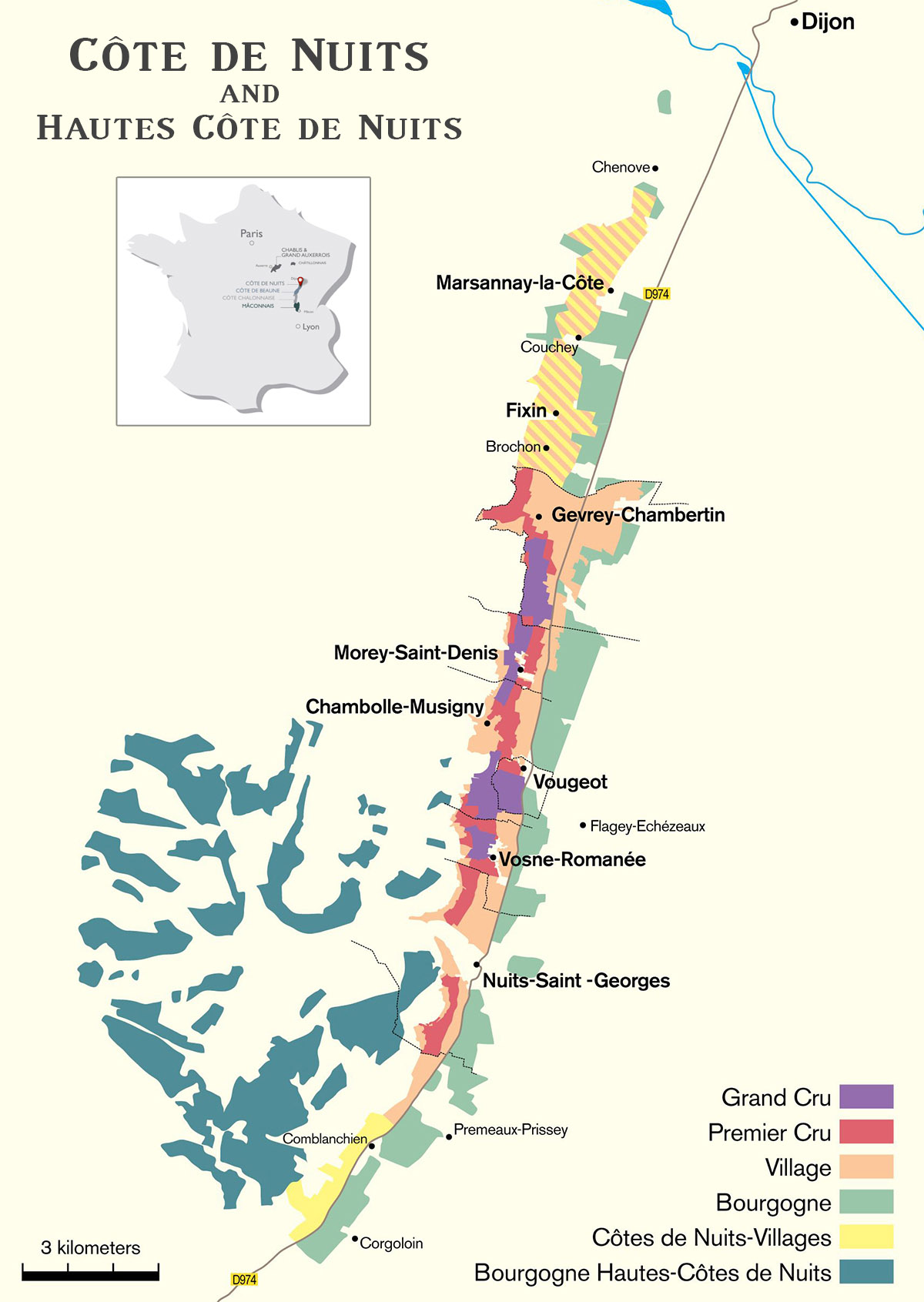
Côte de Nuits is subdivided into eight designated villages; Chambolle-Musigny, Fixin, Gevrey-Chambertin, Marsannay (which also has a separate designation for rosé), Morey-Saint-Denis, Nuits-Saint-Georges, Vosne-Romanée and Vougeot. The area includes 24 superlative vineyard sites clustered around six communes and designated Grand Cru and over a hundred Premier Cru sites. In addition, there are two district appellations: Côtes de Nuits-Villages, which are wonderfully elegant and affordable reds that are ready to drink upon release, and Bourgogne Hautes-Côtes de Nuits, which consists of some 20 villages in the hills west of the vineyards of the Côte de Nuits that produce wines with this appellation.
Marsannay
Within Burgundy’s hierarchy, Marsannay is a fairly new invention. The northernmost commune in Burgundy’s heart only achieved Village status in 1987; prior to that, its grapes were restricted to use in regional wine. Suffice to say that the growing pains of such a phenomenon may take decades, and to date, Marsannay contains none of the storied Grand or Premier Crus in the carefully delineated Burgundy classification system.
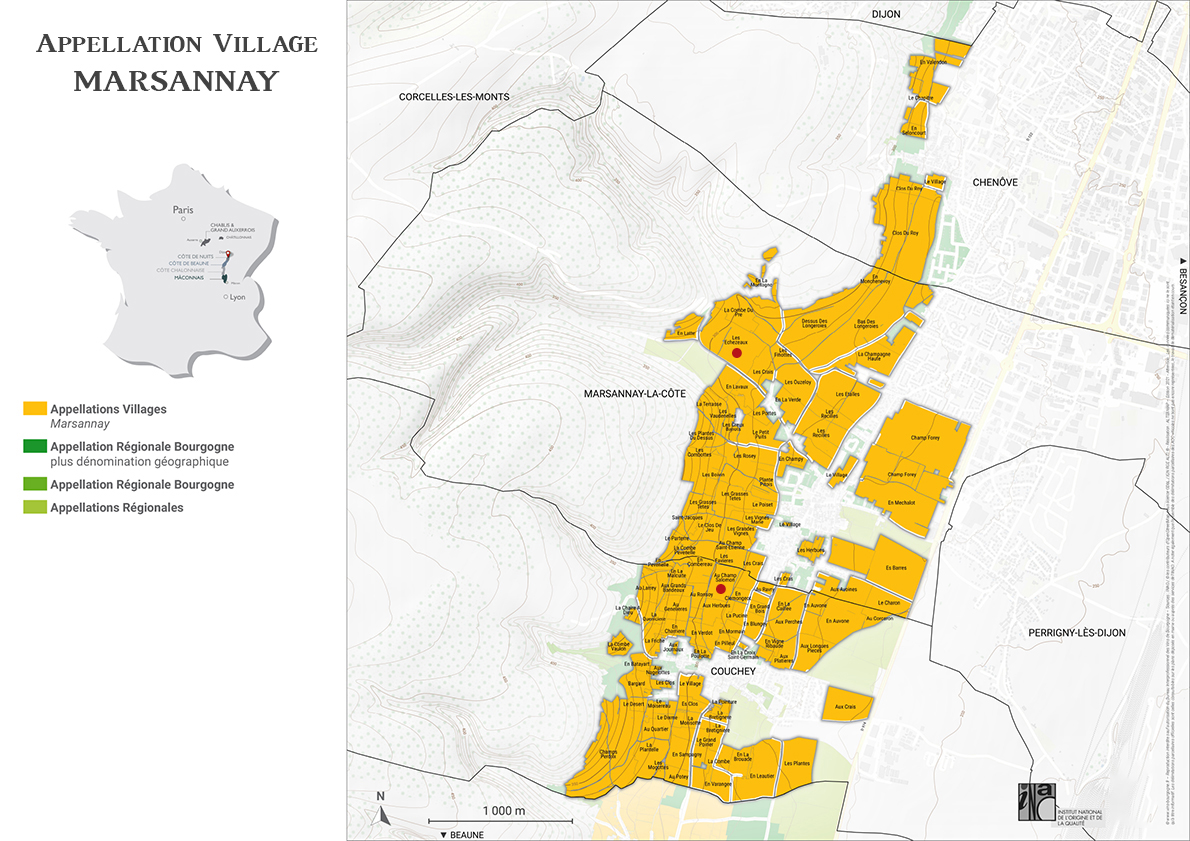
And this is good news for bargain hunters. In Burgundy most emphatically, wine prices are set on reputation as much as anything else. As such, Marsannay wines represent unparalleled value, especially since many individual estates have forged new commitments to improve what history and nature has provided.
Méo-Camuzet Frère & Soeurs
Méo-Camuzet Frères & Sœurs is the Méo-Camuzet négociant entity of Domaine Méo-Camuzet and works closely with local growers to source the best fruit available; the Méos oversee vineyard management, and they care for the wines in the cellars with the same attention to detail and respect of terroir that they do those of the domain.
 Méo-Camuzet Frère & Sœurs, Marsannay ($150)
The 2015 Marsannay is full-bodied, lively and muscular with fine tannins, good length and plenty of staying power under the hood.
Domaine Bart
Sixteen years ago, the winegrowers of Marsannay started the process of having part of the appellation upgraded to Premier Cru. At Domaine Bart, which produces as many as nine different Marsannay bottlings in a given vintage, it is believed that 25% and 30% of the appellation is up for this bump upstairs. Pierre Bart, the sixth generation to run Domaine Bart, says, “We are trying to show which climats would be of interest and which ones should remain in the village appellation. My guess is that there will be five or six Premier Crus. probably the largest ones like Champs Perdrix, Champ Salomon, Clos du Roi, Longeroies and Montagne.”
The Bart domain covers 54 acres, mostly in Marsannay, but with a few parcels in Fixin, Gevrey-Chambertin, Chambolle-Musigny and Santenay.
“My grandmother comes from the same family as Domaine Bruno Clair,” explains Pierre Bart. “Part of the vines come from that side of the family, part from my grandfather’s side. The Bonnes-Mares and the Chambertin-Clos de Bèze mainly come from my grandmother. 35 years ago, when my uncle arrived at the domain, the style of the wines changed. He increased the size of the holding, mainly in Marsannay. He chose to improve quality, both in terms of equipment and in winemaking. Since then we haven’t changed our vision a single iota.”
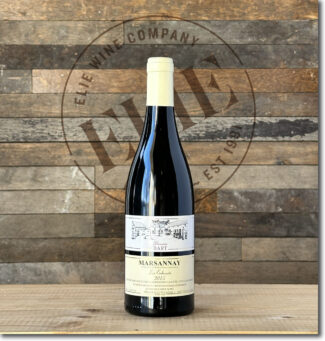 Domaine Bart, Marsannay ‘Les Echezots’ ($68)
‘Echezots’ parcel in Marsannay is one of the coolest in the entire commune—it is in the northern reaches of the appellation, which is already in the north of Burgundy. Echezots soil is pebbly with lots of stones and gray silts from the nearby Combe du Pré. As such, the wine displays an austere character where the fruit is lively and integral, but somewhat background compared to the mineral textures and iodine hints.
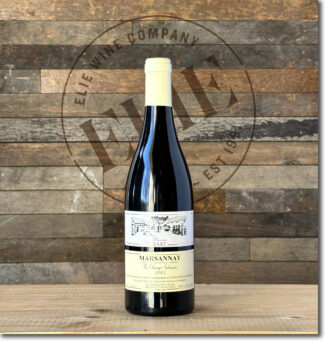 Domaine Bart, Marsannay ‘Au Champ Salomon’ ($78)
Au Champ Salomon is a mid-slope vineyard with south/southeast exposure; soils are clay-limestone formed from cone pebbles. The grapes were drawn from 40-year-old vines, hand harvested, fermented with native yeasts and aged for 18 months in 30% new oak.
Fixin
Fixin is the crème in an Oreo cookie formed by Marsannay to the north and Gevrey-Chambertin to the south; it boasts a superb terroir and unlike Marsannay, it contains six Premier Cru vineyards—La Perrière, Clos du Chapître, Arvelets, Clos Napoléon, Le Meix-Bas and Hervelets. Soils are similar, with homogenous brown limestone exploited best in exposures running east to south-east. Some vineyard plots (Hervelets, for example) have more marl, and those wines are predictably heavier and longer-lived.
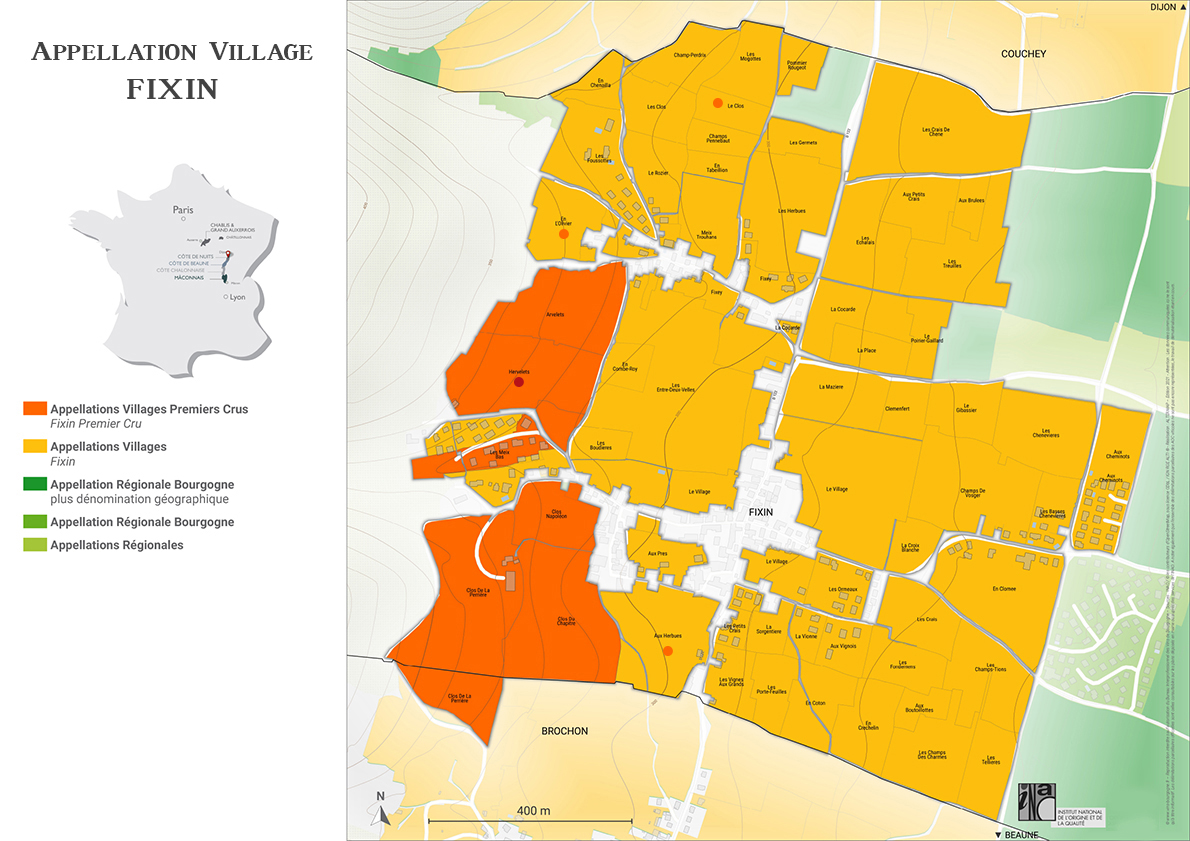
Fixin is solidly red wine country; Pinot Noir accounts for 96% of total production. Chardonnay and Pinot Blanc are also grown in small quantities, whereas Pinot Gris was decommissioned in 2011. Although the legislation permits up to 15% of Chardonnay and Pinot Blanc to be used as accessory grapes in red wines, this is rarely done. The few white wines are generally made entirely of Chardonnay, although blending with Pinot Blanc is permitted. Not much Fixin Blanc makes it out of the appellation; it remains a locally-kept, locally-consumed secret.
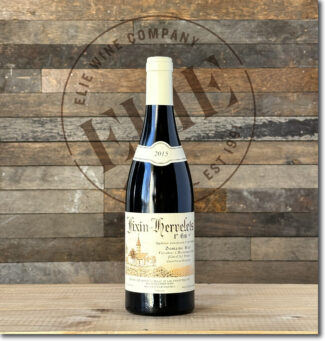 Domaine Bart, Fixin Premier Cru Hervelets ($110)
‘Hervelets’ wines (currently a bit under-the-radar) are typified by their robust, tannic, and sometimes ‘sauvage’ character. So celebrated have they been over the centuries that they were once mentioned in the same breath as Chambertin and Corton. The wine undergoes 20% whole-bunch vinification and 25% new wood.
 Méo-Camuzet Frère & Sœurs, Fixin ($160)
Grapes sourced from Le Clos, Les Herbues and En Olivier lieux-dits. Wines from these parcels show more fruit than from nearby Marsannay and less spice on the finish.
Gevrey-Chambertin
As those schooled in Burgundian lore know, during the nineteenth century it became fashionable for villages in the Côte d’Or to adopt double-barreled names, adding a hyphen followed by the name of their most famous vineyard: Thus Chambolle added Musigny and Gevrey added Chambertin.
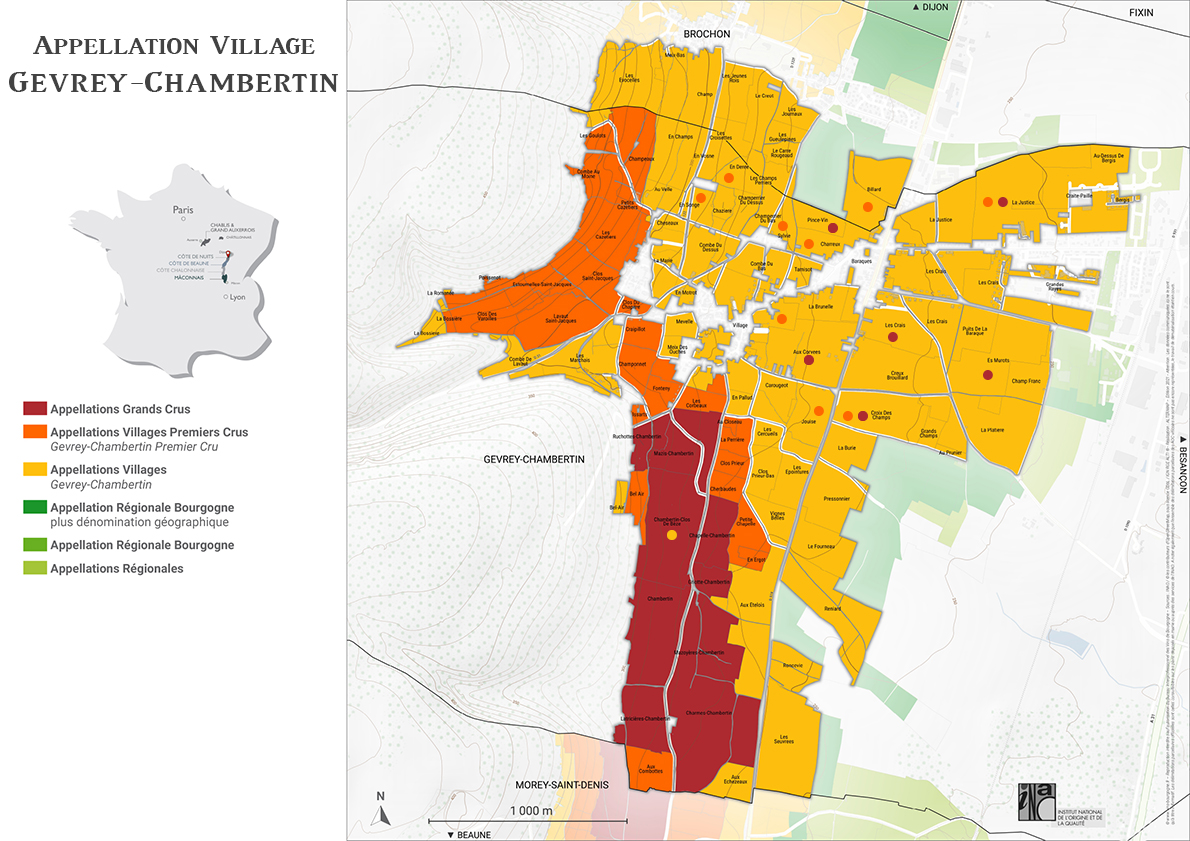
In minimalism, less may be more, and in wine—especially those with a hyphenated name—more may be less; a village-level Gevrey-Chambertin, for example, does not seek to compete with the quality of ‘Le Chambertin’ itself. But if nothing else, its name reminds you that it comes from a rarefied zip code. And to be sure, the region is hallowed grapeland, graced with the Holy Trinity of terroir—elevation, climate and soil structure. Contained within the appellation are nine Grand Crus and 26 Premier Crus (whose name on the label may be followed by the name of the climat of origin) as well as nearly a thousand acres of Village wine.
Domaine Gallois
Prior to taking over the family estate in 1989, Dominique Gallois studied catering in Paris and ran his own restaurant for six years. When he returned to Burgundy, the domain consisted of six acres in Gevrey-Chambertin which his father had managed for forty years, selling the grapes to négociants. Dominique began to renovate the property and in 1989 (after purchasing additional acreage in Combe aux Moines, Petits Cazetiers and Goulots) to bottle his own product, looking first to private customers to build a reputation. Recognizing that he works in terroir that is the envy of the world, Dominique takes special care to work the domain by hand, without pesticides or herbicides. Says Gallois, “Our year is quite full; winter months are dedicated to vine maintenance and Guyot-style pruning. During spring and summer, several tasks are performed allowing yields to be controlled and managing the healthiness of the future grapes. Harvesting is manual—we count on a small, faithful team to carry out the first sorting on the vine. Thereafter, grapes pass over a sorting table where bunches are inspected so as to conserve only the best fruit.”
 Domaine Gallois, Gevrey-Chambertin ($130)
Made up of a blend of 10 parcels situated around the village of Gevrey-Chambertin leading to a fully-rounded cuvée—contributing climats are En Songe, En Jouise, En Billard, En Dérée, Croix des Champs, Sylvie, La Justice, Charreux and two parcels of the clos surrounding Gallois’ home, where the average vine age is around fifty years. This is a textbook Gevrey-Chambertin with massive, yet velvet-smooth tannins and notes of wild game.
Domaine Régis Bouvier
Only a few producers in the Côte d’Or’s northernmost zone of Marsannay have gained international attention for the quality, specificity, and ambitiousness of their wines. Régis Bouvier is regularly mentioned among them. He has a lengthy track record of both consistency and value in this appellation that is quickly growing in prestige.
Régis owns nearly 25 acres of vineyards, mostly in Marsannay, with a few prime parcels in Morey-Saint-Denis and Gevrey-Chambertin. He vinifies all three colors – red, white, and rosé, but the red wines are his crowning achievement, managing to be simultaneously bold and refined, with aromatics to spare. This is all the result of managed yields and high quality terroirs.
 Domaine Régis Bouvier, Gevrey-Chambertin ($93)
Régis’ Village-level Gevrey is drawn from several plots (Les Crais, Aux Corvées, Les Murots, La Croix des Champs, Prince-Vin and La Justice) totaling only a little over an acre. Soils are limestone with marly clay and the vines are about 40 years old. Aged in oak—30% new—for 18 months.
 Domaine Bart, Chambertin Clos de Bèze Grand Cru ($590)
Clos-de-Bèze is one of several Grand Cru sites in one contiguous plot, of which the Chambertin vineyard is at the heart, covering the best part of the hill. The soils of de Bèze are he nearly identical to Chambertin, made up of pebbly, free-draining limestone with a good proportion of clay. This is nutrient-poor terroir that ensures the vines do not expend too much effort on leafy vigor, instead producing small, intensely flavored berries that make high-quality wines. The sunny southeastern aspect ensures that grapes reach full ripeness while retaining essential acidity in Burgundy’s cool continental climate, and as a result, Clos-de-Bèze wines are known to be incredibly well balanced. The wine sees 40% whole-bunch vinification and 50% new wood; Pierre Bart thinks Clos de Bèze tends to taste almost too ready to drink at bottling, so at the end of fermentation he brings the temperature back up and gives the wine a couple of powerful punch downs to fix a bit more tannin.
Morey-Saint-Denis
Forming a stylistic bridge between the firm, fleshy wines of Gevrey-Chambertin and the perfumed wines of Chambolle-Musigny, Morey-Saint-Denis is a wealth of Crus, including twenty Premier Crus and five Grand Crus: Clos de Tart, Bonnes-Mares, Clos de la Roche, Clos Saint-Denis and Clos des Lambrays. The best sites are planted on thin, well-drained, oolitic limestone soils that date from the Middle Jurassic, and occupy the middle slopes while lesser quality wines are produced on the highest and lowest elevations.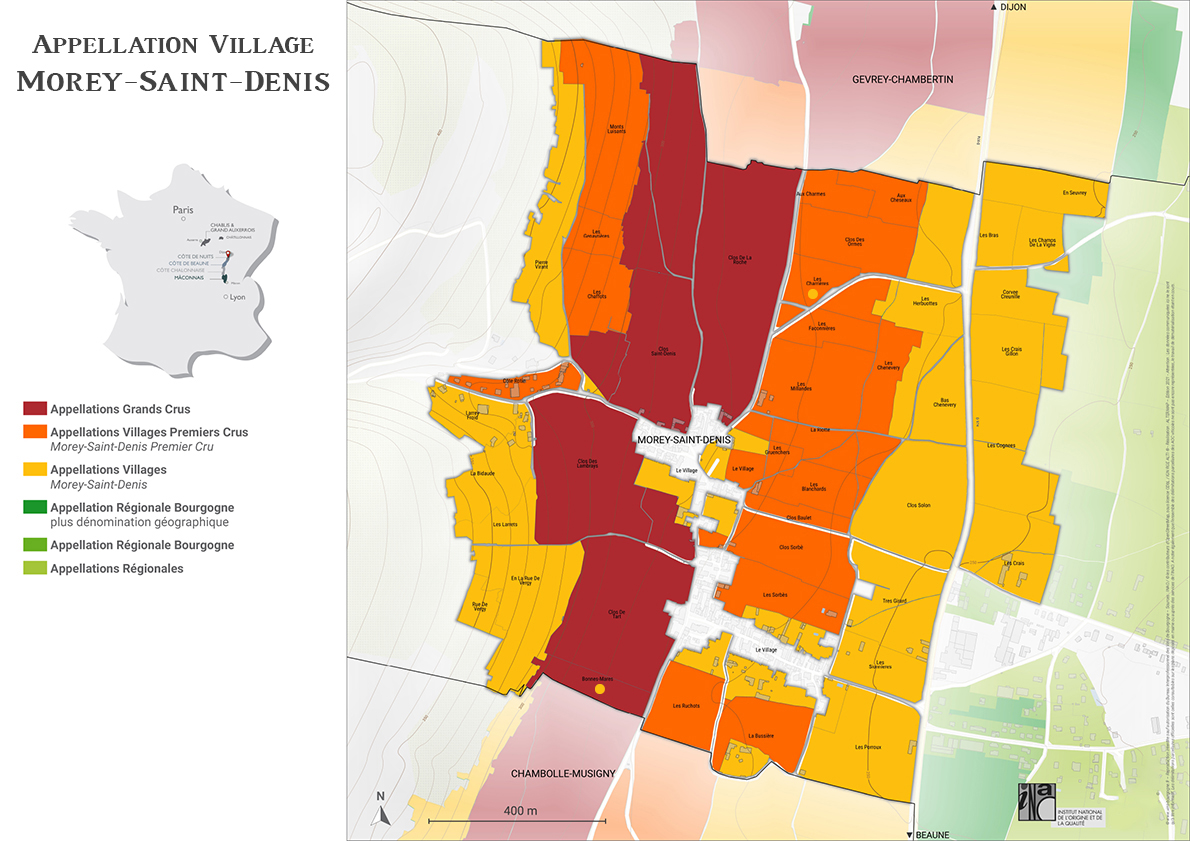
Even among Burgundy enthusiast, the Premier Cru climats are sometimes unfamiliar, due in part to the practice of blending several vineyards as a generic Morey-Saint-Denis Premier Cru bottling, something that is somewhat more common here than in other communes.
Domaine Alain Michelot
Slow evolution is a hallmark of the Alain Michelot philosophy. With twenty acres of vines, nearly all in Nuits-Saint-Georges and half of them Premier Crus, they have slipped under the radar of wine media attention, especially in the United States—despite Matt Kramer’s unbridled praise in ‘Making Sense of Burgundy.’
Change happens gradually at Domain Alain Michelot, and only in increments, methodically and rationally. But the significant shift at the top happened when Alain retired as winemaker and was succeeded by his daughter, the poetically named Élodie Michelot. Her touch has been delicate and judicious; slightly smaller yields, slightly less oak employed. As always, the grapes are 90% destalked, and cuvaison lasts around three weeks. After pressing, the must settles for a good month—a process known as ‘debourbage’—and only then is transferred to Allier and Limousin barrels. The age of the wood depends on the vintage, but is roughly a third new oak. There is no racking for the next 20 months, resulting in very fine tannins, and as is the tradition in Nuits-Saint-Georges, the wines are bottled lightly filtered, but not fined.
 Domaine Alain Michelot, Morey-Saint-Denis ($77)
Having spent 18 months in oak barrels (25% new), the wine reflects the best of the site—opulent cherry framed by bramble, violet and licorice with ‘wildwood’ emerging, especially moss and truffle.
 Domaine Alain Michelot, Morey Saint Denis Premier Cru Les Charrières ($130)
One of 20 Premier Cru climats in Morey-Saint-Denis, the six-acre Les Charrières vineyard lies on shallow, free draining marl just below the famed Clos de la Roche Grand Cru. It faces east, angling gently toward the rising sun, allowing vines to develop sugars and phenols in cool seasons but retaining enough acidity that these wines are typically described as ‘lean.’
 Domaine Bart, Bonnes Mares Grand Cru ($550)
One of five Grand Cru vineyards in Morey-Saint-Denis, the 38-acre site straddles the demarcation line where Chambolle begins; for this ‘split-personality’ reason, it is one of the most often overlooked Grand Cru climats in Burgundy. 30% whole bunch and one-third new wood; the grapes come from a 3-acre holding comprised of two large parcels sitting just above those of Domaine Comte de Vogüé.
Chambolle-Musigny
Along with Vosne-Romanée, the communes of Chambolle-Musigny and Gevrey-Chambertin round out the ‘Big Three’ of Burgundy reds. Much has been written to compare the last two, perhaps best summarized by Nadine Gublin of Domaine Jacques Prieur: “Chambertin has a colder climate and tends to have more structure than Musigny; Musigny is more forward and elegant; it has a body that is very silky and satiny, while Chambertin has greater finesse, but needs more time to reveal itself—it is more serious and discreet.”
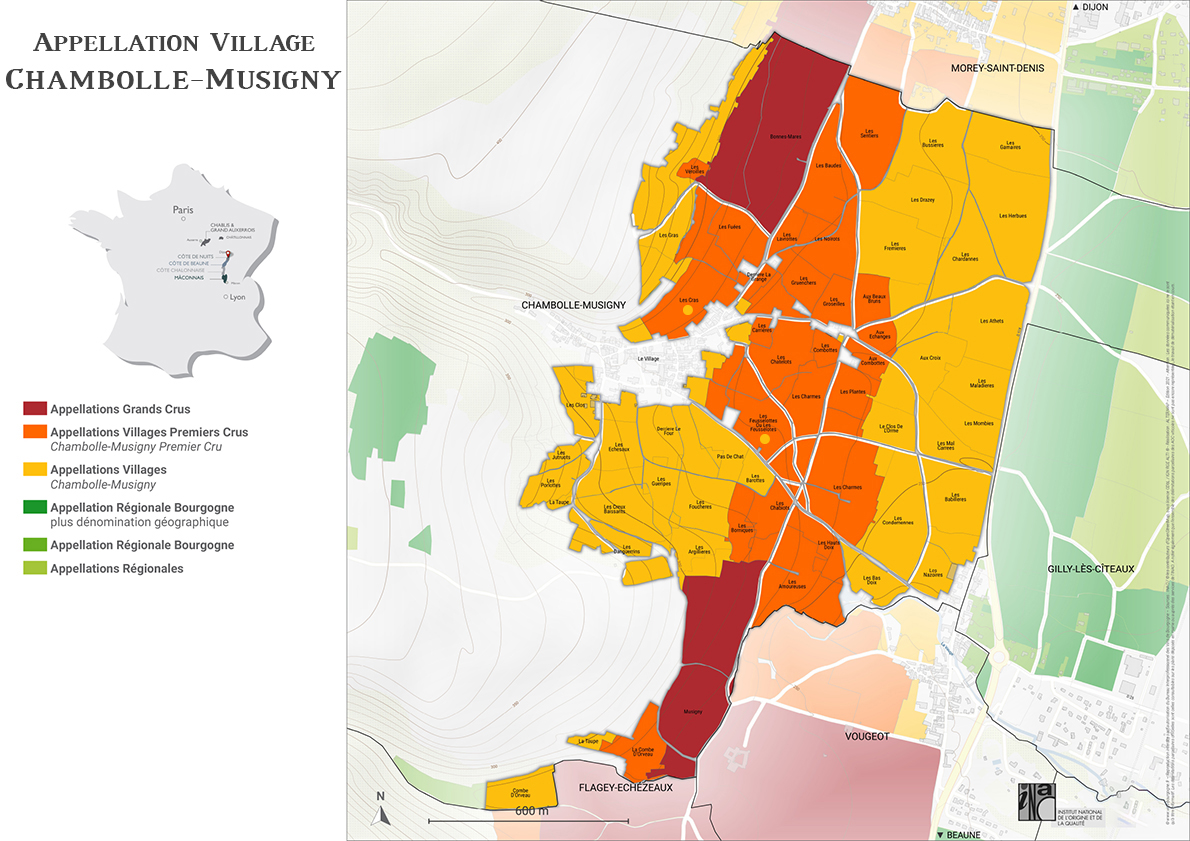
There is a marked difference in size, too: Chambolle-Musigny is relatively small, covering five hundred acres, of which 180 are Premier Cru—the appellation has 24. There are also two Grand Cru climats, Bonnes-Mares, which links its vineyards to those of Morey-Saint-Denis, and Musigny, overlooking the Clos de Vougeot. The prestigious Premier Cru site Les Amoureuses, however, is doubtless on their level.
 Méo-Camuzet Frère & Sœurs, Chambolle-Musigny Premier Cru Les Feusselottes ($390)
Les Feusselottes is a large climat located in a geological hollow between Chambolle-Musigny and Les Charmes; in general, the vineyard faces southeast, but a slight undulation makes for a variety of microclimates. Sitting on a wide alluvial fan spreading out from the Combe Ambin, Les Feusselottes has the deepest and richest soil of Chambolle-Musigny’s Premier Crus. Distinguished by this red, silty earth, the high proportion of limestone results in the wines’ pronounced mineral character.
 Méo-Camuzet Frère & Sœurs, Chambolle-Musigny Premier Cru Les Cras ($390)
The hillside on which Les Cras lies curves slightly around towards the west into the Combe Ambin, providing a unique terroir that makes Les Cras markedly different than many of the other top Chambolle-Musigny vineyards, offering more sunlight exposure than those on slopes that face due east. The limestone-marl soils are similar to Bonnes-Mares, but with higher clay content, giving the wines a little more muscle—the clay contributes minerals and hard-to-extract moisture to the vines, but the topsoil (even on the traditionally heavier lower slopes) is markedly shallow.
Vougeot
The Vougeot commune should be distinguished from its most famous vineyard, Clos de Vougeot, since it also encompasses several other fine climats (several of which are Premier Cru) and has a reputation for excellent white wines as well as reds—rather unusual for the Côte de Nuits. Even red wines from the tiny appellation are allowed to add up to 15% ‘accessory’ varieties, Chardonnay, Pinot Blanc or Pinot Gris.
Deriving its name from the small Vouge river, Vougeot (both the Clos and the satellite climats) owes its reputation to the powerful abbey of Cîteaux, who established these vineyards in the 12th century. The best wines of Vougeot are among the most masterful in Burgundy, succulent and mellow allowing a seamless balance between elegance and delicacy and meaty fullness.
 Domaine Alain Michelot, Clos Vougeot Grand Cru ($370)
Entirely walled, Clos Vougeot is iconic—one of the best known Grand Crus in Burgundy. It covers 125 acres of land, second in size only to Corton, and is equally famous for its fragmentation: It is divided into 100 different parcels owned by nearly as many producers. This creates quality issues; prior to this territorial crumble, grapes from the various microclimates in the vineyard could be blended to create a single harmonious wine. Now, a producer relies on his/her little slice of glory, and may not always produce Grand Cru-quality wares. It is safe to say, however, that the Michelot family makes a consistently wonderful Clos Vougeot, ripe with balanced fruit and soil tones.
Domaine Thibault Liger-Belair
Cousin to Vicomte Liger-Belair of La Romanée fame, in 2001 Thibault Liger-Belair took over storied family property in Nuits-Saint-Georges, reclaiming vineyards which had been contracted out to various share croppers and creating a new domaine under his own name. The properties include some of the most hallowed vineyards in Burgundy: The Grands Crus of Richebourg and Clos de Vougeot, as well as the Premier Cru of Les Saint-Georges that is one of the few vineyards in modern-era Burgundy to be considered for promotion to Grand Cru.
 Domaine Thibault Liger-Belair, Clos Vougeot Grand Cru ($490)
The grapes are drawn from an acre-and-a-half located in the southern part of the appellation, at the corner of the wall separating the Echézeaux and Clos-Vougeot; it was planted in 1948 in long rows (almost 700 feet long) on three different soils: one, with a high limestone/clay ratio, then a terroir filled with small stones, and lastly, fine silt. Harvesting is manual with 40% whole clusters; 50% of the wine is aged in new barrels between 18 to 24 months.
Domaine Méo-Camuzet
Located in the heart of Vosne-Romanée, Méo-Camuzet’s 35 acres extend through some of Burgundy’s top Crus. So much sub-dividing within families underlines the drama that is Burgundy’s legacy that it rare enough for a grower to have enough vines to be able to bottle one Grand Cru. Méo-Camuzet has six.
This is in part the work of the late Henri Jayer, one of Burgundy’s legendary winemakers. Henri spent over forty years farming parcels from Méo-Camuzet under his own label, and for three years, he mentored Jean-Nicolas Méo as he prepared to retire.
Opting to spend his time in the cellar, Jean-Nicholas has put the vineyards in the hands of Christian Faurois, the son of one of domain’s original métayeurs—a sort of sharecropper who tends the land for a portion of the produce. Beside the six Grand Crus astounding grands crus (Richebourg, Clos de Vougeot, Echézeaux, Corton Clos Rognet, Corton Les Perrières, and Corton La Vigne au Saint), Méo produces ten Premier Crus from the communes of Vosne-Romanée, Nuits-St-Georges, Chambolle-Musigny, and Fixin.
 Domaine Méo-Camuzet, Clos de Vougeot Grand Cru ($590)
Jean-Nicolas Méo asks and answers: “Is this a wine which expresses the Cistercian rigor which gave birth to it? No, its image is rather that of a refined gentleman.”
The 7-acre plot that the domain owns is near the top of the vineyard where there is less than 16 inches of topsoil and roots must work their way down through the cracks in the rocks to find water. About a third of the vines were planted in 1920, another third in 1960. Extraction is the name of the game in vinification and leads to remarkable length on a picture-perfect Clos Vougeot.
Domaine François Lamarche
Sixth-generation winemaker Nicole Lamarche has taken her 28 remarkable acres, from which she produces fourteen wines, and re-established the property as one of the top estates in Vosne-Romanée. This return-to-the-past of vineyards dating back to 1797, is the result of integrated viticulture, in which she manages each plot individually and restricts the use of new oak to produce wines that are paradigms of elegance and fragrance—the obligation of all fine Burgundies.
“We are graced with outstanding terroir,” Lamarche maintains. “Our vines are planted in soils of oolite and limestone that contain plenty of iron, giving it the ability to produce full-bodied, well-structured wines with deep color and an excellent capacity for aging.
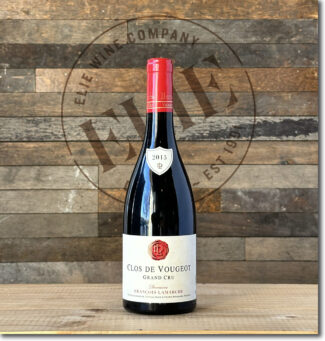 Domaine François Lamarche, Clos de Vougeot Grand Cru ($390)
The monks who tended Clos de Vougeot for nearly a thousand years clearly counted their blessings; it is also one of the few Grand Crus large enough to have multiple lieux-dits within it. Lamarche has three parcels—one near the château by Mugneret-Gibourg; one in the middle near Petit Maupertuis and one along the road by Faiveley. The gentle extraction and long ageing have given us wine for the ages.
Flagey-Echezeaux
Flagey-Echézeaux is commune, not an appellation, and as such, it tends to get a cursory nod in the region, even though it is home to the famous Grand Cru vineyards Echézeaux and Grands Echézeaux; its non-Grand Cru wines are sold as Vosne-Romanée or the generic regional Bourgogne appellation.
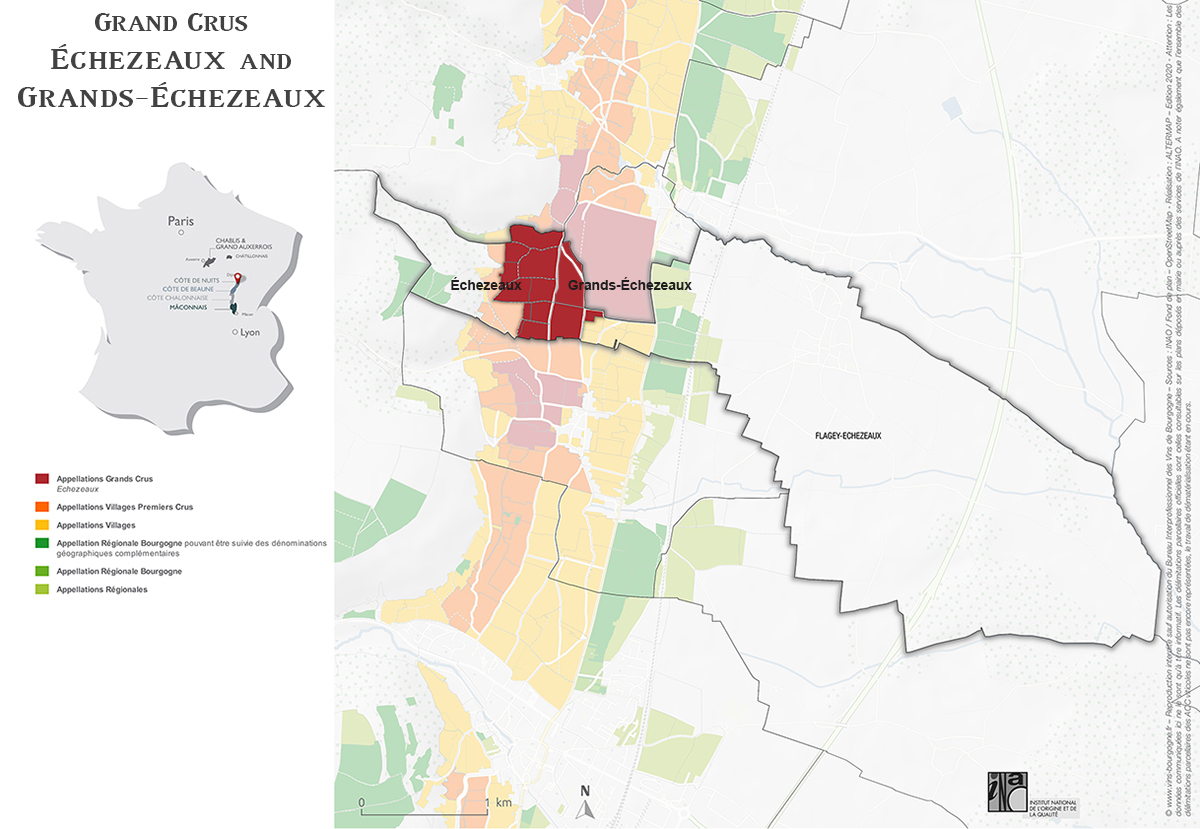
Like the Clos de Vougeot (from which they are separated only by a wall), the most famous vineyards of Flagey were founded by the monks of the abbey of Cîteaux in 12th and 13th centuries. Terroir is fairly homogeneous, with clay overlying Bajocien limestone, but there are a number of climats with more diverse soils consisting of marls with pebbly at mid-slope, and higher up, deeper soil with red alluvium, yellowish marl to create a highly prized mosaic.
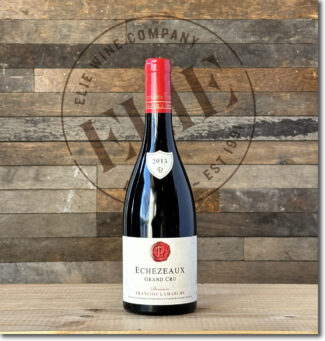 Domaine François Lamarche, Échezeaux Grand Cru ($390)
From parcels in Les Champs Traversins, Les Cruots and Clos Saint-Denis, making up about three acres with vines, on average, 30-years-old. Nicole Lamarche works with very low yields, which alongside the Domaine’s delicate extraction results in a supremely elegant expression of this terroir.
Vosne-Romanée
Originally named just Vosne, the village took the suffix Romanée in 1866 in honor of its most prized vineyard, La Romanée—a habit of many Burgundy communes of the era. From the perspective of a wine lover, it may be grouped together with neighboring Flagey-Echézeaux; while the villages are entirely separate, their finest vineyards are clustered together immediately north of Vosne-Romanée and take that latter title.
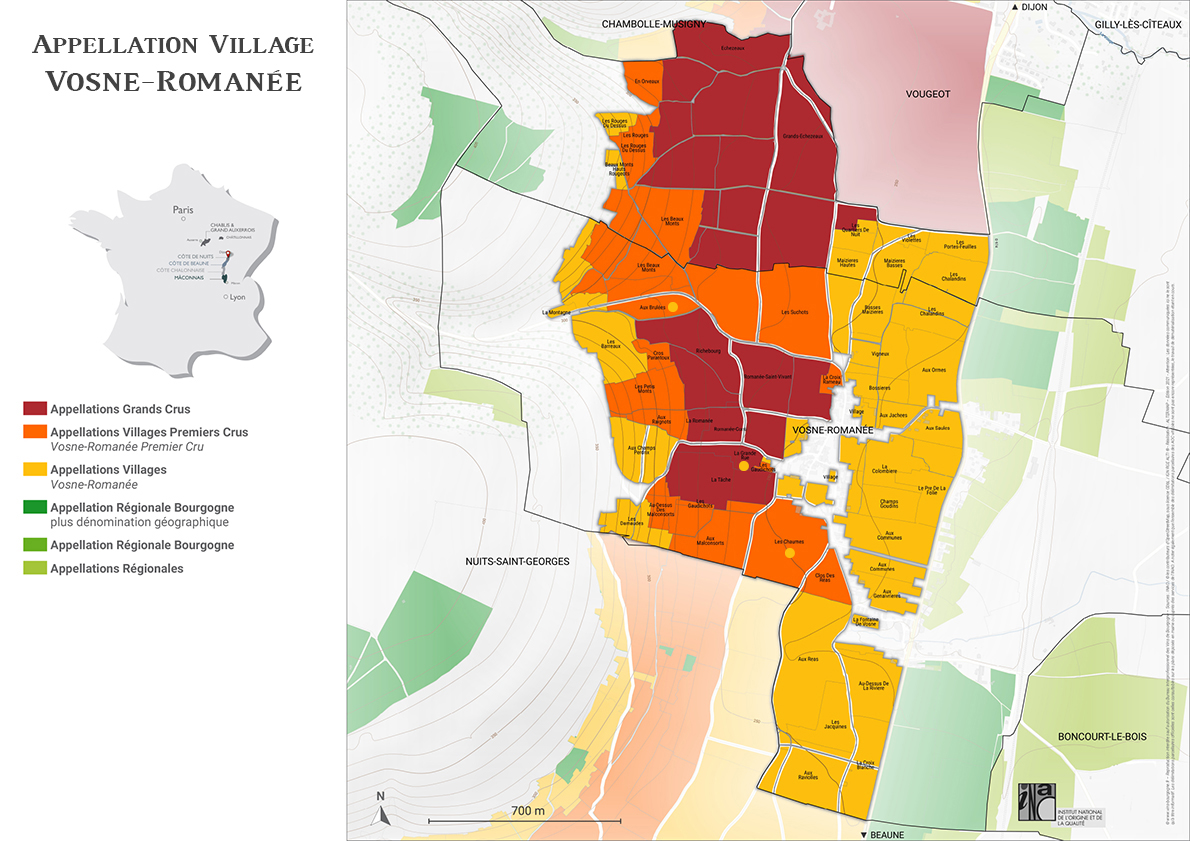
The entire surface area of Vosne-Romanée Grand Crus vineyards (excluding Flagey-Echézeaux) is 67 acres, about half the size of the single Clos de Vougeot climat just across the commune boundary. Even so, the commune of Flagey-Echézeaux with the Echézeaux and Grands-Echézeaux sites included, has more Grand Cru surface area than the Premier Crus and Villages combined. Vosne-Romanée is divided between six individual climats—La Grande Rue, La Tâche, Richebourg, La Romanée, Romanée-Saint-Vivant and the most famous, Romanée-Conti. The best vineyards lie on the mid-slope of the Côte d’Or escarpment. Around these prestigious sites are dotted the Premier Cru vineyards and some entirely unclassified land—the difference between a Grand Cru vine and one deemed worthy only of the regional Bourgogne appellation is sometimes a matter of a few feet.
 Domaine Méo-Camuzet, Vosne-Romanée Premier Cru Les Chaumes ($490)
The 16-acre Les Chaumes vineyard is on the southern end of Vosne-Romanée, somewhat low on the slopes, giving it unique terroir: The limestone-based marl under the vineyard is deeper and richer than in the climats further up the Côte d’Or. It is one of the warmer climats in Vosne and often among the first to be harvested. The domain owns five acres planted in the 1950s and the 1970s.
 Domaine Méo-Camuzet, Vosne-Romanée Premier Cru Aux Brûlées ($890)
As fans of the classic custard-based dessert know, ‘brûlée’ means ‘burnt.’ And although the grapes here don’t quite ignite, they tend ripen quickly in this 11-acre site at the northeastern end of Vosne-Romanée. There is little topsoil and the vineyard tends to be dry, exaggerating the effect; Méo-Camuzet’s plot was planted in the 1930s. This is a wine intended to age slowly, and as such, it treated to top Bertranges and Tronçais oak.
 Domaine François Lamarche, La Grande Rue Grand Cru ‘Monopole’ ($990)
One of six Grand Cru vineyards Vosne-Romanée, it is by far the youngest, only given Grand Cru status in 1992, 56 years after the rest of Vosne-Romanée’s top vineyards. It is also one of the smallest at just under four acres. The Lamarche family acquired the vineyard as a wedding present in the early 1930s, and have been the sole proprietors ever since. During the mid-20th Century, they exchanged some small parcels of vines with Domaine de la Romanée-Conti, expanding La Grande Rue to its current size.
Nuits-Saint-Georges
With the village of Nuits-St-Georges itself as the fulcrum, the robust appellation extends to the north as far as the border of Vosne-Romanée, while the southern section lies partly in Nuits-Saint-Georges and partly in Prémeaux. The wines from each section are unique in style and according to experts, with differences defined (in the main) by the lay of the land. The soils in the northern sector are built around the pebbly alluvium that washes down from up-slope, or in the low-lying parts, around silty deposits from the river Meuzin. In the southern sector the alluvia at the base of the slopes originate in the combe of Vallerots where there are deep marly-limestone soils, while at the top of the slope, the soil has nearly all eroded away and the rock is near the surface. In both regions, favored exposures are mostly to the east or southeast.
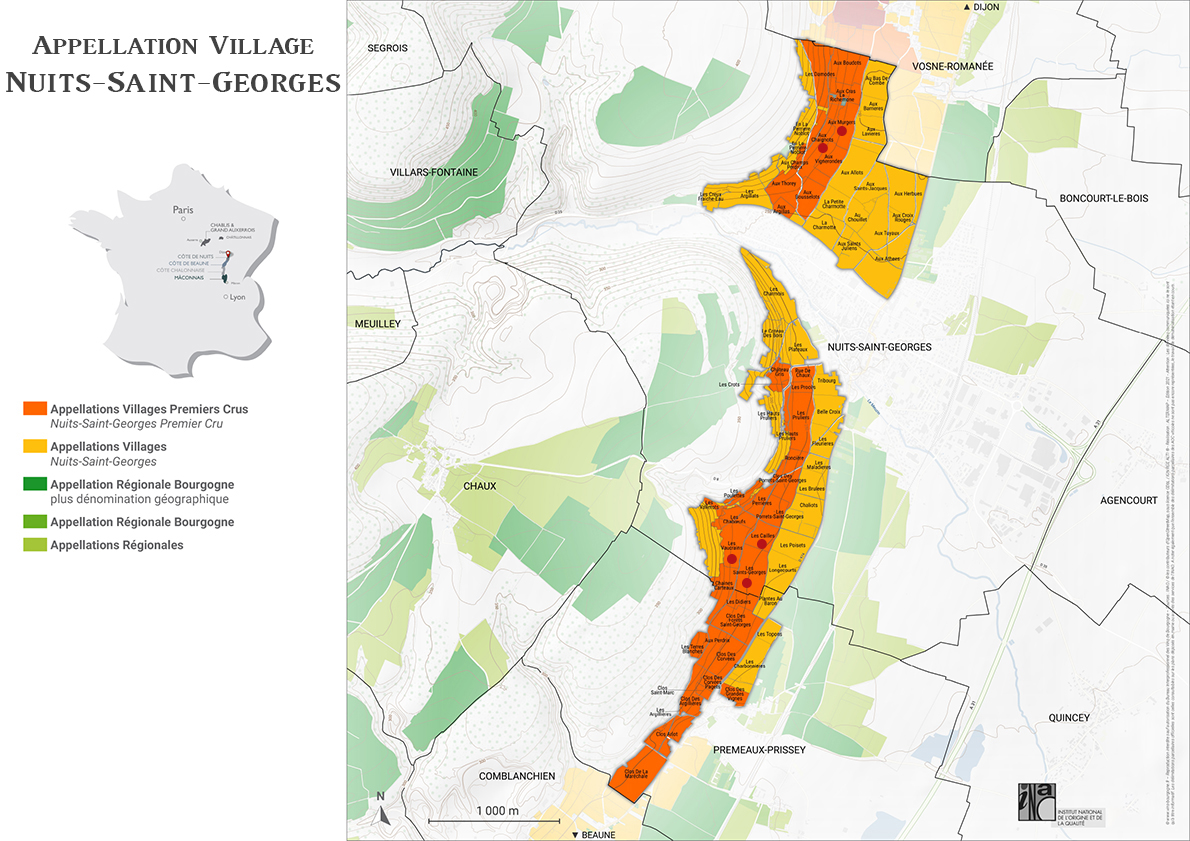
Producing predominantly red wine, Nuit-Saint-George bottles display the muscularity and breeding most sought after in Burgundy—the ability to improve with bottle age. When young, the wine display aromas of cherry, strawberry and blackcurrant, and when matured, leather, truffle, fur and game.
 Méo-Camuzet Frère & Sœurs, Nuits-Saint-Georges ($190)
A blend of domaine and négoce fruit, and although the latter is purchased on the vine, it is not handle in the typical manner of the négociant. Several interventions are carried out during the growing season and most of these plots are monitored for several years, which makes it possible to get to know them as well as the grower does. Jean-Nicolas describes it ‘like renting land.’
 Domaine Alain Michelot ‘Vieilles Vignes’, Nuits-Saint-Georges ($89)
Two vineyard sites are used for sourcing grapes, one in the southern part of the village itself, where vines range from 65 and 77 years old, and another in Primeaux-Prisey, with vines about 50 years old.
 Domaine François Lamarche, Nuits-Saint-Georges Premier Cru Les Cras ($160)
Les Cras and La Richemone are adjacent Premier Crus, but Les Cras is lower on the slope, and the soils are shallower, stonier and contain more clay, giving the wines not only more meat, but more bone with a distinct chalkiness. Lamarche’s plot is smaller than an acre.
 Domaine Méo-Camuzet, Nuits-Saint-Georges Premier Cru Aux Murgers ($390)
Aux Murgers is a mid-slope vineyard at the northern end of the Nuits-Saint-Georges commune, and boasts a southerly exposure. This wine is from a single-vineyard parcel on one of the family’s most primely positioned slopes, using vines planted between 1965 and 1972 on soils fairly evenly divided between clay, Comblanchien limestone, sand and gravel.
 Domaine Alain Michelot, Nuits Saint Georges Premier Cru Aux Chaignots ($150)
Chaignots is a 13-acre vineyard located in northern part of Nuits-Saint-Georges. Situated mid-slope on limestone soils, the wines tend toward earthy elegance. Because there are no Grand Cru vineyards in Nuits-Saints-Georges, the appellation’s considerable reputation rests on its excellent Premier Crus like this one.
 Domaine Alain Michelot, Nuits Saint Georges Premier Cru Les Vaucrains ($160)
Les Vaucrains is one of the most highly regarded vineyards in Nuits-Saint-Georges; the 15-acre site is on the steep, upper slope of the Côte d’Or, just below the line on the famous escarpment where vineyard becomes forest, with the Premier Cru vineyards of Les Chaboeufs and Chaines Carteaux lying north and south respectively. It is the vineyard’s position at the top of the hill that accounts for the weight of these wines; the calcareous soil is quite rocky as the process of erosion has sent much of the smaller material down the hill. The lack of water in this free-draining soil makes for concentrated grapes.
 Domaine Alain Michelot, Nuits Saint Georges Premier Cru Les Cailles ($150)
Les Cailles lies between Les Saint-Georges and Les Porrets-Saint-Georges in the southern part of the commune; it is a 17-acre mid-slope climat often considered worthy of Grand Cru status. The vineyard’s position is perfectly angled to take advantage of the morning sunlight; as it slopes gently toward the east, the vines are bathed in sunlight for a good portion of the day. The soil is pebbly and sandy, and derives its name from this; ‘cailloux’ is the French term for a pebble.
Domaine Thibault Liger-Belair, Nuits-Saint-Georges Premier Cru Les Saint-Georges ($290)
Of Nuits-Saint-Georges’ 41 Premier Cru vineyards, Les Saint-Georges is arguably among the top three. Located halfway between Premeaux-Prissey and Nuits-Saint-Georges, this site has been famous for many centuries as a source of excellent wines and is considered by most to be of Grand Cru quality. The soils are deep, made up of several different kinds of limestone, giving a complex and varied terroir containing influences from Comblanchien, Premeaux and oolite limestones, with enough clay throughout to provide hydration as well as good drainage. The slope is fairly gentle and angled toward the south-east, both of which make for an excellent environment for raising top-flight Pinot Noir.
- - -
Posted on 2024.04.02 in Hautes-Côtes de Nuits, Vougeot, Morey-Saint-Denis, Premeaux-Prissey, Nuits-Saint-Georges, Marsannay, Vosne-Romanée, Gevrey-Chambertin, Chambolle-Musigny, France, Burgundy, Wine-Aid Packages | Read more...
The Champagne Society April 2024 Selection : Champagne André Clouet
Champagne Haute Couture
Jean-François Clouet, An Outstanding Practitioner of Pinotism, Stitches Together Bouzy’s Finest Parcels into Grand Expressions
Champagne André Clouet ‘Cuvée 1911’, Grand Cru Bouzy Brut ($81)
OR
Champagne Andre Clouet ‘Spiritum 96’, Grand Cru Bouzy Rosé Brut ($81)
In any assemblage, individual grape varieties will find their niche; each performs according to its purpose and potential, whether it is power, perfume or polish. In Champagne, the Big Three—Chardonnay, Pinot Noir and Meunier—jockey for position in the hearts of Chefs de Cave, and although quality depends on location, the ability to eke out or find these locations is an indispensable tool in the belt of vignerons and the pinnacle of Champagne as an artform.
Jean-François Clouet, who was not only born and raised in Bouzy, but still lives in the 18th century village house built by his ancestors, is an example of this ideology at its finest. He says, “The vineyards are like beautiful fabrics, each one contributing textures and colors that once assembled, are transformed into a designer gown. Successfully pieced together, it is Haute Couture.”
The following wine selection represents Clouet’s slice of Champagne, a cellar where Pinot Noir rules but does not monopolize; it is terroir with the standing and privilege of its winemaker, and when it comes to Pinot-based Champagnes, an Eden for expression.
The Montagne de Reims: Pinot Noir Country
Located between Reims and Épernay, the Montagne de Reims is a relatively low-lying (under a thousand feet in elevation) plateau, mostly draped in thick forest. Vines find a suitable home on the flanks, forming a horseshoe that opens to the west.
So varied are the soils, topography and microclimates here that it is not possible to speak of the region in any unified sense. Grande Montagne de Reims, which contains all of the region’s Grand Cru vineyards, covers the northern, eastern and southern slopes of the viticultural area, and Pinot Noir plantings dominate at 57%, followed by Chardonnay (30%) and Meunier (13%). Its vineyards face a multitude of directions, and soil type varies by village, giving rise to a breadth of Pinot Noir expressions, as well as exceptional Chardonnay.
To the west, the Grande Montagne de Reims gives way to the Petite, whose bedrock is chalk, but softer than the chalk found further south on the Côte des Blancs. This sort, called ‘tuffeau’, is an extremely porous, sand-rich, calcium carbonate rock similar to what is found in wine regions of the middle Loire Valley.
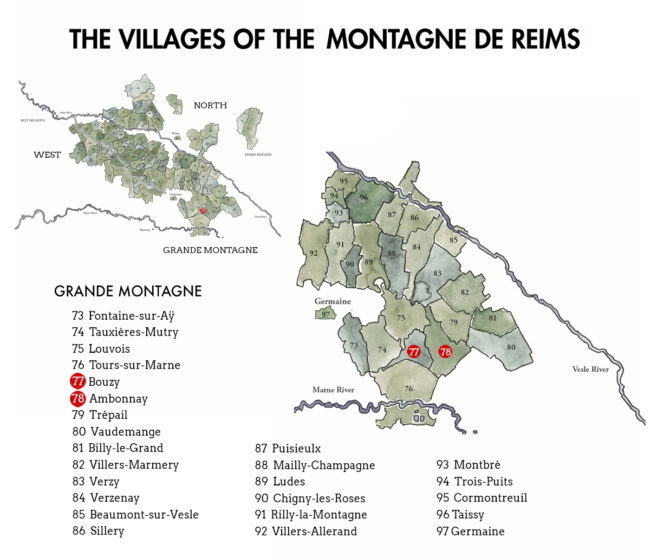
Grand Cru Bouzy: The Epicenter Of Pinot Noir
A village known for its alcohol production named Bouzy? Almost as perfect as its situation on the south-facing side of the Grande Montagne de Reims. This exposure is ideal for ripening Pinot Noir, as its sister village Ambonnay—less than half a mile away—can also attest. Chalky soils provide stimulating freshness as well as housing the deep, cool cellars essential to aging Champagne.
Bouzy has more vineyard acres than citizens (924 to 850) and 87% of the former are Pinot Noir. On the now-defunct ‘échelles des crus’, Bouzy was rated 100%, which make it a Grand Cru village. In recent years, more emphasis has been placed on individual named-sites, either vineyards or portions of vineyards; each lieu-dit is said to possess its own personality which may be exhibited as such, or blended with the others to highlight specific qualities.
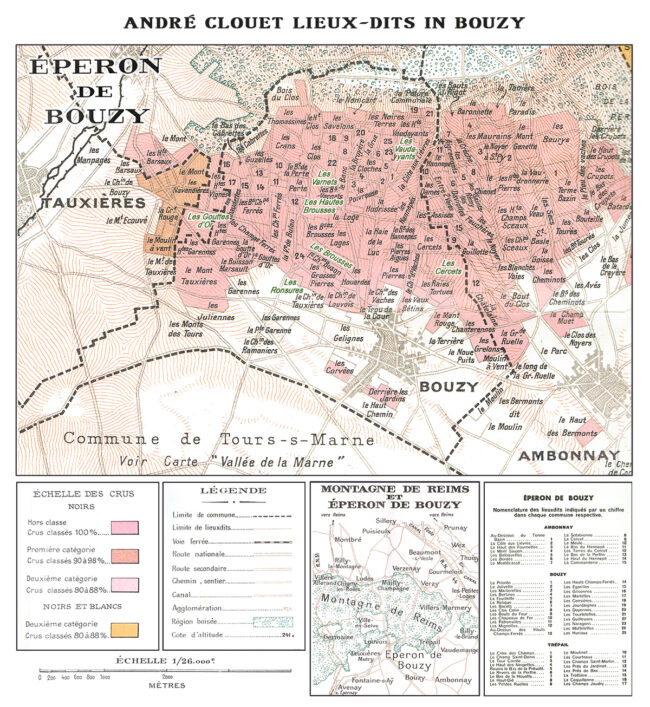
The Rare And Demanding Blancs de Noirs
All Champagne is food wine, but not many are ‘gastronomical.’ Meaning, of course, that the ethereal qualities of effervescence, along with high levels of acidity and a small amount of sugar, complement elements in almost any food, from simple poached salmon to red-hot Thai. But few Champagnes are powerful enough in aroma and palate potency to assert themselves as equals in complexity to gourmet dishes.
Many Champagnes are simply about the bubbles; in Blanc de Noir, we see the true emergence of Champagnes that are about great wines that happen to have bubbles.
Blanc de Noirs is made from Pinot Noir, Meunier, or both. The former brings bouquet and body; the latter, supple fruit and roundness. Both grapes, of course, have white flesh and are generally used to make white wine. With Blanc de Noir, a period of maceration on the skins allows the juice to soak up color, and with it, some of the character we associate with Burgundian Pinot Noir—especially, the ability to mirror qualities found in the particular soil in which it grows.
Upon release, a well-made Blanc de Noir is characterized by mouthfeel—a rich and structured texture—but perhaps even more so, powerful aromatics reminiscent of stone fruits, spices, honey, mocha, smoked wood and even a touch of leather. With vintage Blanc de Noir, allowed cellar time, tertiary notes emerge—coffee, cocoa, dried cherry and more mature yeast flavors of brioche and toast.
Champagne André Clouet
Haute Couture Viticulture
In the imagination of most casual drinkers, Champagne is typified by the Grandes Marques, and especially, the Cuvée Prestige bottles. 24 names have enjoyed a marketing monopoly for many decades; brand loyalty, as in all commodities, is built on reputation and unyielding allegiance.
Somewhat less prominent are Champagne’s grower-producers; farmers who make wine. And compared to the Les Grandes Marques (Billecart-Salmon, Bollinger, Krug, et al), Champagne André Clouet has been around longer.
The Clouet family traces its Bouzy roots to 1492 and at one time was the official printmakers for the court of King Louis XV; the classically pretty labels that grace their Champagne bottles today pay homage to their aesthetic history. Clouet grapes are sourced exclusively from 20 acres of coveted mid-slope vineyards in the Grand Cru villages of Bouzy and Ambonnay.
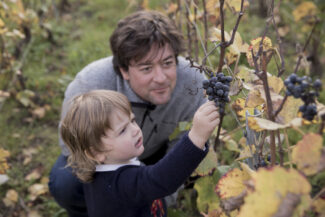
Jean-François Clouet
Born and raised in Bouzy, Jean-François Clouet still lives in his family’s 18th century home; with inimitable wit, he refers to himself as ‘a combination of winemaker and circus ringmaster.’ In fact, the French refer to him as ‘Chef de Cave’—the cellar master. He is arguably the region’s most qualified historian and insists that, without acknowledging the role that the past has played on his winemaking decisions, you can’t truly appreciate his wines.
“To understand Champagne as a whole you need to understand its political history,” he says. “Attila the Hun, the Crusaders, the Templars and Marie Antoinette have all walked here; the birth of the monarchy and the Battle of the Cathalunian Fields took place nearby. In 1911, my great grandfather designed the label that graces our bottles today; I like the idea of the work of human hands in pruning, performing the same actions as my grandfather and even the Romans, who planted vines here 2000 years ago.”
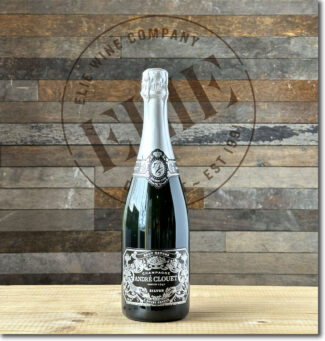 Champagne André Clouet ‘Silver’, Grand Cru Bouzy Brut Nature ($51)
Clouet’s ‘Silver Label’ Champagne is made entirely with Pinot Noir from the Grand Cru village of Bouzy, mostly from the 2010 vintage (so that it has a lot of age and complexity to it already). While this cuvée has no dosage, it was aged in a former Sauternes barrel and bottle-aged for longer than the standard, resulting in additional richness. The wine displays notes of brioche and cream with buttered pastry, citrus, and a lightly oxidized apple note.
*click photo for more info
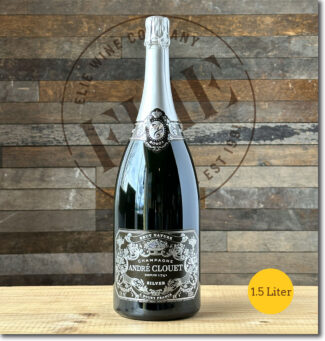 Champagne André Clouet ‘Silver’, Grand Cru Bouzy Brut Nature ($99) 1.5 Liter
A little bit of sugar is unnecessary to help this medicine go down, but a smaller ratio of cork to vino is definitely beneficial. The magnum version of the Silver Label.
*click photo for more info
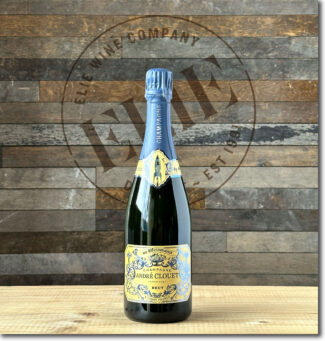 Champagne André Clouet ‘The V6 Experience’, Grand Cru Bouzy Brut ($58)
According to Jean-François Clouet, “Pinot Noir does not mature directly, in linear fashion. Upon reaching its sixth year, it passes into a phase known as ‘The Whirlwind.’ Propelled by an unseen force it reaches outward, taking on another dimension. The wine becomes charged with energy and vibrations.”
V6—with a rocket on the label—refers to this mysterious sixth year; the wine is a blend of 80% Pinot Noir aged between 72 and 90 months on the less and 20% Pinot from the solera. It is dosed at 5 gram per liter, based on a liqueur of barrel-aged Chardonnay and refined sugar.
*click photo for more info
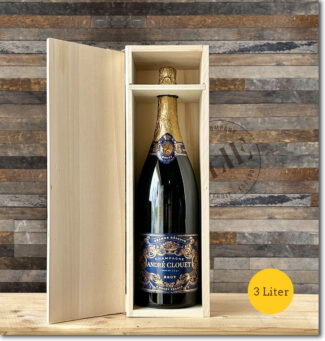 Champagne André Clouet ‘Grand Réserve’, Grand Cru Bouzy Brut ($370) 3 Liter
100% Pinot Noir from Bouzy. There’s nothing poetic about the term ‘3 liter’, but in Champagne parlance, this is a Jeroboam. It shows fresh, fine aromatics of apricot and yeast with a fruit-intense palate and a chalky-minerality and salty finesse on the finish with a nice jolt of lemony acidity.
*click photo for more info
 Champagne André Clouet ‘Grand Réserve’, Grand Cru Bouzy Brut ($650) 6 Liter
Who’s your daddy? 6 liter is a Methuselah—not the largest bottling format made in Champagne, but the biggest that mere mortals are likely to encounter.
*click photo for more info
 Champagne Andre Clouet ‘No 3’, Grand Cru Bouzy Rosé Brut ($58)
92% Pinot Noir, 8% vin rouge from Bouzy; the ‘3’ represents the style of the wine on an odd Clouet scale (inspired by Coco Chanel) where 1 is the lightest wine and 10, the richest. Driven by the chalky minerality of the terroir, the wine offers seductive notes of wild strawberry, raspberry, pomegranate, cherry blossoms, fresh red and pink flowers, crushed chalk, and orange zest.
*click photo for more info
 Champagne Andre Clouet ‘No 3’, Grand Cru Bouzy Rosé Brut ($110) 1.5 Liter
The magnum format of the above.
*click photo for more info
Champagne d’Auteur: Deeply Rooted, Daringly Innovative
It’s an interesting perspective: Terroir, not only as a sense of place, but as a sense of self. But of all the various elements that combine to make a wonderful bottle of wine—soil and sunshine, rain and rootstock—perhaps the most significant touch is the human one. Give two winemakers identical grapes, and they will make two different wines.
Says Jean-François Clouet, “A signature wine is one which expresses the philosophy or personality of a winemaker working in conditions of freedom and creativity. When surrounded by high quality fruit, and when dedicated to small volume production, the hand of the winemaker will be very present. Such a professional is free to play according to his own criteria, pampering the wine and trying methods that is, in many cases, outside the rules and production guidelines.”
 Champagne Andre Clouet ‘Spiritum 96’, Grand Cru Bouzy Rosé Brut ($81)
“Rosés are usually enjoyed while they are still young and fresh,” says Jean-François Clouet. “But I was looking for that complexity and fullness that exceptional wines acquire only after a very long maturation. I didn’t want to offer a rosé that had merely aged well; I wanted to combine the freshness and youth of a rosé wine with the essence of a great vintage. The key element in accomplishing this feat was going to be the liqueur!”
That goal led Clouet to use a concentration half that of a classic liqueur, giving the wine a final proportion of 88% Grand Cru Pinot Noir, 9% Rouge de Bouzy 2018 and around 3% Liqueur de Millésimé 1996.
*click photo for more info
 Champagne André Clouet ‘Cuvée 1911’, Grand Cru Bouzy Brut ($81)
At dosage of 0.5 grams per liter, 50% of the wine was fermented in stainless steel tanks and 50% in Sauternes barrels. 50% perpetual reserve with an assemblage that also includes four vintages: all of which are made from Grand Cru Bouzy estate-grown fruit. The wine is delicately perfumed with sweet rose petal and jasmine and framed in austere minerality and balanced autolytic notes. Despite the relatively recent disgorgement, the mousse presents itself as extraordinarily elegant.
*click photo for more info
Le Clos: Jewel In The Crown, Single Vineyard
A walled garden is of itself a place of mystery and promise; add Jean-François Clouet’s secret ‘Bouzy Black Powder’, a substance he claims is found within the enclosed vineyard that hosts “our most beautiful genetic combinations of Pinot Noir” and you have a real storyline. The northwest-facing Clos contains chalky subsoil in thick layer, with soil amendments that are entirely organic, but the magical properties of the black powder were known only to the Druids, and after much experimentation, himself.
What can be said without needling the fact-checkers is this: There are only four Grand Cru Clos in all of Champagne, and Clouet’s ‘Le Clos’ is among the best.
 Champagne André Clouet ‘Le Clos’, 2012 Grand Cru Bouzy Brut ($320) 1.5 Liter
2012 is widely acknowledged as one of Champagne’s greatest vintages in decades, the result of a relatively warm winter moved into an extremely wet spring where both frost and a vicious hailstorm devastated yields. This cost growers, but benefitting drinkers as the reduced yields resulted in concentrated grapes that produced wines with great depth, complexity and aromatics along with balanced acidity.
This wine is only released in magnum format; the wine is aged in the Sauternes barriques of Château Doisy Daëne. The nose shows peach and almond evolving into a mineral finish quite reflective of the chalk terroir.
*click photo for more info
 Champagne André Clouet ‘Le Clos’, 2009 Grand Cru Bouzy Brut ($380) 1.5 Liter
Vintage 2009: An exceptionally good vintage preceded by a dry winter that left the soils eagerly awaiting the spring rain, which came at an opportune time to ensure a successful budburst and flowering. After a stormy July, August delivered warm sunny days and cool, refreshing evenings as well as intense, dry heat that helped prevent rot and disease from taking hold. The resulting Champagnes tend to display rich, ripe orchard fruit reflecting the warm year and although acidity was far from searing, it was still very much present.
Bottled exclusively in magnums, the wine shows complex and dense scents of apple and cherry with a nice oxidative touch; chalk and discreet oak and mushroom aromas waft from the glass.
*click photo for more info
 Champagne André Clouet ‘Le Clos’, 2007 Grand Cru Bouzy Brut ($320) 1.5 Liter
Vintage 2007: An unseasonably mild winter was followed by a sweltering April, prompting both early budburst and flowering. Then the rains began, signaling the beginning of an unusually cool and damp summer in which fighting rot and disease was an uphill battle. August finally brought warm weather and cleansing breezes which helped dry out the grapes, but harvest still came early, the result of the spring heatwave. Careful sorting was de rigeur, both in the field and in the cellar, and with due diligence the best producers were able to create wines of some merit.
‘Le Clos’, 2007 is one such wine. Post-harvest, the vin clair was fermented in stainless steel and selected barrels, with malolactic fermentations occurring there in these vessels respectively. En magnum.
*click photo for more info
The Magnum Effect
A magnum contains 1.5 liters of wine; a quantitative fact. Less understood is why Champagne producers consider this the ideal format for the vintage wines that connoisseurs intend to cellar for the long haul.
The reasons are several fold: First, since magnums hold twice as much as a standard 750 ml bottle but have the same ‘ullage’, or the space between the bottom of the cork and the wine’s surface, the wine’s exposure to oxygen is reduced in proportion. On a molecular level, this exchange of air and wine is key to the maturation process, generally leading to more complex flavors. The additional volume in a magnum also means that the wine is less sensitive to temperature fluctuations.
Autolysis is another chemical process in traditional sparkling wine production whereby yeast used for second fermentation in bottle breaks down and imparts flavor to the wine, especially the brioche/biscuit notes. In a magnum, the process is measurably slower since they have proportionally more glass surface than standard bottles, so there is more contact between lees on the inside of the bottle and the wine. This slows autolysis while greater contact with the yeast generates more roundness and greater complexity.
Millésimé Champagne: The Signature Of A Year
‘Millésimé’ refers to the process of harvesting, producing and bottling the grapes of a given year—a bit of information virtually always indicated on the label and the cork. Unlike terroir, which remains the same from year to year, Millésimé declarations are the result of exceptional weather in that site; a season in which the grapes achieve the perfect balance between two essential parameters, sugar and acidity.
It is a phenomenon that makes each Millésimé a special and rare Cuvée.
A vintage year is declared by the producer alone, and the well-known Comité Interprofessionnel du vin de Champagne cannot intervene. To reach this conclusion, the winemaker must recognize truly sublime characteristics in the vintage, meaning that the personality and aromatic intensity of the wines are such that they deserve special recognition. Additionally, since Millésimé Champagnes age for three to 10 years or more in the cellar before being marketed, it must be made from grapes with an ideal acid-sugar balance.
Interesting to note that Millésimé Champagnes may be declared in different years depending on the grape variety—an exceptional year for Chardonnay will not necessarily be so for Pinot Noir or Meunier, and vice versa.
 Champagne André Clouet ‘Léopard’, Millésimé 2015 Grand Cru Bouzy Brut ($63)
A leopard can’t change its spots, but a Chef de Cave can change his Assemblage. This blend is 80% Pinot Noir and 20% Chardonnay—the Champagne ages and then ferments in Sauternes barrels. The grapes are sourced from 100% Grand Cru vineyards in Bouzy, and from clay-calcareous parcels that face south and south-east to make the most of the sun and to ensure that the grape ripening is total and balanced. The Pinot Noir is intended to provide body and volume on the palate while the Chardonnay offers chalky length. At 5 grams per liter dosage, the wine promises a minimum of 20 years improvement in the bottle.
*click photo for more info
 Champagne André Clouet ‘Dream’, Millésimé 2015 Grand Crus ‘Bouzy & Le Mesnil-sur-Oger’ Brut ($63)
Founded in 1937, so remarkable is the terroir of Le Mesnil that 100% of its vineyards are ranked Grand Cru. It is situated at the heart of the prestigious Côte des Blancs, so-called (in part) because of the omnipresence of superb Chardonnay. East-facing slopes dominate the village, but vary from steeper inclinations close to the forest on top of the Côte des Blancs hill to almost flat land below the village.
The Chardonnay grapes are sourced as a grower swap for Pinot Noir, and the union of Le Mesnil-sur-Oger and Bouzy Chardonnay works to delightful effect. The tension and minerality of Le Mesnil is bolstered by the body and richness of Bouzy. Layered with spice, grapefruit and white peach.
*click photo for more info
The Vintage 2015: Champagne Is Heating Up
The 2015 vintage in Champagne has been referred to as ‘glittering.’ It was, for starters, the hottest vintage ever recorded in the region, and the extreme heat prevented the development of disease and rot; a few producers commented that these unusual circumstances meant their wines ended up adhering to organic standards purely through circumstance rather than intent. The intense heat ran from June through to August, with the end of August seeing a touch of relieving rain along with cooler nights. Along with being the hottest growing season on record, it was also one of the shortest: Harvest began late August and continued into early September.
Coteaux-Champenois Bouzy Grand Cru: Still Champagne
Covering the same territory as Champagne, Coteaux Champenois may be the wine world’s most celebrated oxymoron: Flat Champagne. By ‘flat’, of course, we are not talking about the week-old Chandon’s Brut in the back of the fridge or the after-effects of shaking a bottle of Cristal after winning the Grand Prix, but the intentional act of releasing a still wine from the same terroir that would otherwise undergo the extraordinary process used to create Champagne.
Spread across 319 communes, Coteaux Champenois producers are entitled to use seven varieties, alone or in tandem, including the Champagne staples Chardonnay, Pinot Noir and Meunier along with Arbane, Petit Meslier and the Pinot derivatives, Pinot Blanc and Pinot Gris. In general, all these grapes thrive at region’s latitude (48 – 49° North) although like their sparkling counterparts, Coteaux Champenois wines tend to be dry and light-bodied with naturally high acidity. The reds are much better in the warmer vintages of recent years, as the predominant variety, Pinot Noir, is able to ripen more consistently.
 Domaine André Clouet ‘Versailles Diamant’, 2015 Coteaux-Champenois Grand Cru Bouzy Blanc ($108)
Tyson Stelzer (Wine Spectator, Decanter, Vinous) refers to Diamant as ‘the best Coteaux Champenois I have tasted to date.’ Sourced from the Grand Cru vineyards of Bouzy and Ambonnay, the 100% Chardonnay wine spends 20 months in Vicard barrels. Beautifully textured, the wine shows green apple, lemon, tropical fruit, pineapple, dried flowers with a persistent lemon and lime finish.
*click photo for more info
 Domaine André Clouet ‘Versailles Rubis’, 2015 Coteaux-Champenois Grand Cru Bouzy Rouge ($108)
Produced from pure Pinot Noir sourced from Grand Cru vineyards in the heart of the Montagne de Reims, the varieties undisputed home. Like the Blanc, the Rouge is aged for 20 months in Vicard barrels—one of the finest coopers in the region. The wine shows tart cherry behind silky tannins a clear and pronounced minerality on the palate.
*click photo for more info
Notebook …
Drawing The Boundaries of The Champagne Region
To be Champagne is to be an aristocrat. Your origins may be humble and your feet may be in the dirt; your hands are scarred from pruning and your back aches from moving barrels. But your head is always in the stars.
As such, the struggle to preserve its identity has been at the heart of Champagne’s self-confidence. Although the Champagne controlled designation of origin (AOC) wasn’t recognized until 1936, defense of the designation by its producers goes back much further. Since the first bubble burst in the first glass of sparkling wine in Hautvillers Abbey, producers in Champagne have maintained that their terroirs are unique to the region and any other wine that bears the name is a pretender to their effervescent throne.
Having been defined and delimited by laws passed in 1927, the geography of Champagne is easily explained in a paragraph, but it takes a lifetime to understand it.
Ninety-three miles east of Paris, Champagne’s production zone spreads across 319 villages and encompasses roughly 85,000 acres. 17 of those villages have a legal entitlement to Grand Cru ranking, while 42 may label their bottles ‘Premier Cru.’ Four main growing areas (Montagne de Reims, Vallée de la Marne, the Côte des Blancs and the Côte des Bar) encompass nearly 280,000 individual plots of vines, each measuring a little over one thousand square feet.
The lauded wine writer Peter Liem expands the number of sub-regions from four to seven, dividing the Vallée de la Marne into the Grand Vallée and the Vallée de la Marne; adding the Coteaux Sud d’Épernay and combining the disparate zones between the heart of Champagne and Côte de Bar into a single sub-zone.
Courtesy of Wine Scholar Guild
Lying beyond even Liem’s overview is a permutation of particulars; there are nearly as many micro-terroirs in Champagne as there are vineyard plots. Climate, subsoil and elevation are immutable; the talent, philosophies and techniques of the growers and producers are not. Ideally, every plot is worked according to its individual profile to establish a stamp of origin, creating unique wines that compliment or contrast when final cuvées are created.
Champagne is predominantly made up of relatively flat countryside where cereal grain is the agricultural mainstay. Gently undulating hills are higher and more pronounced in the north, near the Ardennes, and in the south, an area known as the Plateau de Langres, and the most renowned vineyards lie on the chalky hills to the southwest of Reims and around the town of Épernay. Moderately steep terrain creates ideal vineyard sites by combining the superb drainage characteristic of chalky soils with excellent sun exposure, especially on south and east facing slopes.
… Yet another reason why this tiny slice of northern France, a mere 132 square miles, remains both elite and precious.
- - -
Posted on 2024.04.01 in France, The Champagne Society, Champagne | Read more...
Featured Wines
- Notebook: A’Boudt Town
- Saturday Sips Wines
- Saturday Sips Review Club
- The Champagne Society
- Wine-Aid Packages
Wine Regions
Grape Varieties
Aglianico, Albillo, Aleatico, Alicante Bouschet, Aligote, Altesse, Arcos, Aubun, Auxerrois, Barbarossa, Beaune, Biancu Gentile, Bonarda, bourboulenc, Cabernet Franc, Cabernet Sauvignon, Caino, Caladoc, Carignan, Chablis, Chardonnay, Chenin Blanc, Cinsault, Clairette, Cortese, Corvina, Corvinone, Cot, Counoise, Dolcetto, Fiano, folle Blanche, Frappato, Friulano, Fumin, Gamay, Garganega, Garnacha Tintorera, Godello, Graciano, Grenache, Grenache Blanc, Grolleau, Groppello, Jacquère, Lladoner Pelut, Maconnais, Malbec, Malvasia, Malvasia Nera, manseng, Marcelan, Melon de Bourgogne, Mencía, Merlot, Mondeuse, Montepulciano, Montònega, Morescola, Mourv, Mourvèdre, Muscadelle, Muscat, Nebbiolo, Nero d'Avola, Niellucciu, Palomino, Pecorino, Pedro Ximénez, Persan, Petit Verdot, Pinot Auxerrois, Pouilly Fuisse, Pouilly Loche, Poulsard, Prieto Picudo, Riesling, Rondinella, Rose, Rousanne, Roussanne, Sagrantino, Sangiovese, Sauvignon, Savignin, Sciacarellu, Serine, Souson, Sylvaner, Syrah, Tannat, Tempranillo, Teroldego, Timorasso, Treixadura, trepat, Trousseau, vaccarèse, Viognier, ViuraWines & Events by Date
- September 2025
- August 2025
- July 2025
- June 2025
- May 2025
- April 2025
- March 2025
- February 2025
- January 2025
- December 2024
- November 2024
- October 2024
- September 2024
- August 2024
- July 2024
- June 2024
- May 2024
- April 2024
- March 2024
- February 2024
- January 2024
- December 2023
- November 2023
- October 2023
- September 2023
- August 2023
- July 2023
- June 2023
- May 2023
- April 2023
- March 2023
- February 2023
- January 2023
- December 2022
- November 2022
- October 2022
- September 2022
- August 2022
- July 2022
- June 2022
- May 2022
- April 2022
- March 2022
- February 2022
- January 2022
- December 2021
- November 2021
- October 2021
- September 2021
- August 2021
- July 2021
- June 2021
- May 2021
- April 2021
- March 2021
- February 2021
- January 2021
- December 2020
- November 2020
- October 2020
- September 2020
- August 2020
- July 2020
- June 2020
- May 2020
- April 2020
- March 2020
- February 2020
- January 2020
- December 2019
- November 2019
- October 2019
- September 2019
- August 2019
- July 2019
- June 2019
- May 2019
- April 2019
- March 2019
- February 2019
- January 2019
- December 2018
- November 2018
- October 2018
- September 2018
- August 2018
- July 2018
- June 2018
- May 2018
- April 2018
- March 2018
- February 2018
- January 2018
- December 2017
- November 2017
- October 2017
- September 2017
- August 2017
- July 2017
- June 2017
- May 2017
- April 2017
- March 2017
- February 2017
- January 2017
- December 2016
- November 2016
- October 2016
- September 2016
- August 2016
- July 2016
- June 2016
- May 2016
- April 2016
- March 2016
- February 2016
- January 2016
- December 2015
- November 2015
- October 2015
- September 2015
- August 2015
- July 2015
- June 2015
- May 2015
- April 2015
- March 2015
- February 2015
- January 2015
- December 2014
- November 2014
- October 2014
- September 2014
- August 2014
- July 2014
- June 2014
- April 2014
- March 2014
- February 2014
- January 2014
- December 2013
- November 2013
- October 2013
- September 2013
- August 2013
- July 2013
- June 2013
- May 2013
- April 2013
- March 2013
- February 2013
- January 2013
- December 2012
- November 2012
- October 2012