PRODUCER OF THE YEAR + Join Our Bimonthly (One Bottle Selection) Club ‘THE CHAMPAGNE SOCIETY’. Or Gift It for the Holidays (6- or 12-Month Membership)
Stéphane Riffault
Le Métronome*
*”Our 25 Signature Domaines of The Year.” Guides des Vins 2020, Bettane+Desseauve:
“When you think of Sancerre, you absolutely have to mention Stéphane Riffault. Measure, attention and reflection forge high-flying and stylish cuvées; each reflecting the personality of its terroir. Everything here exudes excellence.”

A Veritable Revolution in Sancerre
Stéphane Riffault is Creating Wines of Texture,
that are Singular, and True to Themselves.
Ten-Bottle Sampler Pack $399
(Two Red, Seven White & One Rosé)
A communion with the soil is the most important relationship a winemaker will ever forge, and nowhere is this demonstrated more reliably than in Sancerre, where three distinct soil types produce a split-personality of wine characteristics. This may be something of well-kept secret, as the name ‘Sancerre’—even to experienced wine drinkers—often exists as a single, all-encompassing concept limited to crisp, bone-dry, citrus-scented Sauvignon Blancs.
Sancerre, as it happens, is a wealth of subtleties from commune to commune, vineyard to vineyard, lieu-dit to lieu-dit, just as it is in Burgundy.
Elie’s 2024’s Producer of the Year is Stéphane Riffault, owner of Domaine Claude Riffault, one of Sancerre’s most innovative young winemakers. He works 33 different parcels and eight different lieux-dits spread across four Sancerrois villages. Riffault’s bottled overview of Sancerre’s triumvirate of soils, as well his mastery of balancing minerality and wood is a feat rarely duplicated anywhere else in the appellation.
Our year-end portfolio of Riffault’s work is a beautiful introduction to a side of Sancerre’s personality with which you may not be familiar.
Sancerre: Sauvignon Blanc is Only Part of The Story
Rumors that Sancerre is synonymous with Sauvignon Blanc have been greatly exaggerated. That said, no credible wine scholar will deny that the stars aligning between Sancerre’s terroir and the blonde scioness of the Val de Loire is a remarkable gift to us all. Just as the Loire River runs through the heart of France, Sancerre pierces the heart of summertime and Sauvignon Blanc grown among the brush, gravel and layers of Cretaceous soils provides an unadorned synthesis of the scents we associate with the easy season: Cut grass, Meyer lemon, tart hedgerow berries and petrichor—the incomparable aroma of raindrops on stone.

80% of the grapes grown in Sancerre are Sauvignon Blanc, so it is no wonder that this varietal dominates the market, especially in the United States. But nearly 20% is Pinot Noir, and it’s a fact that prior to phylloxera, Sancerre was best known for its red wines. Not only that, but in that not-so-distant past, the whites were rarely made from Sauvignon Blanc, but from Chasselas, which is still grown in small pockets.
When the diabolical little phylloxera louse decimated the vineyard of Sancerre (along with much of Europe) they were replanted with Sauvignon Blanc, which was more responsive to the requisite remedy—American root stock.
One thing did not change: The almost clichéd emphasis Sancerre places on purity. This is a result of two factors: First, the region is relatively far north, so a hallmark of nearly all Sancerre—red, white or pink—is its bright acidity—preserved in the grapes by cool nights and temperate days. The pH of a wine determines its mouthfeel, and the higher the acidity, the more sizzling is the sensation of freshness and clarity on the palate, often described as ‘purity.’
Of equal importance, very little oak is used in the maturation process of wines from Sancerre, and the flavors associated with oak—butter, clove, vanilla and caramel—however desirable in Burgundy—tend to mask some of the fruit-driven notes. It’s one of the reasons that oak-free Chablis is considered the purest incarnation of Chardonnay, and likewise, the neutral barrel or stainless steel/cement aging of Sancerre’s Sauvignon Blanc, Pinot Noir and occasionally Gamay offers the best results for preserving the natural flavors inherent in the juice.
Soil Matters: Sancerrois Trilogy
Every cliché-driven wine writer on the planet will tell you that in order to make superb wine you must begin with superb grapes, and every conscientious winemaker on earth will tell you that to grow those grapes you need superb soil. And few appellations the size of Sancerre (roughly 7000 acres) are more narrowly defined by three unique variations on that theme, and this is a point of pride for Sancerre’s winegrowers.

First, are the silex soils, which extend southward from Saint-Satur to Thauvenay. Silex soils contain flint (‘silex’ is what the British call this sedimentary form of quartz); such soils form over millennia as limestone erodes to dust and much harder stones are left in its wake. Flint leaves an interesting imprint on Sauvignon Blanc; the wines are elegant and finely-etched with distinctive citrus and herbal notes, but most prominent is the spark/smoke character that the French call ‘pierre à fusil’—literally, gunflint. The smoky minerality that is so prized in tasting notes is far more evident in silex soils than those chalkier wines grown in limestone—silex wines attain a nearly indefinable quality of precision, like the edge of an arrowhead.
Next is the Kimmeridgian marl found on Sancerre’s westernmost hills (as well as in Chablis Grand Crus and many great Champagne terroirs). It is a mixture of limestone and clay that formed eons ago as the final resting place of the famous comma-shaped oyster, Exogyra virgula. Their fossilized shells (quite visible in many stones from the region) left the soils rich in calcium carbonate. Amazingly, wines from this prehistoric graveyard produce wines in which the now-evaporated sea—in the form of a briny undertow, or saltiness—can clearly be tasted. Kimmeridgian marl is known locally as ‘terres blanches’ because the chalky clay turns white in dry periods.
Sancerre’s Oxfordian limestone soils are perhaps less heralded but they are arguably more important because they produce the bulk of the ‘entry-level’ early-drinking Sancerres that—in the public perception—may better typify the region. That is not to say that, in the right hands, they cannot produce wines of great subtlety, as proven by Stéphane Riffault, whose Sury-en-Vaux estate sits (in part) on a ribbon of Oxfordian. These are stone-filled soils, but unlike silex soils, there’s little flint and unlike Kimmeridgian, there is little clay. Instead, the rocky subsurface is filled with two distinct types of stone, caillottes, which are sizable pebbles and Griottes, which are much smaller. Oxfordian limestone tends to run north-south from Sainte-Gemme down through Bué and below.
Domaine Claude Riffault
When Stéphane Riffault took over Domaine Claude Riffault from his father Claude, he brought with him a tool kit earned in a number of contrasting appellations, having studied and trained with Olivier Leflaive in Burgundy and at Château Angélus in Bordeaux. This broader view informed the core, hands-on education he received from his father at the domain. Among the rather ‘un-Sancerre-like’ methods he brought to the estate was hand-harvesting and extensive sorting before the crush; Stéphane’s wife Benedicte leads the harvest team while Stéphane manages the sorting and press during harvest.
Meanwhile, among the conclusions at which he arrived on his own is that sustainability is key to the future. As such, all 33 of his vineyard acres are organic (Ecocert, 2016) and biodynamic (Biodyvin, 2021).
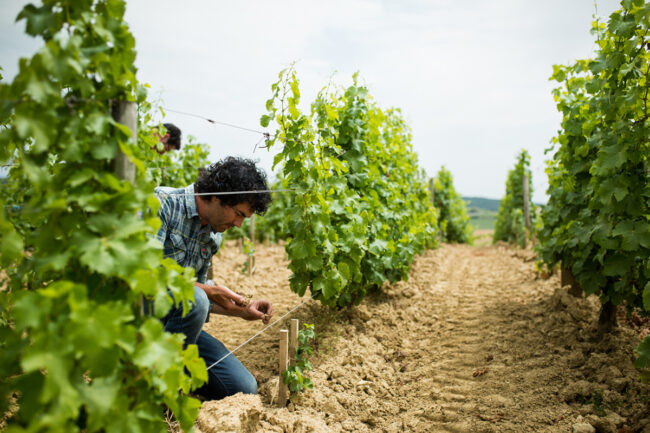
Stéphane Riffault, Domaine Claude Riffault
All good winemakers seem to be equal parts dirt-farmer and metaphysical philosopher, and Stéphane is no exception: “Being a winegrower and winemaker demands commitment, risk and continual self-questioning,” he maintains. “You have to know how to adapt in order to stay dynamic. Improvement requires perpetual movement, and what drives me is the creation of wines of texture; wines that are singular and true to themselves.”
Although most of the Riffault’s holdings are planted on the soft limestone soil called ‘terres blanches’, he farms a handful of parcels on caillottes and silex; thus, he has developed a keen understanding of the qualities that each unique terroir brings to an individual wine. He employs oak moderately to add length to his already-precise, site-expressive and highly delineated bottlings.
All his parcels are vinified separately, and (except for the rosé), all are bottled unfiltered.

White Sancerre: Lieux-dits Tell Their Story
As someone trained in Burgundy (and whose brother Benoît is the winemaker at Domaine Etienne Sauzet in Puligny-Montrachet), you might expect Stéphane Riffault to have a particular affinity for lieux-dits—those unique parcels of vineyards so singular in expression that they have their own names. This is absolutely the case, and there is more: The Crus of Burgundy may be well-mapped and understood, but far less so are the vineyards and lieux-dits of Sancerre. Riffault considers them among France’s finest terroirs, able to produce great white wines not of stature and complexity, but of individual identity. As such, he is making it his mission to champion eight parcels among the 33 plots he currently works as part of an exacting showcase stratospheric Sancerres seen from a near-microscopic perspective.
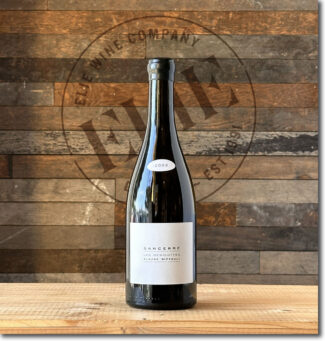 1 Domaine Claude Riffault, 2022 Sancerre ‘Les Denisottes’ Blanc ($44)
Les Denisottes is a three-acre plot located near Riffault’s Sury-en-Vaux estate and is composed of three individual southeast-facing plots at nearly a thousand feet in altitude. The vines (between 40 and 50 years old) are rooted in deep Kimmeridgian limestone. The juice fermented spontaneously and was aged on lees for 14 months in multi-layer wooden barrels with sporadic bâtonnage and no malolactic fermentation, producing a wine loaded with citrus zest, green apple tartness and a distinct flinty minerality.
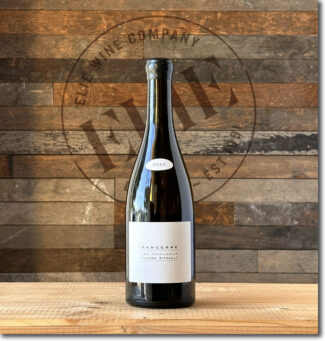 2 Domaine Claude Riffault, 2022 Sancerre ‘Les Chailloux’ Blanc ($44)
Les Chailloux is a unique site in the village of Sury-en-Vaux. While silex soils are common in the neighboring Pouilly-Fumé and the eastern edge of Sancerre, it is fairly scarce in the northwestern part of Sancerre. Stéphane Riffault farms about three acres of vines in this lieu-dit, which produces concentrated and opulent wine, yet racy and intensely saline and capable of aging gracefully for many years.
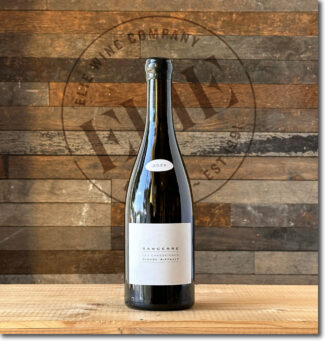 3 Domaine Claude Riffault, 2022 Sancerre ‘Les Chasseignes’ Blanc ($39)
Les Chasseignes is an east/southeast facing lieu-dit that sits at nearly 900 feet in altitude. Planted on gravelly limestone soils, the wine opens with a greenish, refreshing bouquet and gains considerably in complexity upon aeration, becoming round and elegant and finishing with savory notes.
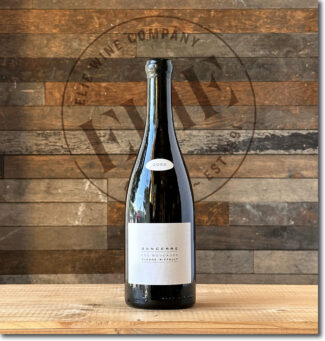 4 Domaine Claude Riffault, 2022 Sancerre ‘Les Boucauds’ Blanc ($35)
From a top parcel in Sury-en-Vaux; the 2022 Boucauds is a blend of both Burgundy barrels (several from Etienne Sauzet in Puligny-Montrachet) and larger oak formats. Because of the deep clay and limestone soils, Les Boucauds always has great mouthfeel and depth, as opposed to Stéphane’s silex and caillottes parcels which are more linear and austere in their youth. Sourced from several Les Boucauds plots, this cuvée employs close to half of all the Sauvignon Blanc planted on the estate.
 5 Domaine Claude Riffault ‘Mosaïque Calcaire’, 2023 Sancerre Blanc ($33)
In 2018 Stéphane Riffault made the decision to release a village-level Sancerre after additional plantings on limestone terroirs that he has undertaken over the last decade. It also includes some fruit from Les Boucauds and Les Chasseignes along with eighteen other parcels. Like all good Sancerre, this wine is supple and nearly succulent, filled with tropical notes besides the melon and pear foundation. It is rich, but remains light on its feet behind gentle acidity.
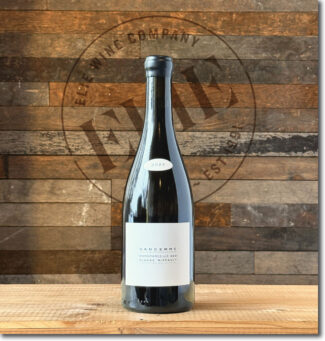 6 Domaine Claude Riffault ‘Monoparcelle 469’, 2022 Sancerre ($53)
Monoparcelle 469, in the ‘Les Sentiers’ plot represents a southeast-facing acre of 54-year-old massale-selection Sauvignon Blanc planted on a shallow terre blanche; this is a wine that shows what a barrel-aged Sancerre can display. It is filled with nuanced, terroir-driven notes of iodine, lemon rind and crushed limestones above a lingering salinity.
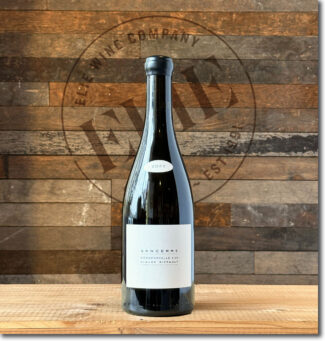 7 Domaine Claude Riffault ‘Monoparcelle 538’, 2022 Sancerre ($53)
‘Les Desmalets’ is a tiny (slightly more than a single acre) that encompasses the fullest-bodied terroir Stéphane Riffault farms—so much so that he blends most of it into his village Sancerre and reserves its oldest vines for this profoundly expressive and age-worthy micro-cuvée. It contains 47-year-old massale-selection Sauvignon Blanc planted on a shallow Kimmeridgian limestone. The fruit is hand-harvested and fermented in French oak foudres, then aged for 18 months in the same vessel. The wine is silky, rich and elegant showing Meyer lemon and orange peel and a nicely-integrated tannic grip.
Red Sancerre: Taking Cues from Burgundy
To look for a silver lining amid the global catastrophe of climate change is nearly sacrilegious—unless you are a fan of red wine from Sancerre. Despite its strong history in the appellation, red wine grapes (Pinot Noir, almost exclusively) once struggled to ripen, and when they did, did so erratically. In all but exceptional vintages, Sancerre reds had a reputation for being thin and somewhat weedy, and even the alchemy of elite producers like Domaine Claude Riffault tended to produce wines with obvious bell pepper notes—a telltale signature of under-ripe red grapes, and an issue that oak does not fix.
In 2014, a warming climate began to put some of these nagging problems in the rearview mirror. The growing season was not necessarily longer, but the diurnal temperature shifts—vital for maintaining a useable balance between sugars and acids—allowed Pinot Noir to ripen more completely and more evenly. The wisest producers began to rely on a Burgundian approach; vinifying individual parcels by terroir, relying on blends that may vary from year to year, and perhaps most importantly, rethinking the use of oak barrels, allowing them to accent rather than submerge the fruit.
And every year, the fruit is proving itself reliably worthy, showing the rich black cherry and cola notes lifted by acidity that we have come to expect in top Burgundies.
All this does not meliorate the downside of climate change, but if life hands you lemons, might as well become better acquainted with Sancerre’s now world-class Pinot Noirs.
 8 Domaine Claude Riffault, 2019 Sancerre ‘La Noue’ Rouge ($33)
La Noue is a six-acre plot of Pinot Noir on planted on Kimmeridge limestone, and here, Riffault’s Burgundian-trained touch is evident. The enticing tea like, garrigue-infused fragrance is followed by raspberry, blueberry and violet notes enrobed in silky tannins. As with all wines from Domaine Claude Riffault, the vines are cultivated according to organic and biodynamic guidelines. Manual harvesting is followed by 18 months of aging. Total production amounts to 10,630 bottles.
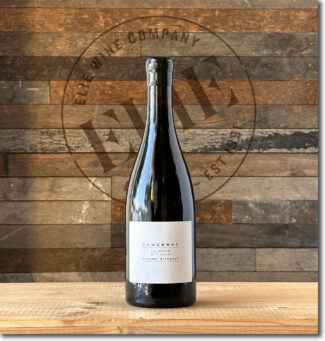 9 Domaine Claude Riffault ‘M.T. Mise Tardive’, 2019 Sancerre ‘La Noue’ Rouge ($42)
‘Mise Tardive’ refers to a process in which the unbottled wine undergoes a longer élevage with extended lees aging. Divided into seven plots and ranging in age from 10 to 60 years old, Noue is the source for both Noue Rosé and Rouge. Stéphane’s Rouge shows his Burgundian-trained touch with this variety, one that preserves the light and delicate style of Pinot from Sancerre, but layered with a depth of red fruit and black tea flavors.
 10 Domaine Claude Riffault ‘La Noue’, 2023 Sancerre Rosé ($33)
‘La Noue’ is a six-acre plot of Pinot Noir grown on clay limestone and marl. Divided into seven plots and ranging in age from 10 to 60 years old it is the source for both Riffault’s Noue Rouge and his rosé. In particular, the rosé is a combination of juice bled off the Sancerre Rouge after a 6-12 hour maceration combined with direct press Pinot Noir. Cherry and citrus dominate the nose, while ripe strawberry notes appear on the palate.
Vintage Journal
Centre-Loire
The 2023 Vintage: A Winegrower’s Vintage
The winter of 2022/2023 was relatively mild in Sancerre and rolled into an equally benign spring, and although a few vines were touched by frost, it was nothing cataclysmic. Budburst was largely successful, and the gently rising temperatures proved idyllic for flowering, with yields promising to be high. June then brought a bout of hot, humid weather aggravated by frequent rain and disease pressure ran high; producers had to frequently spray and those who weren’t vigilant lost yields. That said, the heat pushed the grapes to phenolic ripeness signaling an early harvest.
Although a heatwave struck mid-summer, nights were cool, proving ideal for preserving the acidity and aromatics crucial to Sancerre, and despite a few large storms, the harvest was mostly picked fuss-free.
The 2022 Vintage: Freshness Underscores the Wines’ Definition and Poise, Too. A Promising Vintage.
Directly from the journal of Jean-Paul Labaille, owner and winemaker at Thomas-Labaille in Chavignol:
“Following the terrible frost that impacted our crop in 2021, it almost feels like 2022 was blessed from above. While it’s true that drought and hail impacted many vineyards this year and that the heavy rainfalls in June made it very challenging to work the soils, in the end the vines were balanced and we did not suffer the same amount of hydric stress felt by so many other regions. We even had some light rain in August and at the very beginning of harvest, giving us grapes of great quantity and quality. We began on September 5th, interrupted once on the 7th by a hail storm that touched the Northwest of the appellation. In Chavignol there were zero impacts. Qualitatively, we are in for a good vintage. The fermentations have been going well, with pH levels between 3.2 and 3.3, permitting us to keep a good amount of freshness. The alcohol will end up between 12.5 and 13.5, maybe as high at 13.7 on the Monts-Damnés. 2022 really reminds me of 2018, which is very promising!”
The 2019 & 2018 Vintages: The Twin Years
The back-to-back vintages 2018 and 2019 represent something of a climactic miracle. Even as a stand-alone, 2018 is considered to be one of the most exceptional vintages seen in the region for half a century. Taken together with a spectacular 2019, they are twin towers of triumph.
2018 began with fantastic spring that allowed for successful flowering and fruit set without any of the usual problems that normally occur with rain, hail or frost, and a hot summer developed the ripe semi-tropical flavors associated with the best Sauvignon Blanc. 2019 was a bit cooler, but produced grapes where the coveted acids that reign in aggressive fruit notes.
Tapping the source directly, Vacheron comments, “2018 and 2019 are very similar in the way they are constructed, even if the alcohol is slightly higher in 2018. The two vintages tend to show that it is possible to make wines that have good freshness despite low acidities because the minerality superseded the acidity. 2018 is without a doubt a vintage that will mark people’s memories, and will remain a reference in Sancerre. It’s the kind of vintage that helps grow a heightened generation of wine makers within their appellations.”
Holiday Gift
The Champagne Society Membership
6-Month ($299) or 12-Month ($589) Subscription.
Bimonthly Selection.
Champagne Enters ‘New Era’
 Our brick-and-mortar may be in Birmingham, but here at Elie Wine, our eyes are always cast toward our spiritual home in French and Spanish wine country. Keeping up with the zeitgeist of vinology is a fascinating, ever-changing endeavor, and nowhere is this more true in Champagne, which has undergone more philosophical changes in the past two decades than in the past two centuries. Not only has a steadily warming planet offered once-marginal terroirs a chance to shine, the focus needle is gradually shifting to an appreciation of Champagne as, first and foremost, a wine. In a culture shift sometimes called the ‘Burgundianization of Champagne’, less attention is being paid to big-name brands (who will always have their share of the market) and more to relative newcomers who are showcasing the terroir of individual vineyards, and even plots within that vineyard, rather than simply lauding a Premier Cru village. There is no question that the quality of Champagne overall is improving with single-site expressions and riper grapes that still retain Champagne’s characteristic acidity.
Elie
Join The Champagne Society: A Bimonthly Selection of a Bottle and Sometimes Two.
 As a member of The Champagne Society, you’re in a select community of like-minded folks who appreciate the exceptional in life and recognize that sparkling wine is a superlative among man’s culinary creations. A bottle of Champagne is selected for you bimonthly. You will be drinking some of the best Champagne ever produced.
All selected wines are from passionate grower-producers or small houses deeply connected to the subtleties of each of their vine parcels and who believe that wine is made in the vineyard. Many of these wines are highly allocated, many bought directly, and we quite often only have access to a few cases of a particular cuvée. For more information visit The Champagne Society webpage.
A Gift That Keeps On Giving: Membership Subscription To ‘The Champagne Society’
Lily Bollinger once said, “I only drink champagne when I’m happy and when I’m sad. Sometimes I drink it when I’m alone. When I have company, I consider it obligatory; I trifle with it if I’m not in a hurry and drink it when I am, otherwise I never touch the stuff unless I am thirsty.”
Not only is Champagne the quintessential drink of celebration, it has traditionally been a gift given with ramped-up sentiments. This year we are offering a couple of variations on this theme, beginning with an opportunity to gift a special someone a six-month or twelve-month membership to The Champagne Society. Our pick for December will be packaged in a wrap-ready gift box along with a congratulatory certificate explaining what lies ahead in bi-monthly installments:
Six-Month Membership Gift ($299)
You will take home a pre-packaged, ready-for-gift-wrapping box containing The Champagne Society December two bottles Selection, Champagne Laherte Frères, with a certificate congratulating the recipient on their new membership to the Champagne Society, a select community of like-minded folks who appreciate the exceptional in life and recognize that wine is a superlative among man’s culinary creations. Then, in February and April, they are eligible to receive two more installments, one Champagne bottle each month (described in detail, in advance, by email), which they can stop by the store to pick up in person or have shipped directly to their home at no additional cost.
Twelve-Month Membership Gift ($589)
A full year’s membership in the Champagne Society includes a pre-packaged, ready-for-wrapping gift box containing The Champagne Society December two bottles Selection, Champagne Laherte Frères, along with a congratulatory certificate informing the recipient that they are now part of the Champagne Society, whose members are eligible for discounted prices on highly allocated Champagne, many bought directly, and many available only through Elie Wine Company. Then, in February and April, June, August and October, they are eligible to receive five more installments, one bottle of Champagne each month (described in detail, in advance, by email), which they can stop by the store to pick up in person or have shipped directly to their home at no additional cost.
Notebook …
Wine Siblings: Sancerre and Chablis
Brothers from another mother or sisters from another mister; either way, the land beneath Sancerre and Chablis springs from the same prehistory. Classified in the middle of the 18th century by French geologist Alcide d’Obigny while he was working near the English town of Kimmeridge, he identified a unique layer of dark marl and called it ‘Kimmeridgian.’
Still, as in siblings, there are distinct differences in the DNA of English Kimmeridgian and French Kimmeridgian. The French layer is a relatively uniform chalky marl with thin limestone containing rich layers of seashells. This is because strata formed from the post Jurassic period continued to be deposited in the shallow sea areas which once covered part of France. The way these layers interact is key to the reason that French Kimmeridgian soils produce some of the world’s most heralded wine. The marly soil provides good structure, ideal water-retention and is easy to cultivate while hard limestone Portlandian contains numerous fossil fragments and, having been repeatedly shattered by frost, offers good aeration and ideal drainage along gentle slopes.

Chablis is a significant part of the Kimmeridgian chain; mid-slope vineyards in Chablis match almost perfectly to the Kimmeridgian outcrop, with the soft, carbonate-rich rock being covered by Portlandian limestone and supported by other limestone deposits. Sancerre, meanwhile, sits on top a fault ridge; the eastern side has a layer of Cretaceous soils while the west side is covered with brush and gravel slopes. Further west the best vineyards sit on the classic Portlandian-Kimmeridgian soil combination, producing a classic example of ‘terroir’.
- - -
Posted on 2024.12.12 in Sancerre, Rosé de Loire, France, Wine-Aid Packages, Loire | Read more...
Grenache is at Its Best When It Steps Softly Retrospective of Châteauneuf-du-Pape’s Domaine de La Vieille Julienne Vindicates Their Traditionalist Approach 5-Bottle Sampler Pack for $299
Join Us for Saturday Sips: Domaine de La Vieille Julienne All-Day Tasting
Come as you are; come any time that’s convenient for you during our business hours to sample selection from this week’s selections. Our staff will be on hand to discuss nuances of the wines, the terroirs reflected, and the producer.
Un-Châteauneuf Châteauneuf: Reconsidering Grenache in the Northwestern Cooler, Sandy Part of the Appellation
When a Châteauneuf vigneron decides that modernity has run its course and recognizes that less may actually be more—that the fresher-tasting wines of their grandparents better reflected terroir—changing their winemaking habits may be easier said than done.
The trend toward super-ripe expressions is fairly modern as a concept, and is nowhere more evident than in Southern Rhône’s treatment of Grenache, the workhorse grape of Châteauneuf-du-Pape. Longer hang times in a warming climate saw this varietal pack in natural sugar, leading to ultimate overkill alcohol-by-volumes of up to 17%. But to rein in this style and return to the wiser wines of the past requires a commitment to an altered mindset both in the cellar in the vineyard. And it takes time. Whereas earlier picking, whole-cluster fermentation and aging in concrete rather than oak can be an easy-enough conversion, vineyards also require attention. Cover crops must be planted and vines repruned to promote more vegetal growth to slow ripening—a process that can take five years.
This week we will take a look at Domaine de La Vieille Julienne, whose position in the northwestern corner of Châteauneuf-du-Pape enjoys, besides the dedication of Jean-Paul Daumen, a slightly cooler climate that tends to produce this style of wine naturally.

Stones Vs. Sand
When Mr. Sandman delivers his own dream in Châteauneuf-du-Pape, it is that the legendary galets roulés—the rolled quartzite pebbles of Southern Rhône that have long helped ripen grapes by absorbing heat from daytime sunshine and then releasing it overnight—would fall from grace in favor of his own handiwork: Sand.

Untrained Old Vines Grenache Bush in Galets Roulés
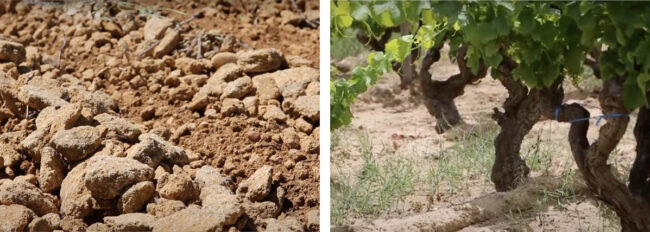
Grès Rouge, Sand and Safre
Enter climate change and warming weather that does not need this prodigious nighttime nudge quite so much. And it turns out that the vines of Châteauneuf grown in sandy soils produce wines that are fresher, more subtle, and in ways, more ‘Burgundian.’
Not only that, but Grenache—CdP’s star actor—actually prefers sandier soil. And unlike galets roulés, sand can be found throughout the appellation, appearing in pockets from the far north and all the way to the south.
Mature Châteauneuf-du-Pape: Time Capsules
We can agree that mature Châteauneuf-du-Pape is one of the most sophisticated pleasures a genuine connoisseur can experience, and it may be equally said that the age of the contributing vines is fundamental to producing truly age-worthy Châteauneufs. This is because older vines produce smaller, more concentrated fruit while deeper root systems enhance terroir-specific minerality. In context, three things are working in favor of Grenache, Châteauneuf’s mainstay. It is a grape that is imminently capable of great nuances with bottle time; also, southern France is home to many of the world’s oldest Grenache vines, and lastly, it makes the best of poor soils and extremely arid climates, and the World Conference on Climate Change and Wine referred to Grenache as “arguably the most environmentally friendly grape in the world and prepared for climate change.”
You will generally pay a pretty high tariff for well-aged Châteauneuf-du-Pape, especially if it has a pedigreed history of ownership. I think you’ll find that the older vintage Châteauneufs in this package are among the most reasonably priced wines, given their provenance, that can be found.
Domaine de La Vieille Julienne
In Châteauneuf-due-Pape’s extreme northern end (only ten feet from Côtes du Rhône—this is not a typo), a single fifty-acre vineyard plot has been producing superlative wines for over three hundred years.
Jean-Paul Daumen, who took over from his father in 1992, has worked diligently to keep the legacy of La Vieille Julienne alive, embracing historical precedent while nudging the domain’s viniculture into the 21st century.

Jean-Paul Daumen, Domaine de La Vieille Julienne
“I began to change my methods of vinification and blending in 2010,” he says, “moving away from blending in the winery and putting the whole of my focus on balanced field blends in the vineyard; the process of blending is now on a parcel by parcel basis, and not based on a grape variety choice. Low yields are a priority at Vieille Julienne, and holding them below 20 hectoliter per hectare leads to power, purity and concentration.”
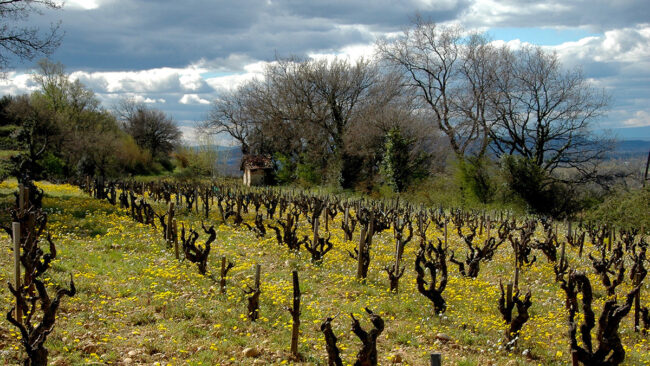
Domaine de La Vieille Julienne
Daumen’s precise methodology is aimed at producing ‘vineyard wine of immense concentration, with little winery influence.’ He destems before co-fermentation and aging takes place in a combination of foudres and old oak barrels. His vines average over 60 years in age while the parcels of Grenache that go into his Réservé bottling of Châteauneuf-du-Pape are over a hundred, making these wines benchmarks of the appellation. Daumen will not release his CdPs until they are approaching their peak, so that they often come onto the market years after most other Châteauneuf-du-Papes have come and gone.
In addition to his Vieille Julienne label, Jean-Paul is also making wines under his biodynamic label ‘Daumen,’ wines intended to be more accessible when young without losing any of his customary complexity.
Vintage 2018: More Densely Concentrated Than Typical
Châteauneuf-du-Pape is an aggressively blended cornucopia; the reality of permitting so many grape varieties in a wine that a given vintage may favor one grape at the expense of others.
Most vintage reports focus on Grenache, the variety upon which CdP has (historically) staked its reputation, but the trend in local vintages has been a changing climate which more and more frequently interrupts the early-budding Grenache with frost and later, with excessive springtime rain, leading to a greater percentage of Syrah and Mourvèdre to represent the mix. Such wines tend to be lower in alcohol with a flavor profile leaning toward darker fruits and earthy minerality, so if that is the style of Châteauneuf-du-Pape you prefer, 2018 was your ideal vintage. Heavy rains in May and June caused a poor fruit set for Grenache and many growers reported a 40%-60% reduction; Syrah and Mourvèdre fared better and are pronounced in the cuvées.
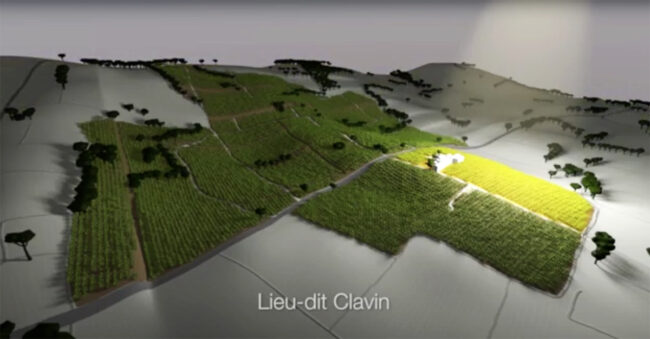
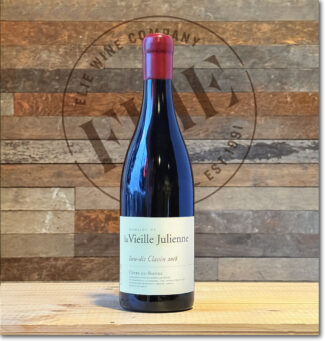 1 Domaine de La Vieille Julienne ‘Lieu-dit Clavin’, 2018 Côtes-du-Rhône Rouge ($23)
The lieu-dit ‘Clavin’ is a 14-acre vineyard on the far side of the road, just beyond the CdP delineation, making it an almost unfathomably great value for this style of wine since Daumen treats its production with the identical techniques and respect that he shows to his classified grapes. Clavin terroir is clay and red sand; the vines are 85 years old. The wine shows lavender and licorice lightly touching red plum, currant and strawberry.
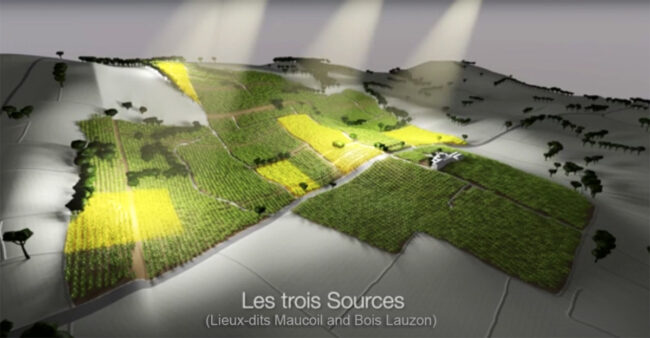
 2 Domaine de La Vieille Julienne ‘Trois Sources’, 2018 Châteauneuf-du-Pape ($61)
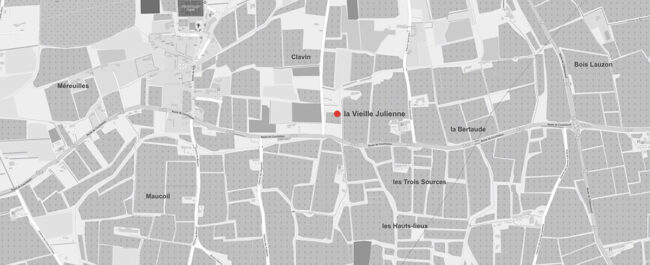
From the precocious lieux-dits Maucoil and Bois Lauzon, where the terroir is made of unique, fine-grained safre sand along with clay and gravel; in this environment, the grapes mature earlier. Located on a flatter ground between Clavin and Les Hauts-Lieux, the Trois Sources terroir mosaic of terroir is particularly suited to Grenache—most of the vines are 75 years old. The wine shows lush aromatics of blackberries, black raspberries, peppery garrigue and herbes de Provence with satiny tannins and a solid spine of acidity.
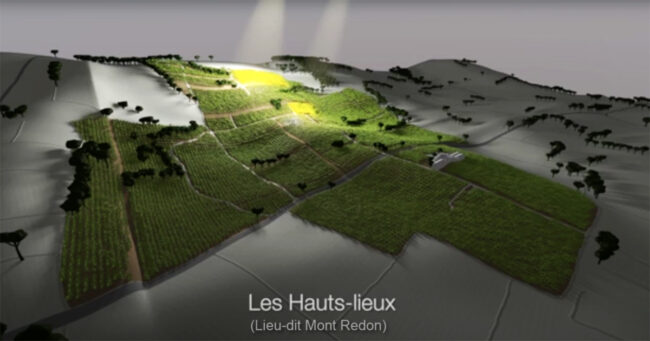
 3 Domaine de La Vieille Julienne ‘Hauts Lieux’, 2018 Châteauneuf-du-Pape ($86)
70% Grenache, 20% Mourvèdre, 5% Counoise and 5% Cinsault grown on the limestone and quartz soil in the Mont-Redon lieu-dit. The ‘high place’ lies in a sheltered part of Daumen’s slope, where marl soils and shallower safre is covered with quartzite pebbles, making it especially friendly to Mourvèdre. The wine shows pure black currant, licorice, violets, and some salty minerality behind pure, polished tannins.
Vintage 2017: Year of the Grenache
Despite being known for its myriad permitted varieties, in reality, the performance of Grenache largely defines the reputation of a Châteauneuf-du-Pape vintage.
2017 began with frost at the end of April, followed by a dry summer. This impacted Grenache more than other varieties since it buds earlier. Then in May, the region was hit with inclement weather, further reducing the Grenache yields. Some of our growers reported a greater yield reduction in 2017 than in 2018 in the range of 25-50%. Luckily summer was hot and dry, allowing the crop to ripen uniformly with a long harvesting period at a leisurely pace. So beneficial was this warmer period later in the season that the remaining Grenache was quite healthy; Didier Negron observed that this vintage was like a more concentrated 2014.
 4 Domaine de La Vieille Julienne ‘Trois Sources’, 2017 Châteauneuf-du-Pape ($58)
From the flatter ground between Clavin and Les Hauts-Lieux, the Trois Sources’ mosaic of safre sand and red clay is particularly suited to Grenache. The wine shows gorgeous raspberry ganache and cassis that glides over grilled herb, mineral and tar with an authoritative finish.
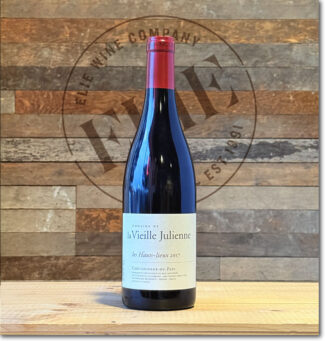 5 Domaine de La Vieille Julienne ‘Hauts Lieux’, 2017 Châteauneuf-du-Pape ($71)
The ‘high place’ lies in a sheltered part of Daumen’s slope; the wine is beginning to show tertiary flavors of leather and earth behind mineral-accented aromas of baked cherry and incense that has picked up toasted earth elements over a sour cherry core. Precise in the mouth with intense red fruit liqueur.
Cuvée Réservé: Singular
Says Jean-Paul Daumen: “In mid-August, when the vineyard is deserted, I like to walk through the vines on the Trois Sources slope, observe their expressions, taste the berries. At that time, I have to be receptive and appreciate all the details that make, in the context of certain vintages, vines show particular expressions. In this case only, these century-old vines of Grenache (90%), but also of Syrah, Cinsault and Counoise will be identified and vinified separately to produce the Réservé.”
 Domaine de La Vieille Julienne ‘Réservé’, 2018 Châteauneuf-du-Pape ($257)
From a single terroir closest to the Les Trois Sources; a tiny production cuvée that in 2018 shows the more elegant, seamless style of the vintage and has a gorgeous bouquet of cassis, blueberries, crushed violets, smoked game, ground pepper, and black licorice.
 Domaine de La Vieille Julienne ‘Réservé’, 2017 Châteauneuf-du-Pape ($257)
Daumen was able to weave the concentrated vintage into a complex tapestry of ripe fruit, spice and peppery garrigue with a velvety texture and a long, gripping finish.
 Domaine de La Vieille Julienne ‘Réservé’, 2015 Châteauneuf-du-Pape ($257)
90% Grenache, 5% Syrah and 5% Mourvèdre; the wealth of fruit is mellowing into perfect tertiary balance; with no loss of detail, the wine shows straw, licorice root and cigar leaf with notes of black cherry and coastal herbs with an integrated, silken tannin backbone.
Vintage 2015: Rich, Ripe and Full of Powerful Fruit
Although the Châteauneuf-du-Pape’s 2015 vintage was slightly challenging for the slow-ripening Grenache, talented winemakers rose to the occasion by producing wines with superior tannins and ripe fruit if slightly higher levels of alcohol.
In early September, the entire Rhône Valley saw heavy rain, which favored the vines planted on free-draining sand and resulted in fresh fruit-forward flavors and expressive minerality. The best domains produced age-worthy wines with complex flavors and sumptuous textures.

Notebook …
Traditional and Modern Styles
Throughout much of its history, CdP provided a leathery foil to the potent and somewhat austere elegance of Bordeaux and the heady sensuousness of Burgundy. CdP is ‘southern wine’, filled with rustic complexity—brawny, earthy and beautiful. But as a business, all wine finds itself beholden to trends, since moving product is necessary to remain afloat. During the Dark Ages (roughly1990 through 2010—in part influenced by the preferences of powerful critic Robert Parker Jr.) much of Châteauneuf-du-Pape’s output became bandwagon wines, jammy and alcoholic, lacking structure and tannin, in the process becoming more polished than rustic and more lush than nuanced. For some, this was delightful; for others, it was a betrayal of heritage and terroir.
These days, a new generation of winemakers seem to have identified the problem and corrected it. Recent vintages have seen the re-emergence of the classic, balanced style Châteauneuf-du-Pape, albeit at slightly higher prices. A changing climate has also altered traditional blends, so that more Mourvèdre may be found in cuvées that were once nearly all Grenache. Mourvèdre tends to have less sugar and so, produces wine that is less alcoholic and jammy, adding back some of the herbal qualities once so highly prized in the appellation. But a return to old school technique has also helped; however, many of the wines in this offer were destemmed prior to crushing and were fermented on native yeast rather than cultured yeast.
Vineyard Management and Grape Varieties
In 1936, the Institut National des Appellations l’Origine officially created the Châteauneuf-du-Pape appellation, with laws and rules that growers and vignerons were required to follow. It was agreed that the appellation would be created based primarily on terroir (and to a lesser extent, on geography) and includes vines planted in Châteauneuf-du-Pape and some areas of Orange, Court In 1936, the Institut National des Appellations l’Origine officially created the Châteauneuf-du-Pape appellation, with laws and rules that growers and vignerons were required to follow. It was agreed that the appellation would be created based primarily on terroir (and to a lesser extent, on geography) and includes vines planted in Châteauneuf-du-Pape and some areas of Orange, Courthézon, Sorgues and Bédarrides. 15 grape varieties are allowed in the appellation: Grenache, Syrah, Mourvèdre, Terret Noir, Counoise, Muscardin, Vaccarèse, Picardan, Cinsault, Clairette, Roussanne, Bourboulenc, Picpoul Noir, Grenache Blanc and Picpoul Blanc. Vine density must not be less than 2,500 vines per hectare and cannot exceed 3,000 vines per hectare. Vines must be at least 4 years of age to be included in the wine. Machine harvesting is not allowed in Châteauneuf-du-Pape, so all growers must harvest 100% of their fruit by hand.

Beyond that, vines are allowed to be irrigated no more than twice a year. However, irrigation is only allowed when a vintage is clearly suffering due to a severe drought. If a property wishes to irrigate due to drought, they must apply for permission from the INAO, and any watering must take place before August 15.
Weather and Climate
Located within the Vaucluse department, Châteauneuf-du-Pape has a Mediterranean climate—the type found throughout much of France’s south—and characterized by hot, dry summers and cool, wet winters. It rarely snows at sea level (as opposed to the surrounding mountains, where snowfall may be considerable).

As the equal of elevation and rainfall, a third defining feature of the climate in Southern France is the wind. In a land dominated by hills and valleys, it is always windy—so much so that in Provence, there are names for 32 individual winds that blow at various times of year, and from a multitude of directions. The easterly levant brings humidity from the Mediterranean while the southerly marin is a wet and cloudy wind from the Gulf. The mistral winds are the fiercest of all and may bring wind speeds exceeding 60 mph. This phenomenon, blowing in from the northeast, dries the air and disperses the clouds, eliminating viruses and excessive water after a rainfall, which prevents fungal diseases.
- - -
Posted on 2024.12.05 in Châteauneuf-du-Pape, Côtes-du-Rhône, France, Wine-Aid Packages, Southern Rhone | Read more...
The Champagne Society December 2024 Bimonthly Selection: Champagne Laherte Frères
The Talented Aurélien Laherte’s Quest for the Perfect Alchemy
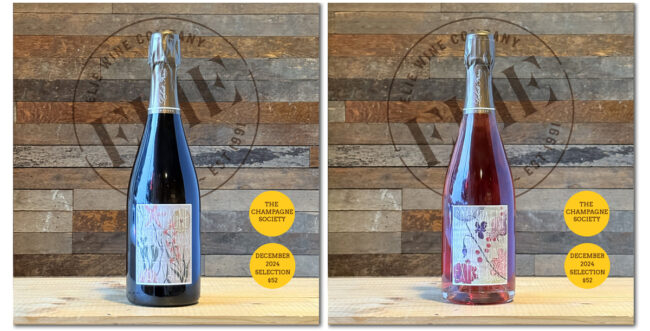
Champagne Laherte Frères ‘Blanc de Blancs’, Brut Nature ($52)
• AND •
Champagne Laherte Frères ‘Rosé de Meunier’, Extra-Brut Rosé ($52)
All that is gold may not glitter, but a glass of Aurélien Laherte’s Blanc de Blancs held up to the low winter sun will do exactly that. And it is this sun, and the associated warming of the planet, that has changed much of the way the world views Champagne and the way the region views itself.
Among the leaders in Champagne’s re-envisioning, Aurélien Laherte recognizes both the importance of a ‘sense of place’ in its grower/producer wines (rather than a carefully crafted blend of many places as had been the standard among the big Champagne houses for decades). Combined with the inevitable effects of warming vintages producing riper grapes with less acidity—both problematic in crafting traditional styles—Laherte has threaded a difficult needle by relying on a combination of organic and biodynamic viticulture, gentler methods of pruning vines while refining techniques in the cellar.
Laherte operates out of Coteaux Sud d’Épernay, a sub-region sandwiched between the Côtes des Blancs and the Vallée de la Marne. His results are undeniable: Chiseled Champagnes that are created with the sole intention of reflecting the nuances of the plot in which they originate. The Laherte estate, with 75 parcels situated in three distinct areas (the southern slopes of Épernay, the Côte des Blancs, and the Marne Valley) is centered in the village of Chavot and produces around 150,000 bottles a year. This week’s offering contains a cross-section of the most outstanding.

Champagne Laherte Frères
Terroir Fundamentals: Preserving Its Details
Champagne’s Coteaux Sud d’Épernay Region
That Champagne is, above all, a style of wine should be obvious, but a common misinterpretation (fueled in part by tradition and in part by marketing) removes it from viniculture and places it on a pedestal of the imagination.
Nothing wrong with this, of course, so long as the ground floor remains intact.
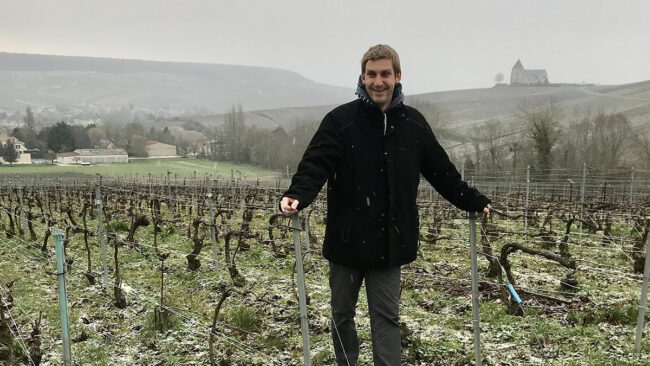
Aurélien Laherte, Champagne Laherte Frères
Aurélien Laherte, along with his high school friend Raphael Bérèche, would like to see these ideas put into context. A group of Champagne’s more progressive producers, including Agrapart, Marie-Courtin, Vincent Laval and Benoît Lahaye, gathers each spring to taste the ‘vins clairs’—wines meant to become Champagne, but having not yet undergone the bubble-creation process. These are not necessarily ‘still wines’ in that they are not meant to stand on their own merits, but have terroir-transparency profiles to make them suitable for top-shelf sparkling versions.
Situated largely in the Côteaux Sud D’Épernay, Laherte vineyards themselves total 26 acres subdivided into 75 separate parcels. Seven of these are farmed biodynamically and certified organic, with the rest farmed either ‘uncertified organic’ or sustainably. Each produces detailed wines that the estate seeks to showcase individually.
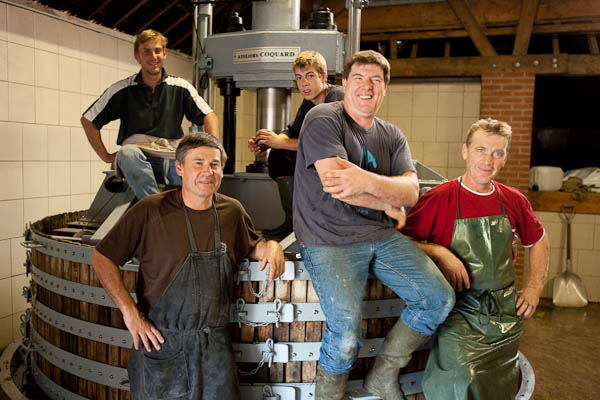
The team, Aurélien upper left
Coteaux Sud d’Épernay: Champagne’s Middle Grounds
The Coteaux Sud d’Épernay is Meunier-rich, with 47% of its 3000 acres planted to this variety, which is sometimes imagined as an ‘also ran’ in the rest of Champagne. In fact, Meunier is suited for soils that contain more clay and in terroirs with harsher climatic conditions since it buds late and makes it more resistant to frost. Sandwiched between the powerhouse wine regions Côte des Blancs and Vallée de la Marne, the Coteaux has an identity removed from either one; its terroir is distinctly different from the clay-heavy soils of the Marne and lacks the chalk of that puts the ‘Blanc’ in the Côte des Blancs.
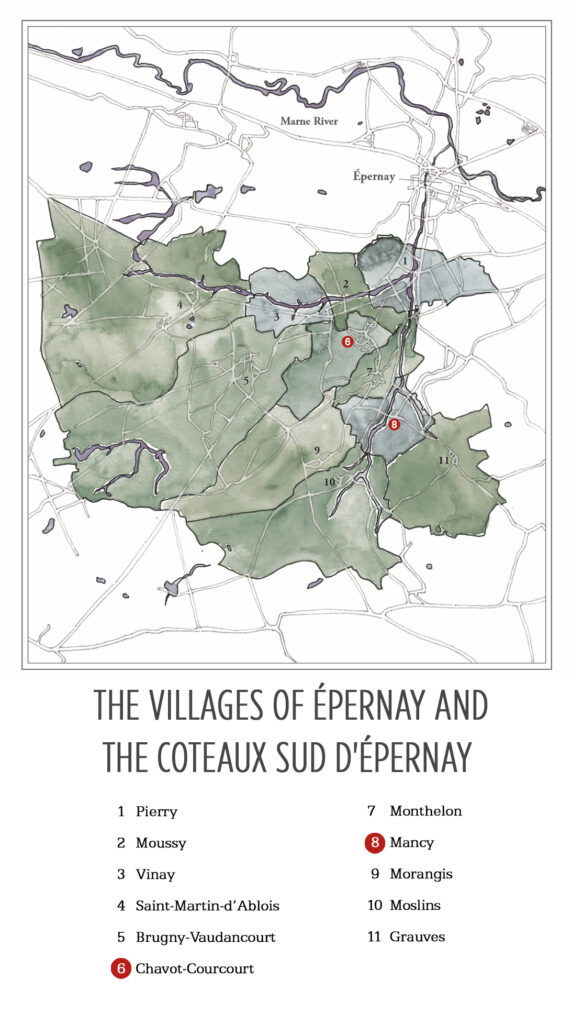
Phrasing it succinctly is Laherte Frères proprietor Aurélien Laherte: “Our wines show more clay influence than those of the Côte des Blancs and they are chalkier than the wines of the Vallée de la Marne.”
In short, these Champagnes are uniquely situated to offer the best of both worlds. As a result, the Coteaux Sud d’Épernay has long fought for recognition as entity unto itself, not necessarily a sub-region of its big brothers on either side.
Terroir Fundamentals: Preserving Its Details
When trying to demystify the mysterious—and to ground the ethereal—words like ‘alchemy’ (the ancient pseudoscience of spinning gold from base metals) may seem problematic. And yet, under the nimble hands of Aurélien Laherte, the full range of Champagne’s ‘next-level’ magic takes center stage.
‘Next-level’ because Laherte is one of the most progressive young winemakers in the Coteaux Sud d’Épernay, a sub-region sandwiched between the Côtes des Blancs and the Vallée de la Marne. A champion of organics and biodynamics, Aurélien produces a lineup of blended and single-vineyard Champagnes that expresses the unique identities of his terroirs.
The quest for perfection is a keystone in the plans of every winemaker, but in Champagne—where warming temperatures are created consistently better harvests and a return to a natural approach is making terroir more and more transparent—the luck of the draw is shifting to the skills of the Cellar Master. Knowing when to blend and when to let an individual lieu-dit shine through is among the most valuable tools in the chest, and when deployed correctly, allows the vintner to create wines worth their weight in gold.
Single Variety Cuvées
Champagne’s Nod to Burgundy
Bordeaux, and indeed much of Champagne, blends grape varieties to create signature ‘house’ wines. In Burgundy, the thinking is different: Burgundies are primarily monocépages, meaning they are made from a single grape variety, often sourced from a single vineyard. In Bordeaux, the monocépage concept is virtually unknown, but in Champagne, most prominent producers will offer at least one or two in their portfolio, Blanc de Noirs or Blanc de Blancs. Frequently they are vintage cuvée produced only in years where a special set of conditions are met and only released in limited quantities.
• Blanc de Blancs
Blanc de Blancs—a term found only in Champagne—is used to refer to Champagne produced entirely from white grapes, most commonly Chardonnay. Pinot Blanc and Petit Meslier can also be used, as well as a number of other varieties permitted in the appellation, but these are much less common.
Chardonnay: ‘Emblematic Cuvée’
 Champagne Laherte Frères, Coteaux-Sud-d’Épernay Blanc-de-Blancs Brut-Nature ($59)
100% Chardonnay from the south-facing slopes of Épernay and Chavot, grown on soft clay and chalk and harvested from vines about 35 years old. The wine is fermented in small wooden foudres and barrels with minimal bâtonnage; it undergoes partial (20%) malolactic and is aged on fine lees prior to disgorgement. The dosage is balanced by the creaminess of the malo; the wine shows bright tropical fruit flavors, especially mango with a hint of ginger.
Disgorgement Date: February 2024. Dosage: 0
Chardonnay: ‘White with A View’
 Champagne Laherte Frères, 2020 Coteaux-Sud-d’Épernay Chavot ‘Les Grandes Crayères’ Blanc-de-Blancs Extra-Brut ($86)
100% Chardonnay from Chavot mid-slopes where soft Campanian chalk gives these old vines a perfect substratum on their western exposition. This is a single-vineyard cuvée with vines grown using sélections massales and a blend of new and old rootstocks. Vinification in wooden barrels; disgorgement is done by hand. A classic Coteaux Sud Blanc de Blancs showing notes of crème brûlée, apple pie, Jerez-like nuttiness and an extremely fine mousse.
Disgorgement Date: November 2023. Dosage: 0-5 gram/liter. 4579 bottles produced.

Chardonnay: ‘Naturally Expresses Terroir, Variety and Intuition’
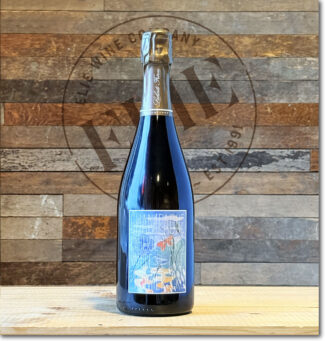 Champagne Laherte Frères ‘Nature de Craie’, Côte-des-Blancs Premier-Cru Brut-Nature ($72)
From organically grown 30-60 year old vines in the Premier Cru villages of Vertus and Voipreux. The vineyards are located in the lower mid-slopes where the chalk is at its most prominent, capped off with a few inches of clay. No added sulfur was used during the vinification or aging of this wine. It is 100% free-run Chardonnay juice, barrel aged, barrel fermented and indigenous yeast fermented.
Disgorgement Date: April 2024. Dosage: 0-5 gram/liter.
Petit Meslier: ‘Vibrant and Expressive’
Petit Meslier is a nearly-forgotten grape of which Laherte is so enamored that he replanted a portion of the clay and silt (with chalk below) mid-slope in the hills of Chavot to preserve the varietal diversity of Champagne. Don’t confuse Meslier with the similar-sounding Meunier; it is a white grape made by crossing Gouais Blanc with Savagnin. Currently grown in small quantities in Champagne, it is noted for its heat resistance and ability to maintain acids during long spells of hot weather and, when vinified as a monocépage, provides tremendous aromatic intensity and depth.
 Champagne Laherte Frères ‘Petit Meslier’, Coteaux-Sud-d’Épernay Extra-Brut ($117)
100% Petit Meslier. In creating his iconic, all-inclusive blend ‘Les 7’, Aurélien was particularly struck by the ability of his Petit Meslier to stand on its own. From a vineyard called ‘Cépage Oubliés,’ it is a blend of several harvests with 40% reserve wine and aged for six months on its lees ‘fût de chêne’, or in oak barrels; it shows honeyed pear, buttered toast and toasted almonds behind an unsurprisingly racy spine of acidity.
Disgorgement Date: October 2023. Dosage: 2 gram/liter.
• Blanc de Noirs
In Champagne, Blanc de Noirs mean that the wine is made from either Pinot Noir or Meunier (or a blend of the two), although it’s relatively common to find 100% Pinot Noir. Despite the ‘Noir,’ they may be notably ‘Blanc’ since both Pinot Noir and Meunier are red skinned, white-fleshed grapes that produce clear juice. Without being given time to macerate on the dark skins, the wine will be white to the eye, though much more to the palate.
Meunier: ‘Celebrating the Variety’
A light juice and dark skin grape, Meunier tends to be considered the ‘inferior’ the three dominant grapes of Champagne, without the finesse, the liveliness or the delicateness of its illustrious counterparts, Chardonnay and Pinot Noir. Lately, Meunier has been experiencing a comeback lately and many up-and-coming winemakers are showcasing it in their range. 100% Meunier cuvées are becoming more common and single vineyard Pinot Meunier releases are available.
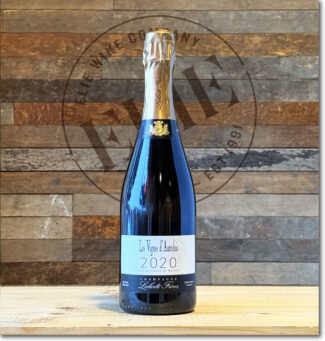 Champagne Laherte Frères ‘Les Vignes d’Autrefois – Vieilles Vignes de Meunier’, 2020 Coteaux-Sud-d’Épernay Extra-Brut ($86)
The selected Meunier plots for this wine were planted by the Laherte family between 1947 and 1953 in the villages of Chavot (lieux-dits La Potote and Les Rouges Maisons) and Mancy (lieu-dit Les Hautes Norgeailles). Some of the vines were planted on French rootstock while others are the result of old sélection massale. Aurélien uses traditional wooden Coquard presses; fermentation occurs with native yeast in old Burgundy barrels and malolactic fermentation does not take place. The wine ages up to 19 months on the lees and dosage is between two and four grams per liter; it exhibits marvelous aromas of white peach, violets and verbena.
Disgorgement Date: December 2020. Dosage: 2-4 gram/liter. 3306 bottles produced.
Pinot Noir: ‘Deep and Faithful’
Pinot Noir accounts for 38% of the area under vine in Champagne and is the dominant grape in Montagne de Reims and Côte des Bar. It is frequently referred to as ‘Précoce’ due to its tendency to ripen early, leaving behind the acidity so prized by Champagne makers. It thrives in cool, chalky soil—a hallmark of Champagne’s terroir.
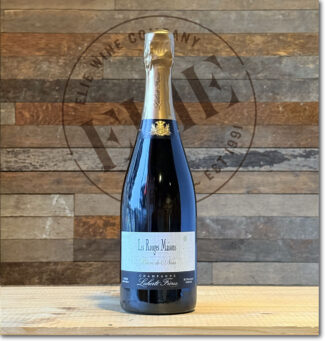 Champagne Laherte Frères, 2020 Coteaux-Sud-d’Épernay Chavot ‘Les Rouges Maisons’ Blanc-de-Noirs Extra-Brut ($86)
100% Pinot Noir from the prized lieu-dit Les Rouges Maisons planted in 1983 on rich soils of silex, schist and limestone. Malolactic is employed and dosage a scant 2 grams per liter to produce a rich BdN, poised on the palate and showing the austerity, finesse and racy freshness typical of this terroir.
Disgorgement Date: December 2023. Dosage: 2 gram/liter. 1637 bottles produced.
Pinot Noir: ‘Intense and Straight’
 Champagne Laherte Frères, 2019 Montagne-de-Reims Premier Cru Chamery ‘Les Longue Voyes’ Blanc-de-Noirs Extra-Brut ($86)
Part of Aurélien Laherte’s’ ‘Terroirs’ series, this is the second incarnation of ‘Les Longue Voyes’, a Blanc de Noirs Champagne made entirely from Pinot Noir. The fruit comes from the village of Chamery on the Petite Montagne de Reims, nearly twenty miles from the estate—hence the name, which means ‘The Long Way’. Barrel aged for 18 months with a 4 grams per liter dosage and no malolactic, the nose reveals notes of black fruits, and the palate is tense, tasty and tonic with a persistent saline finish.
Disgorgement Date: December 2023. Dosage: 2 gram/liter.

Pinot Noir + Pinot Meunier: The Twain Shall Meet
 Champagne Laherte Frères, ‘Blanc de Noires’ Brut-Nature ($57)
Pick your Pinot—this wood-fermented and aged wine is half Noir and half Meunier and shows dried pear, spice, hazelnut, dried flowers and anise open in this very pretty and expressive Blanc de Noirs.
Disgorgement Date: June 2024. Dosage: 0
• Rosé
Credit Madame Clicquot for revolutionizing the (then) relatively small production of pink Champagne. A believer in the idea that a wine should flatter both the eye and the palate, the Grande Dame broke with tradition and re-created the process of making rosé champagne. Before, it was made by adding an elderberry-based mixture to white Champagne, but Madame Clicquot had vines in the Bouzy region of Champagne where she made her own red wine, and she decided to blend this with her still white wines.
This is the most common method of producing rosé Champagne—blending clear white and black grape musts, using between 5% and 15% red wine; it is called a rosé of ‘assembly’. The proportion of red wine can vary, but the white wine must be the majority. Another method of rosé production is the ‘saignée’ method, which involves allowing the must to undergo minimal skin contact, generally for only a couple of hours. This minimal maceration allows the must to develop stronger aromas and flavor profiles while deepening the color. ‘Saignée’ translates literally to ‘bleeding’, which is essentially what the skins are doing into the juice.
Meunier: ‘Strong Identity’
Traditionally used as a blending grape, there are about 26,000 acres of Meunier planted in Champagne, and the variety is rapidly becoming more than an afterthought used for color and balance. In the right soil conditions (calcareous clay with deeper chalk layers) and if allowed to ripen well (leapfrogging the vegetal stage) it can produce a wine that ages remarkably, showing finesse and freshness even after years in the bottle.
 Champagne Laherte Frères ‘Rosé de Meunier’, Extra-Brut Rosé ($61)
100% Meunier, the wine is sourced from vineyards in the Vallée de la Marne and Chavot with an average age of 25 years for the Meunier vinified white and more than 40 years for the parcels selected for the red wine. It is a blend of 30% macerated Meunier, 60% white wine from Meunier and 10% still red Meunier. As a result, it uses both methods of Champagne rosé creation, assemblage (blending) and saignée (bleeding). The wine is multi-layered with a ripe core of red fruit and brisk girdling acids.
Disgorgement Date: July 2024. Dosage 2.5 gram/liter.
Meunier: ‘Varietal Complexity and Nuances’
 Champagne Laherte Frères, Coteaux-Sud-d’Épernay Chavot ‘Les Beaudiers’ Extra-Brut Rosé de Saignée ($82)
Produced entirely from Meunier (harvest 2020) which comes from plots situated in ‘Les Beaudiers’ in Chavot and cultivated using methods which include short pruning for a limited production; manual and painstaking work that requires regular plowing. The grapes were destemmed and macerated for twelve hours, then fermented in barrels on natural yeast without malolactic. The wine shows layers of pomegranate, wild strawberry and rose petals above an exquisite bead and all the depth and density one expects in a saignée.
Disgorgement Date: December 2023. Dosage: 0-5 gram/liter. 2600 bottles produced.
Blending
A Tapestry of Few Threads
Champagne should illustrate the word ‘synergy’ above all, where the sum of the total is greater than the individual parts. The ideal blend should be the aggregation of positive components; every thread should add to the tapestry’s whole. The blend should always drive toward harmony; Chardonnay is often up front, while Pinot Noir supplies the middle and finish. Other allowable varietals should only appear if they contribute to the primary blend.
This is not a universal outcome, of course, and according to Jean-Marc Lallier of Champagne Deutz, “Some winemakers do not blend; they mix.”
When cellar masters do it right, it is a painstaking undertaking; every tank, barrel and vat is tasted countless times to assess which batch would enhance which. This is the true art of Champagne making—the intimate familiarity with each component in order to align them perfectly.
At Laherte, Aurélien does not have a recipe for a single wine; he blends according to the call from the barrel and each blend has a trademark distinction. He prefers very low dosage, insisting that the wine’s minerality must speak first. Regarding the tedious art of blending, he says, “They’re like people; one needs to be strong, one of them weak; one bitter, one elegant.”
Highlighting Village Chavot’s Terroir: Diversity of Soil
The commune of Chavot-Courcourt consists of Chavot (in the northeastern part of the commune) and Courcourt (in the central part of the commune), but also the small villages Ferme du Jard, Les Fleuries, La Grange au Bois, and Le Pont de Bois. Among the many folds and hills in the area, the upper reaches are clay-dominant while the soils turn chalkier as you descend. Most of the vineyards in Chavot-Courcourt are located in the northern part of the commune, on slopes formed by the stream Le Cubry.
Aurélien Laherte explains why he farms so many individual parcels in a relatively small area: “Below the village especially is a significant difference in soil types. I have identified 27 terroir-types in Chavot-Courcourt alone and farm 45 parcels. There is no sand, but there is virtually everything else—from chalk to clay to limestone. Between them are countless fine-grained distinctions, so I treat them individually and vinify them separately.”

Les Beaudiers is a vineyard in Chavot where Laherte Frères has old vines of Pinot Meunier (planted in 1953, 1958, and 1965) that are used for a rosé saignée. Other vineyard sites in Chavot-Courcourt include Les Charmées, Les Chemins d’Épernay, Les Monts Bougies, Les Noelles, La Potote, and Les Rouges Maison, all used by Laherte Frères for their Champagnes Les Vignes d’Autrefois and Les Empreintes.
Although Meunier is the dominant grape variety, Laherte also owns a vineyard called ‘Les Clos’ where he plants all seven legally allowable Champagne grape varieties. From this he concocts the individual-vinification philosophy by picking and pressing all seven varietals together.
‘Duality of Terroir’
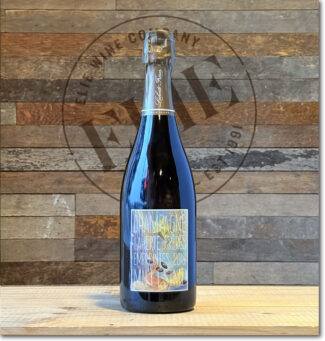 Champagne Laherte Frères ‘Les Empreintes’, 2018 Coteaux-Sud-d’Épernay Chavot Extra-Brut ($99)
From two parcels in the Chavot lieux-dits Les Chemins d’Épernay and Les Rouges Maisons, each (in Aurélien’s words) ‘exemplifying the quintessence of the Chavot terroir.’ The wine is a classic Champagne blend, half Chardonnay, (of which one-third is Chardonnay Muscaté) from Les Chemins d’Epernay where there are clay soils with a little silt stratum in surface and a chalky subsoil—vine planted in 1957. The other half is Pinot Noir from Les Rouges Maison where the soil is fairly deep with a vital presence of clay, flints and schists; these vines were planted in 1983. With a dosage of 3.5 grams per liter, it is a resonant Champagne with floral top notes and deftly balanced acidity.
Disgorgement Date: November 2023. Dosage: 2-4 gram/liter.
‘Infusion’
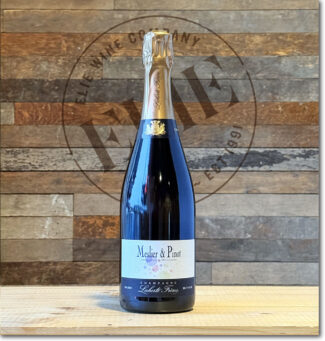 Champagne Laherte Frères ‘Infusion – Meslier & Pinot’, Coteaux-Sud-d’Épernay Chavot Brut-Nature ($135)
Only 669 bottles were made of this tiny cuvée. The blend is 50% Petit Meslier and 50% Pinot Noir from two plots in Chavot, and it spends 30 months on the lees in barrel before being bottled without dosage. True to its name, the crisp fruit of Meslier is infused with Pinot Noir’s vinosity, and the wine shows green apple, citrus peel, almond and stone flavors that linger through a long, nicely balanced finish. Disgorged October 2022.
Disgorgement Date: November 2023. Dosage: 2 to 4 gram/liter.
‘Tribute to Yesterday’s Wines’
The soléra system of maturation used for Sherry, the famous fortified wine of Jerez, is a cry for consistency from vintage to vintage. The system involves removing wine for release from the last of a series of barrels that contains a blend of every vintage since the soléra was started. The void in those barrels is then filled with wine from another series of barrels, and so on, until there is room in the youngest series of barrels. The wine from the most recent vintage is added to those barrels.
In Champagne, the method used is slightly different; after each harvest, wine is added to the blend, and every time a producer is ready to release a new batch of non-vintage Champagne, he removes what he needs. Over time, the cuvée becomes increasingly complex as the fresh wines of the latest vintage taking on the mature qualities of those that came before it. It is a system used by surprisingly few producers in Champagne, but Laherte Frères is one of them.
 Champagne Laherte Frères ‘Les 7 Soléra’, Coteaux-Sud-d’Épernay Chavot Extra-Brut ($117) Soléra 2005 à 2021
As the name suggests, all seven allowable Champagne grapes are used in this single cuvée; 10% Fromenteau, 8% Arbanne, 14% Pinot Noir, 18% Chard, 17% Pinot Blanc, 18% Meunier, 15% Petit Meslier from a vineyard planted by Thierry Laherte in 2003. He picks and presses all seven together and employs his perpetual cuvée: Les 7 contains wine not only from the current vintage, but draws bits of reserve wine from all harvests dating back to 2005, the year Aurélien took over the domain. All bottles are disgorged by hand with a dosage of 4 grams per liter. The wine shows lemon zest, crystalline green-apple candy and floral notes in a stony infrastructure.
Soléra 2005-2021, vinification in barrels. Disgorgement Date: December 2023. Dosage: 2-4 gram/liter. 3642 bottles produced.
‘Back to Basics’
 Champagne Laherte Frères ‘Ultradition’, Extra-Brut ($49)
60% Meunier, 30% Chardonnay and 10% Pinot Noir from vineyard plots in the Côteaux Sud d’Épernay, Vallée de la Marne and Côte des Blancs where vines average around 30 years. The wine ages in barrels for six months and given light filtration before bottling during the spring time. The wine offers a complex bouquet of dried apple and toasted walnut; the Meunier lends floral tones and an upper-register smokiness.
Disgorgement Date: October 2023. Dosage: 4.5 gram/liter.
Coteaux-Champenois: Still Champagne
Is It Still Champagne?
The Coteaux-Champenois AOP is dedicated entirely to non-effervescent wine from Champagne and may be red, white or rosé, although the lion’s share is red—Bouzy rouge being the most celebrated. With a warming climate ripening grapes more consistently, Coteaux-Champenois is becoming positively trendy and producers across the 319 communes entitled to make wines under the Coteaux Champenois appellation.
 Domaine Laherte Frères, 2018 Coteaux-Champenois Coteaux-Sud-d’Épernay ‘Les Rouges Maisons’ Rouge ($73)
100% Pinot Noir from the prized Les Rouges Maisons lieu-dit; Aurélien says. “At the domain, we love diversity and we have a naturally curious and imaginative winegrower spirit! After a few years, we are happy to be able to present some Coteaux Champenois to you again. In 2018, the harvest was beautiful, generous, with maturities rarely reached and with a full and intense aroma. It seemed obvious to us to push the maturities on a few plots, in order to seek phenolic maturity and an interesting structure to develop Coteaux-Champenois.”
The wine shows off the chalky terroir in a mineral-driven Pinot Noir filled with the finesse and tension that reflects true Champagne character. Only 854 bottles were made.

Notebook …
Drawing The Boundaries of The Champagne Region
To be Champagne is to be an aristocrat. Your origins may be humble and your feet may be in the dirt; your hands are scarred from pruning and your back aches from moving barrels. But your head is always in the stars.
As such, the struggle to preserve its identity has been at the heart of Champagne’s self-confidence. Although the Champagne controlled designation of origin (AOC) wasn’t recognized until 1936, defense of the designation by its producers goes back much further. Since the first bubble burst in the first glass of sparkling wine in Hautvillers Abbey, producers in Champagne have maintained that their terroirs are unique to the region and any other wine that bears the name is a pretender to their effervescent throne.
Having been defined and delimited by laws passed in 1927, the geography of Champagne is easily explained in a paragraph, but it takes a lifetime to understand it.
Ninety-three miles east of Paris, Champagne’s production zone spreads across 319 villages and encompasses roughly 85,000 acres. 17 of those villages have a legal entitlement to Grand Cru ranking, while 42 may label their bottles ‘Premier Cru.’ Four main growing areas (Montagne de Reims, Vallée de la Marne, the Côte des Blancs and the Côte des Bar) encompass nearly 280,000 individual plots of vines, each measuring a little over one thousand square feet.
The lauded wine writer Peter Liem expands the number of sub-regions from four to seven, dividing the Vallée de la Marne into the Grand Vallée and the Vallée de la Marne; adding the Coteaux Sud d’Épernay and combining the disparate zones between the heart of Champagne and Côte de Bar into a single sub-zone.

Courtesy of Wine Scholar Guild
Lying beyond even Liem’s overview is a permutation of particulars; there are nearly as many micro-terroirs in Champagne as there are vineyard plots. Climate, subsoil and elevation are immutable; the talent, philosophies and techniques of the growers and producers are not. Ideally, every plot is worked according to its individual profile to establish a stamp of origin, creating unique wines that compliment or contrast when final cuvées are created.
Champagne is predominantly made up of relatively flat countryside where cereal grain is the agricultural mainstay. Gently undulating hills are higher and more pronounced in the north, near the Ardennes, and in the south, an area known as the Plateau de Langres, and the most renowned vineyards lie on the chalky hills to the southwest of Reims and around the town of Épernay. Moderately steep terrain creates ideal vineyard sites by combining the superb drainage characteristic of chalky soils with excellent sun exposure, especially on south and east facing slopes.
… Yet another reason why this tiny slice of northern France, a mere 132 square miles, remains both elite and precious.
- - -
Posted on 2024.12.01 in France, The Champagne Society | Read more...
RED FRIDAY DEAL The Wines of Beaujolais and its Crus at 15% Discount. Any Quantity. All Weekend Offer. + IN-STORE Beaujolais Tasting, Friday & Saturday

Beaujolais is November’s ideal paramour, if not particularly during the third week when the region’s infamous Beaujolais Nouveau is released. As a bright, food-fabulous foil to most Thanksgiving courses, the fourth week in November is when we look to the ten sophisticated Crus of Burgundy’s southern sister region for the best examples of what Gamay can produce.
Post-feast, Elie’s is proud to offer both an in-store tasting and a 15% discount on any quantity of Cru Beaujolais, including the fantastic Fleuries and Morgons of Clos de Mez, Thibault Liger-Belair’s luscious Moulin-à-Vent and the fresh and complex 2021 Armand Heitz Juliénas. They represent the supplest wines from the granite and limestone-rich hills of the region’s north where winemakers are enjoying a renaissance of their roots by producing non-manipulated, non-interventionist wines. Such examples reflect the granitic glories that Gamay brings to this odd appendage of Burgundy, which is utterly un-Burgundian in grape, style or intent.
With Gratitude,
Elie

- - -
Posted on 2024.11.30 in France, Saturday Sips Wines | Read more...
Wine Matchup for Thanksgiving Feast: A Pack of Ten Picks to Enhance the Food, Reawaken the Appetite and Renew Weary Taste Buds ($279) + Recent Arrival Traversing Burgundy in Six Wines with Domaine Manuel Olivier (6-Bottle Pack $459)
A true masterpiece is composed of many elements, and all the details must be in precise balance: The forearm musculature on Michelangelo’s ‘David’ for example—the intake of breath in the nostril of Sanmartino’s ‘Veiled Christ.’ This is as true for a magnificent meal as it is for a sculpture, and any constituent of your Thanksgiving Day spread that’s treated as an afterthought may glare more than the successes.
Naturally, we consider wine to be an indispensable part of this annual meal, not only to reinforce the overall sensory enjoyment, but as a nod to a greater sense of appreciation for things that we, as human beings, get right.
It’s possible to overanalyze your wine choices, of course—many of the other elements of a Thanksgiving feast are as fixed as the solar system. Wine is one factor that is not only less preordained, but can (and should) change with vintages and tastes.
When dealing with alcohol-by-volume, any multi-course meal where wine is served as an accompaniment should follow a simple rule: When possible, go low so your guests don’t get too high. Whether you consider food/wine match-ups to be an art, a science, or simply a way to expand your horizons with a variety of different styles and appellations, there are some tricks to the trade we try to emphasize with our holiday picks: Contrast or complement but never overshadow and keep the octane at a lower level than you otherwise might in order to make sure that everyone returns home to tipple another day.


This Thanksgiving, Elie’s is offering an eclectic line-up (10 bottles for $279) that should delight and entice while keeping your guests on the safe side of celebration. Our suggestions are culled from new arrivals and old standbys, and are offered as interval highlights at various stages of the meal. They reflect the balance that all cooks, winemakers and artists strive for in rhythm, emphasis, unity and variety.

To Serve Before Dinner and with Appetizers
When your guests arrive, an icebreaker does not need to contain ice, but the appropriate chill is always appreciated. Red wines, in particular, tend to be served too warm. In this case, the light and perfumed carbonically-macerated Cabernet France from Sébastien David hits its refreshing high water mark and around 55°F, somewhat lower than the typical household room temperature. Likewise, the tendency is to transfer white wine directly from refrigerator to glass, which is too cold to appreciate the nuances of Blard & Fils Roussette de Savoie. Give it ten or fifteen minutes to pick up some ambient room warmth—it will show much better. Of course, these effervescent, quaffable and refreshing cidres will be fine with a brisk November chill.
Hard Cider
1 Maison Hérout ‘Micro – Cuvée No 1’, 2020 AOP Cidre Cotentin Tranquil ($24) 5.5% abv
A fizzy, bright gold organic cidre aged for three months in Calvados barrels (leading to the slightly higher alcohol content). It shows aromas of fallen lemon and earth with a lightly tannic, vibrant and compelling body that shows brisk dried peach, hay and parchment on the finish

2 Maison Hérout ‘Cuvée Tradition’, 2020 AOP Cidre Cotentin – Brut ($19) 5% abv
Bright gold in the color with frothy bubbles and the heady aromas of picked apple. Slightly earthy with a tannic, vibrant, fruity light-to-medium body and compelling hints of minerality.

Maison Hérout
Normandy
The Hérout estate is located near the town of Auvers, where apples thrive in a lush oceanic climate. The Hérout family began producing cider in the 1940s; today, Marie-Agnès Hérout has taken over the farm and remains true to her heritage by producing some of the finest ciders available from this region. After picking, the apples are grated, macerated, and then pressed with the help of a rack press dating back to 1920, whereupon the juice is left to ferment for four to seven months, often in used Calvados barrels.
Marie-Agnès also continues the family tradition of planting apple trees for future generations and in 2000, began a campaign with the Syndicat de Promotion du Cidre du Cotentin to earn the region’s certification for Appellation d’Origine Contrôlée Cotentin status. In May of 2016, after 16 years of hard work and perseverance, the quest succeeded.
White Wine
3 Blard & Fils, 2020 Roussette de Savoie ‘Altesse’ ($27) 12.5% abv
Nowhere in the world does Altesse reign as regally as in Roussette de Savoie, an AOP which has adopted the grape’s nickname ‘Roussette’ as its own. Late to ripen, and turning pink near harvest, the variety produces small grapes with a tight-bunch structure.
This wine is 100% Altesse from Abymes, from vines that are 35 years old. As always, Thomas Blard ferments naturally, with 20% of the juice seeing skin contact for 10 days. Aged on the lees for 10 months before bottling, the wine presents a terrific nose of green grass, salt, lemon and ripe apricot. The palate follows with green tea, lime zest, and herbs behind an exhilarating, Chablis-like texture.

Blard & Fils
Savoie
Jean-Noël and Thomas Blard are a father/son team who has taken their family domain to new quality heights while moving steadily toward fully organic and natural viticulture. In the 1990’s, Jean-Noël became one of the first vignerons in the appellation to diversify into Pinot Noir, and was also eager to raise the quality bar on Jacquère and Mondeuse—the latter by aging in neutral oak for a minimum of two years. With 25 acres under Blard control, grassed over and fertilized naturally, the Blards use a technique known as ‘intercep’ to remove unwanted greenery before finishing the job by hand.
Five generations of Blard have snatched victory from the jaws of defeat: In 1248, the side of Mont Granier (one of the major formations of the Savoie’s Chartreuse Massif) collapsed, and a wave of boulders and scree crushed the landscape below, forever changing the soil structure. Apremont means ‘bitter mountain’ and Abymes means ‘ruin’ and as a result of the natural upheaval, it is today it is considered to be the best place in the Savoie (and by extension, all of France) to grow Jacquère.
Red Wine
4 Sébastien David ‘Hurluberlu’, 2023 VdF Loire-Touraine ‘Cabernet Franc’ ($25) 13% abv
Working with whole clusters, David ferments ‘Hurluberlu’ on wild yeasts, employing carbonic maceration for 25 days followed by a light pressing to preserve the fruit’s freshness, and to create a wine that is as animated as its name, resplendent with sizzling cherry, bright raspberry and tart cranberry that deserves to be served slightly chilled.

Sébastien David
The Loire Valley
No comment on E.F. Hutton, but when Sébastien David speaks, you should probably listen. He is the fifteenth-generation to make wine in an estate that dates back to 1634. And when he speaks, he says, “I believe in the energy of the land.”
The family owns 37 acres of Cabernet Franc Saint-Nicolas-de-Bourgueil, with the vines aged 35-100 years old. Sébastien heed the call of the land’s energy after his grandfather died in the late 1990s—Sébastien’s first vintage was 1999, and has since focused on producing natural wines from fruit that is Ecocert certified.
“My insistence has been to listen to the soil,” he says. “We are organic, biodynamic and are currently exploring permaculture, where grass grows between rows. In the cellar I use concrete eggs as well as amphorae. The pH here in Saint-Nicolas is higher due to more sand in the soil and the concrete allows me to accentuate the more floral notes of Cabernet Franc rather than the green pepper notes you might get from a Chinon.”
To Toast With
A post-election country may have as much to mourn as to toast, so take a moment with your guests to acknowledge the passing of another interesting year and fondest hopes for the next four.
France’s ingenious méthode champenoise makes the quintessential toasting wine, but such singular improvements have been made throughout the world of bubbles that now is an ideal time to expand your horizons beyond the familiar world of Chardonnay/Pinot Noir blends. Even Cava, Spain’s answer to Champagne, relies primarily on Parellada, Macabeu and Xarel·lo grapes, but there’s another dimension to Spanish sparklers that takes a different, and exciting, route.
Sparkling White Wine
5 Cellers Carol Vallès ‘Parellada i Faura’, 2021 Cava Reserva Brut-Nature D-08/2024 ($22) 11.5% abv
30% Parellada, 30% Xarel·lo and 40% Macabeu aged on lees for over two years. A fruity and lively cava reflecting prominent notes of peach and lemon peel with apple, butter and peach.

Cellers Carol Vallès
Catalunya
Nothing summarizes Thanksgiving better than the lure of family tradition, and this is the magnet that drew Joan Carol back to the farmhouse of Can Parellada that his grandparents acquired more than a century ago. There he founded Cellers Carol Vallès where, with Teresa Vallès, he began to craft cavas in the style he was most passionate about, using traditional methods, unique blends and the long aging times.
To Complement Dinner
When the curtain rises on the main event, cast and crew must be on cue; no more dress rehearsal holidays, this is opening night. And although we’d only recommend diva wines for this important matchup, the fact is that fancy-costume labels should not be a deciding factor when there are plenty of remarkable main-floor wines available for mezzanine prices. Alsace produces wine in a spectacular array of styles that with a little labor-of-love practice; Penedès offers fascinating new varietals while Beaujolais and Burgundy have long offered traditional, but perfect solutions to the myriad flavors of the holiday.
White Wine
6 Domaine Dirler-Cadé, 2022 Alsace Riesling ($33) 12.5% abv
Built from declassified Grand Cru grapes, Dirler-Cadé’s basic Riesling retains many of the markers of their vineyards of origin, juicy, supple, and aromatic, with intricacies of lime, verbena, herbs, and spice.

Domaine Dirler-Cadé
Alsace
As the name suggests, Domaine Dirler-Cadé is the union of two historical Alsatian winegrowing families. Jean Dirler is a 5th generation winemaker whose family had been making wine in the tiny village of Bergholtz, tucked into the lower hills of the Vosge Mountains, since 1871. Ludvine Cadé’s family owned vineyards in nearby Guebwiller, known as Domaine Hell-Cade. The marriage of Ludvine and Jean in 2000 produced Domaine Dirler-Cadé, one of the finest domains in Alsace, with almost half of their 44 acres in Grand Cru vineyards, as well as plots in five lieux-dits.
Rosé Wine
7 Can Sumoi ‘La Rosa’, 2023 Penedès ($24) 12% abv
60% Sumoll and 40% Xarel-lo; a shimmery, orange-pink wine offering vibrant ripe cherry flavors and spicy tangerine with a touch of anise in the mid-palate, finishing with a sharp, chalky minerality.

Can Sumoi
Catalunya
At two thousand feet above sea level (in the Serra de l’Home range) Can Sumoi is the highest estate in the Penedès; Mallorca and the Ebro Delta are visible from the rooftop of the winery’s 350-year-old farmhouse. Below, vineyards sprawl across limestone-rich soil between stands of oak and white pine, which to the ecology-driven Pepe Raventós, share equal importance with the vines. “Forests,” he says, “protect the biodiversity of the estate; they are the green lungs of the world.”
It is a spiritual quest, he admits; the smells and flavors of Catalunya are unique and exist in his soul as surely as in his wine. “To express origin, you really need to bring a lot of life into your farm. The principle is simple: the more diversity on your property, the more richness there is, the more resistant and strong your vines will be. The fewer treatments they need, the more authentic the wine will be. I left the idea of making perfect wine a long time ago. I think my duty is to make the most authentic wine possible.”
Red Wine
8 Clos de Mez ‘Mademoiselle M’, 2022 Fleurie ($27) 13.5% abv
Semi-carbonic fermentation, then aged nine months in vats, Marie-Élodie Zighera’s signature Fleurie offers an attractive floral nose with notes of cherry and strawberry. The backbone is nicely spun through with acidity and the mineral-driven terroir shines through to the finish.

Clos de MEZ
Beaujolais
Marie-Élodie Zighera has roots in the past; a metaphor that is not really a metaphor since her oldest vines were planted so long ago that when France entered the First World War, they were already producing. “Vines have been in my maternal family for four generations,” she says. “The grapes they grew were delivered to the cooperative cellar by my grandmother and mother up until I arrived at the domain as a winegrower. However, this did not deter my grandmother or mother from taking great care of our 17-hectare vineyard. At that time, I was living in Paris with my family and we would come to Fleurie for the holidays. I used to love this time so much, being in close contact with nature.”
Red Wine
9 Domaine Manuel Olivier ‘Vieilles Vignes’, 2020 Bourgogne Hautes-Côtes de Nuits ($49) 12.5% Abv
The Pinot Noir from this old-vine Burgundy originate on a gentle, east/southeast facing slope. 50% of the grapes are de-stemmed; cold maceration follows for a week, then natural fermentation on ambient yeasts. The wine spends 15 months on fine lees in young oak barrels and delivers a rich, fleshy palate with cherry, raspberry and a touch of underbrush.

Domaine Manuel Olivier
Burgundy
Despite a childhood spent among the vines, Manuel Olivier did not follow in the family footsteps directly out of the gate. First, he traveled to Switzerland to pursue his passion for skiing, and along the way, decided that he was equally passionate about wine. He entered the field (literally) with a few acres of vines in 1990, which has grown to nearly 30 in Hautes-Côtes de Nuits, the Côte de Nuits and the Côte de Beaune. Using wild yeast, his goal is to produce approachable, subtle wines where the fruit expressed delicacy. He says, “This can only be obtained by an obsessive attention to detail; handpicking, low temperature maceration and use of natural yeast. I destem half of my harvest and take a minimum of seven days low-temperature maceration prior to fermentation.”
With Dessert
On Thanksgiving, there are those who consider dessert an entirely separate meal, generally offered after a breather and, in the case of football fans, a nail-biter game. Hedonism is a given, and a sugar blast from confections is as easy as pie or as complex and elaborate as your inner pastry chef can concoct. Whether it’s an introduction or renewed acquaintance with an old friend, Banyuls, the produce of sea, mountain, sun and wind, are wines created for pleasure.
Red Dessert Wine
10 Coume del Mas ‘Galateo’, 2017 Banyuls ($30) 500 ml 16% abv
100% old vine Grenache Noir from a plot near the sea. The grapes fortified on their skins—a process that helps extract color, tannin and prevents oxidation, then aged in 225-liter oak casks for a minimum of six months before bottling. The wine is packed with smoky dark fruit and shows great acidity to balance 90 gram/liter residual sugar.

Coume del Mas
Roussillon
Created in 2001 by Roussillon pioneers Philippe and Nathalie Gard, Coume del Mas spreads across 40 acres of difficult terrain, principally on the steep schist slopes around Banyuls-sur-Mer; Andy Cook handles the winemaking. Viticulture in this extreme environment is almost entirely done by hand, and the wines reflect the through dry wines of elegant concentration while the dessert wines display both oxidative and modern ‘rimage’ style requiring an oxygen-free environment of stainless steel. Says Philippe: “Our Banyuls are produced from intense, extremely ripe Grenache Noir grapes that are fortified at around 8% with neutral grape spirit. Akin to Port in some respects, these wines are lower in alcohol and much ‘finer’, fresher and balanced—they are true Mediterranean treasures.”
RECENT ARRIVAL
Traversing Burgundy in Six Wines
with Manuel Olivier
($459)
Karen MacNeil, author of ‘The Wine Bible,’ states, “The pleasure of Pinot Noir is the surprising way the wine pulls you into it and reveals numerous facets of flavor. And precisely because a good Pinot is so complex, it also has an incredible range when it comes to pairing with food. That is why it’s perfect for Thanksgiving when everything from cranberries to squash to roast turkey are all on the same plate.”

Manuel Olivier
Manuel Olivier understands these principles intimately, and his range of red Burgundies navigates multiple appellations explores the nuanced terroirs of each. He manages forty vineyard acres across the Hautes-Côtes de Nuits, Côte de Nuits and Côte de Beaune.
As a side note, since 2019 Olivier has been actively involved in the renaissance of the Dijon vineyards and the development of a new Bourgogne Dijon AOP.

Regional Burgundy
So specific are the cru vineyards of Burgundy that régionale vineyards may exist in the literal shadow of more renowned domains, occasionally separated by hundreds, or even as little as dozens of feet. Régionale wines tend to be culled from vineyards located along the foot of more prestigious wine-growing slopes on limestone soil mixed with some clays and marls, where the earth is stony and quick-draining.
Unlike Bordeaux, where classifications are based on individual châteaux (capable of buying other vineyards and expanding), Burgundian label classifications are more geographically focused. A single vineyard, therefore, may have multiple owners, each with a small piece of the action.
The ‘Bourgogne’ label first appeared in 1937, and in 2017, a further classification permitted wines from vineyards located within the Côte d’Or to be labeled as ‘Bourgogne Côte d’Or’; it’s a great tool for a consumer looking to explore the wide diversity of vineyard among the Hills of Gold while maintaining a terroir-focused, climat approach to Burgundy.
 1 Domaine Manuel Olivier, 2020 Bourgogne ‘Pinot Noir’ ($27)
A lightly smoky and refreshingly bright wine; not overly ambitious, but developing nicely and probably ready to consume.
*click photo for more info
 2 Domaine Manuel Olivier ‘Vieilles Vignes’, 2020 Bourgogne Hautes-Côtes de Nuits ($49)
Pinot Noir from 30-year-old vineyards, aged 18 months in oak barrels. It shows silken notes of ripe raspberry and spice with with earthy, black tea tannins.
*click photo for more info
Pommard (Côte-de-Beaune)
If Burgundy is a volume of poetry, Pommard might be thought of as its Alfred, Lord Tennyson, offering power and rich structure, a charge of the Light Brigade, only with a substantially safer outcome. Pommard is the beginning of serious Pinot Noir in Burgundy; nothing else is grown and nothing else allowed besides (perhaps inexplicably) a few vineyards of the Lemberger/ Sankt-Laurent cross ‘André.’ Aptly named for Pomona, the Roman god of fruit trees, Pommard’s most muscular wines hail from its mid-slope Premier Cru vineyards which run in a nearly uninterrupted from the commune boundaries of Beaune in the north to Volnay in the south. Even that may belie the quality of these wines; most experts believe that the Les Épenotes and Les Rugiens Premier Crus should be promoted to join Corton in its Grand Cru status. Once in line for this prestigious upgrade, the vignerons of the time were wary of the restrictive Grand Cru production laws and declined the offer.
 3 Domaine Manuel Olivier, 2019 Pommard ($76)
From 30-year-old vines grown in chalk/clay soil at the top of the hill; it spends 18 months in contact with fine lees in 30% new barrels, 30% 1-year-old and 30% over-3-year barrels to show macerated black cherry and earth notes with fine-grained tannins.
*click photo for more info
Nuits-Saint-Georges (Côte-de-Nuits)
With the village of Nuits-Saint-Georges itself as the fulcrum, the robust appellation extends to the north as far as the border of Vosne-Romanée, while the southern section lies partly in Nuits-Saint-Georges and partly in Prémeaux. The wines from each section are unique in style and according to experts, with differences defined (in the main) by the lay of the land. The soils in the northern sector are built around the pebbly alluvium that washes down from up-slope, and in the low-lying parts, around silty deposits from the river Meuzin. In the southern sector the alluvia at the base of the slopes originate in the combe of Vallerots where there are deep marly-limestone soils, while at the top of the slope, the soil has nearly all eroded away and the rock is near the surface. In both regions, favored exposures are mostly to the east or southeast.
Producing predominantly red wine, Nuits-Saint-Georges bottles display the muscularity and breeding most sought after in Burgundy—the ability to improve with bottle age. When young, the wine display aromas of cherry, strawberry and blackcurrant, and when matured, leather, truffle, fur and game.
 4 Domaine Manuel Olivier, 2019 Nuits-Saint-Georges ($81)
From an east-facing lieu-dit known as Aux Allots where the vines are 40 years old and grow in clay/limestone. The grapes are partially destemmed and fermented on ambient yeast, then aged 18 months on fine lees. The wine shows floral intensity and dense, yet delicate layers of blackberry, currant and dark cherry.
*click photo for more info
Gevrey-Chambertin (Côte-de-Nuits)
“The Emperor would drink only Chambertin.” – Louis Constant Wairy, Napoleon’s valet.
As those schooled in Burgundian lore know, during the nineteenth century it became fashionable for villages in the Côte d’Or to adopt double-barreled names, adding a hyphen followed by the name of their most famous vineyard: Thus Chambolle added Musigny and Gevrey added Chambertin.
In minimalism, less may be more, and in wine—especially those with a hyphenated name—more may be less; a village-level Gevrey-Chambertin, for example, does not seek to compete with the quality of ‘Le Chambertin’ itself. But if nothing else, its name reminds you that it comes from a rarefied zip code. And to be sure, the region is hallowed grapeland, graced with the Holy Trinity of terroir—elevation, climate and soil structure. Contained within the appellation are nine Grand Crus and 26 Premier Crus (whose name on the label may be followed by the name of the climat of origin) as well as well as nearly a thousand acres of Villages wine.
Gevrey-Chambertin wines are full-bodied, rich, and meaty in their youth and mature to feature notes of leather, game and underbrush.
 5 Domaine Manuel Olivier, 2019 Gevrey-Chambertin ($87)
From the lieu-dit La Brunelle, located in the heart of the village, where 40-year-old vines thrive on deep, iron-rich soils. The wine is aged for 18 months on fine lees and shows cherries and cassis alongside Gevrey’s typical profile of smoked meats, sweet soil and orange rind.
*click photo for more info
Vosne-Romanée (Côte-de-Nuits)
Originally named just Vosne, the village took the suffix Romanée in 1866 in honor of its most prized vineyard, La Romanée—a habit of many Burgundy communes of the era. From the perspective of a wine lover, it may be grouped together with neighboring Flagey-Echézeaux; while the villages are entirely separate, their finest vineyards are clustered together immediately north of Vosne-Romanée and take that latter title.
The entire surface area of Vosne-Romanée Grand Crus vineyards (excluding Flagey-Echézeaux) is 67 acres, about half the size of the single Clos de Vougeot climat just across the commune boundary. Even so, the commune of Flagey-Echézeaux with the Echézeaux and Grands-Echézeaux sites included, has more Grand Cru surface area than the Premier Crus and Villages combined. Vosne-Romanée is divided between six individual climats—La Grande Rue, La Tâche, Richebourg, La Romanée, Romanée-Saint-Vivant and the most famous, Romanée-Conti. The best vineyards lie on the mid-slope of the Côte d’Or escarpment. Around these prestigious sites are dotted the Premier Cru vineyards and some entirely unclassified land—the difference between a Grand Cru vine and one deemed worthy only of the regional Bourgogne appellation is sometimes a matter of a few feet.
 6 Domaine Manuel Olivier, 2019 Vosne-Romanée Premier Cru Les Damaudes ($144)
Les Damaudes is a steep, landlocked Premier Cru found between La Grande Rue, La Tâche and La Romanée Conti where the airy clay-limestone soil contains 50% disintegrated lava. The wine boasts an elegant, refined nose of blackberry jelly, roasting coffee bean with a hint of chocolate and a long spicy finish with notes of nutmeg, cinnamon and wood smoke.
*click photo for more info
Notebook …
Solar Vintages Roll: 2018, 2019 And 2020
On average, Burgundy sees 1900 hours of sunshine per year; glance at a diagram and you’ll see a neat curve that peaks in July with around 258 sunlit hours and then drops off precipitously for the rest of the year. Vintages that bring considerably more sun hours are referred to as ‘solar’ vintages. 2018, 2019 and 2020 go down as a triumvirate of such vintages.
Even before en primeur orders were placed, 2018 was being hailed as a vintage that resembled the ideal conditions of 1947. Hopes ran high that the atypical ripeness and plushness of the wines might represent a ‘new normal’ in Burgundy. Part of the success of the vintage, in particular for the whites (which show gobs of energetic freshness and alluring fruit) was a particularly wet preceding winter that raised water tables high enough that the ensuing drought was handled easily, especially by more mature vines. The factor most crucial to success was determining harvest dates—pick too soon, and the fruit will not be phenologically ripe; too late, the grapes will flab out and lose acidity.
2019 followed with another bullseye. Dimitri Bazas, director of Maison Champy in Beaune, said, “If you offer me a contract for 30 years and it promises me that every year will be like 2019, then I would say, where do I sign?” The ideal ripeness and special personality of the vintage lies in a growing season that was the third-warmest year of the last century. Two short blasts of extreme heat at the end of June and the end of July were offset by enough rain to prevent serious drought stress to the vines.
2020 cranked up the above conditions another notch; it became a vintage in which one said ‘despite’ rather than ‘because of.’ Even the most experienced taster doubted that the heat and dryness, forcing harvest in August, could possibly produce such a fresh and joyous style. This was a vintage that tested Burgundian vignerons to the max; adaptability and careful attention to the vagaries of nature was key. In 2019, wine from high on the slopes of the Côte d’Or showed the highest levels of dry extract and salty minerality, providing balance for the ripe fruit, while in 2020, the extract combined with fresh acidity to make the wine truly electric.
- - -
Posted on 2024.11.21 in Nuits-Saint-Georges, Vosne-Romanée, Gevrey-Chambertin, Hautes-Côtes de Nuits, Cidre, Fleurie, France, Wine-Aid Packages, Cava | Read more...
Featured Wines
- Notebook: A’Boudt Town
- Saturday Sips Wines
- Saturday Sips Review Club
- The Champagne Society
- Wine-Aid Packages
Wine Regions
Grape Varieties
Aglianico, Albarino, Albarín Tinto, Albillo, Aleatico, Alicante Bouschet, Aligote, Altesse, Arcos, Aubun, Auxerrois, Barbarossa, Beaune, Biancu Gentile, Bonarda, bourboulenc, Cabernet Sauvignon, Caladoc, Carignan, Chablis, Chenin Blanc, Cinsault, Clairette, Cortese, Corvinone, Cot, Counoise, Dolcetto, Fiano, folle Blanche, Frappato, Fumin, Gamay, Garganega, Garnacha Tintorera, Godello, Graciano, Grenache, Grenache Blanc, Grolleau, Groppello, Jacquère, Lladoner Pelut, Maconnais, Malbec, Malvasia, Malvasia Nera, manseng, Marcelan, Marselan, Marzemino, Melon de Bourgogne, Mencía, Merlot, Mondeuse, Montepulciano, Montònega, Mourv, Mourvèdre, Muscadelle, Muscat, Natural, Nebbiolo, Nero d'Avola, Niellucciu, Palomino, Patrimonio, Pecorino, Pedro Ximénez, Persan, Petit Verdot, Pineau d'Aunis, Pinot Auxerrois, Pouilly Fuisse, Pouilly Loche, Poulsard, Riesling, Rondinella, Rose, Rousanne, Roussanne, Sagrantino, Sangiovese, Sauvignon, Sciacarellu, Serine, Souson, Sylvaner, Syrah, Tannat, Tempranillo, Teroldego, Timorasso, Treixadura, trepat, Trousseau, Ugni Blanc, Viognier, Viura, Xarel-loWines & Events by Date
- September 2025
- August 2025
- July 2025
- June 2025
- May 2025
- April 2025
- March 2025
- February 2025
- January 2025
- December 2024
- November 2024
- October 2024
- September 2024
- August 2024
- July 2024
- June 2024
- May 2024
- April 2024
- March 2024
- February 2024
- January 2024
- December 2023
- November 2023
- October 2023
- September 2023
- August 2023
- July 2023
- June 2023
- May 2023
- April 2023
- March 2023
- February 2023
- January 2023
- December 2022
- November 2022
- October 2022
- September 2022
- August 2022
- July 2022
- June 2022
- May 2022
- April 2022
- March 2022
- February 2022
- January 2022
- December 2021
- November 2021
- October 2021
- September 2021
- August 2021
- July 2021
- June 2021
- May 2021
- April 2021
- March 2021
- February 2021
- January 2021
- December 2020
- November 2020
- October 2020
- September 2020
- August 2020
- July 2020
- June 2020
- May 2020
- April 2020
- March 2020
- February 2020
- January 2020
- December 2019
- November 2019
- October 2019
- September 2019
- August 2019
- July 2019
- June 2019
- May 2019
- April 2019
- March 2019
- February 2019
- January 2019
- December 2018
- November 2018
- October 2018
- September 2018
- August 2018
- July 2018
- June 2018
- May 2018
- April 2018
- March 2018
- February 2018
- January 2018
- December 2017
- November 2017
- October 2017
- September 2017
- August 2017
- July 2017
- June 2017
- May 2017
- April 2017
- March 2017
- February 2017
- January 2017
- December 2016
- November 2016
- October 2016
- September 2016
- August 2016
- July 2016
- June 2016
- May 2016
- April 2016
- March 2016
- February 2016
- January 2016
- December 2015
- November 2015
- October 2015
- September 2015
- August 2015
- July 2015
- June 2015
- May 2015
- April 2015
- March 2015
- February 2015
- January 2015
- December 2014
- November 2014
- October 2014
- September 2014
- August 2014
- July 2014
- June 2014
- April 2014
- March 2014
- February 2014
- January 2014
- December 2013
- November 2013
- October 2013
- September 2013
- August 2013
- July 2013
- June 2013
- May 2013
- April 2013
- March 2013
- February 2013
- January 2013
- December 2012
- November 2012
- October 2012