Saint-Julien Channels Pauillac In Search of Purity, Precision and an Assertive Style, Bordeaux’s Château Ducru-Beaucaillou Achieves All in Their 300th Vintage Release, 2019 (3-Bottle Package $366)
If ever an estate has enshrined within its very name the fact that grapes thrive where other crops fail, it is Château Ducru-Beaucaillou: The famous lieu-dit of Beaucaillou (good pebbles) was once called Maucaillou (bad pebbles) when they tried to grow cereal crops instead of grapevines. It is the deep Günzian gravel that earns the terroir both scorn and praise from farmers (depending on crop; along with soil, a favorable climate and the general wherewithal of generations of vignerons, Ducru-Beaucaillou’s reputation has held strong—and grown—for three centuries. Vintage 2019 marks this very milestone and the estate’s outspoken owner Bruno-Eugène Borie considers it a spectacular vintage in which the château’s legendary purity, precision and assertive style is on full display.
This week’s package offers a fascinating peek behind the curtain at Ducru-Beaucaillou to see how climate change has restructured priorities and bred innovation, and how the leadership of Bruno Borie has led to a number of incredible undertakings, including re-corking a full inventory of 40 vintages (1950 and 1990) in an oxygen-free environment, giving them an extended life of 50 more years.
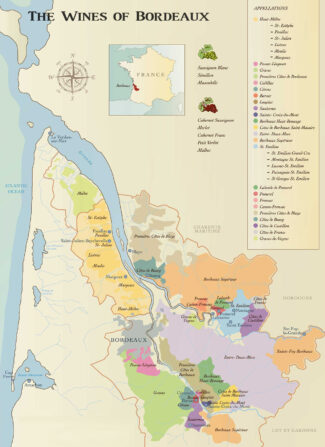
Saint-Julien & Pauillac: Neighboring Communes
The most singularly revered appellation on earth, Pauillac is to wine what The Beatles are to pop music. Though fewer than ten square miles in total, three of the top five châteaux in the 1855 Médoc Classification are located here, and so varied is the topography that each estate is able to market the individual nature, in style and substance, of their wares. And it is this trio of skills—growing, producing and selling—that has made the region almost a cliché, synonymous with elite wine, where futures sell for exorbitant rates long before the wine is even in the bottle.
Great things come in small packages, especially when big money is involved. Saint-Julien—the smallest of the major Médoc appellations at under four-square miles—also boasts (through a series of real estate deals between the large estates and the small ones) an astonishing pedigree: Fully 95% of the appellation sits on classified acreage. Key to the desirability of the wines produced here is the seamless fusion of concentration and elegance; the wines are of a style historically referred to as masculine, but held to standards of manhood in the mode of a Knight Templar before a brawny warrior. This blend of finesse and fortitude comes in part from the preponderance of gravel in the best vineyards, allowing natural drainage in the wet years, radiating warmth in cool vintages, extending the growing season and allowing vine roots to extend
omne trium perfectum
300th Vintage Release: Three-Bottle Package ($366)
The estate’s 300th anniversary was blessed with magnificent growing conditions, which brought forth a wine of particular distinction. Ideal levels of rain (falling mostly at night, guaranteeing freshness) while clear days and cool nights in September, together with a heatwave in the middle of the month, helped to concentrate the fruit and ripen the very fine tannins.

The wine package we offer this week includes one bottle of the special Tercentenary bottling of Château Ducru-Beaucaillou 2019, one bottle of 2019 ‘La Croix Ducru-Beaucaillou’ which hails from a separate vineyard and yet is considered one of the best second labels in the business and one bottle of Ducru’s third wine ‘Le Petit.’
Château Ducru-Beaucaillou
Passion Perfects Nature’s Opus
Beside the poetry in a rhyming name, this hallowed Second Growth estate, given high praises in the 1855 classification, has produced the best wines in its history in the 21st century. This is credit to the Borie family, who bought the château in 1941.The current helmsman is Bruno, who grew up on the estate: “I was born and raised at Beaucaillou and I have always been immersed in this country landscape and lifestyle, in the vineyards and the pastures, cattle and all; I basked in the fascinating environment of the cellars, where the transmutation of the grape juice into wine, and then the slow maturation of the young wine into these magical elixirs takes place.”
He learned the magic of wine early, but to nail down the business and technical end, he spent time in California as a winery intern before becoming the Commercial Director for P.A. Sichel and the CEO of Lillet, the Bordeaux aperitif. He began to manage Beaucaillou in 2003, where he was instantly confronted with the excessive heat the Bordeaux had begun to suffer with global warming. This required that he embark upon a paradigm shift to tackle the changing climate, and it perseveres to the day: “My first major decision was to not have a preconceived agenda,” says Bruno, “but rather to listen to nature and try to tailor our approach accordingly. For 2003, this meant very little leaf thinning to keep bunches shaded and protected from the scorching rays of the sun.”
These days, Borie relies on a number of quality initiatives, including more selective harvesting and establishing more organic farming practices: “We now cultivate and plough various grasses and legumes to help aerate the soil,” he explains. “This increases biodiversity, and the quantities of critical nutrients. When replanting vineyards, we leave our plots fallow for five years, during which time we perform a deep ploughing to reduce compaction, and then cultivate various grasses in rotation to help preserve our precious soils.”
The Vineyard: Maucaillou, Beaucaillou
The clock began to tick towards Château Ducru-Beaucaillou’s tercentennial hurrah in 1720, when Jacques de Bergeron married Marie Dejean, whose dowry included land known as Maucaillou, a name formed as a portmanteau of the French words ‘mauvaise’ and ‘cailloux’ meaning ‘bad pebbles’. The first records of the name change from ‘bad’ to ‘good’ is 1760.
The titular stones, good or bad, are quartz pebbles swept in by the ancient Garonne river at the beginning of the early Quaternary Period, about two million years ago. Beyond the gems it produces in the cellar, terroir so blessed also offer rich lithological finds like Lydian jasper and agatoids. The gravel is less kind to plants, giving rise to poor soils—a condition to which grape vines are well suited. Their vast network of roots, snaking through the gravel, are able to draw nutrients from far below. A bonus is that in cooler weather, the stones retain daytime heat and return it to the vines at night to facilitate the ripening of the grapes.
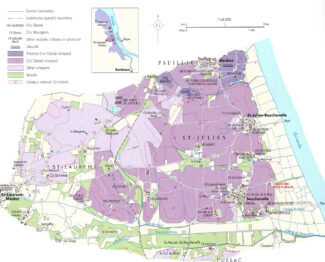
Ducru-Beaucaillou’s proximity to the vast Gironde River estuary—where four daily tides mitigate the rigors of winter and moderate the summer heatwaves—may also deflect the trajectory of hailstorms. The vineyard is located to take advantage of these natural features, beginning immediately above the low-lying marshland of the Gironde, about three hundred yards from the estuary and extending to the west, ending at a slight elevation that offers natural drainage of rainwater into the Gironde or the tiny Mouline brook to the north.
Bruno Borie: Works To Balance Centuries Of Tradition With Contemporary Viticulture
“I was born in 1956 and raised in Ducru-Beaucaillou,” say Bruno Borie. “I was truly a country boy, preferring to run through vineyards and meadows than taking walks in the town. I enjoyed the company of the winegrowers and loved taking part in the various jobs, including, of course, the harvest.”
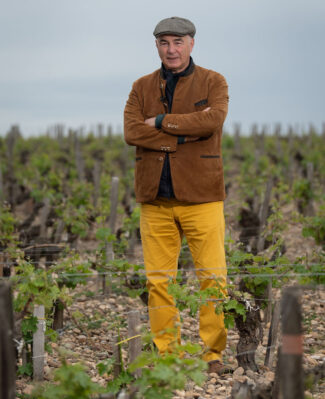
Bruno-Eugène Borie, Château Ducru-Beaucaillou
In his years exploring the vineyard as a living entity as well as a financial concern, Borie has developed a deeply personal philosophy about his role: “We help the vineyard give birth to wine. Nature can do it all; we are here to allow nature to express and share the best of herself. I am here to make Ducru-Beaucaillou, not just another Cabernet Sauvignon or another Cru Classé.”
To this end, he has overseen significant changes in Beaucaillou viticulture, introducing new techniques and reviving forgotten practices, looking both towards the past and modern science. Although he considers biodynamics to be more esoteric than scientific, the entire vineyard was certified HVE 3 in 2016 and he eschews the use of herbicides and pesticides. Emmanuel Bonneau joined the team as technical director in 2016, and is currently researching phytotherapy (the medicinal use of medicinal plants and herbs) to tackle mildew, while lightweight robots reduce soil compaction.
“The most crucial element in making fine wine is to be close to the plant and its ecosystem,” Bruno explains. “Our system of pruning, for example, consists of preparing the vine not only for next year, but following ones. Therefore, it must be the same person who prunes from one year to another because he ‘reads’ each vine the same way. Each of our vignerons is assigned a selection of plots for all seasonal vineyard operations which fosters a deeper connection with the vines through continuity. This ensures that our approach is the most adapted for our environment and our vines.”
The Harvest: The When And Why
The decision of when to harvest is a complex one, and it would be fair to say that every estate has their own formula though which they determine picking schedules, based both on weather and the style of wine they’re after. It’s no different at Beaucaillou, where, according to Bruno, “We pick each plot when fruit is at optimal ripeness and then seek to preserve its purity and enable it to express its terroir fully. We also consider blending compatibility for harvest date. For example, the 5-15% of Merlot in the blend of Ducru needs to be Médoc-like in style. It must be compatible with Cabernet with typicity, freshness and elegance to counterbalance Merlots that are overly rich. To determine the precise harvest date for each plot, we collect and analyze the critical measures (sugar, IBMP, acidity, pH), but the final decision is based entirely on taste.”
Winemaking: Selection And Precision
A combination of artisan methods and new innovations form the backbone of Château Ducru-Beaucaillou’s cellar tenets; leading the second category is the use of conical wooden ‘Smart Vats’ for the Grand Vin. Smart Vats have a number of advantages, including automatic and gentle remontage that can be fractioned over 24 hours with complete oxygen control for extreme precision, analyzing and storing relevant data on sugar, density and oxygen throughout cuvaison, allowing a refinement of approach and data saved for current decisions and future reference.
The traditional methods that Borie employs includes ‘slow hand’ extraction: First come a cold maceration, then gentle remontage in the earlier phases of fermentation when critical decisions are made by taste and tanks are sampled several times per day. The goal, according to Borie, is the extract noble tannins with the most refined grains, giving the ‘draped cashmere’ mouthfeel for which Ducru-Beaucaillou is widely praised.
“Of course, we consider the data,” Borie says, “and Smart Vats enable us to conduct our extractions with even more precision to achieve this goal. In the end, science allows us to make better art.”
2019 Vintage: Low Yields But Pure, Aromatic And Well-balanced
Like much of the Left Bank, the 2019 growing season for Saint-Julien began with a mild, if lackluster spring that saw cool temperatures and patches of rain in the run-up to the summer months (although rainfall was still less than in other Bordeaux appellations, leading to lower yields than average). A warm, dry summer ensured the grapes reached phenolic ripeness and, bar some rainfall towards the end of the season, conditions remained smooth and easy for a seamless harvest.
The resulting grapes were extremely healthy, and naturally, this translates to the wines. In general, the wines are sophisticated and powerful with rich, dark fruit and velvety tannins while still retaining delicate aromatics. The best 2019s exhibit the ideal balance between fruit, acid, alcohol and tannin needed for long-term aging. Although many of the wines will make very pleasant early drinking, the top examples should be able to cellar for many years to come.
2019 At Ducru-Beaucaillou: Cabernet Sauvignon Is Key
So hot was the summer of 2003—the year that Bruno Borie took over Ducru-Beaucaillou—that he knew that winemaking in Bordeaux would likely never be the same. Going forward, weather, rather than tradition, would dictate work in the vineyard. Harvest dates were creeping forward and August vacations were a thing of the past. 2019 was another hot season, and Bruno realized that this sort of weather pattern was ideal for Cabernet Sauvignon, a thick-skinned variety that requires a lot of accumulated heat and sunlight hours to fully ripen.
He says, “With warmer summers like 2019, the fruit is richer and more concentrated with longer length, and the thick skins, which ripen during the final phase, can fully ripen, giving deeply colored wines with high levels of extremely fine-grained, ultra-silky tannins. At Ducru, we have three key strengths as we face climate change: privileged terroirs, the dominance of Cabernet Sauvignon, and of course highly invested and competent technical teams, including Cellar Master René Lusseau and Oenologist Consultant Eric Boissenot.”
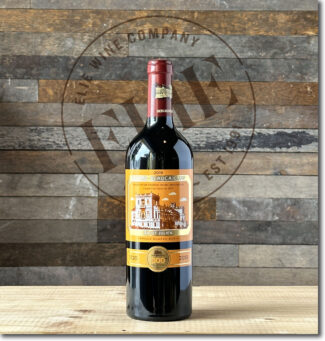 2019 Château Ducru-Beaucaillou, Saint-Julien ($261) ONE BOTTLE
80% Cabernet Sauvignon and 20% Merlot matured for 18 months in 100% new French oak. Purple-black in color, the 2019 Ducru-Beaucaillou explodes from the glass with notes of cassis, blueberry pie and plum preserves behind hints of candied violets, dark chocolate, licorice, crushed rocks and freshly-overturned soil with a touch of mossy bark—a wine whose finish passes the 60-second mark with ease.
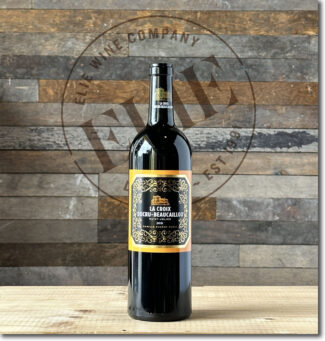 2019 Château Ducru-Beaucaillou ‘La Croix Ducru-Beaucaillou’, Saint-Julien ($60) ONE BOTTLE
The estate does not market La Croix Ducru-Beaucaillou as a ‘second wine’ because it comes from a different source: an inland vineyard on the south bank of the La Mouline stream close to Château Talbot; it was previously sold as Château Terrey-Gros-Caillou. It consists of 91 acres planted with 65% Cabernet Sauvignon, 25% Merlot, 5% Cabernet Franc and 5% Petit Verdot. The breeding is made for 60% in new oak barrels 12 months, producing a muscular yet fresh wine, displaying a full range of berry, lavender rose petal, mint, spice and gravel inflections.
 2019 Château Ducru-Beaucaillou ‘Le Petit du Ducru-Beaucaillou’, Saint-Julien ($45) ONE BOTTLE
60% Merlot Noir, 36% Cabernet Sauvignon, 4% Petit Verdot barrel aged for twelve months with one-third new oak. Among the most sumptuous third wines on the market, intended as an introduction to the Famille Borie style, but in fact an intense experience that stands on its own. The wine is lush with layers of dark cherry, plum, mocha and licorice; a bit of aeration also brings out hazelnut and walnut wrapped in creamy tannins.
Time Capsules
A Half-Century of Ducru-Beaucaillou
As Bruno Borie carefully recorked all vintages between 1930 and 1990, this divine diorama looks at some of the top vintages from the estate of the past half-century—so many, in fact, that it frequently said that Ducru-Beaucaillou is a Second Growth that deserves First Growth status.
2010: A Promise of Longevity
Recognized as legendary across the board, 2010 was truly great vintage whose exceedingly dry growing season served to concentrate the juice and provide wines with outstanding depth.
Despite a wet June giving a damp start to summer, the season soon heated up turning exceedingly hot and dry, particularly in the Médoc region; the arid conditions caused the right amount of water stress to improve the berries, and the long, sunny days continued through to October with nights steadily chilling as the season drew to a close. Cool nights were imperative to preserving the acidity in the grapes and rains, fortunately, came in September freshening the grapes.
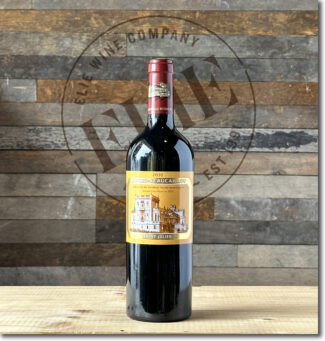 2010 Château Ducru-Beaucaillou, Saint-Julien ($550)
Just beginning to fully open up, the wine is now entering a drinking window that should last two more decades at least. A sensuous nose offers layers of blackberry paste and warm ganache, steeped fig and pastis-soaked plum flavors. The structure is massive yet polished, and the fruit displays purity through a graphite-supported finish. Large-scale and extremely well-rendered. 8,416 cases made.
2000: A Stunning Vintage, Closer To Maturity
A mild, warm winter followed by a wet spring made mildew a threat, but from July onwards, a spectacular summer dominated Saint-Julien with hardly any rain until mid-September. Sunny weather then returned for the October harvest, broken by a single day of rain—a boon to parched vines. Producers who picked early risked unripe wines and others who picked later risked jamminess, but for the majority who picked at the right time, the vintage offers fantastic rewards.
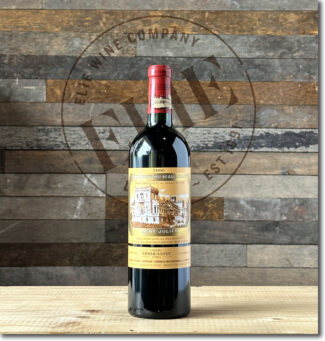 2000 Château Ducru Beaucaillou, Saint-Julien ($490)
70% Cabernet Sauvignon and 30% Merlot, the truly stunning garnet-brick colored 2000 Ducru-Beaucaillou offers flamboyant scents of baked black currants, raisin cake, prunes, Chinese five spice and eucalyptus plus touches of cigar box, new leather and cast iron pan. It will continue to improve, too.
1983: Fully Mature
1983’s growing season in Saint-Julien began with a cold winter and chilly, wet spring. Balmy conditions settled in shortly afterward, allowing for a near-perfect budburst and flowering, and, despite a brief cool patch, temperatures than rocketed in July with the month even proving a record breaker. Drought was a problem but only through August, which brought plenty of rain. September brought drier, sunnier conditions and a run of good days in the lead-up to the harvest ensured the resulting crop was in good health. The harvest began towards the end of September and ran through to October, producing a generous but good-quality crop.
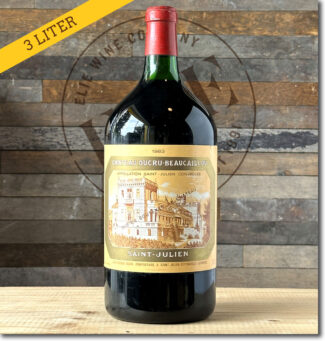 1983 Château Ducru-Beaucaillou, Saint-Julien ($2,400) DOUBLE-MAGNUM
Although some ‘83s lacked the structure for long term again, large format bottles age at a much more leisurely pace, and thus, are ideal to experience the nuance changes in this full-bodied wine showing blackberry and hazelnut behind a beautiful base of gravelly soil tones, cigar ash and a touch of juniper berry. Perhaps currently drinking at its apogee, the wine is svelte and pure on the attack with melting tannins and a long, complex and seamlessly balanced finish
1978: The Miracle Vintage
Known as the ‘Miracle Vintage’, 1978 began with a damp, chilly spring that affected both bud break and flowering. Conditions eventually improved, but it was not until the end of the summer the weather had sufficiently warmed up and dried out. There followed a string of idyllic, sunny days, perfect for bringing the crop to phenolic ripeness and these perfect conditions late in the season rescued the vintage from possible disaster—the so called ‘miracle.’ The heavy rains of October came late, holding off until all the fruit had been picked—another manifestation of the miracle.
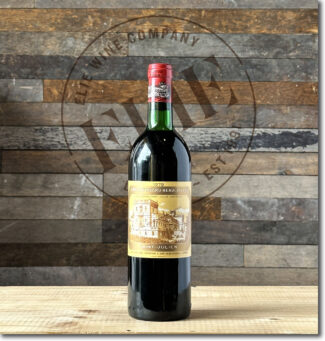 1978 Château Ducru-Beaucaillou, Saint-Julien ($450)
‘78 Ducru is considered one of the unequivocal successes from this vintage. From the outset, the well-developed bouquet of licorice, earth, black currants, and underbrush shone none of the vegetal character found in many wines of the vintage. Now fully mature, the medium-bodied Saint-Julien gem exhibits soft tannin, excellent concentration and purity, and a sweet, elegant finish.
- - -
Posted on 2025.04.15 in Pauillac, Saint Julien, France, Bordeaux, Wine-Aid Packages | Read more...
Rioja Alavesa: Going Its Own Way New-Generation Viñadores Emphasize Vineyard Over Cellar Treatment and Show the Specialness of Thier Sub-region.
There are no philosophical mandates in winemaking, but there are certain truisms that seem to arise regardless of appellation and country of origin. That is, low-end wines tend to emphasize immediacy; they display linear, fresh fruit notes unhindered by the sort of essential inner structures that can evolve into something else—something more interesting.
Pricier wines are faithful vessels for a specific time and place.
No dusty tome on why certain wines improve, or become more complex with age, does justice to the words of Luis Gutierrez in his book ‘The New Vignerons’ as he describes a tasting with one of our featured winemakers, Telmo Rodríguez of Remelluri:
“In 2015, I returned to Remelluri to talk to Pablo and Telmo about all this, to taste their new vintages and reminisce about that dinner in 1998, once again eating some of the most typical dishes from La Rioja in front of the huge fire in the kitchen. We had Patatas a la Riojana (Rioja-style potatoes), ribs, and spring onions from their vineyards. And we drank a superb 150-year-old-plus Madeira, a wine that made us travel in time and think about the people who had made it, people with no means, and we imagined how they must have lived, possibly without electricity or shoes. They would have never dreamt that someone in Spain would be drinking that wine a century and a half later. We were there at Remelluri the day after a heavy snowfall, the heaviest they had seen since 1999, one of those days when you have to take photos of snowy vineyards that have to last for the next ten years.”

The Ascendency of New Generation: Setting the Path to the New Rioja
When a generational shift overtakes an old, familiar wine zone, the first casualty is often conditioning. In days of yore, Rioja meant big, blustery, barrel-bludgeoned reds, where quality was measured by ‘crianza’—the years a Tempranillo blend spent first in oak, then in bottles. The farther the wine was away from the vineyard, the better it was supposed to be. Entry level Crianza wines undergo a two-year old process which keeps them at least a year in fifty-gallon barrels. Riserva sees three years of aging; Grand Riserva, five-years, with at least two years in oak. These wines are, by intent, filled with complexity, with the oldest displaying matured tertiary flavors of tobacco, leather, truffle, etc.
It’s a style of wine has its legions of apostles, but in a general sense, freshness over oak and a sense of place rather than a sense of wood is the name of the game in the modern era. Less ripeness is traded for more bracing acidity. Rioja may have been a bit slow to get the memo, and wine drinkers in America even more so, but the new wave of younger winemakers in Spain’s most famous wine-producing region are spreading the wings of innovation so wide that we can’t help but feel the influence.
In this package, we will feature five bodegas run by five charismatic winemaker who are offering a fresh take on an old style, breaking with tradition and frequently loosening the Tempranillo stranglehold in favor of a cornucopia of other varieties.

Rioja Alavesa: Finding the New in an Old Land
To level set, Burgundy contains 70,000 acres of vineyards divided into 84 distinct appellations. Rioja, with 161,424 acres, has three—Rioja Alavesa, Rioja Alta and Rioja Baja—and even those rarely appear on labels. Instead, the traditional way of categorizing wine from this sprawling blend of Mediterranean and mountain landscapes, has been a celebration of how long the wine has spent in wooden sarcophagus, from the youngest Joven styles through Crianza, Reserva and Gran Reserva. The aging is carried out in 225-litre oak barrels for a period ranging from 1 to 3 years, and later in the bottle itself for a period between six months to 6 years.
This is largely the doing of the Consejo Regulador, the Regulatory Council of La Rioja, whose mission is to safeguard the region’s identity—a noble enough pursuit, whose result has traditionally been an ocean of largely homogenous wine: Silky, moderately potent, often displaying lackluster fruit with a patina of age. Under current rules, Rioja is often blended from vineyards across the entire territory, and the barrel is, perhaps, given more emphasis than the grapes.
Says winemaker Gil Berzal of the eponymous bodega in the Rioja Alavesa: “Rioja has forgotten its roots and it gives the prominence to the barrel, basing its attributes in the presence of the wine in touch with the wood. Our area is different from the rest of areas included in the D.O. Rioja, due to the characteristics of the soils, climate, age of the vineyards, and the relief of the land. This is the reason to give Rioja Alavesa its worth.”
Berzal is a pioneer of the new thinking afoot in Alavesa, a hilly region along the north bank of the Ebro River full of chalk and limestone, ideal for growing the mainstay grape, Tempranillo. Iconoclastic winemakers like Álvaro Loza, Arturo de Miguel Blanco, Olivier Rivière and Telmo Rodriguez have pioneered technical advances and field techniques designed to rise above the rusticity of the region’s wines, and at least one consortium, the Asociación de Bodegas de Rioja Alavesa has gone so far as to explore the formation of an entirely new DO that would allow Alavesa producers to include information on the label that reflected terroir, lot and the winemaking process.
Álvaro Loza
Rioja Alavesa
‘A Declaration of Intent’
Talent occasionally skips a generation. Case in point is Álvaro Loza, who grandfather raised vines in the hills of Rioja but whose parents are not in the business at all. When Álvaro took his grandfather’s lessons to heart, that wine is “all about happiness and joy,” he quickly learned that a whole lot of experience is also required to make a complete package. As such, he realized (in the nick of time) that he should switch his studies from mechanical engineering to oenology, and having completed his schooling in Beaune’s famous wine school, Álvaro set out on a series of jaw-dropping internships. First in Napa, where he worked the harvest, then back to France where he worked with a small producer in Condrieu. In 2018 he travelled to Tasmania, and in 2019 he took a job at Domaine Léon in the Côte des Bar (Champagne), before joining the harvest at Clos Ibai in Rioja, where he made his first wines. Since then, he has moved between hemispheres, harvesting with Marlise Nieman in Bot River (Cape South Coast, South Africa) and picking grapes in Champagne and Rioja. Working at Clos Ibai has allowed him to have a tiny space in this cellar for his wines.

Álvaro Loza
“I still farm the four plots of land that my grandfather tended—they have become the cornerstone of my wine business. I farm two parcels in Haro and two in Labastida, totaling just three acres altogether. Of the Haro vineyards, one is goblet-trained, the other trellised are in the Zaco meander, next to the river Ebro. They combine a sandy area with another rich in pebbles. The Labastida plots are located on the same terrace between Cien Reales and Las Viñuales, where the most striking feature is a large layer of sandstone with calcium carbonate sediments.”
According to Loza, this soil contributes to obtaining the fresh tannins that characterize his wines wine and prolong the finish. With the exception of some white grapes and a mixture of varieties in the oldest vines, Tempranillo is the dominant variety. Álvaro Loza cultivates the land with the philosophy of maintaining the oldest and most special vines that reflect their potential in the wines.
“This is a global trend,” he points out, “and one that can extend to my homeland. These types of small vineyards would be of no use to the region’s larger producers, and so by maintaining them we can not only ensure that old vines are not lost. Vinifying them is key to making the kind of wine I most appreciate.”
 Álvaro Loza Viticultor, 2021 Rioja Alavesa ‘Labastida’ ($53)
95% Tempranillo and 5% Viura. Álvaro’s Labastida plots are located on the same terrace between Cien Reales and Las Viñuales, where Its most striking feature is a large layer of sandstone with calcium carbonate sediments. According to Loza, this soil contributes to obtaining the fresh tannins that characterize the wine and help to prolong the finish.
165 cases made.
 Álvaro Loza Viticultor ‘Cien Reales’, 2021 Rioja Alavesa ‘Labastida’ ($87)
100% Tempranillo. A scant 24 cases were made of this highly-prized single-plot wine. The Tempranillo is hand-harvested and 70% of the fruit is destemmed, and the remaining 30% is left whole-cluster, where it ferments in the open air during a 35 day maceration. Following a pressing, the wine is racked to 225 liter neutral French oak barrels for 16 months before bottling.
Arturo de Miguel Blanco
Artuke
Rioja Alavesa ‘Baños de Ebro
Vineyards are Judged on Their Potential
“We fight to preserve our culture, not to transform it,” announces Arturo de Miguel Blanco.
With his brother Kike (who joined him in 2010—‘Artuke’ is a portmanteau of both their first names), he cultivates about fifty acres of decades-old, high-elevation vineyards in Baños de Ebro in Rioja Alavesa. Working with blends of Tempranillo, Garnacha, Graciano, and Mazuelo (and often with white grapes in the mix) they are creating the sort of bright, fruit-and-mineral driven wines that best mirror both their terroir and new trends in Rioja.

Arturo de Miguel Blanco, Artuke
“We buck the norms and also bureaucracy,” he says. “For example, we plant all bush vines, even our newest ones. Government aid goes to trellised vines because they can be mechanized and the yields are larger, but their resistance to water stress is lower. It sadden me to see the loss of old bush vines in this area; they’re being replaced by trellised plants.”
Blanco’s father Roberto produced bulk wine from the same land, but the brothers have seen fit to explore opportunities their soil might provide by doing a detailed study of various plots in Baños de Ebro, Ávalos, San Vicente de la Sonsierra and more recently, in Samaniego. Arturo’s conclusion was eye-opening:
“Rioja should be bottled along regional, village and single vineyard lines, similar to the Burgundian approach, and we should begin to eschew the traditional Crianza, Riserva and Gran Riserva classifications.”
 Artuke ‘Pies Rotos’, 2022 Rioja Alavesa ($24)
85% Tempranillo, 15% Graciano from middle-aged vines, 20 to 50 years old, grown on the alluvial soils of Baños de Ebro. Fermented on destemmed but uncrushed grapes in the carbonic maceration style; aged one year in 500-liter oak barrels, although 10% of the volume was preserved in concrete. ‘Pies Rotos’ means ‘broken feet.’ A nicely fresh evening sip with added complexity from the oak; it shows bright cherries and acidity due to the elevation of the vines, and picks up the licorice notes found in many quality Riojas.
 Artuke ‘Finca de los Locos’, 2022 Rioja Alavesa ($40)
The name is a nod to Arturo’s ‘loco’ grandfather, who bought a neglected plot of land in Baños de Ebro and vowed to make productive—which he did. 80% Tempranillo and 20% Graciano, the fruit comes from the single plot ‘Las Escaleras’ planted in 1981 on sandy limestone soils. The wine is ripe and juicy, bright with red berry acidity and balsamic herbs.
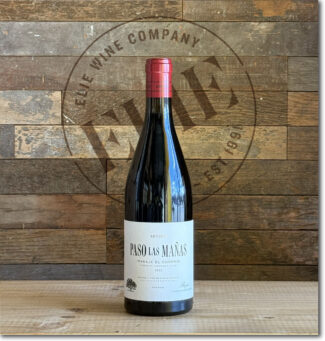 Artuke ‘Paso las Mañas’, 2022 Rioja Alavesa ($50)
100% Tempranillo from a ten-acre plot of Tempranillo on the highest slope of Samaniego (at an altitude of 2500 feet) where the wind blows so relentlessly that the vines had to be specially trained, unlike the head-pruning that Arturo uses in the rest of his vineyards. Soils are clay and chalky soils with many surface stones; the grapes are fermented and aged in used French oak foudres, resulting in a wine loaded with creamy black cherry complemented by a hint of blackberries, sweet spices, and herbs.
620 cases made.
 Artuke ‘El Escolladero’, 2020 Rioja Alavesa ($120)
tiny production wine, less than one thousand bottles made. And understandably so, since the grapes come from the Escolladero (derived from the Spanish word for obstacle) vineyard in one of the most difficult passages through the Sierra Cantabria mountains. 85% Tempranillo and 15% Graciano planted in 1950; the grapes are vatted in micro-tanks and undergo daily punching down and pigeage, then spends 12-16 months in 600-liter French oak barrels. The wine remains very fresh with luscious notes of bramble berries and coastal herbs behind nicely integrated tannins.
 Artuke ‘La Condenada’, 2020 Rioja Alavesa ($150)
80% Tempranillo with a blend of Graciano, Garnacha and Palomino Fino. The grapes are from vines about 40 years old grown on sandy soil at an altitude of about 1800 feet. Harvested by hand and aged in French oak barrels for 14 months, then bottled without sulfur after a soft filtration, it shows dynamic blackberry, cherry and strawberry notes swirling amid toasty vanilla and roast coffee beans with a finish well-balanced with spice and mineral note.
Telmo Rodríguez
Granja Nuestra Señora de Remelluri
Rioja Alavesa ‘Labastida de Álava’
New Single-Origin Rioja
In September, 2021 a wine that had been in the making for almost a decade was released at the Place de Bordeaux. Called ‘Yjar,’ it is a single vineyard cuvée from the foothills of the Sierra de Toloño in Rioja.
The wine was the brainchild of Telmo Rodríguez, who in 2011 returned to the idyllic family estate of Granja Nuestra Señora de Remelluri in Labastida after an 11-year absence. Intent on improving the bodega’s standing in the wine world while introducing ecologically-sound practices (viñedo ecológico, or organic vineyard, is one such example), his first step was to isolated those grapes grown at Remelluri from grapes sourced from long-standing suppliers, sending the latter to Lindes de Remelluri, a village wine range that includes a red wine from San Vicente de la Sonsierra and another one from Labastida.

Telmo Rodríguez, Remelluri
“Remelluri has not been ill-treated since the Middle Ages,” Temo says with pride. “When my parents bought it in the 1960s, it was farmed with animals, fertilized with manure, and grass grew freely among the vines. What’s so special about it is the proximity to the mountains, something that other properties lack.”
Now extending to nearly 370 acres, vineyards stretch across three valleys; the central area known as Remelluri, plus Valderremelluri and Villaesclusa. Soils vary within the clay-limestone sphere at elevations that range from of the Sonsierra. Elevation ranges from 2000 feet to nearly 3000—remarkably high for viticulture. These higher plots are reserved for white varietals.
 Remelluri ‘Yjar’, 2018 Rioja Alavesa – Labastida de Álava ($179)
Pronounced (more or less) ‘Ya,’ the wine is a field blend of Tempranillo, Graciano, Garnacha, Gran Negro and Rojal. The vineyard, 9 acres in size, sits on an eroded slope with its own water supply patter; the soil contains a high concentration of carbonates, accumulated to a depth of around two feet. The wine is juicy with black cherry, crushed blueberry and cocoa powder that evolve to truffle, black pepper, incense and freshly chopped herbs.
Olivier Rivière
Rioja Alta, Rioja Baja, Rioja Alavesa
Channeling Burgundy
Olivier Rivière’s path to Rioja was hardly one of least resistance: Born in Cognac, he had made up his mind to produce wines in Fitou—the red wine appellation at the heart of southern France’s Languedoc-Roussillon. Having studied oenology in Montagne St-Émilion, he interned in Bordeaux and then in Burgundy, working on a range of vineyards and learning the nuances of biodynamics. This latter skill proved to be his lifeline to Spain; hired by Telmo Rodriguez in 2004 to help convert his La Rioja Alavesa vineyards to biodynamic production, Rivière never left, having fallen in love with Rioja’s diversity of grape varieties and soil types.

Olivier Rivière
“The soils here are made up of red clay, limestone, sand, gravel and alluvial material,” he says, “and the climate is generally mild, typically continental. My harvests are conducted by hand, with grapes transported in 14-kilogram batches to avoid damage, and taken to the cellar for manual selection within 30 minutes. Whole cluster fermentation takes place, each variety separately, using indigenous yeasts, and the wine is aged in variously sized tanks, foudres and demi-muids. Maceration is minimal, and only a small amount of sulfites will be used at the point of bottling.”
Rivière tends to follow a technique of producing cuvées holistically across terroirs and uses a quality grading system imported from Burgundy, starting with generic appellations and village wines, and moving up to Grand Cru; this is in direct opposition of the local tradition of Crianza, Riserva and Gran Riserva. Today, he farms 61 acres with elevations between a thousand and three thousand feet and above sea level. Some of his vines are more than 90 years old, and include Tempranillo, Graciano, Mazuelo, Garnacha, Viura, Malvasia and Garnacha Blanca and cover vineyards in Rioja Alta, Rioja Baja and Rioja Alavesa, as well as his prized plot in Artanza.
 Olivier Rivière ‘Las Viñas de Eusebio’, 2015 Rioja Alavesa ($55)
100% Tempranillo, Las Viñas de Eusebio comes from two sites near Laguardia and Navaridas, unique for their decomposed sandstone and limestone soils. Elevation is high (between 1600 and 2000 feet) and the vines are fairly young at 20 years old. With more age, Olivier believes that these two sites will produce at Premier Cru levels. Amazingly fragrant and densely structured, the wine is beautifully scented with forest berries, spiced plum and balsam wood through the finish.
 Olivier Rivière ‘Gabaxo’, 2022 Rioja Alavesa, Rioja Alta, Rioja Baja ($28)
‘Gabaxo’ is a vaguely unfriendly term to signify a border jumper, and this wine is, in fact, Olivier’s only wine that blends fruit from various sites within Rioja. The Tempranillo and Graciano are from Rioja Alavesa, planted on rocky, clay-limestone soil at elevation nearly 1700 feet. The Garnacha is from Cárdenas in Rioja Alta, grown on red clay, and from Rioja Baja. Along with Bastid, Olivier considers Gabaxo to be equivalent to Côte de Nuits version of Rioja.
The Other Two Sub-regions: Rioja Baja and Rioja Alta
Despite the innovations happening in Rioja Alavesa, it remains the smallest of the three Rioja regions—wetter and cooler than the other two, boasting predominantly chalky clay with terraced vineyards.
Rioja Alta is located on the western side of Rioja and has an Atlantic climate with soils mostly comprised of iron-rich clay mixed with limestone. Due to the sub-region’s varying elevations, the wines produced here can have great structure and high acidity. The majority of Rioja Alta’s vineyards lie south of the Ebro River. Tempranillo thrives in these conditions, producing signature style of traditional Rioja; as a result, these wines form the backbone of most Rioja blends. Other important grape varieties include Graciano and Garnacha. When compared with Rioja Alavesa, these wines tend to be lighter in body and lower in acid, with the emphasis on elegance.
Rioja’s east is referred to as Rioja Baja, although some now call it ‘Rioja Oriental,’ thinking of ‘baja’ as a pejorative term). In fact, Rioja Baja is primarily fruit tree and vegetable country, and in the 19th century, it was criticized for planting grapevines in highly fertile alluvial soil and as a result, overproducing wine grapes. But since Rioja was traditionally made by blending grapes from all over the region and because Rioja Baja is warmer and drier than the Alta or Alavesa, Baja grapes almost always reach total ripeness, something that happens with less regularity in the other two subzones. Also, Rioja Baja was Garnacha country, adding character in blends to the predominant Tempranillo of the Alta and Alavesa. Sadly, most of the Garnacha has been replaced with Tempranillo since the late 1980s, but Garnacha is still in demand, and some wineries are investing heavily in it or replanting it.
 Olivier Rivière ‘Rayos Uva’, 2022 Rioja Baja ($20)
Rayos Uva is Olivier’s version of a Bourgogne Rouge, sourced from fruit grown in the sandy, gravelly and alluvial soils of Rioja Baja. 2022’s blend is biodynamically farmed Tempranillo, Garnacha and Graciano, meant for drinking now, shows raspberry perfume with cherries in the foreground along with light tannins and mineral salts strung across a slender, fruit forward frame.
Olivier Rivière ‘Ganko’, 2022 Rioja Alta ($61)
‘Ganko’—Japanese for ‘stubborn—is Olivier’s nickname. A blend of 60 – to 90-year-old Garnacha and Mazuelo vines grown in sandy red clay at elevations near two thousand feet, it is hand-harvested and whole-cluster fermented on natural yeast in concrete tanks, then aged 16–18 months in foudre and French oak demi-muids. Powerful and full-bodied with intense, spicy red fruit notes ideal for laying down, but enjoyable young with an hour’s decanting.
Benjamín Romeo
Bodega Contador
Rioja Alta ‘San Vicente de la Sonsierra’
‘Even the Smallest Detail Has Its Reason.’
We’re fond of saying cavemen made wine by discovering naturally-fermented fruit while foraging, and then translating that natural happenstance to their rocky shelters. In 1995, Benjamin Romeo, winemaker and vine-grower, joined their ranks when he acquired a centuries-old cave hewn into the rock beneath the Castle of San Vicente de la Sonsierra in Rioja. He began to experiment with small-scale wine projects in the cave as he purchased more vineyard land, and meanwhile outfitted his parents’ garage with equipment to increase his capacity.
And then came his dream winery: “Between 2004 and 2006, I worked with architect Hector Herrera on the design,” says Benjamin. “It was built over the following two years and opened in June, 2008 to coincide with the summer solstice.
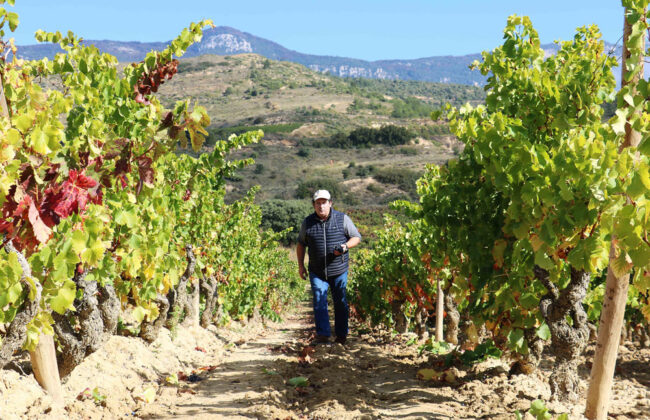
Benjamin Romeo, Bodega Contador
It is a nature-centered endeavor with terraces covered with plants that blend in with the local vegetation. The winemaker adds, “The bodega has exposed concrete walls so that gradually they become coated with dust and end up melding with the earth from which they came.”
Benjamín Romeo currently owns 124 acres of vineyards spread across 60 different plots, most of which are bush vines. He works with organic compost and shreds vine shoots over the soil to increase moisture retention. Selection, both on the vineyard and the winery, is essential to Romeo’s way of operating: He uses 10,000-litre wooden vats; malolactic fermentation is mostly done in barrels; aging times for red wines range from 16 to 18 months and he takes moon cycles into account when it comes to handling wines.
Both the 2004 and 2005 vintages of Contador received 100-point scores on Robert Parker’s Review—an unprecedented achievement for a Spanish winery. In fact, it’s a feat so tough that only a caveman could do it.
 Bodega Contador ‘Alma Contador’, 2022 Rioja Alta ‘San Vicente de la Sonsierra’ ($123)
Romeo’s new red blend, 2020 Alma Contador, originates in three vineyards in San Vicente de la Sonsierra, each at different altitudes. It blends 92% Tempranillo with 8% Garnacha, which then matures in new French barriques for 20 months. The ‘soul’ of Contador is meant to showcases the power and elegance of Tempranillo with notes of black fruit, spice and vanilla. It is still quite young, but displays a structured palate with firm tannins and a long, lingering finish.
Rioja’s White Wine Revolution
Alavesa White, Orange and the Jurassic
In the mind of most wine drinkers, the most freely-associated Rioja color is red, and many are surprised to find out that the region has traditionally produced a sizeable amount of white wine—in days of yore, when the climate was cooler, Rioja had more white vineyards than red ones. In fact, it was not until the arrival of phylloxera in Bordeaux in 1866 (when merchants went looking for an alternative source of red wine) that red Rioja came into its own. And even then, these grapes were frequently used to make rosés or lighter reds called Ojo de Gallo by blending them with co-planted white varieties.
What’s true is that the white face of Rioja has suffered slings and arrows in the intervening years, many from critics who considered the offerings to be thin, overly-oaked, low on acidity and aromatics and frequently oxidized. In the middle of the twentieth century, white wine varieties still outnumbered reds in overall acreage, but it dwindled precipitously until it dipped below 10%. By the turn of the 21st century, Mercedes López de Heredia—who still crafts some of the country’s greatest and most traditional whites at her family’s bodega in Haro, admitted that she was starting to feel like ‘the last of the Mohicans.
The recent resurgence of Rioja white has been a deft balancing act between a past focused on aging in oak (and the dominance of Viura) and new grape varieties along with less traditional winemaking techniques. These are challenges that the next generation embraces, and are planting at higher altitudes with more focus on freshness and terroir.
Rioja’s three historic grape varieties—Garnacha Blanca, Malvasía de Rioja, and Viura—were all authorized when the Consejo Regulador was founded in 1925. The palette of varieties they can now choose from includes Sauvignon Blanc, Chardonnay, Maturana Blanca, the local grape Turruntés; also, fruit from old, overlooked vines in abandoned vineyards, with discoveries made of Calagraño, Jaén Blanco, Mazuelo Blanco, Moscatel de Alejandría, Palomino, Pavés, Rojal, and Xarel·lo. Better yet, old-vine Viura has overcome its poor reputation, at least in the best sites, and the development of new white-wine vineyards in areas that, in the days when the climate was substantially cooler, were considered marginal, has raised the bar on Rioja whites exponentially.
Naranja, brisé or amber: Call it what you will. In the absence of a name consensus the trend is clear, and Orange Wine has become a category in Rioja. Although its color makes it look like a rosé, orange wine is in fact the opposite: Rather than using red wine grapes, orange wines rely entirely on white varieties allowed to macerate until the must reaches the desired color and body. Like natural wine, orange wine is not to everyone’s taste, but Rioja’s top entries to the field display notes of dried figs, roasted apples, roasted almonds and fennel with hints of mango and citrus notes.
Another extraordinary style that Rioja is exploring is akin to the Jura’s vin jaune, traditional Sherry and aged White Burgundy where white wine undergoes extended aging to develop rich, nutty, oxidative characteristics.
 Artuke ‘Trascuevas’, 2022 Rioja Alavesa White ($53)
90% Viura, 5% Malvasía, 5% Palomino Fino grown on calcareous clay soils from three different vineyards with vines over 50 years old. The harvest is done manually, and the grapes are transported in 20-kilogram boxes to the winery where they are destemmed, and pressed to initiate fermentation in stainless steel tanks with native yeasts. Afterward, the majority ages for 10 months in 500-liter French oak barrels, with a small percentage in concrete tanks. The wine shows a yeasty nose and a full palate of citrus, apple and pear.
 Olivier Rivière ‘La Bastid’, 2022 Rioja Alavesa ‘Labastida’ White ($36)
85% Viura, 8% Garnacha Blanca, 7% Malvasía from Olivier’s Labastida vineyard planted on clay-lime soil. After careful sorting and pressing, the wine ages for ten months in 500-liter French oak barrels. It shows carefully crafted nuances of orange peel, anise seed, pear, nectarine and creamy vanilla.
 Álvaro Loza Viticultor ‘Con.tacto’, 2022 Rioja Alavesa ‘Labastida’ Orange ($39)
100% Viura, known elsewhere as Macabeo, grown in a single ten-acre, south-facing plot in Elciego. The vineyard is mostly planted to Tempranillo, but Viura occupies the higher elevated end of the vine rows. The fruit is hand-harvested and whole-cluster fermented for 15 days in contact with the skins and the stems (hence, the name), then racked into 8 year old French oak barrels for one year. As in Sherry, the layer of ‘flor’ that forms in these barrels is yeast that allows fermentation to continue without oxidation. The label is a tribute to his grandfather, with his hand and Álvaro’s hand on the label, reminiscent of Michelangelo’s ‘Creation of Adam’ fresco in the Sistine Chapel.
 Olivier Rivière ‘Mirando al Sur’, 2020 Rioja Alavesa ‘Labastida’ White ($98)
100% Viura from 55-year-old vines planted near the village of Labastida in Rioja Alavesa. It is named Miranda al Sur (‘looking south’) not because of the vineyard’s exposure, but because it is aged in used Sherry butts (one Fino and one Amontillado) after a whole cluster fermentation in oak vats. The wine is richly toned with notes of Balsam wood and tangerine and a subtle herbal and mineral-spicy accompaniment. In the mouth it is broad and creamy, with layered viscosity; seamless and rounded.
- - -
Posted on 2025.04.07 in Spain DO, Wine-Aid Packages, Rioja DOC | Read more...
The Methodical Purist: Emmanuel Lassaigne (Champagne Jacques Lassaigne) is Redefining Terroir in Champagne’s Outlying Sub-region Montgueux + Southern Champagne Tapestry: Vincent Couche in Villages Montgueux and Buxeuil
The Methodists were named for a methodical approach to Christianity and the Puritans for a desire to purify it. Although Montgueux’s roots are a bit more pagan (the name means Hill of the Goths), Emmanuel Lassaigne’s angle of approach combines both philosophies, and in doing so, creates the region’s finest Champagne.
As an officially-delineated growing region, Montgueux—a mere fifteen minutes from Troyes—arrived late to the Champagne party; most of the current vines were planted in the 1960s. Among the first to reclaim Montgueux’s once-renowned terroir was Emmanuel Lassaigne’s father Jacques, from whom he took over Champagne Jacques Lassaigne in 1999.
As background notes to his latest project, a renowned two-acre Montgueux vineyard called Clos Saint-Sophie, Emmanuel says: “There were twenty varieties of grapes growing here in the 1880s. The Clos was so well known that Japanese botanists came to study it in 1886 and took a hundred cuttings back with them—the first Vinifera vines to grow in Japan.”
Join us on an exploration of this tiny chalk hill 60 miles south of Épernay, unlike anywhere else in Champagne, led by the tour guide who knows it best, Emmanuel Lassaigne. So in love with Montgueux is Lassaigne that he purchases up to 30% of his grapes from vineyards he does not own simply to present a more unified spectrum of the region’s remarkable terroir.
The Landscape of Champagne: Rethinking the Sub-regions
Classification is a man-made phenomenon; a way of understanding and categorizing a complicated world. Biologists do it, chemists do it, musicologists do it, but no field of study seems more joined at the hip to classification than oenology. Champagne, for example, has typically been subdivided into three major regions—the Montagne de Reims, the Côte des Blancs and the Vallée de la Marne. But, like the platypus who threw a curve ball to biologists as an egg-laying, duck-billed mammal, the classical subdivisions of Champagne ignore a portion of the 84,000 acres legally allowed to wear the Champagne label.
On the other end of the scale, the Comité Champagne (an umbrella organization for both growers and Champagne Houses first formed in 1898 to combat phylloxera) offers its own dizzying classification system, dividing the region in twenty individual sub-regions.
Finding neither taxonomy satisfactory, Champagne writer and former editor of ‘Wine & Spirits’ Peter Liem has found a middle, yet all-inclusive ground with seven named sub-regions—even while admitting that he is courting controversy.

Of the original three divisions, he leaves the Montagne de Reims and the Côte des Blancs intact, but argues that Vallée de la Marne should be broken in two to reflect the chalky bedrock of the northeast supporting primarily Pinot Noir and the collection of villages southwest of Épernay (called, unsurprisingly, the Coteaux Sud d’Épernay) where, within a relatively small region, a distinct variety of soils and terroirs can be found. The Côte des Bar is handed to us ‘as is’ since the principal vineyard area of the Aube lies on Kimmeridgian marl, much like its neighbor Chablis.
The most interesting sub-category in Liem’s system is the quartet of Côte de Sézanne, Coteaux du Morin, Vitryat and Montgueux. He groups them together despite their unique but isolated characteristics chiefly because they are areas of new plantings.
• The 1500-acre Côte de Sézanne sits a few miles southeast of Étoge in the Côte des Blancs. Chardonnay accounts for around 75% of the vineyard plantings, but there is a significant amount of Meunier and Pinot Noir. Sézanne wines are known for being among the fruit-forward in the region.
• Contiguous to the vineyards of Sézanne, the Coteaux de Morin forms the northern end of a string of vine-clad hills south of the Côte des Blancs. 2200 acres of vineyard comprise the region; about half is Meunier, 40% Chardonnay and the rest Pinot Noir.
• Vitryat is located in the Côte des Blancs but removed from the main by 25 miles (to the east); this is Chardonnay country, and this variety dominates Vitryat’s 1130 acres of limestone marl to produce elegant wines with a stony minerality unlike the crisper Champagnes that typifies the Côte des Blancs.
• Montgueux, the smallest of the four sub-regions, is made up of 514 acres of chalk, where the vines generally face south along a single hillside. These wines are renowned for their exotic fruit flavors, especially pineapple and mango. According to Emmanuel Lassaigne, “Our south-facing exposure always produces these tropical wines, but the soils are very chalky, so there is a lot of minerality too.”

Chalking Up Differences: Montgueux Rocks
In general, if you chalk up Champagne terroir to chalk, you are close, but like the grapes themselves, there are many flavors of this white, soft porous rock, made from the gradual accumulation of fossilized shells from marine life. The ‘Paris Basin’ is the key geological formation that produces the remarkable terroirs of northern France; a giant limestone bowl that, 75 million years ago, was a shallow sea where eukaryotic organisms lived, died and piled up. A slow tilting of this basin allowed the Seine, Aube, Yonne, and Loire rivers to cut through the rising ridges and form an archipelago of wine areas of which Champagne figures prominently, along with the Loire Valley and Burgundy.
The Campanian chalk that dominates the Côte des Blancs and the Côte de Sézanne is the standard-bearer for Champagne’s terroir, but the chalk in Montgueux and Vitryat, for example, is 13 million years older—deposits from the Turonian Stage.
Montgueux is an outcropping of pure Turonian chalk sitting three hundred feet above the surrounding plains, and although this soft limestone is the predominant mineral presence, small amounts of red clay and flint are also found in the soil—trace elements that allow Montgueux Chardonnay to express a full aromatic palate.
New Plantings: Reviving Historic Terroir in Coteaux du Morin, Côte de Sézanne, Vitryat, and Montgueux
The story of European wine is distinctly bifurcated: Before phylloxera and afterward. Prior to the Great Blight of the eighteenth century, more than 150,000 acres of Champagne were planted to vine. Today, that number is fewer than 90,000 acres. Root-devouring aphids alone did not account for the decline, of course; a couple of World Wars and the subsequent economic implosion played their role. Whatever the cause, in the process, some historically important terroirs were abandoned.
By the 1960’s, a renaissance had begun to find footing among growers, and Champagne vineland that had lain fallow for half a century was slowly replanted. Nowhere was this more in evidence than in Peter Liem’s Big Four—Coteaux du Morin, Côte de Sézanne, Vitryat and Montgueux, which have re-established themselves as important Champagne growing areas. Although there are fewer grower-producers today than in the past (with more growers selling grapes to major Champagne Houses and cooperatives) this leaves a vast opening for pioneers to learn about the varied faces of these long-untapped soils, climates and exposures.
Champagne Jacques Lassaigne
Wine First
If a poster child was needed for the concept of Champagne’s phoenix rising from the flames of phylloxera, no hill is better suited than Montgueux. And in the endeavor, no white knight may be considered more noble than Jacques Lassaigne. With the original intention of selling grapes to négociant houses, he began to bottle still wine in the 1970’s and Champagne in the ‘80s. His first ‘parcellaire’—a term synonymous with ‘lieu-dit’—was from Le Cotet, a plot that Emmanuel still farms today.
Of it, Emmanuel says, “We have a single area of vines between 55 and 60-years old within this individual vineyard, all Chardonnay, making a wine of intense minerality. It sings with citrus acidity in its youth but as it ages, it fattens. It’s another Champagne which must be treated as a white wine with bubbles, serving it (preferably) not too cold in the correct wine glass.”

Emmanuel Lassaigne, Champagne Jacques Lassaigne
From the outset, the Lassaignes relied on organic agriculture, using no synthetics and allowing the rows to grass over, creating competition with the vines—a technique that reduces yields and produces smaller berries, both indispensable factors in creating great wines. But as a Champagne house, they are decidedly not certified organic, for reasons that betray a small secret among French vignerons worth squirreling away: According to Emmanuel, “The French are masters in the art of paper. Many growers (like us) who work without chemicals prefer to remain uncertified because we resent having to deal with the bureaucracy and pay the fees to be certified in something we’ve been doing for years of our own accord.”
The majority of Lassaigne’s current ten acres is planted to Chardonnay, and lie across the street from his home above the valley that lies between Montgueux and Troyes. As mentioned, he annually purchases an additional six acres of grapes from old vines in top terroirs.
Of Clos Sainte-Sophie he says, “It’s the best vineyard in Montgueux.”

Emmanuel Lassaigne, courtesy of Grand Champagne Helsinki
In the cellar, Lassaigne vinifies all parcels separately and (with the exception of ‘Le Cotet’ and ‘Colline Inspirée’) fermentation is done in stainless steel. The initial fermentations are completed with native yeasts while secondary fermentations rely on a commercial, neutral Aube-originated yeast strain that imparts no aroma to the wine and promotes a very long, cool second fermentation—key to developing the prized mousse of which Champagne is justifiably proud. Although Lassaigne uses sulfur minimally at pressing to prevent oxidation, the domain has been disgorging without sulfur for 32 years. He scoffs at oenologists who insist that sulfur is a preventative measure, saying, “We’ve avoided it for more than a quarter century and to date, nothing has gone wrong.”
Emmanuel also disgorges all the bottles himself, by hand, which is an increasingly uncommon practice in Champagne where machine disgorgement has become the norm.
The human touch plays an integral role in every facet of winemaking with which Emmanuel engages. And it’s fitting, since Champagne is one of humanity’s greatest triumphs.
 Champagne Jacques Lassaigne ‘Les Vignes de Montgueux’, Montgueux Blanc-de-Blancs Extra-Brut ($79)
True to its name, the grapes in ‘Les Vignes de Montgueux’ come from seven to nine individual sites throughout Montgueux where the age of vines is around 35 years and yields are kept to 60 hectoliter/hectare (Champagne’s average is 66 hl/ha). Harvest is done at maximum ripeness before the grapes are destemmed and pressed. The base wine undergoes complete malolactic fermentation and is aged in new and old barrels for 12 to 24 months. Once bottled, it is held for one to five years until it is disgorged, corked and released.
The wine shows glints of gold in the glass with lovely dried mango and lemon-lime zest in the aromatics. The palate is vibrantly alive with crisp citrus and creamy melon flavors that are backed by a spine of acidity and dazzling minerality. The finish resonates with succulent pineapple and citrus notes and shows the full, expressive panoply of Chardonnay.
 2015 Champagne Jacques Lassaigne ‘Millésime’, Montgueux Blanc-de-Blancs Brut-Nature ($169)
2015 vintage: After a wet winter and a mild spring, high temperatures and dry weather prevailed from mid-May until mid-August and the drought conditions produced wines with great concentration if a somewhat rustic tinge.
A blend of three parcels, 80% fermented in stainless steel and 20% in 225-liter foudres for eight months, then on lees for an additional eight years. Disgorged February, 2024 and dosed ‘brut nature,’ meaning less than 3 grams of sugar per liter.
Shows bright lemon, sour apple and pear notes with a touch of creaminess to warm it the shivery acidity and salinity.
Montgueux in Details: Story Told in Parcels
Emmanuel Lassaigne currently farms nearly nine acres of vines, but he also purchases grapes from another six acres so that his wines can represent all facets of Montgueux’s terroir. He then vinifies each parcel on indigenous yeast in order to preserve their individuality, either in barrel or in stainless steel.
“This allows me a wide palette for blending,” he explains, “even though the final wine is pure Montgueux. My vintage Champagne combines three parcels. The fifty year old vines in Les Grandes Côtes, for example, yield rich, buttery wines. I control the amount I use, but it offers depth and vinosity. Les Paluets makes wines that are sleeker and more elegant. I also have vines in Le Cotet that were planted in 1964. It is very citrussy, contributing freshness to the blend. Each parcel has its own story to tell, and I act as a editor that combines each story into a cohesive collection.”
 2017 Champagne Jacques Lassaigne ‘Le Grain de Beauté’, Montgueux ‘Le Cotet/Les Paluets’ Blanc-de-Blancs Brut-Nature ($219)
2017 Vintage: In Champagne, 2017 got off to a promising start with warm, dry conditions through late spring and early summer, hurrying along budburst and flowering. August was universally rainy, though, prompting an outbreak of botrytis. This meant that the harvest had to be carried out quickly and for some producers, it was the shortest on record. Chardonnay tended to be uniformly good and there was also some extremely good Pinot Noir, with Meunier suffering from over-ripeness. Despite these setbacks, the potential for some great Champagnes exists.
From two parcels—Le Cotet and Les Paluets—the grapes were harvested by hand, destemmed, and gently pressed. The wine undergoes complete malolactic fermentation and is aged in barrels for 4 years until it’s bottled. Disgorged á la volée (manually). The wine shows a lovely minerality with dried fruit, citrus zest and melon on the nose.
 2018 Champagne Jacques Lassaigne ‘Autour de Minuit’, Montgueux ‘La Voie Creuse’ Blanc-de-Blancs Brut-Nature ($283)
2018 Vintage: An all-around excellent growing season preceded by an extremely wet winter which—albeit by chance—created a brimming water table for the long, hot summer that ensued. Despite some hail storms, the resulting crop was large and abundant; the grapes were mostly picked by hand and continuing good weather meant the harvest could be done at a leisurely pace, with all varieties performing well.
For this cuvée, Lassaigne collects barrels from Jean-François Ganevat formerly used in vin jaune production. The wine spends three years on it lees and is bottled without dosage. The exception balance of purity and tension shows through layers of creamy peach and lemon meringue.

A Jewel Reclaimed: The Montrachet of Champagne
“Explosively aromatic with notes of lemon peel, pomelo and passion fruit giving way to notes of gingerbread and toast.”
This could easily be mistaken for Montrachet tasting notes, but in fact, it is a description of Champagne from Clos Sainte-Sophie in Montgueux. Sainte-Sophie has a more easterly exposure than many local vineyards, giving the wines a unique structure and remarkable complexity. Under the ownership of the Valton family for the past hundred years, for much of this time, Sainte-Sophie fruit was sold to Charles Heidsieck for premium blends. Today, more and more is being dedicated to single-vineyards wines, especially those of Emmanuel Lassaigne.
Former Charles Heidsieck cellar-master Daniel Thibault confirms the original assessment, saying, “If there is a Montrachet in the Aube, it will be found in Montgueux.”
Montgueux—the ‘hill of the Goths’—is a fairly new region in Champagne, a chalky outcropping that is nearly all planted to Chardonnay, with only about 10% of the vineyard land given over to other varieties. Emmanuel Lassaigne, considered by many to be the finest winemaker in Montgueux, further illuminates the Montrachet-ness of the wines he produces: “Our south-facing exposure always produces rich wines with very ripe flavors; the soil is chalks, so there is always an undercurrent of minerality and notes of mango and tropical fruit.”
 2017 Champagne Jacques Lassaigne ‘Clos Sainte-Sophie’, Montgueux’ Blanc-de-Blancs Brut-Nature ($237)
Clos Sainte-Sophie is a unique clos, the only one of the Champagne’s 13 walled vineyards situated in the Aube. Owned by the family behind French undergarment brand Le Petit Bateau, cuttings from the vineyard were used to plant the first wine grapes in Japan in 1877.
Lassaigne reached an agreement with the elderly owner to purchase Sainte-Sophie grapes in 2010. He vinifies the juice for six months in a combination of barrels previously used for Cognac, Savagnin ouillé and Burgundy. The juice is then blended in tank for 2 months and bottled in the spring of the following vintage before spending six years on the lees in bottle. It shows bright beams of acidity balanced by caramel cream and lemon/lime acidity.
 2016 Champagne Jacques Lassaigne ‘Clos Sainte-Sophie’, Montgueux Blanc-de-Blancs Brut-Nature ($237)
2016 Vintage: 2016 was tricky, with merciless April frosts devastating yields and in some cases wiping out entire crops. The weather continued to frustrate growers with heavy rains from May through to July, encouraging mildew and rot to further reduce yields. Warm, dry weather finally arrived in July and temperatures continued to creep up, with August reaching blistering highs that caused some grapes to suffer from burns. The harvest was down by roughly a third and smaller, more flexible producers like Emmanuel Lassaigne generally fared better than larger, more regimented houses.
The wine is 100% Chardonnay, disgorged March 2022, and bottled with zero dosage. It expresses Lassaigne’s characteristic intense aromatics and chalky notes along with pronounced acidity, a touch of meadow flowers, brioche and fleur de sel.
Southern Champagne Tapestry
Blending Villages Montgueux (Aube) and Buxeuil (Côte-des-Bar)
‘Aube’ translates to ‘dawn’, so it is fitting that this district is Champagne’s rising star. In part this is because of the district’s push towards a culture of artisanal, experimental, terroir-driven Champagne. Situated further south than the other four regions, it is less prone to frost and the Pinot Noirs of the Aube are rich and fruit-driven. Although the district is devoid of Grand or Premier Cru vineyards, since the 1950s, grapes grown there have formed a vital backbone of the blend produced by many of the top Champagne houses.
Perhaps the lack of a historical reputation means that the AOP has less to lose, but the overall mindset of the region encourages mavericks, which in tradition-heavy Champagne is rarely seen. It is these independent winemakers that are primarily responsible for district’s mushrooming growth, which now makes up almost a quarter of the entire Champagne region.
Since the Côte des Bars is the Aube’s only significant wine producing area, the two names are generally interchangeable in winemaking discussions; the vines of the Côte des Bar can be found scattered patches within two main districts, the Barséquenais, centered on Bar-sur-Seine, and the Barsuraubois, centered on Bar-sur-Aube.
Helping to forge the region’s new identity is a crew of younger grower/producers, many of whom have traveled abroad and trained in other winemaking regions. As a result, they tend to focus more on individuality; single-variety, single-vintage, and single-vineyard Champagnes from the Côte des Bar are quite common. Not only that, but land remains relatively inexpensive, which encourages experimentation. Even though many of Côte des Bar’s Champagnes are 100% Pinot Noir, styles can differ markedly from producer to producer, bottling to bottling and, of course, vintage to vintage.

Champagne Vincent Couche
The distance between Reims and Chablis is about two hundred miles and Vincent Couche’s approach to Champagne is more in line with traditional Burgundian thought and practices than many cellar masters: He farms small parcels kept separate with high-density plantings and focuses on wines of terroir rather than wines that are blended to a formula.
The fact that his properties are in the south of Champagne gives him a unique ability to explore the terroirs of this gently rolling terrain, where it is a touch warmer than the Marne, although it’s less centered on a major river system. He is enamored of ripeness, giving his cuvées their signature depth and complexity. In Chardonnay, extra hang-time (especially in a warmer growing season) produces luscious notes of nectarine and ripe pear while for Pinot Noir grapes the same conditions develop nuances of preserved cherry, fig and cocoa.
Aiming to Recreate Ideal Conditions for Harmonious Biodiversity and Precise Balance
Vincent Couche has been thinking about vines since he was eight years old. By early adulthood he was able to turn that fascination into a career, studying enology in Beaune and taking on several intern positions in Switzerland and Germany before founding his Champagne house in 1996. His current acreage of vines is split between two unique terroirs: Seven acres of Chardonnay in Montgueux and 25 acres of Pinot Noir in Buxeuil, where the parcels mostly face south and west on steep slopes overlooking the Seine.

Vincent Couche
“To succeed in winemaking, you must combine a respect for the land to an attachment to ancestral know-how, close to nature. You must excel as a craftsman who leaves no detail untouched, from the soils that produce the fruit vats and storage places, including the bottles. Everything is carefully chosen with the sole aim of obtaining high-end quality.”
His love of nature translated into a meeting with agricultural engineers in 1998 that prompted him to switch to organic and biodynamic cultivation in 1998. His estate was Demeter certified in 2011.
“Earth friendly winemaking as a philosophy is having a moment right now,” Vincent declares. “We pick grapes by taste and touch, and generally harvest over a week after our neighbors in both Montgueux. We are after higher levels of ripeness than is the norm.”
Couche is also a master at producing ratafia—a cordials made by the maceration of ingredients such as aromatic fruits and nuts in pre-distilled spirits, followed by filtration and sweetening.
 Champagne Vincent Couche ‘Chardonnay de Montgueux’, Montgueux Brut-Nature ($75)
2012 is used as the base year with a 2019 disgorgement and zero dosage; eight years on lees has produced a lovely baker’s aroma with yeast and dried green apple on the nose with lean tart lemon and a very fine mousse.
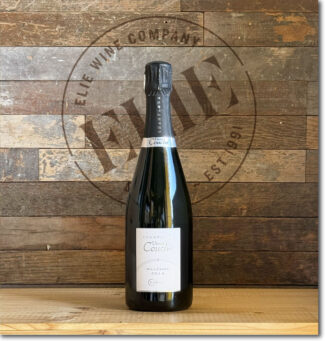 2014 Champagne Vincent Couche ‘Champagne de Buxeuil’, Côte-des-Bar ‘Buxeuil’ Extra-Brut ($99)
2014 Vintage: A warm, dry spring meant the growing season got off to a healthy start with successful budburst and flowering while the absence of severe frost gave producers cause for optimism. Summer dashed these original hopes with a rainy June and July and an August that did not dry out until midway through. Then a benign September brought warm, dry conditions ripening the grapes and effectively saving the harvest and the resulting crop, although not exceptional, was generally very good.
37% Chardonnay, 63% Pinot Noir. Disgorged in December 2021 and dosed at 4 gram/liter. The predominance of Pinot shows in dried cherry aromatics; the Chardonnay shines through with the beautiful chalky freshness with notes of warm pastry.
10,562 bottles and 912 magnum produced.
 Champagne Vincent Couche ‘Élégance’, Montgueux+Buxeuil Extra-Brut ($56)
84% Pinot Noir and 16% Chardonnay, disgorged in February, 2022. The Pinot is grown in Buxeuil’s Kimmeridgian limestone and the Chardonnay in clay and silex from Montgueux. The wine spends three years on lees before disgorgement and dosed with zero sugar. It shows vibrant high-acid roundness with crunchy pear, raspberry, and golden delicious apple fruit and a kiss of brioche from the yeast.
5000 cases produced.
 2002 Champagne Vincent Couche ‘Sensation’, Montgueux+Buxeuil Brut-Nature ($153)
2002 Vintage: A sensational vintage! The preceding winter was cold and frosty and moved slowly towards a late spring. However, when it did arrive, spring was ideal, allowing for a successful flowering. Summer brought a succession of dry, sunny days that vintners dream about, ripening but not burning the grapes. Harvest was leisurely and the resulting wines were beautifully balanced and opulent with sharp acidity—ideal for cellar aging.
Half Pinot Noir and half Chardonnay, aged four months on lees and a full twenty years on lees in the bottle before disgorging in May, 2022. Dosed at zero. The wine shows hints of lime oil and orange blossom on the nose while the palate is full, complex with notes of pear and apple. The acidy remains alive and well despite the years in the bottle with enormous, mineral-driven length.
950 cases produced.
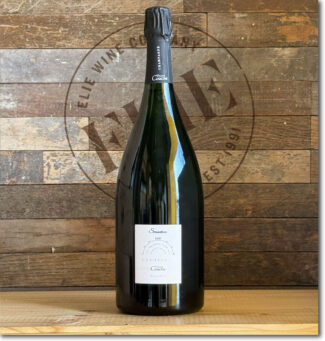 2000 Champagne Vincent Couche ‘Sensation – Dégorgement Tardif’, Montgueux+Buxeuil Extra-Brut ($368) 1.5 Liter
2000 Vintage: To kick off the 2000 growing season, spring was dry, but both June and July saw bouts of hail which caused considerable damage to certain vineyard plots. A warm August brought plenty of sunshine which lasted through to the September harvest. Overall, the wines were a touch low in acid but had good fruit, body and structure and some great wines were made.
‘Dégorgement Tardif’ is a Champagne term that signifies a late removal of dead yeast cells (lees) from the bottle, resulting in a wine with a richer, more complex character. 50% Pinot Noir and 50% Chardonnay, this beautifully aged Champagne was disgorged in May, 2021 and displays fine, well-integrated bubbles mingling with notes of dried stone fruit, Meyer lemon, honeyed apple, crushed chalk and toasted brioche.
450 cases produced.
 Champagne Vincent Couche ‘Rosé Désir’ Montgueux+Buxeuil Brut-Nature Rosé ($62)
95% Pinot Noir and 5% Chardonnay, this cuvée relies on blending three rosé style—carbonic, traditionally extracted, macerate fruit and some direct press. It spends a year in fût, three years on the lees before being disgorged and bottled unfiltered with zero dosage. The wine boasts a radiant nose of red berries against glimmers of spiced biscotti and roasted cashew. A silken palate of black cherry underlined by blood-orange rind before a long voluptuous finish.
600 cases produced.
- - -
Posted on 2025.04.01 in France, Champagne, Wine-Aid Packages | Read more...
Enthroned at The Summit of Larzac: Domaine de Montcalmès, a Languedoc Stand-out, Drinks Well in Its Youth and Shows No Weakness with Age. + Four Top Terrasses du Larzac Producers. 6-Bottle Package, All Producers Sampler $268 + Recent Arrival Larzac’s Rising Star: Le Clos du Serres 6-Bottle Sampler Package For $138
Join us for Saturday Sips: A Taste of Terrasses du Larzac
Come as you are; come any time that’s convenient for you during our business hours to sample selection from this week’s selections. Our staff will be on hand to discuss nuances of the wines, the terroirs reflected, and the producers.
Elie
If you’re an aspiring domaine owner working with a tight budget, and have an eye to producing world-class French wine, you could do worse than Terrasses du Larzac, where an acre of vineyard land might set you back the equivalent of $5,000. Compare that to Burgundy’s $100,000-an-acre mind-blowing average. Not only that, but only 35% of the available land is currently under vine.
It’s no wonder that this relatively new (2014) appellation is seducing many winemakers who are equally green behind the ears; they are beginning careers with an eye (and palate) toward quality—still a rather novel concept in Languedoc, long the home for a sea of cheap wine available for under ten dollars a bottle. AOP rules in TdL are relatively tight in comparison to the Languedoc as a VdF: in Larzac, there are five permitted grapes—Grenache, Syrah, Mourvèdre, Cinsault and Carignan; the wines must be blends and include at least two from Grenache, Syrah and Mourvèdre. Furthermore, cellar-aging must last at least one year.

Among the new class of Larzac producers, we number the following as among our favorites. They are visionaries with both heritage and discipline, finding in the wonderfully diverse terroirs of the region an opportunity to rival, and frequently outgun, wines from the same grapes made way up north in the Rhône.
Terrasses du Larzac: A Languedoc Stand-Out, Coming into Its Own
The history of Languedoc’s vineyards dates back to the 5th century BCE when the Greeks introduced vines to the area. As such, the Terrasses du Larzac AOP is a bit anomalous simply because it only received official recognition in 2014. Extending across 32 communes among the foothills of Larzac, with its northern boundary naturally formed by the Causse du Larzac, part of TdL’s appellation upgrade was a phasing-out of the predominantly Carignan-based wines of the past in favor of ‘cépages améliorateurs’ (improver varieties) like Grenache, Syrah and Mourvèdre—grapes more usually associated with Rhône. Carignan is now limited to only 30% of any Terraces du Larzac wine.

But the terroir is perfectly suited to the Big Three; Larzac is geologically varied and offers soils that range from stony clay and sand, iron-rich red soils, and heavier clay soils with high limestone content. Vineyards situated on the banks of the Hérault river are planted on pebble-strewn alluvial terraces and stonier soils with limestone bedrock. The average altitude of the local vineyards is around 400 feet, but rise to nearly 1300 feet in the northerly commune of Saint Privat. The Mediterranean climate provides distinctly seasonal rainfall throughout spring and fall, and thanks to the nearby mountains of the southern Massif Central, the appellation’s vineyards enjoy the benefits of cooler nights after hot days, helping to provide balance between sugar and acid in the grapes.
PACKAGE ONE
This package offering is comprised of six wines featured and numbered below: Two wines from Montcalmès, one white Vin de France 2020 and one red 2019, and one of each of Saint-Sylvestre 2015, Mas Jullien ‘Lous Rougeos’ 2017, Cal Demura ‘Les Combariolles’ 2017 and Le Clos du Serres ‘Le Palas’ 2018 for a total of six bottles at $268.
Domaine de Montcalmès
The Summit of Larzac
The quiet persistence of Frédéric Pourtalié has, since his first vintage in 1999, gradually elevated Domaine de Montcalmès to a quality level to match his mentor Grange de Pères, although in terms of cult wine status, it still flies a bit under the radar. Pourtalié trained at Pères before taking over family vineyards at the edge of the Massif Central, where cool night air descends off the Cévennes Mountains.
Named for a hamlet that once overlooked the Hérault valley, Pourtalié’s winemaking cousin Vincent Guizard (now of Domaine Saint-Sylvestre) joined in 2003 in a quest to put the Hérault estate on the world’s wine map. Today, Pourtalié farms 54 acres spread between the communes of Puéchabon, Aniane, St. Jean de Fos and St. Saturnin de Lucian, each with its own unique microclimate and soil geology. Montcalmès means ‘limestone mountain’ in Occitan, and Pourtalié draws variously from the lacustrine limestones of Puéchabon, the rolled pebbles of Aniane, the scree of Saint-Saturnin and the clays of Saint-Jean-de-Fos.

Frédéric Pourtalié, Domaine de Montcalmès
photo: Atelier Soubiran
The domain is hundreds of miles from either Burgundy or Southern Rhône, but the influence of both manages to trickle down to Pourtalié’s operation. His Mourvèdre grows on pudding-stones nearly identical to Châteauneuf-du-Pape’s galets roulés and his red wines are aged for 24 months in old Romanée-Conti barrels, giving them a potential longevity of a decade or more.
Frédéric Pourtalié proudly shares that for the past decade, he has been supplying top-end wines to local Michelin starred restaurants— the Pourcel, the Auberge du Vieux Puits in Fontjoncouse, Michel Bras in Aveyron—but also the Troisgros, Pierre Gagnaire, the Grillon in Paris. “Between restaurants and a network of wine merchants, it is sometimes hard to keep up,” says Pourtalié.
“We are slowly expanding; I recently planted six acres of Syrah on a clearing of scrubland on the hillsides, but I’ve also made time to vinify a 100% Viognier in Vin de France, this time sold only in the cellar. A special vintage just for visitors.”
Vintage 2020
The ‘nutshell’ summation of the 2020 vintage in Languedoc is ‘low quantity, high quality.’
For the most part, the appellation had ample reserves of water from flooding the previous autumn and winter. The spring was quite cool, and there was quite a bit of rainfall in late April early May. Summer heated up, but not to the over-the-top extremes of 2019; it was dry, but the August nights were cool—ideal were quite warm but thankfully without the extremes of 2019. High summer did of course warm up and was dry as usual, but the August nights were cool with an ideal condition for the ripening and flavor development.
 2020 Domaine de Montcalmès, Terrasses du Larzac ($57)
60% Syrah, 20% Mourvèdre, 20% Grenache; the grapes were destemmed and crushed and allowed to ferment separately on indigenous yeast during a maceration of 30 days. The varieties underwent regular punching down, following which barrel-aging took place over 24 months; the three varieties were blended two months before bottling.
The wine shows clean blackberry and cassis notes while the palate is silky with spice and fine-grained leather with a touch of licorice on the finish.
 2020 Domaine de Montcalmès, Languedoc Blanc ($57)
50% Marsanne, 50% Roussanne—the classic Hermitage blend in which the Marsanne provides body and the delicate flavors of peach, pear and spice, while Roussanne brings elegance, aroma, crisp acidity for aging and nut along with mineral notes. The vines, now over twenty years old, are located in Puéchabon on a clay-limestone hillside. After harvesting by hand, the two varieties were pressed and vinified together via direct pressing, and cold settled. Vinification occurred on indigenous yeasts in barrels and demi-muids and the wine was aged in used oak barrels for 24 months. The different barrels were blended 4 to 6 months before bottling.
 ONE BOTTLE
•1• 2020 Domaine de Montcalmès, VdF Languedoc-Terrasses du Larzac Blanc ($47)
40% Petit Manseng, 10% Gros Manseng, 10% Petit Courbu, 10% Gros Courbu, 15% Chenin, 15% Chardonnay; a blend so unusual it wears the generic VdF label, but don’t let that fool you; the wine is a gem, showing taut minerality and an herbal edge suggestive of the wild thyme and fennel that grow near the vines. In the mouth, it is reminiscent of honey, almonds, wildflowers and gentle brine.
Vintage 2019
2019 was (as is happening more and more frequently) a season of intense drought, beginning with a cold, dry spring which slowed leaf development in the vines. High summer temperatures arrived quickly and further slowed growth during peaks. Relief came in the weeks before harvest with a mercury drop, especially at night, and a few rain-filled days. Harvest 2019 came later than in 2018 and the wines are more concentrated, with nicely defined tannins behind moderate to low acidity.
 ONE BOTTLE
•2• 2019 Domaine de Montcalmès, Terrasses du Larzac ($57)
60% Syrah, 20% Mourvèdre, 20% Grenache. The two sites that contribute to this are distinct; the first is north-facing and on limestone scree, the source of the Syrah and Grenache, while the second is south-facing and on galet roulés as you might find in Châteauneuf-du-Pape. This warmer site is where he sources the heat-loving Mourvèdre. The wine aged in old casks from Domaine de la Romanée-Conti for two years before release and reamins fresh on the nose with ripe plum and blackberry, bricking out with leather, balsamic, undergrowth, chocolate and dried fruit.
Vintage 2018
If any vintage in a given appellation can be labeled ‘typical,’ 2018 in Languedoc was that. After a dry autumn, the winter and spring that followed were particularly wet, bringing record precipitation levels. This was ideal for rebuilding water tables drained during the dry 2017 growing season. The rain was not yet done, and heavy downpours in May and June threatened mildew, and the most sensitive vineyards face yield cuts. Wine growers who acted rapidly managed to have yields in the normal range. The rest of the summer was hot and dry, with expected storms in mid-August. The grapes were harvested during an Indian summer that allowed them to reach an exceptional level of ripeness.
 2018 Domaine de Montcalmès, Terrasses du Larzac ($57)
60% Syrah, 20% Mourvèdre and 20% Grenache, The wine presents a toasty nose of campfire charcoal with hints of vanilla and an intensity of blackberry jam. The palate shores up the bouquet adding scrubland garrigue and on the finish, mineral, graphite and bracing acidity to offset the tannins.
Vintage 2016
2016 was a notably dry year, but also a year that demonstrated how cleverly a grape vine can adjust, throwing its resources into long-term survival and paying less attention to the health of its annual progeny of grapes. As a result, the fruit was small and the juices concentrated.
The red wine grapes reached optimal ripeness in late September and early October and compared to the white grapes, were witness to the stress of one month’s additional drought. Red volumes were down 40%, with Syrah in particular displaying small berries. Mourvèdre and Carignan came in last, having suffered less than the Syrah and Grenache; but then these varieties resist semi-arid conditions better. Carignan displayed a notable improvement in quality versus earlier years (perhaps due to its Spanish origins)—a masochistic variety if ever there was one.
 2016 Domaine de Montcalmès, Terrasses du Larzac ($54)
The Syrah and Grenache are planted on a limestone plateau facing north; the Mourvèdre on south facing slopes filled with rolled pebbles similar to Châteauneuf-du-Pape. The wine has come into its own, showing rich black cherries with cranberry acidity behind the bite of Mediterranean herbs and tannins that have integrated well, becoming settled and harmonious.
Vintage 2015
A delightful vintage for Languedoc; one that wine writer Jancis Robinson calls ‘une année vinabilis.’ Water tables were replenished over the previous year’s winter, and spring was warm and dry, with no weather issues during flowering. Conditions that favor healthy and clean fruit continued into summer, with no hail or rainstorms of any serious note. Hydric stress was an issue for younger vines with shallower roots, notably some Syrah planted in 2006. The older Grenache and Syrah shrugged it off as deeper roots found water. Harvesting began in early September and finished a week earlier than ever before. Grenache wound up as the star of the year; ripe, healthy and very juicy. The Syrah yielded smaller but very concentrated and fruity berries. The Mourvèdre and Carignan were well-balanced between acid and sugar.
 2015 Domaine de Montcalmès, Terrasses du Larzac ($48)
60% Syrah, 20% Mourvèdre, 20% Grenache; an enticing nose displaying ripe black cherry, anise and a fleeting whiff of dried strawberry. A Grenache with a delicacy that is reminiscent of Château Rayas; a nice balance between fruit and the grip of acidity and silken tannins.
Vintage 2014
As folks in Languedoc recall too well, 2014 was the vintage of cataclysmic hailstorms which seriously compromised yields. Spells of unseasonably hot spring weather tested vines while the summer brought sharp variations in temperature, with cool periods followed by periods of extreme heat. Only the most careful and persistent vintners produced notable wines, but the best of these show balance, concentration and complexity at relatively low alcohol levels.

2014 Domaine de Montcalmès, Terrasses du Larzac ($50)
60% Syrah, 20% Mourvèdre, 20% Grenache; the nose is full of leathery cherry and perfumed with dried violet while the fruit is settling into garrigue spice with a long and lingering finish washed in velvety tannins.
 2014 Domaine de Montcalmès, Terrasses du Larzac ($249) Jeroboam (3 Liter)
Some Larzac from the 2014 vintage may already have peaked, but the beauty of a large bottle format—in this case a three-liter Jeroboam—is the slower, more exacting aging process. As such, this mega offering has traversed the years with grace. Showing mature tertiary notes of earth while maintaining a dark fruit profile behind spicy garrigue and game with mellowed tannins, it is also a collector wine: 2014 was the first year that Terrasses du Larzac was officially recognized as an appellation.
Vintage 2013
Compared with the rest of France, the Languedoc fared well in 2013, escaping most of the major climatic hazards that beset other regions. Key climatic factors were a wet spring—the wettest in thirty years—but that meant that there was no danger of water stress later in the season. Summer arrived late, leading to a late harvest—sometimes grapes catch up, but this year they did not. Fortunately, September was bright and sunny and the rain that did fall did not harm the grapes. They ripened well, with supple tannins and ample freshness.
 2013 Domaine de Montcalmès, Terrasses du Larzac ($49)
60% Syrah, 20% Mourvèdre, 20% Grenache; a typically elegant wine in the process of aging beautifully, showing broad and expansive dried berries and kirsch accented by hints of garrigue and Asian spice. The finish is very long, with ripe, silky, fine-grained tannins.
 2013 Domaine de Montcalmès, Terrasses du Larzac ($130) Magnum (1.5 Liter)
A large format version of the above.
Domaine Saint Sylvestre
Terrasses du Larzac, Languedoc
It’s easy to conclude that Terrasses du Larzac has one of the highest concentrations of ambitious young producers in the south of France. This is partially due to the unique climate conditions but also the vast range of soil types confined to a relatively small area. Throughout the communes that host Larzac’s vineyards, you’ll encounter schist, sand, horizontal layers of red ruffe, clay/limestone and galets roulés in the course of a few miles.
“Among the more interesting of these types is the ruffe,” says Vincent Guizard of Domaine Saint-Sylvestre, referring to the fine-grained, brilliant-red sandstone soil. “It’s rarely found outside Languedoc. It is extremely iron-rich soil that is a beautiful brick color and produces intense, fruity and full-bodied Syrah, Grenache, Carignan, Mourvèdre and Cinsault.”
Vincent and Sophie Guizard, Domaine Saint Sylvestre
Guizard knows his terroir as well as his wife Sophie knows the wine business; together, they created Domaine Saint-Sylvestre in 2010 with 17 acres he owned as part of Domaine de Montcalmès, the winery he worked alongside his cousin, Frédéric Pourtalié. Domaine Saint-Sylvestre released its first vintage release in 2011.
Vincent and Sophie employ a sustainable approach to viticulture, a method known as ‘lutte raisonnée’ (the reasoned struggle) and use no synthetic fertilizers or herbicides in the vineyards.
 ONE BOTTLE
•3• 2015 Domaine Saint Sylvestre, Terrasses du Larzac ($41)
70% Syrah, 20% Grenache, 10% Mourvèdre. A beautifully-aged Larzac blend showing dried cranberry, sweet leather, crushed stone, garrigue and woodsmoke. Total production, 1375 cases.
Mas Jullien
Terrasses du Larzac, Languedoc
Olivier Jullien bore witness to the unwieldy beast that was Languedoc wine during the 1970s. Partly responsible for the European ‘wine lake’ created by over-cropped vineyards producing bulk wine for mass consumption and, if unsold, distilled as industrial alcohol. As a boy growing up in Jonquières, north of Montpellier, he saw many talented contemporaries either opt out of winemaking as a career or move to other appellations. He became the ironic pioneer who stayed put: “I saw it as a moral mandate to prove the worth of my land,” he says.
In 1985, Olivier converted several outbuildings on his family’s farm into wine cellars, intent on producing thoughtful and complex wines under the label ‘Mas Jullien.’ His father was a vigneron who grew grapes and sold them to the local co-op, but these were not the quality that Olivier was after, so he purchased vineyards of his own.

Olivier Jullien, Mas Jullien
Today, he controls 37 acres scattered around Jonquières, most of them growing vines grow on the rocky terraces of the Larzac plateau at the foot of Mont Baudille. Some of these vines are planted near 3000 feet, the highest altitudes in the region. This acreage is actually a reduction from Jullien’s original holding—as he experiments, he hones. His brief foray into natural wines is an example: “I think it’s a good thing in general because it has led people to reduce their sulfur dioxide. But sans souffre (zero sulfur) doesn’t work. You must add some after malolactic and before bottling. Without any sulfur you get the same wine every year, from every terroir.”
He has been working organically and biodynamically for a long time, but he doesn’t bother with certification. Like son, like father: As a side note, so successful was Olivier with his ‘moral mandate’ that his father wound up leaving the co-op in the 1990s and making his own wine under the well-respected label Mas Cal Demoura, today owned by Isabelle and Vincent Goumard.
Vintage 2017
2017 was a rough wine year across France; due to frost and drought, it became a double-record year, for both the earliest harvest and the smallest harvest since 1945.
Languedoc did not see it coming: Winter was encouraging, with January to March witnessing twice the rainfall of 2016. Despite a cold January, there were no frosts or hail of any note, and February followed suit. March temperatures were above average, and with the water-replenished soil, vines grew explosively. Everyone anticipated a recovery in yields, notably among the younger, shallower-rooted vines after the drought-induced drops in 2016.
Disaster struck in late April with a Siberian mass of cold air that made temperatures plunge, causing winemakers to light smudge pots across the region. Crop losses were huge, and further exacerbated by the subsequent rake-hell turn in the weather, which became scorching hot and rain-free until near harvest. It was to be yet another year of low yields (40% less than normal) and a harvest a record two weeks earlier than expected.
And then, a funny thing happened in the cellars: The evolving wine turned out to be similar to 2003 but characterized by more maturity and higher acidities. The wine, lacking in quantity, wound up more than making up for it in quality.
 2017 Mas Jullien ‘Autour de Jonquières’, Terrasses-du-Larzac ($53)
40% old-vines Mourvèdre planted in poor limestone soils, with 40% Carignan and 20% Syrah, also from very old, minuscule-yielding vines. The wine is aged for two years in a combination of demi-muids and large foudres and exhibits dark raspberry, blackberry, date, pink peppercorn and basil notes that still shine through an earthy core with nicely integrated tannins.
 ONE BOTTLE
•4• 2017 Mas Jullien ‘Lous Rougeos’, Terrasses-du-Larzac ($53)
‘Lous Rougeos’ is Occitan for ‘Les Rougeots,’ and ironically, rougeots is a grape disease characterized by arrested growth of shoot tips and red discoloration of leaves. The wine originates in Olivier’s highest vineyard (around 1450 feet); a west-facing plot situated above the village of Saint Privat. Composed of 50% old-vine Carignan and 50% Syrah, it is fermented and aged 12 months in fine-grained oak foudres. The wine is harmonious and well balanced, with silky forward fruit and black pepper, blackberry and licorice.
Mas Cal Demoura
Terrasses du Larzac, Languedoc
In Occitan—the lenga d’òc of Southern France—Cal Demoura means ‘one must remain,’ and Jean-Pierre Jullien is living proof.
Olivier’s father Jean-Pierre came from a long line of Languedoc vignerons who made a living filling orders from the Languedoc wine industry, good and bad, staying afloat by selling grapes to the local co-operative. But his son’s stubborn refusal to watch Languedoc’s reputation drop any further, and convinced that the terroir of the region was made of sterner stuff, Olivier founded Mas Jullien and proved his point. Suitably impressed, Jean-Pierre sold off a portion of his vineyards and retained only the best twelve acres and began to make wines on the scale of Olivier’s to become part of the qualitative revolution in the Languedoc.
In 2004, Jean-Pierre retired, selling the estate to its current owners, Isabelle and Vincent Goumard.

Isabelle and Vincent Goumard, Mas Cal Demoura
Having spent a year working alongside Jean-Pierre in the fields and cellar, these two young, Dijon-trained enologists became convinced of the terroir’s potential long before taking control. The soil is dry and stony with deep but porous topsoil and the Mas Cal Demoura parcels are spread over 27 diverse acres that benefit from the cooling winds that come both from the Mediterranean and from the mountains to the north of Monpeyroux. This results in a long growing season that preserves essential acidity and yields juice of high complexity.
 ONE BOTTLE
•5• 2017 Mas Cal Demoura ‘Les Combariolles’, Terrasses du Larzac ($51)
Les Combariolles is a lieu-dit located halfway between Jonquières and Monpeyroux; the Goumards believe it produces wine with less rusticity and more charm than surrounding vineyards. Equal parts Syrah, Mourvèdre and Grenache, the wine sees longer cuvaison and an eighteen month élevage in 600 and 500 liter demi-muids and in an oval, 2400 liter foudre. The wine is nicely concentrated, almost liqueur-like with pure cherry notes with a lovely spicy, peppery edge.
 2017 Mas Cal Demoura ‘Terre de Jonquières’, Terrasses du Larzac ($36)
Previously labeled ‘L’infidèle’, this wine is the signature cuvée of the domain, a blend of all the regional grapes—Grenache, Syrah, Mourvèdre, Cinsault and Carignan. It is treated to a prolonged maceration that may last up to six weeks; aging takes place in older demi-muids and each grape variety undergoes the primary stages of the élevage separately. The wine brims with dried fruit and a wild savory character behind incisive minerality, offering notes of cassis, freshly-turned earth and complex aromas of licorice and tobacco.
RECENT ARRIVAL
PACKAGE TWO
This package offering is comprised of six wines, two of each wine featured and numbered below.
Le Clos du Serres
Terrasses du Larzac, Languedoc
Says Beatrice Fillon, “We chose this new occupation to rebuild our lives, to abandon a lifestyle where speed was of the essence and which seemed to us to be more and more unreal.”
She is referring to the decision she made with her husband Sébastien to purchase the 40-acre domain Clos du Serres. It was a life-changing move for the couple. Born in St Etienne, Sébastien grew up in a rural, agricultural environment and was familiar with working the land, but it was Beatrice, who hails from Montpellier, who chose the area: “We wanted to move south to the only region where there is still land to clear.”
Sébastien adds, “We were won over by the quality of life, surrounded by wild, unspoilt nature, set among olive groves, vines and the wild garrigue, close to some great natural sites—Lake Salagou, Saint-Guilhem-le-Désert, the Hérault gorges—but not far from Montpellier or the sea at the foot of the Larzac plateau.”
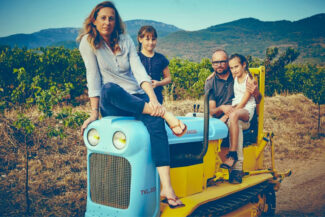
The Fillons, Le Clos du Serres
The domain is organically certified and the Fillon’s philosophy is built around the idea that a wine’s quality has its roots in the vine, but terroir gives nothing without being worked. To this effect, each of their parcels are cultivated with individual attention: “In winter, we leave the grass between the rows of vines to avoid erosion during the heavy autumn rain and enhance the soil’s life,” says Sébastien. “We start ploughing with the first warm days getting rid of the grass naturally thus ensuring it doesn’t challenge the vine’s access to water. During the winter we treat with organic material; grape-based compost and manure from animals bred on the Larzac plateau.”
Work in the cellar is equally meticulous, according to Fillon: “We use ‘tronconique’ (conical) concrete vats and other small ones made of glass fiber with floating ‘hats.’ Thanks to the shape of the concrete vats, the ‘marc’ hat sinks into the juices, resulting in soft and natural extraction, so that fermentation based on the grapes’ natural yeast is very steady. The glass fiber vats mean we can work with very small volumes, maximizing our ability to vinify parcel by parcel. Proof is that our winery boasts 17 vats for 15 land parcels.”
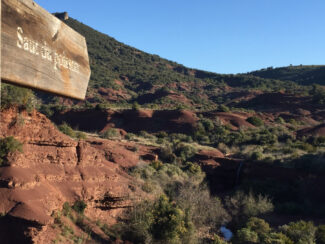
Iron-rich, red Ruffe soil in Le Clos du Serres
Vintage 2022
Despite spring frosts and summer hail, clear risks during any growing season in the Languedoc, 2022 wound up being spectacular—the most acclaimed vintage in the region since 2011.
Extreme weather patterns have become commonplace in the Languedoc in recent years. After the June hailstorm, the temperature heated up while sunshine and wind reduced the risk of disease. Some grape varieties made such rapid progress that for the first time in history, Languedoc winegrowers began picking grapes in July. Most harvested between August 11 and October 19, with the early-ripening whites coming in ahead of schedule. It rained in mid-August and at the beginning of September, which polished the tannins and the polyphenols. The weather from then on was idyllic and the reds reached peak ripeness with no concerns at all.
Marie Corbel, head of the Interprofessional Council of Languedoc’s technical department, called the vintage ‘bright, vibrant and exhilarating.’ “The reason for this is that the levels of ripeness promoted quick, easy extractions for the reds, culminating in an explosion of fruits and silky tannins on the palate. Aromatics dominate in the whites, with great density. The rosés follow the same tendency, reaching unusually high levels of expressiveness,” she said.
 TWO BOTTLES
•1• 2022 Clos du Serres ‘Saint Jean’, Terrasses du Larzac ($24)
Equal parts Cinsault, Grenache, Syrah, Carignan and Mourvèdre from various plots at elevations of around 1000 feet and aged for eight months in concrete vats. There is, of course, no oak influence—only raspberry and cranberry with spicy notes that pick up orange peel and clove on the long, luscious finish. 835 cases produced.
 TWO BOTTLES
•2• 2022 Clos du Serres ‘Serres’, 2022 Languedoc ($19)
Overall, Sébastien was delighted with the 2022 vintage. He says, “The weather was perfect up to 15th June and then the heat arrived, which was very worrying. However, rain between 15th and 20th August saved them. The Syrah was ripe earlier and benefitted less from the rain, but everything else ripened well and the other reds were picked about a month after the Syrah.”
60% Grenache in addition to equal parts Cinsault and Carignan, the wine shows red fruit jelly and garrigue, especially sage. Total production is 833 cases.
 TWO BOTTLES
•3• 2020 Clos du Serres ‘Les Maros’, Terrasses du Larzac ($26)
Soil type is the chief difference in Clos du Serres’ fifteen identified parcels of vines; each has an individual make-up that includes schist, sandstone, pebble, shingle and red ruffes. ‘Les Maros is the domain’s coolest vineyard and is planted to Cinsault, Carignan and Mourvèdre with the former making up 60% of the blend of this vintage. Each variety is vinified separately and then aged for 12 months in concrete tanks which enables the fresh and complex fruit character to shine through. 500 cases produced.
 ONE BOTTLE
•6• 2018 Le Clos du Serres ‘Le Palas’, Terrasses du Larzac ($34)
From a west-facing lieu-dit adjacent to the village of Saint-Jean de la Blaquière, this organically-certified blend of 38% Syrah, 32% Carignan, 30% Grenache is aged in concrete and shows blackberry and plum preserves with citrus notes accompanying licorice, black pepper and graphite. Total production, 250 cases.
- - -
Posted on 2025.03.14 in France, Wine-Aid Packages, Languedoc-Roussillon | Read more...
The Evidence Of Things Terroir Champagne Hubert Noiret’s Coteaux du Petit-Morin Single Vineyards In Pursuit of Authentic Expression of Place of Origin
Wine is not about bubblegum halter tops or chunky flip-flops, but as an industry, it is as susceptible to fashion trends as any other. At Elie’s, we roll our eyes at some and embrace others with open arms and eager palates. Since the mid-1990s, as a whole, French winemakers (many fresh out of enology school) have made a concerted effort to employ organic methods in their vineyards, both as homage to the soil that produces grapes and as a planet-saving necessity.
In Champagne, global warming has shifted the hierarchy of terroirs, allowing regions once considered marginal to seize a little limelight. Discovering these tiny pockets (Villevenard in the Coteaux du Petit-Morin, for example, has around three hundred acres under vine) as they begin to rise in the public’s estimation is one of the joys of being a merchant; getting to know the winemakers themselves is one of the privileges of being a wine lover.
A New Generation
If we are on the brink of another Golden Age of Champagne, the 70’s and ‘80’s might be viewed as the Dark Ages. The advent of industrialized farming and its overwrought dependence on synthetic fertilizers, pesticides and fungal treatment, stripped away a portion of the character that many wineries had spent centuries nurturing. The organic farming and an adherence to biodynamic principles that feature prominently in the practices of countless modern operations had its beginnings in the ‘back to the future’ outlook of this generation of winemakers, who took a rearview mirror to the methods of their forefathers and saw the folly of treating wine as a process rather than a reflection of place.
Champagne Hubert Noiret is this week’s ‘Exhibit A.’
Champagne’s Search for Authenticity: A Wine Like Any Other
Over the years we have emphasized that Champagne—however vaunted it is as a symbol, a ritual and an icon—is first and foremost, a wine. At a wedding, an anniversary or at two minutes passed midnight on New Year’s Day, you may lose track of this simple fact, but the men and women who work the cellars of Champagne do not. At its best, whether blended or not, Champagne expresses the site(s) upon which it is grown, and this is a wine fundamental that does not change because process adds carbonation. And it’s a fact that long before that carbonation is added, the still wine (vin clair), is evaluated at face value and many major houses isolate individual vineyards with specific characteristics at this point, the better to create a more complex and predictable final product.
Still Champagne, a subject about which we wrote recently, is an entirely different category, and was born in part from a warming climate which allows traditional cool weather Chardonnay and Pinot Noir (which serves sparkling Champagne best when slightly under-ripe and still electric with acidity) to ripen more completely on the vine. Such grapes make infinitely better non-carbonated wine, and are, in fact, the talk of the town in both Épernay and Reims.

Digging Deeper: Site-Specific Champagne
For a wine region that is a day-trip away from Burgundy, Champagne has showed a historical reluctance to focus on lieux-dits—vineyard-specific wines. In fact, Champagnes named for a particular village has been a rarity; Eugène Salon did it in 1905, and however legendary his Côte des Blancs has become, it was decades before anybody else did it, at least for public consumption.
But things are changing in Champagne—climate and zeitgeist, and the torch is being passed to a younger generation. In the 1990s, interest in experimentation took hold, and part of that innovative spirit involved the recognition that sites have personality—something that Champagne houses have long been obsessed with displaying. Blends can achieve a generic identity recognizable from vintage to vintage, and it is unlikely that single-cru models will replace this hegemonic tradition. But a new crop of chef de cave in Champagne are also increasingly aware that consumers have become interested in a more focused reading of terroir and that by attempting to express their vineyards with individuality rather than synergy when blended with others, an entirely new breed of wine-lovers will be engaged—those who recognize that any wine’s primary identity is drawn from the vine, not the label.
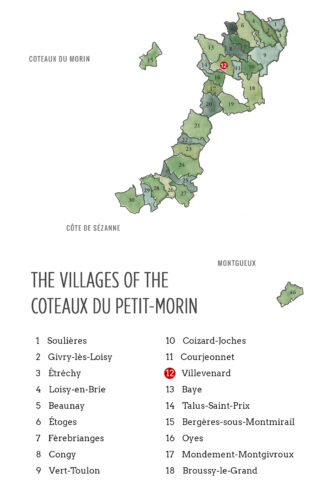
The Landscape of Coteaux du Petit-Morin
It’s all quiet on the western front—primarily because the Champagne-producing villages of Petit-Morin are located exclusively on the eastern front. This has traditionally been négociant country, where growers sell their grapes rather than produce wine. Although Coteaux du Petit-Morin is only fifteen miles from Épernay, it remains rural and true to its roots, where the vineyards are surrounded by open field and forested hillsides.
The region is frequently lumped in with the Côte de Sézanne or labeled ‘Val de Petit-Morin’ named after the river that has its source in the Val-des-Marais commune, part of the Côte des Blancs. But Olivier Collin of Ulysse Collin (the area’s largest producer) prefers to call his home-base Coteaux du Petit-Morin after the hillsides on which the vines grow; he defines the territory in specific terms: “Côte de Sézanne begins at the villages of Broyes and Allemant, south of Villevenard. We run from Soulières in the north to Villevenard in the south, up to Vert-Toulon in the east. As you can see, we are quite unique from either Sézanne or Côte des Blancs”
He adds: “Meunier is more common than Chardonnay in the Val du Petit-Morin taken as a whole, while Chardonnay completely dominates the Côte des Blancs. The finest terroirs in Petit-Morin are peppered with black silex—a type of flint—that offers our Champagnes a smoky tone of minerality that is unique.”
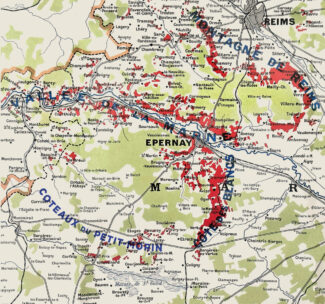
Cyril Jeaunaux of Jeaunaux-Robin reinforces this statement: “We are often grouped with Côte des Blancs, but our aspect and terroir are completely different. Our soils contain much more clay and considerably less chalk; we have black silex and, whereas Côte des Blancs is nearly all Chardonnay, we excel at Meunier,” adding, “For me, it is a fairly recent phenomenon to be talking about individual plots and vineyard-specific Champagnes—maybe only for the last ten years. This is the same length of time since we began referring to Petit-Morin as a unique and self-contained regional appellation. As for terroir, my parents worked under the blending philosophy of the big Champagne houses, meaning that our wines were a balanced mix from many villages and multiple vineyards. For me, the ‘terroir revolution’—sometimes called the ‘Burgundian turnover’—has happened in my own time.”
Silex is a word that arises in nearly every conversation about Coteaux du Petit-Morin’s distinctive soil, and Aurélien Clément of Clément & Fils mentions that his own local silex deposits near Congy—mostly grey rather than black—were used for centuries and centuries before vineyards were planted. “Perhaps as long as seven thousand years ago, early man used it in tool-making,” he says.
Like Cyril Jeaunaux’s family, Clément adds, “My uncle and great-grandfather were more concerned with blends rather than the expression of ‘one blood’—meaning a single vineyard or commune. When our regional identity was legalized for use on our labels, we began to take a more focused look at the specific ground beneath our feet, seeing it, perhaps, as a chance of a new way of expressing our Champagnes.”
Marie Laurène Lefébure (Champagne Lefébure) is also a fan of Petit-Morin for the complexity of the soils, which she favors over the homogenous aspect of the Côte des Blancs; she mentions specifically the clays near her winery in Baye in the western part of the appellation and in particular, the ferrous content of her terroirs: “For me, this is more important than silex. Iron imparts a rich and sensual aroma that almost reminds one of blood. We love Meunier, of course, but our orientation allows us plots of Chardonnay, which here shows an exotic side—it is very unique, very baroque Chardonnay.”
Along with her husband Sébastien, Lefébure generally avoids the ‘fast-motion zeitgeist’ in modern Champagne, but is equally a proponent of natural approach to winemaking. In fact, the couple was assisted by the organic champagne pioneering family, the Horiots in building her small, low production winery.
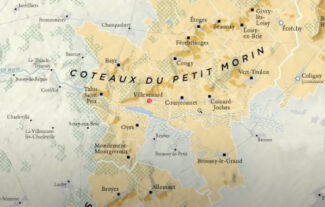
About The Flinty Soils of the Village of Villevenard
Flint is a word with plenty of literary oomph—references range from Shakespeare (“O Cassius, you are yoked with a lamb that carries anger as the flint bears fire …”) to Dickens (“Scrooge was hard and sharp as flint, from which no steel had ever struck out generous fire …”).
It’s also a word used in wine descriptors to signify a wine with a minerality that approaches smokiness.
Whether or not the mineral itself is responsible for all the ‘flint’ tasting notes is debatable, since flint is chemically inert and virtually insoluble, and thus, odorless and tasteless. But soils that contain measurable quantities of flint still produce iconic wines. This is true especially in Coteaux du Petit-Morin, where Silex Noir, a rare black flint, is found. It is a soil component most associated with a small corner of Vouvray, but which reappears in the terroir of Villevenard.
But for a vineyard? Besides making hard tools for prehistoric man, it’s a great marketing tool for modern wineries. It’s true that flint pebbles provide good drainage, and being inert, restrict nutrient availability, making for meager soils—the kind that tend to deliver finer grapes. At the same time, in overly dry areas, flint pebbles can promote the localized formation of dew, which leads to increased microbial activity and more organic matter beneath the stones. All this promotes a good soil structure. But does flint influence the taste of the wine itself? Alas, vine roots are demonstrably incapable of absorbing and using a solid, inert compound such as silica, which is tasteless anyway.
Wine is poetry in a glass, however, so we’ll raise one to the power of literary allusions.
Champagne Hubert Noiret
In Pursuit Of Authentic Expression Of Place Of Origin
The transition from wine growing to wine marketing, from selling your grapes to producers to becoming the producer yourself, often takes many generations. Such was the case with Hubert Noiret, a Champagne house in Villevenard commune of Petit-Morin formed in 2003 by Nathalie and Jean-Michel Noiret, whose families have been tending vineyards since the 18th century. Indeed, it is a background that has served the couple well.
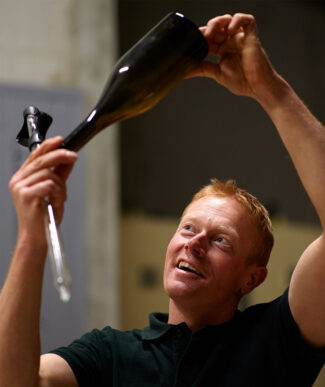
Jean-Michel Noiret

Nathalie Hubert-Noiret
Says Nathalie: “We find that the ancestral techniques of our grandparents who used natural materials have been forgotten and replaced by chemistry. Used on a large scale, it has unbalanced the human environment and plant diversity in the name of comfort. Our life journey has made us understand that chemistry has limited human and plant life and created a phenomenon of resistance, which is why since 2011, we gradually rebalance the natural forces of life on all our plots via biodynamics. We reuse materials of natural origin at very low doses: copper against mildew and sulfur against powdery mildew—both essential for the protection of the vineyard and the production of great Champagne.”
Jean-Michel adds, “From a very young age, we followed our parents closely, but to try to understand what nature wants to give us, I would need at least 3 lifetimes. Ours is a profession of patience, where every detail counts to achieve excellence. We are blessed to be in a region of Champagne rich in a Neolithic past with a very diverse and varied geology. We move from the peat of the Marais de St. Gond to chalk, from marls to white and green clays, from sandy loams to clay loams; a geological palette of incredible richness, lending a character and a style to our Champagnes.”
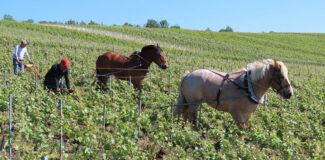
Champagne Hubert Noiret Vineyards in Villevenard, a village in Coteaux du Petit-Morin
2021 Vintage in Coteaux du Petit-Morin
2021 was a pretty brutal growing season throughout Champagne’s Côte des Blancs and Coteaux du Petit-Morin region, but a few well-positioned producers were able to snatch victory from the jaws of de weather. March was mild, but April temperatures took a nose-dive with heavy bouts of frost; growers who only lost 30% of their crop were considered lucky. Humidity followed and the bruised vines began to rot. A much-anticipated May warm-up did not arrive, but instead brought heavy rains. By July, 60% of all vineyards were affected.
Most of the grapes went into blends, but the best maintained vineyards have produced vintage wines with fresh elegance and acidity and may even have some capacity to age.
 Champagne Hubert Noiret, Harvest 2021 Coteaux du Petit-Morin – Villevenard Lieu-dit ‘Clos Prieur’ Blanc de Blancs Extra-Brut ($68)
100% Chardonnay from hand-picked grapes, traditional pressing, 10 months of aging and vinification in 228-liter and 300-liter oak barrels. The vin clair was bottled July 2022, disgorged in February 2024 and dosed at 4 gram/liter. The wine shows a lusciously creamy nose, notes of butter and ripe nectarine peach with roasting spices through the palate. 2120 bottles made.
2014 Vintage in Coteaux du Petit-Morin
A warm, dry spring got the growing season off to a quick and healthy start; both budburst and flowering were successful, and the absence of any severe frost gave producers cause for optimism. However, all that crashed to a halt as the summer proved to be damp. July and August were cool and wet with only the latter half of August eventually drying out. Although the large volume of rain was enough to make rot a concern, cooling breezes kept it at bay. A benign September brought warm, dry conditions, ripening the grapes and effectively saving the harvest.
 Champagne Hubert Noiret ‘Cuvée des 3 Symboles’, 2014 Coteaux du Petit-Morin – Villevenard Lieu-dit ‘Les Bacons’ Blanc de Blancs Extra-Brut ($68)
From the single-plot ‘Les Bacons’ planted between 1969 and 1984; the site is northeast of Villevenard with a gentle west-facing slope. The soils are clay-rich with some black flint above a subsoil of chalk. Cuvée 3 Symboles is 100% Chardonnay from this site and shows toasty notes above a caressing character. The wine is manual harvested and traditionally pressed, then aged for 10 to 12 months in 300-liter oak barrels on fine lees. The vin clair was bottled July 2015, disgorged in April 2023 and dosed at 5 gram/liter. 1750 bottles made.
2013 Vintage in Coteaux du Petit-Morin
Both the winter and spring were cold and wet, delaying first budburst and then flowering. Young grapes suffered millerandage and coulure due to the cool temperatures, which cut yields. However, the reduced crops tended to ripen more easily during what transpired to be a long, cool growing season. Despite summer temperatures never really heating up, conditions remained fairly consistent, and a warm, sunny September provided just enough warmth to rescue the harvest. Many producers chose to pick later than usual to take advantage of the positive turn in the weather.
 Champagne Hubert Noiret ‘Cuvée des 3 Symboles’, 2013 Coteaux du Petit-Morin – Villevenard Lieu-dit ‘Les Bacons’ Blanc de Blancs Extra-Brut ($68)
100% Chardonnay from 2013 harvest. Unlike the rich, concentrated ripeness of 2012, 2013 Champagnes are almost its exact opposite: elegant, introverted and lithe, revealing themselves slowly and quietly, thriving on finesse rather than power. This Champagne is aged on lees in oak barrels during 10 to 12 months. Dosed at 5gram/liter. From the single-plot ‘Les Bacons’ planted between 1969 and 1984; the site is northeast of Villevenard with a gentle west-facing slope. The soils are clay-rich with some black flint above a subsoil of chalk.
The wine is manually harvested and traditionally pressed, then aged for 10 to 12 months in 300-liter oak barrels on fine lees. The vin clair was bottled July 2014, disgorged in April 2022 and dosed at 5 gram/liter. 1750 bottles made.
Notebook ….
Single Harvest vs. Vintage (Millésime) Champagne
In France, under Appellation d’Origine Contrôlée (AOC) rules, vintage Champagnes must be aged for three years—more than twice the required aging time for NV Champagne. The additional years on the yeast is said to add complexity and texture to the finished wine, and the price commanded by Vintage Champagne may in part be accounted for by the cellar space the wine takes up while aging.
On the other hand, a Champagne maker might prefer to release wine from a single vintage without the aging requirement; the freshness inherent in non-vintage Champagnes is one of its effervescent highlights. In this case, the wine label may announce the year, but the Champagne itself is referred to as ‘Single Harvest’ rather than ‘Vintage’.
Drawing the Boundaries of the Champagne Region
To be Champagne is to be an aristocrat. Your origins may be humble and your feet may be in the dirt; your hands are scarred from pruning and your back aches from moving barrels. But your head is always in the stars.
As such, the struggle to preserve its identity has been at the heart of Champagne’s self-confidence. Although the Champagne controlled designation of origin (AOC) wasn’t recognized until 1936, defense of the designation by its producers goes back much further. Since the first bubble burst in the first glass of sparkling wine in Hautvillers Abbey, producers in Champagne have maintained that their terroirs are unique to the region and any other wine that bears the name is a pretender to their effervescent throne.
Having been defined and delimited by laws passed in 1927, the geography of Champagne is easily explained in a paragraph, but it takes a lifetime to understand it.
Ninety-three miles east of Paris, Champagne’s production zone spreads across 319 villages and encompasses roughly 85,000 acres. 17 of those villages have a legal entitlement to Grand Cru ranking, while 42 may label their bottles ‘Premier Cru.’ Four main growing areas (Montagne de Reims, Vallée de la Marne, the Côte des Blancs and the Côte des Bar) encompass nearly 280,000 individual plots of vines, each measuring a little over one thousand square feet.
The lauded wine writer Peter Liem expands the number of sub-regions from four to seven, dividing the Vallée de la Marne into the Grand Vallée and the Vallée de la Marne; adding the Coteaux Sud d’Épernay and combining the disparate zones between the heart of Champagne and Côte de Bar into a single sub-zone.

Courtesy of Wine Scholar Guild
Lying beyond even Liem’s overview is a permutation of particulars; there are nearly as many micro-terroirs in Champagne as there are vineyard plots. Climate, subsoil and elevation are immutable; the talent, philosophies and techniques of the growers and producers are not. Ideally, every plot is worked according to its individual profile to establish a stamp of origin, creating unique wines that compliment or contrast when final cuvées are created.
Champagne is predominantly made up of relatively flat countryside where cereal grain is the agricultural mainstay. Gently undulating hills are higher and more pronounced in the north, near the Ardennes, and in the south, an area known as the Plateau de Langres, and the most renowned vineyards lie on the chalky hills to the southwest of Reims and around the town of Épernay. Moderately steep terrain creates ideal vineyard sites by combining the superb drainage characteristic of chalky soils with excellent sun exposure, especially on south and east facing slopes.
… Yet another reason why this tiny slice of northern France, a mere 132 square miles, remains both elite and precious.
- - -
Posted on 2025.03.06 in France, Champagne, Wine-Aid Packages | Read more...
Featured Wines
- Notebook: A’Boudt Town
- Saturday Sips Wines
- Saturday Sips Review Club
- The Champagne Society
- Wine-Aid Packages
Wine Regions
Grape Varieties
Aglianico, Albarino, Albarín Tinto, Albillo, Aleatico, Alicante Bouschet, Aligote, Altesse, Arcos, Aubun, Auxerrois, Barbarossa, Beaune, Biancu Gentile, Bonarda, bourboulenc, Cabernet Sauvignon, Caladoc, Carignan, Chablis, Chenin Blanc, Cinsault, Clairette, Cortese, Corvinone, Cot, Counoise, Dolcetto, Fiano, folle Blanche, Frappato, Fumin, Gamay, Garganega, Garnacha Tintorera, Godello, Graciano, Grenache, Grenache Blanc, Grolleau, Groppello, Jacquère, Lladoner Pelut, Maconnais, Malbec, Malvasia, Malvasia Nera, manseng, Marcelan, Marselan, Marzemino, Melon de Bourgogne, Mencía, Merlot, Mondeuse, Montepulciano, Montònega, Mourv, Mourvèdre, Muscadelle, Muscat, Natural, Nebbiolo, Nero d'Avola, Niellucciu, Palomino, Patrimonio, Pecorino, Pedro Ximénez, Persan, Petit Verdot, Pineau d'Aunis, Pinot Auxerrois, Pouilly Fuisse, Pouilly Loche, Poulsard, Riesling, Rondinella, Rose, Rousanne, Roussanne, Sagrantino, Sangiovese, Sauvignon, Sciacarellu, Serine, Souson, Sylvaner, Syrah, Tannat, Tempranillo, Teroldego, Timorasso, Treixadura, trepat, Trousseau, Ugni Blanc, Viognier, Viura, Xarel-loWines & Events by Date
- September 2025
- August 2025
- July 2025
- June 2025
- May 2025
- April 2025
- March 2025
- February 2025
- January 2025
- December 2024
- November 2024
- October 2024
- September 2024
- August 2024
- July 2024
- June 2024
- May 2024
- April 2024
- March 2024
- February 2024
- January 2024
- December 2023
- November 2023
- October 2023
- September 2023
- August 2023
- July 2023
- June 2023
- May 2023
- April 2023
- March 2023
- February 2023
- January 2023
- December 2022
- November 2022
- October 2022
- September 2022
- August 2022
- July 2022
- June 2022
- May 2022
- April 2022
- March 2022
- February 2022
- January 2022
- December 2021
- November 2021
- October 2021
- September 2021
- August 2021
- July 2021
- June 2021
- May 2021
- April 2021
- March 2021
- February 2021
- January 2021
- December 2020
- November 2020
- October 2020
- September 2020
- August 2020
- July 2020
- June 2020
- May 2020
- April 2020
- March 2020
- February 2020
- January 2020
- December 2019
- November 2019
- October 2019
- September 2019
- August 2019
- July 2019
- June 2019
- May 2019
- April 2019
- March 2019
- February 2019
- January 2019
- December 2018
- November 2018
- October 2018
- September 2018
- August 2018
- July 2018
- June 2018
- May 2018
- April 2018
- March 2018
- February 2018
- January 2018
- December 2017
- November 2017
- October 2017
- September 2017
- August 2017
- July 2017
- June 2017
- May 2017
- April 2017
- March 2017
- February 2017
- January 2017
- December 2016
- November 2016
- October 2016
- September 2016
- August 2016
- July 2016
- June 2016
- May 2016
- April 2016
- March 2016
- February 2016
- January 2016
- December 2015
- November 2015
- October 2015
- September 2015
- August 2015
- July 2015
- June 2015
- May 2015
- April 2015
- March 2015
- February 2015
- January 2015
- December 2014
- November 2014
- October 2014
- September 2014
- August 2014
- July 2014
- June 2014
- April 2014
- March 2014
- February 2014
- January 2014
- December 2013
- November 2013
- October 2013
- September 2013
- August 2013
- July 2013
- June 2013
- May 2013
- April 2013
- March 2013
- February 2013
- January 2013
- December 2012
- November 2012
- October 2012