Bloomsday Commemoration (June 16) – Jurassic Odyssey: Chablis Elevates Terroir to Its Most Precise Expression. Exploring Grand Crus and Premier Crus Over Three Vintages, in Three Sampling Packages.
2024 marks the hundred-and-second anniversary of the release of James Joyce’s modernist masterpiece ‘Ulysses,’ and a few venerable souls who purchased a copy on the day it came out are still trying to wade through it. Not everyone agrees on the genius of the work—a florid, stream-of-consciousness ramble through Ireland’s capital city over the course of a single day (June 16, 1904) featuring Leopold Bloom, his wife Molly and would-be-writer Stephen Daedalus—but everyone can appreciate the remarkable image Joyce painted of Dublin at the turn of the century; the people, the streets, the offices, the brothels and above all, Davy Byrne’s pub:
“Nice wine it is. Taste it better because I’m not thirsty …. Mild fire of wine kindled his veins. I wanted that badly …. Glowing wine on his palate lingered swallowed. Crushing in the winepress grapes of Burgundy. Sun’s heat it is.”
June 16 is known as ‘Bloomsday’ and is commemorated by Joyce fans across the globe. At Elie’s, we prefer to take our own literary license and use the occasion to celebrate Bloom’s passion, ‘the winepress grapes of Burgundy’ with our own amble through Burgundy’s unparalleled countryside.

Chablis: Burgundy’s Golden Gate
James Joyce appreciated France (he studied at the Sainte-Geneviève Library) and France appreciated him back—‘Ulysses’ was first published at Sylvia Beach’s Paris bookstore, Shakespeare and Company and printed in Dijon by Maurice Darantieres.
A hundred miles below the 6th Arrondissement (the location of the bookstore) and about the same north of Dijon, the valleys and wooded hilltops of Chablis begin, with vineyards festooning the slopes that run alongside the pretty River Serein—aptly translated to ‘the serene river.’ Spanning approximately 10,000 acres and encompassing 27 communes, there are 47 vineyards classified as Premier Crus and seven Grand Crus.
In terms of terroir fanaticism, Chablis is first among equals in France. The key divide in quality levels lies between vineyards planted on Kimmeridgian soils and those with Portlandian soils. Kimmeridgian is more highly regarded; it contains greater levels of mineral-rich clay, as well as the essential marine fossils which are responsible for its significant lime content. Kimmeridgian soils are the source of the trademark ‘goût de pierre à fusil’, or gunflint, which can be preserved in the best wines for decades.
The wines of Chablis, at whatever level (Chablis Grand Cru, Chablis Premier Cru, Chablis and Petit Chablis) are Chardonnay and nothing but; all but the most heralded are vinified and aged without oak, giving them the greenish gold hue that exemplifies the appellation as well as the classic minerality of the nose.
Elaborating Chardonnay: Back to The Origins
All Chablis is Chardonnay, but not all Chardonnay is Chablis. That deceptively simple fact belies the multiple faces that this variety adopts in the relatively small confines of Burgundy—incarnations based equally on terroir and tradition. The Côte Chalonnaise and Mâconnais tend to produce balanced, approachable, subtly-oaked Chardonnays that Americans may know best from the 1990s craze of wines from the village of Pouilly-Fuissé.
The Côte d’Or, on the other hand, turbo-charges the concept by producing oaky, complex and long-lived wine. Only the most intensely-flavored fruit can stand up to this style of oak-barrel maturation, but the resulting wines are at the pinnacle of the world’s great whites.
The third style features in this week’s packages, where a cooler climate and northerly latitude barely allows the grapes to ripen, thus ensuring that Chablis makes a leaner style with higher acidity that does not lend itself to intensive oak-aging. As such, these wines are pristine, rarely seeing new oak at all, and only occasionally seeing milder, seasoned barrels to soften some of the electricity.
Chardonnay in Chablis: Acid Trip
Acidity in wine must be handled with the same circumspection as in the laboratory—make a wrong move and you end up with a wincing sting; in either case, it’s a fail. Balance is the key in all things wine, but clearly, wines from more northerly regions face a bigger struggle in balancing ripeness with sharpness, and Chardonnay is the poster-child varietal for ‘If life hands you lemons, make Chablis.’
The line between refreshing tension and acid-reflux may be fine, and one reason that aging Chablis has always been a requirement in Cru versions is that time softens acids and allows the briny, saline-driven savoriness to blossom. Nearly all Chablis undergoes a secondary malolactic fermentation prior to bottling, a technique that transforms malic acid into softer lactic acid and provides a more stable environment. Most Premier and Grand Cru Chablis also see time in neutral oak to further the mellowing process before facing the catwalk of consumption.
Jurassic Odyssey: What Lies Beneath
“The vineyards of Chablis have a single religion,” writes Jacques Fanet in his book ‘Les Terroirs du Vin’: “Kimmeridgian.”

Kimmeridgian limestone marl – courtesy of The Source

Soil in Chablis; big chunks of Portlandian limestone on top with soft Kimmeridian limestone marls underneath.
In the middle of the 18th century, a French geologist working in the south of England identified and named two distinct types of limestone from the Jurassic Era; Portlandian, which he found in Dorset with a layer of dark marl just below it, subsequently named after the nearby village of Kimmeridge. These strata also run across the Channel and through the north of France, where they become a part of the ‘Paris Basin’ and play an indispensable role in creating the soils. A slow geological tilting of this basin allowed the Seine, Aube, Yonne, and Loire rivers to cut through the rising ridges and form an archipelago of wine areas in Champagne, the Loire Valley and ultimately, Burgundy.

Chablis remains the biggest island in the Kimmeridgian chain and it is home to some of the finest Chardonnay terroirs found on earth. The defined region ‘Chablis’ was recognized in 1923 by the Wine Tribunals as requiring a sub-soil of Kimmeridgian limestone while wine grown anywhere else in Chablis would be classed Petit Chablis. The Grand Cru mid-slope in Chablis maps almost perfectly to the Kimmeridgian outcrop, with the soft, carbonate-rich mud rock capped by Portlandian Barrios limestone and supported by Calcares à Astarte, yet another type of limestone.
And now for the interesting part: As vital as Kimmeridgian soil is to the top Cru classifications in Chablis, it is not the primary consideration. Geologic conditions identical to those experienced by the Grand Cru slope extend both northeast and southwest, but the vineyards on those sites are classed as Premier Crus. As a matter of fact, the reference to Kimmeridgian limestone in the definition of Chablis was discontinued in 1976, a tacit admission that slope and orientation are of even greater importance to wine quality.

Rive-Droite vs. Rive-Gauche Premier Crus: Six-Bottle Package Sampler ($339)
When wine people become involved in right bank/left bank imbroglios, they’re usually arguing Bordeaux. Not today, where the banks are along a different river and within a different appellation and most assuredly showcase a different style: Chablis.
The River Serein runs through the Chablis valley, bisecting a series of Crus and Climats. As a quick refresher course, a Burgundian climat is a specific area that, due to superior physical and weather patterns, has been identified and named for producing wine with unique organoleptic qualities—appearance, aromas, taste and mouthfeel. ‘Climat’ is often used interchangeably with ‘lieu-dit,’ so for the record, here is the difference: A lieu-dit is a plot of land whose name refers to something precise in either historical or topographical terms; it is purely geographical and corresponds to a clearly defined area. A Climat can refer to a lieu-dit, to just a part of a lieu-dit, or even several lieux-dits grouped together. It is a statement of quality first, geography second.
Chablis, split down the spine by the Serein, contains 47 Climats that can be mentioned on the wine label; 40 of them produce Chablis Premier Cru and the remaining 7 make Chablis Grand Cru. The Chablis Grand Cru Climats are all found on the right bank of the River Serein, while Chablis Premier Cru Climats are found on both sides of the river, with 24 on the left bank and 16 on the right.
Decide for yourself in this week’s six-bottle package which of Louis Michel’s interpretations you prefer; we’ll offer a profile of each wine individually, of course, but as a general rule, wines from the left bank are more mineral and fresh while wines from the right bank are rounder and opulent.
The 2022 Vintage: Superb Harvest with Outstanding Lasting Potential
The worst reviews of Chablis 2022 call it ‘very good’, and from there, depending on producer, the sky is the limit. On top of being the sunniest summer on record, the preceding winter was mild and dry, with under five inches of precipitation over four months. Budbreak started at the end of March, and perhaps 30% were lost by a subsequent frost. But a second generation of buds proved productive, leading to good yields. June, July and August were hot and generally dry, though with enough rain to stave off drought. Maturity was early and quick, and harvest began toward the end of August and lasted into the second week of September.
Louis Michel & Fils
“Chablis des Amateurs”
Folks who say ‘yes’ to the magic of Chablis will appreciate the things to which winemakers Jean-Loup Michel and his partner/nephew Guillaume Gicqueau-Michel say ‘no’: Oak, bâtonnage and added yeast. Since 1970, fermentation has taken place entirely in stainless steel to preserve the essence of the Chardonnay grape—Michel & Fils is perhaps the best-known proponent of entirely oak-free wines, even in his three Grand Cru offerings. Bâtonnage—the stirring of the lees to make the wine fatter and richer—is atypical in Chablis, and at Michel & Fils, unheard of.

Guillaume Gicqueau-Michel
The Michel family has been a presence in Chablis since 1850. Situated in the heart of the village, the estate covers 60 acres that spread across over the very first slopes that were discovered by Cistercian monks in the 11th century and include three Grand Crus (Grenouilles, Les Clos, and Vaudésir), seven Premier Crus (Montmain, Forêts, Butteaux, Butteaux “Vieilles Vignes”, Vaillons, Séchets, Fourchaume and Montée de Tonnèrre).
The domain also produces village-level Chablis from twenty named communes and a Petit Chablis; offering wines from all four sub-appellations make Louis Michel a rarity among local producers.
Rive Droite Premier Crus
Not only is longevity is a hallmark of palate sensation in Chablis: more than half of the Climats entitled to wear the ‘Premier Cru’ label had their present-day names by 1429. Chablis Premier Cru represents about 14% of Chablis production, with sites scattered on either side of the Serein River and covering around 2000 acres. As in Bordeaux, where the location of the vineyard compared to the Dordogne and the Garonne determines the style and quality of the wine, the case is similar in Chablis. Again, as in Bordeaux, this is the result of soil, topography and exposure to the sun: On the right bank, close to the village, many of the well-known Premiers Crus share similar geology, exposition and characteristics with the Grand Crus.
Marc-Emmanuel Cyrot of Domaine Millet describes wine from the right bank this way: “The right bank provides complex, well-balanced wines, with a maximum of minerality and vivacity. These vines face south or southwest, getting warmer afternoon sun, making more opulent, fruit-driven wines, that can be steely and powerful.”
 •1• Louis Michel & Fils, 2022 Chablis Premier Cru Vaulorent ($60)
The Fourchaume vineyard, massive in both size and reputation, extends for nearly two miles … with the exception of one enclave which is found in the Grand Cru valley. Vaulorent comes from this enclave. The wine is fermented on native yeast in stainless steel tanks over at least 12 months with as little handling as possible, then bottled with slight fining.
The wine shows an arresting, gunflint-scented bouquet with focus and delineation that emphasizes shellfish, mineral reduction and floral, white-fleshed fruit flavors.
 •2• Louis Michel & Fils, 2022 Chablis Premier Cru Montée de Tonnerre ($60)
Set slightly back from the Grand Crus vineyards, Montée de Tonnèrre abuts Blanchot, where its moderate slopes, exposed to the west, welcome the sun in the afternoon. The grapes are protected from the east winds and ripen without much effort while the shallow soil, underlain with Kimmeridgean marly limestone, reveals veins of blue clay to gives the wines both minerality and energy.
The wine is intense and powerful, with nutty, honeyed accents, and in this outstanding vintage from an outstanding producer, it is every bit as good as many a Grand Cru.
Rive Gauche Premier Crus
There’s no genuine ‘left and right,’ of course: The so-called lefties lie on the Serein’s west side, where vineyards tend to face southeast and get morning sunlight. This results in lighter, more restrained wines with floral and green apple notes.
 •3• Louis Michel & Fils, 2022 Chablis Premier Cru Vaillons ($54)
Vaillons is one of the largest Premier Cru vineyards in Chablis, sitting southwest of the town itself. As in all left bank climats, it gets an abundance of early sunlight to make fresh, slightly floral wines with intense minerality. The Climats Séchets and Les Lys can use Vaillons on their labels but often opt for their own names.
The lieux-dits of Chatains, Roncières, Mélinots—tiny parcels in the Valvan valley—are blended during vinification to produce aromas of toasted hazelnuts mingle with sweet white peach, soft spice notes and mild tobacco.
•4• 2022 Louis Michel & Fils Chablis, 2022 Premier Cru Montmains ($51)
Montmains lies southeast of Vaillons, separated only by a small valley. It has particularly stony soils, making a lighter, leaner style of wine. Butteaux and Les Forêts lie within Montmains and are often seen on labels. Louis Michel’s four Montmain vineyards extend along a clay slope known for being sensitive to spring frosts, requiring extra care in the field.
The wine shows ripe, candied flavors with notes of saline behind spicy floral aromas, toasted almonds, candied lemon and apple and a lively, chalky finish.
 •5• Louis Michel & Fils, 2022 Chablis Premier Cru Forêts ($60)
Forêts is one of the three Climats included under the ‘flag-bearing’ Montmains, often overlooked. Typical of the left bank, Forêts’ south and east exposure provides exceptional sunlight, and the grapes can take all the time they need to ripen. Rather flat at the bottom, Forêts turns into a steep slope towards the top of the hill. Like many climats of Chablis, Forêts has a marly Kimmeridgian subsoil.
The wine displays classic gunflint along with earthier elements of fern and forest bracken mixed with ripe apricot, cocoa and pepper.
 •6• Louis Michel & Fils, 2022 Chablis Premier Cru Butteaux ($54)
Proudly perched on a hilltop (or ‘butte’—hence, the name), Butteaux is a high-altitude climat that overlooks its neighbor Forêts. Butteaux south-facing slopes where too ventilation provides the grapes with the perfect terroir for easy ripening. In the subsoil, the Kimmeridgian marls are quite shallow and characterize in places by large blocks, while on the surface, white and blue clay with large stones facilitate drainage.
The wine originates in four parcels spread over the Butteaux slopes, the most distant acres from the Louis Michel winery. It shows caramelized baked-apple aromas with toasted nuts, wet stone made more complex by the earthy spice of forest undergrowth.
Right-Bank vs. Left-Bank Premier Crus Sampler: Two-Bottle Package ($145)
This is a winner-take-all package, two bottles, one each of right bank vs. left bank, both vying for palate supremacy.
The 2019 Vintage: Concentration and Complexity
A relatively mild winter, with few prolonged cold spells, got a bit antsy in the early spring with a couple of serious frosts, which cut into yields quite drastically. By the end of June, the temperatures reversed themselves in intensity and a long heat wave moved in. July was cooler, with August heating up again; overall the balance led to grapes in which acids concentrated along with sugars at the end of the season. The low-yielding 2019 vintage Chablis in Chablis produced wines that are simultaneously atypically concentrated but very incisive and structured, although aromatically, quite classically Chablisienne.
Domaine Billaud-Simon
Credit Napoléon’s loss at Waterloo for the establishment of Domaine Billaud-Simon; Charles Louis Noël Billaud returned home from the war to plant vines on the family holdings in Chablis. A century later, the estate expanded with the marriage of his descendent Jean Billaud to Renée Simon.

Winemaker Olivier Bailly, Domaine Billaud-Simon
Owned by Erwan Faiveley since 2014, the 42-acre site produces wine from four Grand Cru vineyards, including single-acre plots in Les Clos and Les Preuses. The Domaine also owns four Premier Cru vineyards, including Montée de Tonnèrre, Mont-de-Milieu, Fourchaume and Vaillons.
 1 Domaine Billaud-Simon, 2019 Chablis Premier Cru Montée de Tonnerre ($81)
Montée de Tonnerre is a hundred acre umbrella vineyard sitting on a southwestern spur, with Blanchot and the Grand Cru sites just over the Bréchain valley to the north, and Mont de Milieu on the next hillside south. Billaud-Simon has plots within the three sectors of Montée de Tonnerre with the oldest plots in the Pied d’Aloup climat which are nearly 90 years old. Olivier Bailly normally only uses tank for this climat but this year has 6% in barrel.
The wine is mineral and intense, with nutty, honeyed characters beginning to emerge with age.
 2 Domaine Billaud-Simon, 2019 Chablis Premier Cru Les Vaillons ($64)
The 318 acre Vaillons vineyard is made up of eight, smaller climats, all Premier Crus in their own right, but also able to be blended together to produce, or just simply labeled Vaillons. Billaud-Simon’s Vaillons is a blend of six of them.
The wine shows electrifying acidity that has begun to mature with the sweet peach and green apple notes.
Left-Bank Premier Crus: Six-Bottle Sampler Package ($399)
This package focuses on the left bank alone (with one exception, L’Homme Mort), with all the unique site-specific glories contained within.
The 2020 Vintage: An Early Yet Classic Vintage
In 2020, the problem for Chablis was not reining in grape acid, but retaining it. Like much of Western Europe, Chablis experienced the warmest 12 months on record, warmer even than 2003. This meant an early start to the 2020 growing season and, while there were outbreaks of frost, the damage remained minor, particularly when compared to 2021.
According to Domaine Long-Depaquit’s Matthieu Mangenot, “2020 was a very easy vintage to manage. With a 40% reduction in rainfall and over 300 hours more sunshine than average, there were next to no disease issues in the vineyard. The dry weather even retarded weed outbreaks and this meant little to no spraying was required.”
One of the surprises that has emerged from persistent summer heatwaves brought about by a changing climate is a somewhat unique ability for Chardonnay to adapt without losing its sense of place. 2020 is a case in point, according to Mangenot: “Despite the heat and dryness, the alcohol levels are normal, the acidity levels are exceptional and the overall balance on the palate means the wines are representative of an excellent vintage for the region.”
Domaine Laroche
As one of Chablis’ most respected holders of Grand Cru vineyard land, Domaine Laroche is in many ways synonymous with the appellation. Shored up by a thousand years of history, the first Laroche to own land was Jean Victor who bought his first parcels of vines in the village of Maligny, a short distance from the village of Chablis. Passed along from father to son, the Laroche vineyards continued to expand gradually and by the mid-1960s totaled fifteen acres. In 1967, when Henri Laroche inherited this land, he had witnessed three years in the 1950s and 1960s in which there was no production at all; his vines yielded very little, and it was impossible to make a living from vine-growing alone—local farmers had turned to cereal crops and animal rearing to survive. Winemaking became something of a Chablisean afterthought, and so plagued was the region with spring frosts that Henri managed to save a section using rudimentary techniques such as burning straw and old tires.

Grégory Viennois, Domaine Laroche
With his son Michel joining the team, Laroche expanded into the best Crus in Chablis, for a current total of 222 acres, including 15 acres of Grand Crus, 52 acres of Premier Crus, and 156 acres of Chablis AOP. Only Chardonnay grapes are grown, of course, and the best vineyards are planted primarily on the region’s unique Kimmeridgian soil—a mixture of clay, chalk and fossilized oyster shells, renowned for producing crisp, mineral-driven, precise and elegant wines prized throughout the world.
 •1• Domaine Laroche, 2020 Chablis Premier Cru L’Homme Mort ($82)
L’Homme Mort is one of the most northerly Premier Crus in Chablis, located within the larger Fourchaume Premier Cru (Right Bank) just south of the town of Maligny. Wines made in this oddly-named (The Dead Man), 17-acre Climat share the softer, more rounded characters that are synonymous with Fourchaume while also possessing a distinctive zingy minerality.
The nose shows classic notes of minerals, citrus, brioche and stone fruits with a textured and balanced mouthfeel with saline tinges and bracing acidity.
 •2• Domaine Laroche, 2020 Chablis Premier Cru Les Beauroys ($69)
Les Beauroys lies on the left bank of the Serein, and produces wines that are most often described as ‘charming’. It is among the earliest vineyards in Chablis to ripen and is known for being delightfully accessible in its youth.
The wine shows a delicate nose that combines anise with candied orange peel and leads to a pithy palate driven by citrus and salinity.
 •3• Domaine Laroche, 2020 Chablis Premier Cru Côte de Léchet ($72)
The Côte de Lechet vineyard lies just above the small village of Milly on the western side of the river. A southeasterly aspect gives it exposure to the less intense morning sun, in contrast to the more sunset-facing slopes on the other side of the valley. This encourages slower ripening in an already cool climate, and ensures that the acidity that typifies the region’s wines flourishes.
Elegant and floral with spicy undertones, the wine demonstrates a profound minerality that lingers through to the finish and adds complexity to the gentle acidity.
Domaine Long-Depaquit
Enviable Holdings
At more than 150 acres, Long-Depaquit is one of the largest domains in Chablis, renowned and respected not only for its sprawling terroir but for a commitment to low-intervention, organic farming. In 2014, upon completion of a new winery, the estate has focused on quality improvements centered on earth-friendly approach; in 2019, the property was awarded the highest Level 3 Haute Valeur Environmentale certification.
Beaune-based négociant Albert Bichot has managed Long-Depaquit since 1967, and the current winemaker, Matthieu Mangenot, joined in 2007 after dual training as an agronomist and an oenologist in South Africa, Lebanon, Bordeaux and especially, Mâconnais and Beaujolais. He has spearheaded the domain’s comprehensive approach to authenticity and sustainability.

Matthieu Mangenot, Domaine Long-Depaquit
Long-Depaquit produces around 180,000 bottles of Chablis each year, and like most large estates in the region, the lion’s share is village wine fermented and aged in 100% stainless-steel tanks. Wine from their six Premier Cru sites and six Grand Cru sites wines see a small percentage fermented and aged in barrels between two and five years old; Grand Cru Les Clos typically sees a higher percentage (25 to 35%) of oak.
Their flagship cuvée is Grand Cru La Moutonne, drawn from a 5.8 acre monopole vineyard that straddles two Grand Crus (95% in Vaudésir and 5% in Les Preuses) in a steep amphitheater capable of producing some of the richest, most complex wines in Chablis.
 •4• Domaine Long-Depaquit, 2020 Chablis Premier Cru Les Lys ($64)
Les Lys is a Premier Cru climat within the larger, umbrella Premier Cru vineyard of Vaillons. While contiguous with the latter, Les Lys has a unique aspect, bordering Séchets but facing northeast over the town of Chablis towards the Chablis Grand Cru vineyards; the rest of the Vaillons climats face generally southeast.
A textbook example of how brightly Premier Cru Chablis can shine; grilled pineapple and yellow apple on the nose with a palate of salt-preserved lemon, crushed hazelnut and fruitcake spices.
 •5• Domaine Long-Depaquit, 2020 Chablis Premier Cru Les Vaillons ($55)
Found in a valley to the southwest of Chablis on the western side of the Serein River, a southeasterly face and high-quality Kimmeridgian soils below meld to make this large climat a sought-after location. At 318 acres, the Vaillons vineyard is made up of eight, smaller Climats, all Premier Crus in their own right, one is Les Vaillons.
Tensile and incisive, the wine displays classic aromas of crisp green apple, citrus zest, white flowers and oyster shell with racy acids and loads of depth at the core.
 •6• Domaine Long-Depaquit, 2020 Chablis Premier Cru Les Beugnons ($59)
Les Beugnons is located at the western extremity of the Valvan valley on the left bank of the Serein River, where the favorable exposure is very favorable for creating expressive and charming wines.
The wine shows rich aromatics of pear peel, slight smoke, yeasty lees and candied lemon following through with a juicy palate reminisicent of ripe Mirabelle and a touch of honey.
Keeping Potential: The Grand Crus – Six-Bottle Sampler Package ($724)
In Chablis, the Grand Cru appellation comprises seven climats—Blanchot, Bougros, Les Clos, Grenouilles, Preuses, Valmur and Vaudésir. It is mainly produced in the village of Chablis, but also at Fyé and Poinchy. At elevations between around 300 to 800 feet, and exclusively on the right bank of the Serein, Grand Cru vineyards enjoy the ideal combination of sunshine, exposure and soil, formed in the Upper Jurassic era, 150 million years ago, are composed of limestone and marl with Exogyra virgula, tiny oyster fossils.

The jewel in the crown of Chablis, this is a wine for keeping, for 10 to 15 years, sometimes more. One the nose, the mineral aromas of flint are intense, giving way to linden, nuts, a hint of honey and almond. In an ideal vintage, the balance is perfect between liveliness and body, encapsulating the charm of an inimitable and authentic wine.
 1 Domaine Long-Depaquit, 2020 Chablis Grand Cru Bougros ($108)
Bougros is located at the northwestern edge of the Grand Cru hillside; it covers nearly 39 acres of slop on the Right Bank of the Serein and tends to produce wines that are rounded and less austere in youth than those from the other Grand Cru climats.
Silky and expressive, the wine offers brioche, toast and ripe green apple with petrol, dried peach and shellfish nuances.
 2 Domaine Long-Depaquit, 2020 Chablis Grand Cru Les Preuses ($117)
The 29-acre Preuses slopes continue from those of the Bougros climat at the bottom of the hill, becoming increasingly steep toward the top. At the northern end of the Grand Cru slope, the Kimmeridgian soils and a sunny aspect make for an excellent terroir, but the wines tend to be rich and elegant, if less aromatic than other Chablis Grand Cru wines.
The wine is steely and rich with a gunflint character behind softer floral tones and hazelnut notes.
 3 Domaine Long-Depaquit, 2020 Chablis Grand Cru Les Vaudésirs ($135)
At the heart of the Grand Cru area, the Vallée des Vaudésirs is a perfect example of the geology and history of Chablis, bearing witness to the erosion that followed the last ice age. Long-Depaquit’s vineyard is more than forty years old, planted in the ‘endroit des Vaudésirs’, where, beneath steady sunshine, Kimmeridgian outcrops are the most numerous.
The wine’s bouquet is redolent of citrus fruit and delicate lily and chamomile notes while the palate offers green apple notes, hint of white peach and a hint of coastal herbs.
 4 Domaine Long-Depaquit, 2020 Chablis Grand Cru Les Clos ($135)
At 65 acres, Les Clos is by far the biggest Grand Cru climat in Chablis. Its southwest exposure, offering perfect sun, combines with a relatively steep slope to provide optimal ripening conditions. Because of its size, Les Clos’ soil is multi-faceted: towards the top, stones and limestone become more prevalent, whereas towards the bottom, on the contrary, it gets deeper with more clay.

The wine blends two plots and reflects the specificity—the bouquet combines floral notes from the higher of the two plots with almond and hazelnut notes from the mid-slope vineyard.
 5 Domaine Long-Depaquit, 2020 Chablis Grand Cru Les Blanchots ($117)
Blanchots provides a unique soil composition, combining typical Chablis Kimmeridgian limestone with ammonites and a layer of white clay. Blanchots takes its name from this white clay, which retains moisture and protects the vines from hydric stress.
The wine shows a floral nose dominated by lilies and white roses; the ample mouth is generous with citrus and stone fruit, leading to mineral fish with hints of flint and graphite.
 6 Louis Michel & Fils, 2020 Chablis Grand Cru Grenouilles ($112)
At under 25 acres, Grenouilles is the smallest of the Chablis Grand Cru appellations. Because it lies next to the Serein, a beneficial moderating effect comes into play and when combined with its exceptional south and southwest exposure guarantees an excellent opportunity for long, slow ripening. The poor and stony clay soil sits on a bed of Kimmeridgian limestone and marl, adding to the superior draining of this low-lying climat.
The wine shows notes of fresh meadow flowers, white stone fruit and kiwi with a chalky and slightly saline backbone.
Chablis’ Pinnacle
Gilding the Lily 101: We know what to do when life hands us lemons, but when the vineyard hands us Grand Cru crop, the options are interesting. Technical director Grégory Viennois explains the steps involved in creating the Domaine Laroche pinnacle, ‘La Réserve de l’Obédience’:
Laroche owns 11 acres, or just over one-third of Grand Cru Les Blanchots, and maintains that is their favorite plot of earth in Burgundy. This is in part due to Blanchots’ unique soil composition, combining typical Chablis Kimmeridgian limestone with ammonites and a layer of white clay. Blanchots takes its name from this white clay which retains moisture and protects the vines from hydric stress.
With eastern and southern exposures on a steep slope where elevations range from 500 to700 feet, these old (70+ years) Blanchots vines ripen with a matchless minerality and aromatic richness due to soil, orientation and intensive viticulture: More than 30 people are dedicated to caring for Domaine Laroche vineyards, with each person responsible for only one plot. Domaine Laroche practices ‘lutte raisonnée, or ‘reasoned protection’, using chemical intervention only when required. The vineyard is plowed to aerate the soil and encourage development of the root system, as well as the organic life in the soil; vines are pruned and trained by hand, with a strict pruning and debudding regimen.
“The grapes are hand-harvested in Grand Cru Les Blanchots and collected in small crates to go to the winery, where they are sorted. Then, each parcel is kept apart in order to do the entire winemaking process separately. Blending of the best wines from Grand Cru Les Blanchots takes place at the beginning of the summer every year—samples are taken from each vat, cask and barrel and are then tasted and selected for their delicacy and silky outlines. The aim is to express in the glass the typicity of the terroir as faithfully as possible. We try to get nearer to the perfect wine if it exists: refined, intense, mineral and capable of maturing for at least twenty years.”
 Domaine Laroche ‘La Réserve de l’Obédience’, 2020 Chablis Grand Cru Les Blanchots ($234)
Up front, notes of elderflower, vanilla and apple aromas and flavors converge. There is gobs of mid-palate richness above vivid acidity. Within a few years, look for the emergence of exotic aromas of petrol, quinine and pear scents to precede the appealing and concentrated minerality.
 Domaine Laroche ‘La Réserve de l’Obédience’, 2019 Chablis Grand Cru Les Blanchot ($193)
Regardless of vintage La Réserve de l’Obédience is a delicate and subtle wine that showcases a markedly different style in its youth than in its maturity. Up to five years, the white fruit aromas, the mineral-driven finish and the extraordinary freshness remain front and center. With a few more cellar years, the inherent richness of terroir is expressed at its best and the soft spices and acacia honey notes, still supported by the freshness, emerge to center stage.
A note …
About Joyce and Bloom
In the Roaring Twenties, such literary eroticism had its price: ‘Ulysses’ was banned in the United States from 1922 (the year it was published) to 1933, a period of time that roughly mirrors Prohibition. James Joyce’s iconic novel follows—in minute and exhilarating detail—three Dubliners as they meander through the course of a single day, June 16, 1904, and is today considered one of the most important works of literature ever composed.
Much of the action in ‘Ulysses’ takes place in pubs, where Leopold Bloom—the novel’s main protagonist—shows a particular penchant for Burgundy. In a passage that made the very real ‘Davy Byrne’s Pub’ famous, Bloom orders a Gorgonzola sandwich along with his customary glass of Burgundy.
“Glowing wine on his palate lingered swallowed. Crushing in the winepress grapes of Burgundy. Sun’s heat it is. Seems to a secret touch telling me memory. Touched his sense moistened remembered. Hidden under wild ferns on Howth below us bay sleeping: sky. No sound. The sky… O wonder! Coolsoft with ointments her hand touched me, caressed: her eyes upon me did not turn away. Ravished over her I lay, full lips full open, kissed her mouth. Yum…. She kissed me. I was kissed. All yielding she tossed my hair. Kissed, she kissed me.”
- - -
Posted on 2024.06.15 in Chablis, France, Wine-Aid Packages | Read more...
Châteauneuf-du-Pape Finds Its Balance: Two Domaines Show The Craveable Attraction of The Wine’s Combined Intellectual and Hedonistic Elements
Gifts Fit For A Great Father’s Day
Fathers come in all stripes and strengths, of course, and so no wine can serve as a ‘one-size-fits-all.’ But if ever a wine comes close, it’s Châteauneuf-du-Pape. Or, for our purposes, Châteauneuf-du-Papa.
Like any patriarch worth his salt, Châteauneuf matures with grace but is approachable at any age. Like any good mentor, Châteauneuf is a wealth of insight into a number of subjects—in this case, the cornucopia of grapes that make up its essence. Châteauneuf is a bit rustic and at times, may be rough around the edges, but in general, overdelivers on a promise of exuberance while retaining a brooding core—qualities that intermingle as the years go by. Like the role that a father may play in our lives and imaginations, Châteauneuf-du-Pape remains a timeless example of muscle and guidance from which there is always something new to learn.
‘Age before beauty’ is an expression that champions wisdom over looks, and it’s a concept with a lot of meaning in a discussion about terroir. The primacy of place—the philosophy under which a wine should reflect its specific acre of origin—is one of the fundamental Grails of winemaking, especially in France. And this is a quality which a given wine may not express in the bloom of youth, when fruit and façade remain in the forefront. It takes years in the bottle before a wine’s primary flavors have settled; only then do the earthy underpinnings emerge.
If recognizing terroir is your intent, then age before beauty is your shibboleth.
But this is less important if the celebration you’re after is wine’s hedonistic side, and this is why youthful wines are so primally enjoyable.
Not many appellations produce wines that excel in equal measure regardless of age, albeit for different reasons. Châteauneuf-du-Pape is one of them, and this week, we’ll take a look at the product of two outstanding CdP estates, Chapelle St. Théodoric and Domaine Pierre Usseglio & Fils. Both domains produce wines that are sensuous gems in their youth and powerhouses of sophistication in their mature years. And as vital to an understanding this mystical metamorphosis, we’ll look at some details of the vintages that produced them.
Châteauneuf-du-Pape
Peak Expression Of The Wines Of Southern Rhône
Châteauneuf-du-Pape in France’s Rhône valley has traditionally been viewed as a rustic cousin to the elegant and long-lived persistence of great wines from Bordeaux and Burgundy. Châteauneuf is age-worthy, certainly, but there is exuberance in the fresh fruit flavors that dominate the style that makes it decadently drinkable virtually from the day it is released. It was said to make up for in pleasure what it lacked in sophistication.
With more than 8,000 acres under vine, Châteauneuf-du-Pape is the largest appellation in the Rhône, producing only two wines, red Châteauneuf-du-Pape, representing 94% of the appellation’s output, and white Châteauneuf-du-Pape. Of the eight red varietals planted, Grenache is the most dominant variety by far, taking up 80% of vineyard space, followed by Syrah, Mourvèdre and tiny quantities of Cinsault, Muscardin, Counoise, Vaccarèse and Terret Noir.

Untrained Old Vines Grenache Bush in Galets Roulés

Grès Rouge, Sand and Safre
Terroir varies and can only be viewed as a generalization; limestone soil predominates in the western part of Châteauneuf-du-Pape; sand and clay soil covered with large stones on the plateaus. Mixed sand, red and grey clay, and limestone can be found in the northern part of the appellation, less stony soil alternating with marl in the east and shallow sand and clay soil on a well-drained layer of gravel in the south. The large pebbles contribute to the quality of the vines and grapes by storing heat during the day and holding water.
Like the soils, there is an enormous diversity of winemaking styles among CdP producers, creating both appealing, easy-to-understand fruit-filled wines as well as wines of greater intensity and sophistication.

Chapelle St. Théodoric
Chapelle St. Theodoric is the domain that isn’t a domain, at least not in the usual sense of the word. Since 2009, grapes come from two lieux-dits in the CdP have been vinified under the direction of American wine importer Peter Weygandt while the vines are cultivated by the team from nearby Domaine de Cristia.

Baptiste Grangeon (right) Domaine de Cristia
The lieux-dits Guigasse and Pignan were chosen for their sandy soil and nearly stone-free surfaces. Both parcels contain only Grenache vines at an average age of 50 years with some over one hundred. The vineyards are biodynamic and the yields are low—around 14 hectoliter/hactare. Compare this to the legally permitted 35 hl/ha and the average for the appellation at 32 hl/ha.
The genuine ‘Chapelle Saint-Theodoric’ is an old chapel situated by the parking place in the center of Chateauneuf-du-Pape at Avenue Baron le Roy. The chapel is one of the oldest historical buildings in town. It’s used for expositions and has no relation to the vineyard.
Peter Weygandt has been an importer of French wines since 1987 and has gained an international reputation for the quality of his selections and his portfolio of top boutique French, Italian, German, Austrian, Georgian, Spanish and Portuguese wines.
A Clear Sense Of Place
From its inception in 2009, the mission of Chapelle St. Théodoric has been to display the pure and expressive complexities of Grenache as interpreted by winemaker Baptiste Grangeon. The experiment is to see how, with identical treatment of the fruit, the subtleties of two proximate terroirs can be identified. La Guigasse is planted on sandy soil and the Le Grand Pin parcel on higher soil at the top of Pignan, literally adjoining the vines of Château Rayas.

Chapelle St. Théodoric
The vinification is traditional whole-cluster such as that employed by Jacques Reynaud at Château Rayas, Laurent Charvin, Henri Bonneau. The two parcels are vinified, aged and bottled separately, but with the exact same treatment, and the challenge is to find what terroir differences one might find in pure sand, between vines less than 200 meters apart.
The difference between the wines from these two parcels is clear and distinct: La Guigasse is the slightly richer of the two while Le Grand Pin, perhaps because the sand is nearly pure white, perhaps the higher elevation or due to some other factor yet to be determined, makes a wine that is lower in alcohol, more perfumed and finer.
The 2021 Vintage: Year Of The Vigneron
Precocious is a dangerously loaded word, whether it is used to describe a child or a vintage. It generally means that things are happening out of sequence, earlier than is usual. 2021 was such a season in Southern Rhône, and the rumbles of discontent began the year before. Autumn, 2020, was mild and damp and the season remained so until a short cold spell happened in January ʼ21. In February, Saharan winds brought unseasonable highs that reached into the mid-60s°F, advancing the vegetative cycle throughout the vineyards. Vines, if not growers, love these unseasonable warm spells, leaving them easy targets for one of a vigneron’s worst nightmares— spring frost. Sure enough, during the first week of April, a catastrophic frost lambasted the vineyards and across Châteauneuf-du-Pape, reports indicated potential losses of up to 80%. The double-whammy of frost is not only seen in the damage it inflicts at the time, but that it leaves grapes weaker and more susceptible to fungal disease in the weeks to come. To aggravate this latter risk, the rest of the spring was humid, with heavy rains accompanied by cooler temperatures and less than average sunshine, raising fears of coulure (uneven ripening).
In Châteauneuf-du-Pape, the catastrophe saw a 70% reduction in yield in a few spots, but overall, the impact was ameliorated by the proximity of the Rhône River. Even so, in 2021, the skill of the winemaker came to the forefront. Every vigneron in the appellation had issues to deal with and questions to consider, including the use of whole bunch (weighing its aromatic benefits against the risk of underripe stalks), the amount of oak to use, how strictly to sort grapes, and in particular, how much to alter their blend in the varieties or vineyard plots they could draw from.
It is fair to say that the best domains did splendidly, creating wines in classical CdP style, meaning, possessed of exceptional elegance and incipient freshness, fruit not bogged down by alcohol. Managed well, cooler temperatures permit a long, slow ripening period and produce grapes with full phenolic ripeness but lower sugars. This leaves alcohol levels blissfully low compared to recent averages, and a welcome change to some of the headier wines of some vintages.
 Chapelle St. Théodoric ‘La Guigasse’, 2021 Châteauneuf-du-Pape ($99)
Possibly the wine of the vintage; on the nose, intriguing spices waft over herbal and savory notes to provide a compelling counterpoint to cherry and raspberry perfume, while the full-bodied palate is concentrated and sappy, finishing bright, fresh and long.
 Chapelle St. Théodoric ‘Le Grand Pin’, 2021 Châteauneuf-du-Pape ($108)
From 35-year-old Grenache vines in Pignan, this is a floral, ethereal expression of Chateauneuf-du-Pape marked by scents of roses, lavender, strawberry compote and hints of pine resin. The 2021 Châteauneuf Du Pape Le Grand Pin offers a slightly fresher style compared to the La Guigasse, which always tends to be a slightly more powerful wine.
The 2016 Vintage: Benchmark Vintage, Truly Rare
The 2016 vintage in Rhône was dominated by warm days and cool nights; ideal conditions for growing top-shelf Cinsault, Mourvèdre, Grenache and Syrah. Preceded by a relatively mild winter, the spring was dry and cool and summer exploded with plenty of sunshine and heat. September rains replenished the reservoirs enough to allow each variety to reach full phenolic ripeness. Harvest began in mid-September and, depending on vine age and terroir, some growers continued grape picking until early October. Châteauneuf red wines from this vintage are creamy and concentrated with silken texture and brilliant fruity richness, while the whites, full-bodied richness, remarkable complexity and sensational freshness.
 Chapelle St. Théodoric ‘La Guigasse’, 2016 Châteauneuf-du-Pape ($99)
Dark-berry brawniness overlies the raspberry compote, with earth and minerals on the nose and fleshing out in the mouth.
.
 Chapelle St. Théodoric ‘Le Grand Pin’, 2016 Châteauneuf-du-Pape ($120)
Originating from the pure white sands of the hilltop vineyard called ‘Pignan,’ ‘Le Grand Pin’ is lower in alcohol than its meatier sister wine from the lieu-dit La Guigasse, more perfumed and finer—in short, one of the purest expression possible of Grenache. From 35-year-old vines, vinified as whole clusters and then aged 24 months in older demi-muids, scents of roses, licorice and black cherries mark the nose while the rich mid-palate is laced with resinous herbs and chalky minerality.
The 2015 Vintage: Rich, Ripe And Full Of Powerful Fruit
Although the Châteauneuf-du-Pape’s 2015 vintage was slightly challenging for the slow-ripening Grenache, talented winemakers rose to the occasion by producing wines with superior tannins and ripe fruit if slightly higher levels of alcohol.
In early September, the entire Rhône Valley saw heavy rain, which favored the vines planted on free-draining sand and resulted in fresh fruit-forward flavors and expressive minerality. The best domains produced age-worthy wines with complex flavors and sumptuous textures.
 Chapelle St. Théodoric ‘La Guigasse’, 2015 Châteauneuf-du-Pape ($83)
Highly expressive, mineral-accented aromas of baked cherry and incense that pick up toasted earth element over a cherry core. Precise in the mouth with intense red fruit liqueur, a touch of acidity and a generally autumnal nature.
The 2012 Vintage
Although yields were low, Châteauneuf-du-Pape growers were quite satisfied with Vintage 2012—drought threatened to overly-stress vines on several occasions, but rains fell at critical moments. Conditions were generally sunny and hot, and harvest ran between mid-September and mid- October, allowing winemakers to extract the best of a quality vintage. The wines tend to be well-balanced, fruity, round and unctuous. Because the level of malic acid was quite high in 2012, the tannins have become more refined after malolactic fermentation.
 Chapelle St. Théodoric ‘Le Grand Pin’, 2012 Châteauneuf-du-Pape ($98)
Traditional whole-cluster vinification on indigenous yeast and aged in various ages of demi-muids. Pignan is usually harvested a little later than Guigasse with a lower average yield (15 hectoliter/hectare). The wine is now within its optimal drinking window and would do well with a one or two-hour decant. It remains fruit forward with plenty of berry notes still present, now nicely integrated with oak and tannins. The nose is aromatic with kirsch, raspberry, kitchen spices and a hint of black pepper, and showing maturity in an earthy finish filled with leather, blueberry and smoke.
The 2010 Vintage: Terroir-Driven, For Aging
The summation of 2010 vintage in Châteauneuf-du-Pape is ‘low volumes but very high quality.’ Although climate specialists described the climate of this vintage as cooler and wetter than usual, there was shatter (floral abortion) on the Grenache during springtime and hydric deficiency in July and August, explaining the low yield.
2010 was a season of extremes; CdP experienced 55 days during which temperatures were higher than 86°F along with 46 days of frost (compared to a more standard 30). From October 2009 to September 2010, rainfall was 23% higher than average, but lower than average in July and August. During the agricultural year, total rainfall was close to 31 inches (average is 25 inches) making this period one of the wettest in terms of rainfall over the past 139 years.
As in 2009, this vintage’s quality and characteristics are due to the climatic conditions: a rainy springtime and a dry summer enabled the grapes to be healthy and build an interesting tannic structure. During harvesting, sorting was minimal and everything proceeded smoothly, apart from a storm at the beginning of September, leading to superb results across the board.
 Chapelle St. Théodoric ‘La Guigasse’, 2010 Châteauneuf-du-Pape ($169)
100% Grenache, not destemmed, and aged and fermented in older demi-muids. It shows the typical Guigasse herbal streak, especially menthol and pine needles, and the richness of Guigasse fruit that one can expect. Full-bodied blackberry, violets and chocolate all emerge with air contact, so let it breathe; it is nicely balanced with a great mid-palate and a long, silky finish.
Domaine Pierre Usseglio & Fils
The quintessence of Châteauneuf-du-Pape is the conviction that the sum of parts is greater than the whole. As such, Domaine Pierre Usseglio maintains 60 acres of vines spread out across the entire region, maintaining property in 17 individual lieux-dits with one plot set aside for the production of white wine. The red-wine holdings are planted to 80% Grenache, 10% Syrah, 5% Mourvèdre, 5% Cinsault; vine age ranges from 30 to 75 years of age. A sizeable portion of the CdP vineyard sits within famous La Crau, ancient confluence of the Durance and Rhône rivers; the rest climbs the hill across the road from the actual ruins of the castle from which Châteauneuf-du-Pape gets its name.

Grégory Usseglio
The estate also owns 15 acres of Côtes-du-Rhône, another 15 in Lirac and another five acres that it bottles as ‘Vin de France.’
Says Jean-Pierre: “We work our vineyard manually, and with respect throughout the seasons. We let nature express itself freely. It is thanks to this difference in terroir that we can offer complex, silky and balanced wines; our vines are spread across multiple sites where the soils range from limestone and rolled pebbles, to sand and sandstone flecked with clay. These are the voices of the earth and we are committed to listening.”
Fierce But Lovable, The ‘Proverbial’ Brooding Wine
Spencer Tracy, James Dean, Ron Perlman to name but a few: Brooding, fierce actors who are also lovable.
In the world of wine, no example is more striking than that of Usseglio’s Châteauneuf-du-Pape; the proverbial brooder that also offers a candy store’s worth of fruity delights—cherry to blueberry to deep rich raspberry. The earthiness, quite literally, grounds these flavors, but it is an easy wine to cozy up to, especially when young. The evolution that slowly supplants the chewy fruit with Provençal herbs and leathery forest tones offers a neophyte drinker some time to develop a passion for such tertiary flavors. That gives CdP a great profile, depending on how long it has been allowed to brood, as if Ron Perman played both the Beauty and the Beast.
The 2020 Vintage: Supple Fruit, Accessible Tannins, Stands Out For Immediate Drinkability
Following the extreme heat of 2019, growers were hoping for plenty of rainfall over the winter to replenish aquafers, and they got it. An astonishing 15-20 inches of rain fell between October and December, and a mild early spring saw vine buds break nearly two weeks earlier than in 2019. The summer was hot, but not unreasonably so; rains were moderate and frequent enough to prevent heat stress. Harvest for white grapes began in the third week of August, and the 2020 vintage is extremely strong in this category, however small (only 5% of Châteauneuf-du-Pape’s total). It is characterized by elegance and beauty, with a nose marked by citrus and stone fruit and a palate that combines balanced acidity with a prolonged finish.
 Domaine Pierre Usseglio ‘Tradition’, 2020 Châteauneuf-du-Pape ($45)
Tradition 2020 is a blend of 80% Grenache, 10% Syrah and 5% each Mourvèdre and Cinsaut; it shows an aromatic bouquet of red berries, plum with subtle of dried herbs. The palate echoes the nose, with an enduring and balanced finish suggesting impression of structure and finesse.
 Domaine Pierre Usseglio ‘Tradition’, 2020 Châteauneuf-du-Pape ($128) 1.5 Liter
Same wine as above in magnum.
 Domaine Pierre Usseglio, 2020 Châteauneuf-du-Pape Blanc ($67)
2.5 acres is used in the production of this blend of 70% Clairette, 25% Grenache Blanc and 5% Bourboulenc, fermented and matured in a mix of vessels including stainless steel, barrels and amphorae. Fragrant and youthful with a wonderful salinity below flavors of white peach, pears and apples with some pronounced flintiness; the wine has excellent grip and bold extract with multiple layers that continue through a long finish.
Réserve des 2 Frères
Domaine Pierre Usseglio Réserve des Deux Frères made its debut with the 2000 vintage. The name was changed to ‘Réserve des 2 Frères’ in 2007 along with a label redesign.
The wine is made from the estate’s oldest Grenache vines. Previously made with 10% Syrah, this only rarely the case today, although a small percent of Syrah went into vintage 2020. Grapes are usually completely destemmed; the level of stem retention depends on the vintage.
Slightly more modern in style than the tradition-heavy ‘grandfather’ wine ‘Mon Aïeul,’ ‘Two Brothers’ is aged in a combination of 10% new demi-muids and 10% new oak barrels along with a combination of one- or two-year-old French oak barrels, where it ages for 12-20 months. Domaine Pierre Usseglio Reserve des 2 Frères is not made every year, and when it is, only 500 cases are produced.
 Domaine Pierre Usseglio ‘Réserve des 2 Frères’, 2020 Châteauneuf-du-Pape ($179)
A splash of Syrah in the 2020 bottling leads to a fresh and focused wine, balanced, toasty and loaded with raspberry liqueur, crème de cassis, graphite, smoke meats, licorice that combines power and elegance.
 Domaine Pierre Usseglio ‘Réserve des Deux Frères’, 2015 Châteauneuf-du-Pape ($207)
Grenache (per se) is not always the best candidate for aging; it possesses a naturally low concentration of phenolics, which contribute to its pale color and lack of extract. With a propensity for oxidation, Grenache-based wines tend to be made for early consumption.
But in Châteauneuf-du-Pape, under the hands of skillful viticulture and planted in marginal soil with restricted yields, all that changes. The vibrant fruit of young Grenache mellows and spice box tones come out with leather, and in this wine, tar, black olives and tobacco.
The 2019 Vintage: Grenache Excels As Harvest Lingered Into Early October, An Elite Vintage
As a variety, Grenache enjoyed a marvelous renaissance in 2019, and for this sun, heat and wind-loving variety, 2019 provided ideal conditions throughout Southern Rhône. An abundant fruit set was followed by three heat waves interspersed with rain and more moderate temperatures, and as a result, there was no stress for the vines and ripening never shut down. Growers were able to pick at optimum ripeness and nothing much had to be done in the vineyard. The fruit’s health carried through to the cellar, with many growers reporting that their vinification were fast and efficient.
Cuvée de Mon Aïeul
Usseglio’s flagship wine produced from highly selective plots that narrow lieux-dits down still further. Only Grenache vines between 75 and 90 years old are used, originating from La Crau, Bédines and Serres. No destemming is done and fermentation lasts for 30-40 days.
Having made its debut in 1998, and translating to ‘My Grandfather’, Mon Aïeul has been made from 100% Grenache since 2020; previously, 5% Syrah was used in the blend. Half of each year’s blend wine is aged for 12 months in used demi-muids while the remained is aged in concrete tanks. Production averages 650 cases per year.
 Domaine Pierre Usseglio ‘Cuvée de Mon Aïeul’, 2019 Châteauneuf-du-Pape ($124)
Full-bodied, lusciously textured and round, showing upfront notes of Asian spice, cocoa, and mint with a palate loaded with blackberry, kirsch and raspberry behind a granite-shale minerality.
Not For You!
From the oldest vines of the estate, Usseglio’s quirkily named ‘Not For You!’ originates in the estates oldest Grenache vineyards and is not made every vintage. It was made for the first time in 2007, from the Les Serres lieu-dit when Thierry Usseglio and consulting winemaker Baptiste Olivier ended up with one particular barrique that contained over 17% alcohol after the fermentation finished. According to Usseglio, Josh Raynolds tasted it and then wrote down in his notes that this wine, because of its sheer concentration and intensity, is “Not for You!”. Usseglio loved this statement and spontaneously decided to name this particular cuvée following Josh’s comment. Since, it has been bottled in 2009, 2010, 2016 and 2019.
 Domaine Pierre Usseglio ‘Not For You!’, 2019 Châteauneuf-du-Pape ($399)
Despite the obvious wood influence, floral elements shine through cedary notes, adding nuance to the flavors of black cherries, plums and milk chocolate. The wine is full-bodied and supple, with crisp acids over notes of bark and earth. There is a ‘long-haul’ expectation here that is poised to deliver great depth and sophistication down the road. Currently, the wine is opulent, but with the stem and bark notes still prominent, with a bitter chocolate-covered cherry notes.
 Domaine Pierre Usseglio ‘Not For You!’, 2019 Châteauneuf-du-Pape ($890) 1.5 Liter
The same wine in magnum, which will take longer to age to perfection, but will deliver more, as the slower maturation process is almost certain to be a plus—it usually is.
No 18
Talk about a cornucopia! The titular ‘18’ is a reference to the number of grape varieties that go into this co-fermented field blend; at around 5% each, this covers the whole of the ‘allowables’—Grenache Blanc, Grenache Gris, Syrah, Mourvèdre, Cinsault, Counoise, Muscardin, Vaccarèse, Terret, Clairette Blanche, Clairette Rose, Picpoul Noir, Picpoul Blanc, Picpoul Gris, Roussanne, Bourboulenc and Picardan.
 Domaine Pierre Usseglio ‘No 18’, 2021 Châteauneuf-du-Pape ($159)
The grapes are harvested manually, 100% destemmed, and vatting is followed by thermo-regulation that lasts between 20 to 30 days. The wine is then aged in amphorae for a year prior to bottling. It shows young-vine strawberry, cherry and white flowers with pretty, silky tannins to shore it up.

LIRAC
A SHORT HOP ACROSS THE RIVER FROM CHÂTEAUNEUF-DU-PAPE
On the western side of the Rhône River, about six miles north of Avignon, Lirac is a typically Mediterranean wine growing cru, with low yearly rainfall and high sunshine levels (especially during summer and into the harvest months). The famous Mistral wind from the north plays a significant cooling role, and blows, on average, 180 days a year.
Lirac terroir is largely built around elevation; vineyards on the upper terraces of the appellation are made up of red clay and the large pebbles known as ‘terrasses villafranchiennes’, with the soil of the lower vineyards gradually showing more loess and/or clay-limestone. All are prone to summer drought and, under certain strictures, irrigation is allowed.
“The terroir of Lirac is often hidden in the shadows of Châteauneuf-du-Pape,” says Laure Poisson of Les Vignerons de Tavel & Lirac. “But in recent years, Lirac has emerged from the shadows to become something different, something unique.”
Blend makeup in Lirac wines is reasonably focused, with regulations favoring the classic Grenache, Syrah, Mourvèdre (and a bit of Cinsault) blend. Grenache must make up a minimum of 40% of the blend while Syrah and Mourvedre must be over or equal to 25%.
 Domaine Pierre Usseglio & Fils, 2020 Lirac ($33)
Usseglio & Fils’ 2020 Lirac is produced with 50% Grenache, 25% Mourvèdre, 20% Syrah from vines averaging 40 years old. A sweet core of blackberry is enshrouded in notes of black plum, black currant, aniseed and traces of new leather which lend promise to a cellar-worthy gem.
Famille Pierre Usseglio ‘L’Unique’
Greater Than The Sum Of Its Parts
The purpose of inventing the ‘Vin de France’ appellation was purely commercial; for a country whose wines are so inextricably linked to place of origin, a category that allows grapes from anywhere in the country to be used may seem like an odd innovation. But, faced with competition from elsewhere, it allowed winemakers to create a lower-priced product that could compete with New World wines. And, as is the case in a nation of vignerons, VdF wines are (for the most part) of self-evident quality, with many approachable, easy-to-understand prizewinners.
 Famille Pierre Usseglio ‘L’Unique’ , 2020 Vin de France Southern-Rhône ($25)
The spirit of VdF is loud and clear from the playful label on this blend of Grenache (40%), Syrah (20%), Mourvèdre (20%), Marselan (15%) and Merlot (5%) macerated for 25 days followed by six months aging in concrete before release. The wine is ripe and fruit-forward with fresh red berries, spring flowers and light spices. Very much an everyday wine that proves the Usseglio clan’s deft hand with all strata of winemaking, even in the level playing field that VdF encourages.
Notebook …
Traditional and Modern Styles
Throughout much of its history, CdP provided a leathery foil to the potent and somewhat austere elegance of Bordeaux and the heady sensuousness of Burgundy. CdP is ‘southern wine’, filled with rustic complexity—brawny, earthy and beautiful. But as a business, all wine finds itself beholden to trends, since moving product is necessary to remain afloat. During the Dark Ages (roughly1990 through 2010—in part influenced by the preferences of powerful critic Robert Parker Jr.) much of Châteauneuf-du-Pape’s output became bandwagon wines, jammy and alcoholic, lacking structure and tannin, in the process becoming more polished than rustic and more lush than nuanced. For some, this was delightful; for others, it was a betrayal of heritage and terroir.
These days, a new generation of winemakers seem to have identified the problem and corrected it. Recent vintages have seen the re-emergence of the classic, balanced style Châteauneuf-du-Pape, albeit at slightly higher prices. A changing climate has also altered traditional blends, so that more Mourvèdre may be found in cuvées that were once nearly all Grenache. Mourvèdre tends to have less sugar and so, produces wine that is less alcoholic and jammy, adding back some of the herbal qualities once so highly prized in the appellation. But a return to old school technique has also helped; however, many of the wines in this offer were destemmed prior to crushing and were fermented on native yeast rather than cultured yeast.
Vineyard Management and Grape Varieties
In 1936, the Institut National des Appellations l’Origine officially created the Châteauneuf-du-Pape appellation, with laws and rules that growers and vignerons were required to follow. It was agreed that the appellation would be created based primarily on terroir (and to a lesser extent, on geography) and includes vines planted in Châteauneuf-du-Pape and some areas of Orange, Court In 1936, the Institut National des Appellations l’Origine officially created the Châteauneuf-du-Pape appellation, with laws and rules that growers and vignerons were required to follow. It was agreed that the appellation would be created based primarily on terroir (and to a lesser extent, on geography) and includes vines planted in Châteauneuf-du-Pape and some areas of Orange, Courthézon, Sorgues and Bédarrides. 15 grape varieties are allowed in the appellation: Grenache, Syrah, Mourvèdre, Terret Noir, Counoise, Muscardin, Vaccarèse, Picardan, Cinsault, Clairette, Roussanne, Bourboulenc, Picpoul Noir, Grenache Blanc and Picpoul Blanc. Vine density must not be less than 2,500 vines per hectare and cannot exceed 3,000 vines per hectare. Vines must be at least 4 years of age to be included in the wine. Machine harvesting is not allowed in Châteauneuf-du-Pape, so all growers must harvest 100% of their fruit by hand.

Beyond that, vines are allowed to be irrigated no more than twice a year. However, irrigation is only allowed when a vintage is clearly suffering due to a severe drought. If a property wishes to irrigate due to drought, they must apply for permission from the INAO, and any watering must take place before August 15.
Climate And Weather
Located within the Vaucluse department, Châteauneuf-du-Pape has a Mediterranean climate—the type found throughout much of France’s south—and characterized by hot, dry summers and cool, wet winters. It rarely snows at sea level (as opposed to the surrounding mountains, where snowfall may be considerable).

As the equal of elevation and rainfall, a third defining feature of the climate in Southern France is the wind. In a land dominated by hills and valleys, it is always windy—so much so that in Provence, there are names for 32 individual winds that blow at various times of year, and from a multitude of directions. The easterly levant brings humidity from the Mediterranean while the southerly marin is a wet and cloudy wind from the Gulf. The mistral winds are the fiercest of all and may bring wind speeds exceeding 60 mph. This phenomenon, blowing in from the northeast, dries the air and disperses the clouds, eliminating viruses and excessive water after a rainfall, which prevents fungal diseases.
- - -
Posted on 2024.06.10 in Châteauneuf-du-Pape, Lirac, France, Wine-Aid Packages, Southern Rhone | Read more...
The Champagne Society June 2024 Selection: Champagne Fleury
Côte des Bar For The Course
Champagne Fleury, An Ecological Pioneer Is In Pursuit Of “Understanding And Enhancing Terroir’s Character”
New Releases

Champagne Fleury ‘Notes Blanches’, 2015 Côte-des-Bar Brut-Nature ($99)
Although it sounds a bit contradictory, ‘doing what comes naturally’ is often an exacting science and a dedicated quest, and nowhere in Champagne is this more evident than in the fields and cellars of Domaine Fleury, the Côte des Bar foremost champion of ‘The Art of Nature.’
Founded in 1895 in the heart of the Côte des Bar and driven by the terroir of the clay-limestone hillsides formed by the first tributaries of the Seine, Fleury has a storied history in the region, managing to weather both the phylloxera crisis and the market crash of 1929. But according to Jean-Pierre Fleury, it was biodynamics over all else that gave new meaning to Champagne production: “To be respectful of the natural and living heritage of this terroir, where custodians of the land forever learn, in all humility, to perceive the balance and to unearth its mysteries.”
Gone entirely biodynamic by 1992—a time when the concept was foreign to nearly every winemaker in France—Jean-Pierre has passed the spirit of purity and innovation to his children: Morgane Fleury, an actress and sommelier, who has developed a new concept of an ecological wine and champagne bar in central Paris; Jean-Sébastien, also at the heart of innovation at the domain, who is experimenting with grafting techniques in the vines as well as reintroducing horses to work on certain plots; Benoît, who is currently working with massale selection and agro-forestry as new ways of cultivating the vines in symbiosis with an adapting environment.
Biodynamic practices remain the focus of virtually every decision made at Fleury: According to Jean-Pierre Fleury, who passed away in 2023, “This idea of nature’s unity and the interdependence between the earth’s life forces has become central to everything we do. It simultaneously encompasses humility by questioning certain convictions or conventions, observation skills and a new way to care for plants and soils, the latter being the source of a plant’s balance. Biodynamic agriculture involves coordinating the element’s relation, exchange, affinity and also repulsion with cosmic rhythms.”
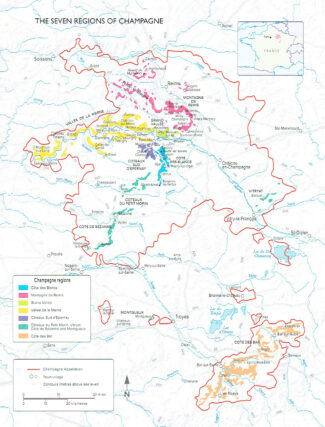
South Rising: Aube’s Côte des Bar
There is a certain ignominy in being Aube. Ninety miles south of Épernay, there have been times when its very inclusion in the Champagne appellation has been cast into doubt: In 1908, for example, Champagne Viticole was defined as 37,000 acres in the Marne and the Aisne, with the Aube département excluded. The effervescent French do not take such face-slaps lightly, and after a series of riots, a new legal delimitation of Champagne was drawn in 1927, delineating its modern boundaries—85,000 acres that this time included the Aube and its most heralded subzone, the Côte des Bar.
Even so, the échelles des crus ranking offered none of Aube’s villages the prestige of Grand Cru or Premier Cru ranking. This didn’t help in removing the stigma of being Champagne’s Pluto, and it has only been fairly recently that progressive—even iconoclastic winemakers— have thrust the region into the spotlight. Today, the Côte des Bar makes up 23% of Champagne’s output, and the past 20 years have seen its vineyard surface grow by more than three thousand acres.
Champagne Fleury
“Let Nature and Its Rhythms Express Themselves.”
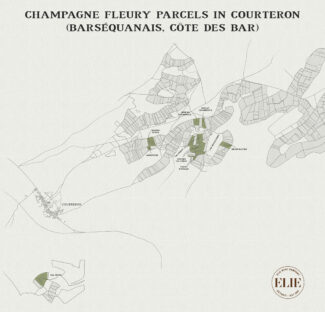
If any estate is anchored to the Côte des Bar it is Champagne Fleury, whose Courteron vineyards span 38 acres on a clay-limestone hillside along a tributary of the Seine. But, as the first Champagne house to convert to biodynamics (1989), Jean-Pierre Fleury proved that a producer can have roots in the earth while raising the mainsail to innovation.
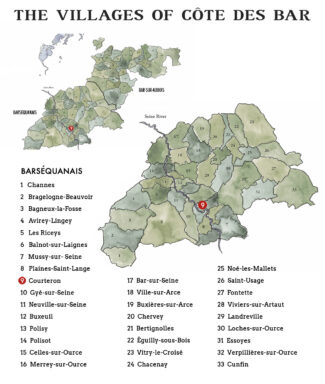
Today, his son Jean-Sébastien Fleury has taken the winemaking rudder, and is tacking toward the future with respect for the unique situation of the Côte des Bar, which is closer to Chablis than to Reims. “The key is soil health,” he says. “We must keep the earth healthy. The structure of the soil gives back the essence of the terroir.”
In this endeavor, he is joined by his younger brother Benoît, who came on board in 2010 to manage the vineyards, intent not only on maintaining biodynamics, but also researching soil biology, biodiversity and experimenting with agro-forestry. A third sibling, Morgane, initially studied to be an actress and a sommelier in Suze-la-Rousse, runs ‘My Cave Fleury’ in Les Halles (made famous by Émile Zola’s famous novel of the same name) where she specializes in biodynamic wines.
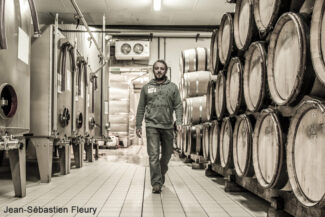
The estate encompasses ten plots planted primarily to Pinot Noir, the oldest planted in 1970, and new cuttings are established every year to maintain the vitality that younger vines bring to Champagne. The ultimate goal, according to Jean-Sébastien is a wish “to let the nature and its rhythms express themselves.”
Appreciate the Balance and Share the Mysteries of Nature
The Japanese have long espoused a mystical connection between the earth and sky; a spectacle of nature and the subtle balance that prevails between tradition and modernity. That is a philosophy that winemaker Jean-Sébastien Fleury grew up with. His father, Jean-Pierre, who originally wanted to be an astronomer, embraced the concept that every human on earth has a small but essential role in maintaining the harmony of the universe, and fell in love with cultures founded on principles of equity, between people and with the land, and decided early to raise his family in physical and spiritual health.
Champagne is especially suited to this thought process; at its core, it is an attempt to find a nearly magical equilibrium between nature and man’s ability to enhance it. An understanding of the microcosm and the macrocosm is essential to a biodynamic vision, and as an homage to the interdependence of earth and sky, Fleury vineyard practices seemed—in the last century—as almost druidic, although they are now being embraced throughout France.
Enhancing and Understanding Terroir’s Character
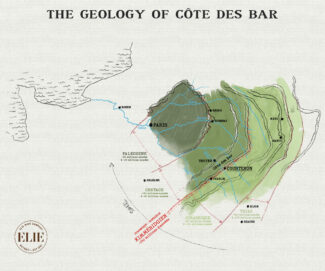
Reims lies at Latitude 49°5, and Épernay at 49°; in the northern hemisphere, it is generally considered difficult to obtain quality grapes at the 50th parallel and above. The ninety mile cushion enjoyed by Côte des Bar has a pronounced effect on the grower’s ability to ripen Pinot Noir; as a result, 86% of the vineyards are planted to this varietal. Despite this, the soils of the Côte des Bar is closer to that of Chablis—Kimmeridgian marl topped by Portlandian limestone, whereas the vines near Épernay and Reims tend to be planted in Cretaceous chalk. Chablis, of course, is ground zero for Chardonnay, and it is humidity coming from the Atlantic in the west as well as continental influences with higher temperatures that make the Côte des Bar Pinot Noir country through and through. That said, local climate conditions, slope and orientation are extremely varied throughout region, and produces many individual micro-climates, so each vigneron needs to be fully attentive to his own terroir in order to make the most of it. Côte des Bar features a host of small producers whose output varies almost as much as the local landscape.
The Biodynamic Principles: Respecting Earth’s Life Forces
The Fleury family looks at the estate as a living organism and pampers it as one might a beloved family pet. “We have been cultivating our land in line with its habitat for more than thirty years, acknowledging nature’s rhythms and the influence of terrestrial and cosmic forces. At first, this agricultural principle may seem demanding and esoteric, but it is truly a virtuous circle. We envision wine as a support of nature’s creation that undeniably enhances the product we bottle. All wines are labeled ‘Organic Agriculture TM’ and ‘Biodynamic.’”
Fleury delves deeper: “A vineyard is a monoculture, so our work is directed toward increasing biodiversity. Our viticultural work is focused on both the soil and the plant. Cultivation is done by hand in addition to the application of biodynamic preparations. Vine work is synchronized with planetary and lunar cycles; this is based on the effects these heavenly bodies have on root, leaf, flower and fruit development. For example, vine suckering, de-leafing and de-budding is done on ‘leaf day’ in the lunar calendar. The grafts and harvest is done in accordance with the lunar spring, when the moon is rising, a time that favors heavy sap flow. The lunar fall, when the moon is descending, is the best time for pruning.”
Vinification at the Winery: Producing Earth’s Best
“Our slow aging process is a symbolic return to the earth,” says Jean-Sébastien Fleury, referencing the biodynamic methods that result in wines with an improved balance between sweetness and acidity compared to other wines. “In our Domain, these characteristics allow us to leave the bottles to age in our cellar for a longer time of 3 to 5 years for the Blanc de Noirs, Fleur de l’Europe and Rosé, and 6 to 10 years for the Millésimes. This slow aging process that is an essential step before revealing the wine during the tasting. Aging before beginning a new life symbolizes another cycle of nature and of the cosmos.”
Champagne’s Primary Grapes and Heirloom Varieties
The vast majority of Champagne is made from one or more of the Big Three, chosen in late 19th century as grape varieties that offer the best balance of sugar and acidity to complement the effervescence. First, Pinot Noir, which dominates the holdings in the Côte des Bar, where it is sometimes called Précoce due to its ability to ripen early. When allowed to thrive in cool, chalky soil, Pinot Noir endows Champagne with body, punch and structure. Chardonnay is also an early ripening variety, particularly well-suited to terroirs which lie on an outcrop of chalk, and yields delicately fragrant wines with floral, citrus and mineral notes and produces wines that age well. The trio is rounded out by Meunier, a hardy grape that is compatible with soils containing more clay, such as in the Marne Valley, where it is frequently considered an insurance grape against poor vintages since it buds later and is more accepting of cooler mesoclimates.
In terms of climate and attitude, no place in Champagne is more hospitable to heirloom grapes than the Côte des Bar; overall, more than 250 acres of vineyard is dedicated to Pinot Blanc (locally called Blanc Vrai), Pinot Gris (Fromenteau), Arbane and Petit Meslier.
Chardonnay – ’White Rainbow’
Since virtually all Champagne not designated ‘rosé’ appear pale and straw-colored in the glass, it is sometimes assumed that white wine grapes are predominant in the region. In fact, Chardonnay is the least widely planted of the Big Three, and finds its most reliable stronghold in the north where the Côte des Blanc provides a home-base on an extension of the same chalk outcrop that runs through Chablis.
Despite being less represented in the southern part of Champagne, there still pockets of resistance where Chablisienne terroir prevails, especially those anchored off the slopes of Champraux.
 Champagne Fleury ‘Cépages Blancs’, 2011 Côte-des-Bar Extra-Brut ($105)
100% Chardonnay vinified 50% in oak; bottled 07/2012, disgorged 12/2022; dosage, 2 gram/liter.
The old-vine vineyards blended to make this wine are planted in Kimmeridgian limestone in the lieux-dits of Champraux and Valprune; the wine displays superb dried fruits aromas with licorice and praline, the wine is redolent of almonds, peach and white flowers.
*click photo for more info
Pinot Gris – ‘Return Of The Eclipse’
300 years ago, the early-maturing Pinot Gris (then called ‘Fromenteau’) made up 50% of the vineyards in Champagne and even today, the pink-skinned Pinot Noir mutation accounts for about 14% of the vineyard plantings. In Champagne, it can often be identified by the notes of honey and almond it lends to a cuvée.
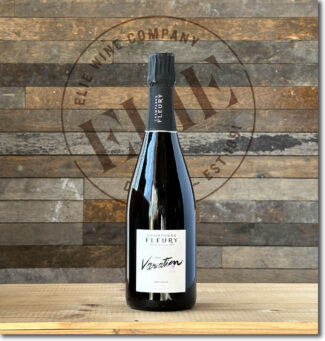 Champagne Fleury ‘Variation’, 2015 Côte-des-Bar Brut-Nature ($120)
100% Pinot Gris vinified in thermo-regulated vats. Bottled 10/2016; Disgorged 05/2021; dosage, 0 gram/liter.
Planted in 2010, harvested in 2015, this wine is made without sulfites and after five years aging, receives zero dosage. It is the second release of this unique biodynamic Pinot Gris; the mouth is rich and alive with a bright mousse, shows apple notes, bright stone fruit, soft spice and salinity.
*click photo for more info
Pinot Blanc – ‘Memory Of A Star’
Originating in Alsace, Pinot Blanc can be a problem child easily corrupted by disease and mutation, the result of its large berries and unstable relationship with parent Pinot Noir. Yet its value remains in its low sugar/acid ratio and it’s floral, green apple flavor profile.
 Champagne Fleury ‘Notes Blanches’, 2015 Côte-des-Bar Brut-Nature (Sold Out)
100% Pinot Blanc with 50% oak élevage. Bottled,10/2016; disgorged,12/2022; dosage, 0 gram/liter.
Emile Fleury, who founded the domain, was a champion of Pinot Blanc—a well-known varietal in Alsace and a hidden gem in Champagne. Morgane Fleury’s vision of creating a monovarietal cuvée using 100% Pinot Blanc from lieux-dits Charme de Fin and Valverot is a rare and expressive experience.
Made from 25-year-old vines, ‘Notes Blanches’ is from the 2015 vintage; it shows creamy lemon and toasted bread on the nose. The palate is filled with tension and elegance, with a fine mousse and mineral finish.
*click photo for more info
Pinot Noir Country: Côte-des-Bar Takes Cues From Burgundy
So obsessed was the Aube on becoming part of Champagne that they fought back; 40,000 French soldiers were required to quell the violence. Still, like a child who denies his roots, the flavors of Burgundy can be tasted in most aspect of the region—traditions, architecture, cuisine and winemaking.
Most growers in Aube’s vineyard acres trained in Burgundy, and the luxurious Champagnes the region is capable of carry both the precision and minerality of Kimmeridgian limestone—often so close to the surface that no soil is evident and the vines appear to be planted in lunar bedrock—which is the identical foundation for the Grand and Premier Crus of Chablis. Puligny-Montrachet barrels are often used in cellars and biodynamics—much more prevalent in Burgundy than in Champagne—are becoming increasing indispensable to young winemakers in the Côte des Bar. It is, in part, this tension—the tug of war between Champagne and Burgundy—that creates the marvelous electricity of Côte des Bar wines.
‘Planet Pinot Noir’
 Champagne Fleury ‘Blanc de Noirs’, Côte-des-Bar Brut ($56)
100% Pinot Noir with 62% harvested in 2018, perpetual reserve for the balance. Bottled 10/2019; disgorged 01/2023; dosage, 4.7 gram/liter.
Created in 1955 by Robert Fleury, this traditional cuvée was re-labeled ‘Blanc de Noirs’ in 2010. Delicate aromas of white peach and iris appear on the nose, while the body shows black cherry and a hint of tart cranberry behind an elegant, zesty and bright bead.
*click photo for more info
‘Notes Of Twilight’
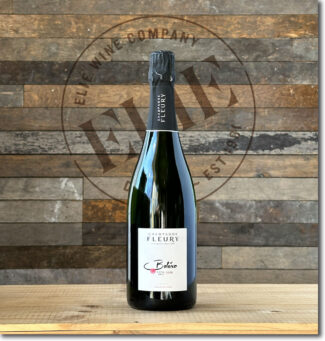 Champagne Fleury ‘Boléro’, 2008 Côte-des-Bar Extra-Brut ($130)
100% Pinot Noir with 30% élevage in oak. Bottled 12/2009; disgorged 12/2022; dosage 0 gram/liter.
Formerly called ‘Millésimé’ (when it contained a small amount of Chardonnay), the cuvée became pure Pinot Noir in 2004. Aged nine years on lees, it is the brainchild of Benoît Fleury, and drawn from four plots—Charme de Fin, Champreaux, Meam Bauché and Montégné. It exhibits complex scents of toasted almond, apricot and freshly-baked bread followed by a lengthy, mineral-driven finish. shows interwoven aromas of dried fruits, toasted almonds, apricots and freshly-baked bread followed by juicy stone fruits wrapped in crystalline effervescence.
*click photo for more info
‘When Mars Meets Venus’
 Champagne Fleury ‘Rosé de Saignée’, Côte-des-Bar Brut ($76)
100% Pinot Noir vinified in thermo-regulated vats. From the 2018 harvest; bottled 07/2019; disgorged 10/2022; dosage 3.4 gram/liter.
The grapes see a short period of maceration before pressing—the production method called saignée. It produces a light, lyrical sparkling wine whose dosage has been gradually reduced over the years; the wine is redolent of strawberry compote and vanilla, with a rich palate that maintains both elegance and delicacy.
*click photo for more info
Coteaux-Champenois: Still Champagne
Coteaux-Champenois is a unique AOP dedicated entirely to non-effervescent Champagne. It may be red, white or rosé, although the lion’s share is red—Bouzy rouge being the most celebrated. With a warming climate ripening grapes more consistently, Coteaux-Champenois is becoming positively trendy and producers across the 319 communes entitled to make wines under the Coteaux Champenois appellation are becoming better known.
Like their fizzy sisters, still wines from the region tend to be dry and light-bodied with naturally high acidity. The reds are better in warmer vintages, which is why the predominant red variety, Pinot Noir, is currently basking in the newfound heat waves of northern France. The reason that 90% of the Coteaux Champenois output is red is not necessarily because the terroir has traditionally favored Pinot Noir, but because locally grown Chardonnay has commanded a higher price when sold to Champagne houses.
 Domaine Fleury, Coteaux-Champenois Rosé ‘Côte-des-Bar’ ($68)
Comprised of vintages 2017, 2018 and 2019 hand-harvested 35 to 40 years old Pinot Noir vines, fermented spontaneously with low-intervention, bottled unfined and unfiltered. The wine offers a nose of Maraschino cherry, strawberry and lemon zest while the fruit-driven palate had notes of cherry and raspberry behind bright acidity.
Predominantly Pinot Noir: Blended for ‘Subtle Alchemy’
Champagne should illustrate the word ‘synergy’ above all, where the sum of the total is greater than the individual parts. The ideal blend should be the aggregation of positive components; every thread should add to the tapestry’s whole. The blend should always drive toward harmony; Chardonnay is often up front, while Pinot Noir supplies the middle and finish. Other allowable varietals should only appear if they contribute to the primary blend.
This is not a universal outcome, of course, and according to Jean-Marc Lallier of Champagne Deutz, “Some winemakers do not blend; they mix.”
When cellar masters do it right, it is a painstaking undertaking; every tank, barrel and vat is tasted countless times to assess which batch would enhance which. This is the true art of Champagne making—the intimate familiarity with each component in order to align them perfectly.
View Champagne Fleury cuvée blends over the years here.
‘Where The Sun Meets The Moon’
 Champagne Fleury ‘Fleur de l’Europe’, Côte-des-Bar Brut-Nature ($61)
85% Pinot Noir, 15% Chardonnay, 54% from the 2017 harvest; 40% received élevage in oak. Bottled 07/2018; disgorged 01/2023; dosage 0 gram/liter.
The first biodynamic cuvée in Champagne, the name references the generation that witnessed the fall of the Berlin Wall and results from a special pressing of the grapes that reserves the optimum juice. The wine displays silken notes of green apple and peach with warm brioche on the nose and persistent pinpoint bubbles throughout the palate.
*click photo for more info
‘Cosmic Symphony’
 Champagne Fleury, 2010 Côte-des-Bar Millésime Brut ($110)
80% Pinot Noir, 20% Chardonnay with 60% in bottle with corks during second fermentation. Bottled 12/2013; disgorged 09/2022; dosage 3 gram/liter.
The grapes come from 20-year-old vines, the first declared vintage for Fleury since 2004. The old vines give intensity and toasty character to the palate, which is full of honey-nut spiciness with hints of smoke behind citrus/apple flavors.
*click photo for more info
‘Little Music For Time And Space’
 Champagne Fleury ‘Sonate’, 2013 Côte-des-Bar Extra-Brut ($105)
92% Pinot Noir, 8% Pinot Blanc bottled 07/2014, disgorged 10/2022 and dosed at 0 gram/liter.
Sonate is the fourth edition of sulfite-free wine. From plots in Champraux, Valprune and Charme de Fin, the vines average 35 years of age. The wine is loaded with aromatic richness, opening with aromas of acacia, daffodil and citrus peel behind ripe peach and a characteristic note of quince jelly.
*click photo for more info
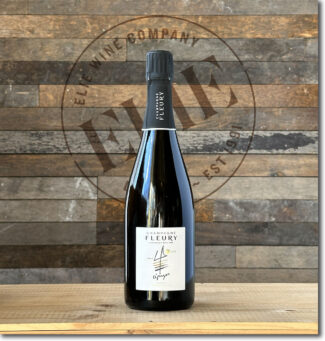 Champagne Fleury ‘4 Cépages’, 2014 Côte-des-Bar Brut-Nature ($130)
58% Pinot Noir, 25% Chard, 12% Pinot Blanc, 5% Pinot Gris (the four ‘cépages’, or grapes), harvested in 2014, bottled 07/2015 and disgorged 01/2022 with 0 gram/liter dosage.
The wine has a notably complex nose of toasted nuts, fresh pastry and apricot marmalade with a sensationally rich palate dominated by citrus, honeycomb, saffron, apricot and candied cashews.
*click photo for more info
Notebook …
Single Harvest vs. Vintage
In France, under Appellation d’Origine Portégée (AOP) rules, vintage Champagnes must be aged for three years—more than twice the required aging time for NV Champagne. The additional years on the yeast is said to add complexity and texture to the finished wine, and the price commanded by Vintage Champagne may in part be accounted for by the cellar space the wine takes up while aging.
On the other hand, a Champagne maker might prefer to release wine from a single vintage without the aging requirement; the freshness inherent in non-vintage Champagnes is one of its effervescent highlights. In this case, the wine label may announce the year, but the Champagne itself is referred to as ‘Single Harvest’ rather than ‘Vintage’.
Vintage Journal
2018
An outstanding vintage for Champagne, producing both quality and quantity. A few isolated hailstorms led to some crop loss, notably in the Côte des Bar, but fortunately, early summer brought hot, sunny and dry days. Occasional showers were welcome relief to parched vines and kept hydric stress at bay, allowing for optimal ripening at a gradual pace in ideal conditions that resulted in an early harvest.
2017
2017 was a vintage that managed (in some areas) to seize defeat from the jaws of victory. A promising start was compromised by August rains which prompted an outbreak of botrytis. This meant the harvest had to be carried out fast and for some producers, it was the shortest on record. Chardonnay tended to be uniformly good and there was also some extremely good Pinot Noir. It was Pinot Meunier that tended to suffer the most, with many grapes overripe.
2015
A wet winter and mild spring gave way to an exceptionally dry summer from mid-May onwards, and hot weather prevailed until mid-August, when heavy rains fell. Rains gave way to fine, cool, yet sunny weather for the first two weeks of harvest, which began on August 29th.
2013
2013 saw a cool spring followed by a cool summer, with delayed flowering and an onset of millerandage and coulure due to the cool temperatures, cutting yields. However, the reduced crops tended to ripen more easily during what would transpire to be a long growing season. Chardonnay was the strongest performer with some great examples coming from the Côtes des Blancs as well as from the Marne Valley. However, Pinot Noir from Aÿ was also very good.
2012
Like 2008, 2012 was a difficult growing season, with severe frosts in the winter. March brought warmth but early bud break made the vines vulnerable. Overall, the early growing season was wet, with mildew a serious issue, however, conditions improved dramatically in the summer months. An August heatwave resulted in a rapid accumulation of sugar, but the nights remained cool, which preserved acidity. Although yields were low due to the early frost, later hail and disease pressures, the 2012 harvest was exemplary in its maturity, acidity and grape health.
2011
Following a warm, early spring and a cool, damp summer season, 2011 was one of the earliest Champagne harvests in history. Patience and fierce selection at harvest time turned out to be the winning recipe.
2010
Dry conditions hindered grape development early in the season, and after a hot summer, torrential rain in mid-August caused widespread disease pressure. The ripeness of the grapes was good and the acidity remained high despite the warm season, but as a combined consequence of the challenges of the growing season, the global financial crisis and the cellars bursting with fine 2008 and 2009 vintage bottles, few houses declared 2010 a vintage. The ones who did, did so so for a reason.
2008
Initially a difficult, damp year with widespread mildew, expectations for 2008 were low. However, drier conditions in August and a fine, warm September with cool nighttime temperatures proved to be the saving grace. Harvest began on September 15th and it quickly became known as an outstanding year, due to the finesse brought about by the fine, saline freshness and purity of fruit. A dream-come true vintage in many aspects, 2008.
Drawing The Boundaries of The Champagne Region
To be Champagne is to be an aristocrat. Your origins may be humble and your feet may be in the dirt; your hands are scarred from pruning and your back aches from moving barrels. But your head is always in the stars.
As such, the struggle to preserve its identity has been at the heart of Champagne’s self-confidence. Although the Champagne controlled designation of origin (AOC) wasn’t recognized until 1936, defense of the designation by its producers goes back much further. Since the first bubble burst in the first glass of sparkling wine in Hautvillers Abbey, producers in Champagne have maintained that their terroirs are unique to the region and any other wine that bears the name is a pretender to their effervescent throne.
Having been defined and delimited by laws passed in 1927, the geography of Champagne is easily explained in a paragraph, but it takes a lifetime to understand it.
Ninety-three miles east of Paris, Champagne’s production zone spreads across 319 villages and encompasses roughly 85,000 acres. 17 of those villages have a legal entitlement to Grand Cru ranking, while 42 may label their bottles ‘Premier Cru.’ Four main growing areas (Montagne de Reims, Vallée de la Marne, the Côte des Blancs and the Côte des Bar) encompass nearly 280,000 individual plots of vines, each measuring a little over one thousand square feet.
The lauded wine writer Peter Liem expands the number of sub-regions from four to seven, dividing the Vallée de la Marne into the Grand Vallée and the Vallée de la Marne; adding the Coteaux Sud d’Épernay and combining the disparate zones between the heart of Champagne and Côte de Bar into a single sub-zone.
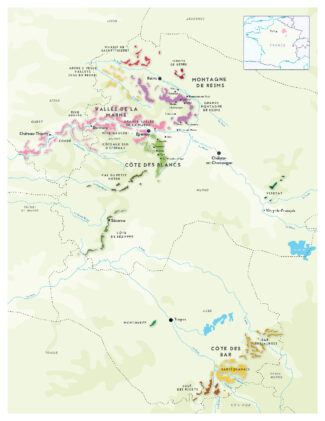
Courtesy of Wine Scholar Guild
Lying beyond even Liem’s overview is a permutation of particulars; there are nearly as many micro-terroirs in Champagne as there are vineyard plots. Climate, subsoil and elevation are immutable; the talent, philosophies and techniques of the growers and producers are not. Ideally, every plot is worked according to its individual profile to establish a stamp of origin, creating unique wines that compliment or contrast when final cuvées are created.
Champagne is predominantly made up of relatively flat countryside where cereal grain is the agricultural mainstay. Gently undulating hills are higher and more pronounced in the north, near the Ardennes, and in the south, an area known as the Plateau de Langres, and the most renowned vineyards lie on the chalky hills to the southwest of Reims and around the town of Épernay. Moderately steep terrain creates ideal vineyard sites by combining the superb drainage characteristic of chalky soils with excellent sun exposure, especially on south and east facing slopes.
… Yet another reason why this tiny slice of northern France, a mere 132 square miles, remains both elite and precious.
- - -
Posted on 2024.06.01 in France, The Champagne Society, Champagne | Read more...
The Enduring Beauty Of Beaujolais Great As Well As Joyous Wines. Distinctive Enough To Bear More Specific Appellations And Individual Parcels. Domaine de Vernus, A New Face, In Five Crus. 7-Bottle Pack For $264
Memorial Day is a time to reflect on mortality as well as to celebrate the rebirth of warmth and leisure time. No wine captures the complexity emotions better than Beaujolais, which can be light and lyrical as well as profound and nuanced. These are ideal wines with which to celebrate Memorial Day, the gateway to summer and the joy of transcendence.
In literature, a character study is a critical examination of a single character to understand not only their significance to a given narrative, but as a way of better understanding the work as a whole. This week, we will undertake a similar focus on a lone, but phenomenal Beaujolais winemaker (Guillaume Rouget of Domaine de Vernus) in order to see how a single talented vigneron can exemplify the moods, the changes, the whims of a region where a diverse terroir remains committed to a single grape variety, Gamay.
Rouget certainly comes with a proper pedigree: The grand-nephew of Henri Jayer (the Burgundian innovator known for making some of the most critically acclaimed and expensive Pinot Noirs in the world), he was trained to the vine from childhood, first by his father Emmanuel Rouget and then at the École des Vins de Bourgogne in Beaune. When he decided to join forces with Domaine de Vernus owner Frédéric Jametton in Régnié-Durette, it was to pursue a shared goal: Producing elegant, racy wines that display the intense fruitiness of Gamay along with age-worthy structure that can develop complexity over time alongside the best Burgundies. Guillaume is in charge of the entire production chain, from cultivation through all phases of vinification, ultimately taking part in the marketing of the estate’s wines. A true renaissance man in Beaujolais, his handling of various top Crus may not be ‘Beaujolais Nouveau,’ but it is very much the new Beaujolais.

Guillaume Rouget with father Emmanuel Rouget, Domaine Emmanuel Rouget in Vosne-Romanée and Flagey-Echézeaux
The Beaujolais Vineyard: Diversity Of Soils, Rocks and Minerals
The biggest error a Beaujolais neophyte makes is an expectation one-dimensional predictability. To be fair, the mistake easy to make based on the region’s reliance on Gamay, a grape that elsewhere may produce simple and often mediocre wine. In Beaujolais’ terroir, however, it thrives.
In fact, this terroir is so complex that it nearly defies description. But Inter-Beaujolais certainly tried: Between 2009 and 2018, they commissioned a colossal field study to establish a detailed cartography of the vineyards and to create a geological snapshot of the exceptional richness found throughout Beaujolais’s 12 appellations.

Beaujolais may not be geographically extensive, but geologically, it’s a different story. The region bears witness to 500 million years of complex interaction between the eastern edge of the Massif Central and the Alpine phenomenon of the Tertiary period, leaving one of the richest and most complex geologies in France. Over 300 distinct soil types have been identified. Fortunately, Gamay—the mainstay grape, accounting for 97% of plantings—flourishes throughout these myriad terroirs. In the south, the soil may be laden with clay, and sometimes chalk; the landscape is characterized by rolling hills. The north hosts sandy soils that are often granitic in origin. This is the starting point wherein each appellation, and indeed, each lieu-dit draws its individual character. There are ten crus, the top red wine regions of Beaujolais, all of them located in the hillier areas to the north, which offer freer-draining soils and better exposure, thereby helping the grapes to mature more fully.
A Palette Of Ten Crus
Beaujolais is a painter’s dream, a patchwork of undulating hills and bucolic villages. It is also unique in that relatively inexpensive land has allowed a number of dynamic new wine producers to enter the business. In the flatter south, easy-drinking wines are generally made using technique known as carbonic maceration, an anaerobic form of closed-tank fermentation that imparts specific, recognizable flavors (notably, bubblegum and Concord grape). Often sold under the Beaujolais and Beaujolais-Villages appellations, such wines tend to be simple, high in acid and low in tannin, and are ideal for the local bistro fare. Beaujolais’ suppler wines generally come from the north, where the granite hills are filled with rich clay and limestone. These wines are age-worthy, and show much more complexity and depth. The top of Beaujolais’ classification pyramid is found in the north, especially in the appellations known as ‘Cru Beaujolais’: Brouilly, Chénas, Chiroubles, Côte de Brouilly, Fleurie, Juliénas, Morgon, Moulin-à-Vent, Régnié and Saint-Amour.

Each are distinct wines with definable characteristics and individual histories; what they have in common beyond Beaujolais real estate is that they are the pinnacle of Gamay’s glory in the world of wine.
2020 Vintage: Rhône Scents. Bathed in Sunshine.
If you can invent a way to leave Covid out of the equation, 2020 was a wonderful vintage throughout Beaujolais. The growing season was warm, beginning with a mild and frost-free spring, which developed into a hot and sunny summer without hail or disease. Drought—a persistent worry in the region—was not as severe as it might have been, and by harvest-time the majority of grapes were in fine health with rich, ripe, almost Rhône-like flavors—raspberries, sour cherry and even garrigue; the local scrub comprised of bay, lavender, rosemary and juniper.
2020 yields were low due to the dry conditions, leading to concentrated juice and wines able to benefit from time in the cellar.
But, of course, you can’t leave Covid out of the equation: Normally the release of Beaujolais Nouveau occurs on the third Thursday of every November, but in pandemic-dominated 2020 the normal celebrations could not take place and producers instead chose to release the wines a week earlier than usual in order to allow for international shipping times.
Domaine de Vernus
After thirty years in the prosaic world of insurance brokerage, Frédéric Jametton decided to do a rakehell turn on his career trajectory. Having been born in Dijon and lived in Burgundy for most of his life, he had become an enlightened wine lover. Not only that, but his former profession brought him in contact with numerous members of the wine community. At the end of 2017, he realized that the time had come to invest in a winery.

Winemaker Guillaume Rouget, left, with Frédéric Jametton, Domaine de Vernus
Initially looking in the south, he became convinced that the heat spikes brought on by climate change made it unsuitable for the long haul, and after discussions with his friend Guillaume Rouget of Flagey-Echézeaux (who agreed to come on board as a consultant) Jametton settled on Beaujolais, piecing together 30 acres of vineyards acquired from 12 different proprietors, and is gradually restructuring parcels with a view to more sustainable farming.
Thanks in part to Rouget’s influence, vinification is conducted along Burgundian lines, with around 70% of the grapes destemmed and fermented in stainless steel with élevage in recently-used, high-quality Burgundy barrels for some 10–11 months. Jametton’s ultimate goal, echoed by Rouget, is to offer a range of wines that brings out the best of the different terroirs while respecting the character and personality of each Cru and each plot.
With Rouget in charge of the vineyards and winemaking process, Frédéric remains at the management helm and spearheads marketing.
Beaujolais-Villages: Gamay in Full Bloom
Of the three Beaujolais classifications, Villages occupies the middle spot in terms of quality. To qualify, the wine generally hails from more esteemed terroirs in the northern half of Beaujolais, from one of 38 villages that have not been named ‘cru’ appellations. They are expressive wines with more structure and complexity than generic Beaujolais, though not as exclusive as those from the ten crus. Accounting for about a quarter of all Beaujolais production, Villages wines are most often produced by négociants and vinified using stricter rules as to yields and technique.

 1 Domaine de Vernus, 2020 Beaujolais-Villages ($27)
80% whole cluster fermentation from vines around 35 years old; the grapes are subject to alternate grape-treading, pump over, and ‘delestage’—a two-step ‘rack-and-return’ process in which fermenting red wine juice is separated daily from the grape solids by racking and then returned to the fermenting vat to re-soak the solids. Fermentation on wild yeast for two weeks. A fruit-forward, juicy wine with expressive aromas of strawberry and spicy black cherry.
*click on image for more info
Régnié: The Gateway to Beaujolais
Many Beaujolais wines are best consumed in their youth, and this is a quality emphasized with gusto by Régnié, the youngest of the Beaujolais crus. In fact, it wasn’t until 1988 that a group of 120 wine growers lobbied to get the appellation officially recognized, pointing out the newcomer in the family has plenty to offer: Its favorable geographical location between its two brothers, Brouilly and Morgon, allows the production of wines of a unique fruitiness.
Often called the ‘Prince of the Crus’, Régnié’s terroir is distinguished by the pink granite soils found high in the Beaujolais hills. Here, at some of the highest altitudes in the region, vines are planted on coarse, sandy soils that are highly permeable and drain freely, an environment which is well suited to the Gamay grape variety.
Further down the slopes, higher proportions of clay with better water storage capabilities lead to a slightly more structured style of wine. The variation within the vineyard area allows growers to produce everything from fresh, light wines to heavier, more age-worthy examples of Régnié.

 2 Domaine de Vernus, 2020 Régnié ($30)
From vines with an average age of 42 years. 100% destemmed with three weeks of fermentation time on native yeasts followed by ten months maturation, half in oak barrels and half in stainless steel tanks. The wine has a lively acidity behind notes of sour cherry kirsch with hints of agave and pepper.
*click on image for more info
 Domaine de Vernus, 2019 Régnié ($72) 1.5 Liter
Same wine, in 2019, in magnum, allowing for a slower maturation process in the cellar.
*click on image for more info
Chiroubles: A Terroir in Altitude
Granite is notorious for its strong erosion effects on soils and Chiroubles finds a perfect balance with light, sandy soils that remain moist throughout the summer; the climate tends to be oceanic, though with a Mediterranean and Continental touch.
Chiroubles is relatively tiny, with fewer than a thousand acres under vine, but it is a mouse that roars. This is due mostly to elevation: Chiroubles vineyards are the highest in Beaujolais, with some planted 1500 feet above the Saône River valley. Taking advantage of extreme diurnal shifts between the warm days and cold nights, the same soils that produce Fleurie to its immediate north here build wines that are lighter and fresher, often with pronounced floral characteristics.

 3 Domaine de Vernus, 2020 Chiroubles ($27)
From the highest-altitude vines in Beaujolais with an average age of 63 years in the Verbomet lieu-dit and 36 years in Châtenay, both featuring terroir built on shallow granitic soil. The back-breaking work required to harvest on the steep slopes of Chiroubles produces an airy, intensely perfumed wine with silky notes of black cherry, plum and raspberry with a pronounced minerality and electric acidity.
*click on image for more info
Fleurie: Home to Fragrant Wines
Each of the Beaujolais crus wears its own face; where Morgon is bold and handsome and Saint-Amour is a fairyland of delicate beauty, Fleurie—covering an unbroken area of three square miles—represents Beaujolais’ elegance. The terroir is built around pinkish granite that is unique to this part of Beaujolais, with the higher elevations accounting for thinner, acidic soils that produce graceful and aromatic wines. Below the main village, the wines are grown in deeper, richer, clay-heavy soils and the wines themselves are richer and deeper and appropriate for the cellar. The technique known as gridding, which involves extracting more color and tannin from the skins of the grapes, is proprietary to Fleurie.

 4 Domaine de Vernus, 2020 Fleurie ($34)
From vines with an average age of 63 years. 80% destemmed with three weeks of fermentation on native yeasts followed by ten months maturation in oak barrels, 6% new. The wine shows soft-bodied fragrance with concentrated notes of strawberry and rose petal above a vivacious acidity.
*click on image for more info
Morgon: Power, Reveals Itself in a Few Years
Morgon, on the western side of the Saône, may only appear on the label of a Gamay-based red wine; even so, the appellation allows the addition of up to 15% white wine grapes: Chardonnay, Aligoté or Melon de Bourgogne. Nevertheless, the wines of Morgon wind up being among the most full-bodied in Beaujolais, with the potential to improve in the cellar so consistently that the French describe wines from other AOPs that display this quality by saying, “It Morgons…”
The largest of the Beaujolais crus, the terroir is largely built around ‘rotten rock’ made up of decomposed shale, giving the appellation’s wines aromas of sour cherries with notes of violet and kirsch with delicate tannins that promise optimal ageing.

 5 Domaine de Vernus, 2020 Morgon ($36)
From vines with an average age of 67 years. 80% destemmed with three weeks of fermentation on native yeasts followed by ten months maturation in 80% oak barrels and 20% in stainless steel tanks. This structured Morgon is a benchmark showing cherries and plums abound along with licorice, mineral and taut acidity.
*click on image for more info
 Domaine de Vernus, 2020 Morgon ($86) 1.5 Liter
Same wine in magnum, allowing for a slower maturation process in the cellar.
*click on image for more info

 6 Domaine de Vernus, 2020 Morgon ‘Grands Cras’ ($47)
Grand Cras, ideally situated at the foot of the Côte du Py, ranks among the appellation’s most famous climats. The deep soil is made up of granitic alluvium that allows grapes to maintain Burgundy-level tannins while retaining the fruitiness typical of Beaujolais. With an average vine age of 71 years, the fruit is hand-harvested and 80% destemmed, following which the wine spends ten months in oak. A rich, cherry-driven profile with hints of kirsch, fresh tobacco and menthol.
*click on image for more info
Moulin-à-Vent: Power and Structure
Moulin-à-Vent is to the ten crus of Beaujolais what Moulin Rouge is to Parisian cabarets: First among equals. Of course, that equality is a matter of taste—some consumers prefer floral Fleurie and charming Chiroubles to the full-bodied, tannic-structured Moulin-à-Vent and it’s no secret Georges Duboeuf sells a hundred thousand cases of Beaujolais Nouveau a year.
Forgetting the forgettable and concentrating on the myriad styles of Cru Beaujolais, nowhere is the evidence of terroir—the site-specific contributions of geology, sun-exposure and rainfall—more obvious than in Moulin-à-Vent. Although each appellation works with a single grape variety, Gamay, the results range from light, glorified rosé to densely layered, richly concentrate reds that rival Burgundian Pinot Noir cousins from the most storied estates.
Moulin-à-Vent is unusual for a number of reasons, and among them is the fact that there is no commune or village from which it takes its name. Like the Moulin Rouge, the appellation is named for the ‘moulin’—windmill—that sits atop the hill that overlooks the south- and southeast-facing vineyards. The most outrageous reality of the Cru, however, is that the wine owes its structure and quality to poison: Manganese, which runs in veins throughout the pink granite subsoil, is toxic to grapevines and results in sickly vines that struggle to leaf out and produce small clusters of tiny grapes. It is the concentration of the juice in these grapes that gives Moulin-à-Vent a characteristic intensity unknown in the other crus of Beaujolais, where manganese is not present. It also gives the wine the foundation of phenolic compounds required for age-worthiness; Moulin-à-Vent is among a very select few of Beaujolais wines that can improve for ten, and even twenty years in the bottle.

 7 Domaine de Vernus, 2020 Moulin-à-Vent ‘Les Vérillats’ ($63)
‘Les Vérillats’ stand at the very top of an old granitic mount at around 900 feet elevation where the topsoil is so thin that trellis stakes cannot always be fully anchored. Terroir is very specific here, known locally as ‘gorrhe’—a thin, acidic soil lacking in nitrogen but containing high concentrations of potassium, phosphorous and magnesium. The wine, from 70-year-old vines, shows atypical black fruits—blackberries and currant, along with supple minerality and bracing acids.
*click on image for more info
 Domaine de Vernus, 2020 Moulin-à-Vent ‘Les Vérillats’ ($162) 1.5 Liter
Same wine in magnum, allowing for a slower maturation process in the cellar.
*click on image for more info
- - -
Posted on 2024.05.23 in Fleurie, Beaujolais-Villages, Regnie, Chenas, Chirouble, Morgon, Moulin-à-Vent, France, Beaujolais, Wine-Aid Packages | Read more...
Meet The Introverted Extroverts Of Spanish Wines: Galicia Winemakers Render Modern Interpretations By Learning The Intricacies Of The Land And How It Is Expressed Through Its Heritage Varieties.
Contrast has always animated the soul of wine; the subtle way that sugar plays against acid while fruit notes wrangle savory undercurrents. Wine is about transformation—fermentation is a pretty radical transmutation, after all—a metamorphosis of grape juice from the plebian to the profound. In tandem, Spain is a land which has been in upheaval for as long as records have been kept, changing with each millennium, each decade, every hour. Given this churning cauldron of people, processes and perspectives, why shouldn’t the introverts become extroverts and the other way around?
The drive to look inward while simultaneously looking outward is a major dynamic that is motivating young Spanish winemakers in nearly all the established wine regions. At the same time, changing climate, technology and the innately radical Spanish love of freedom is expanding the territory where world class wine can be produced.
This week, we look at some of the emerging stars of the Spanish wine scene and how they have integrated tradition with trajectory in a vision of sustainability that is key not only to the future of the industry, but to its survival.
Galicia: Spain’s Moody Atlantic Landscape
The cliff-battering waves and darkly sensuous landscape of Galicia on Spain’s northwest coast have given rise to a unique language and a distinctive culture. Among wine lovers, the Galician patchwork vineyards have often been viewed as a synonymous with Albariño. But nothing is as simple as it seems, particularly in a region that the wine world has pigeonholed at best, and at worst, overlooked entirely.
Of course, some Galician wine has earned the overlook: The region, inextricably linked to the ocean, is famous for its mariscos—seafood—and much of the vinous output (cultivated on seaside slopes) was simple, slightly fizzy, bone dry, light-bodied white wine similar to the Vinho Verde made over the border in Portugal. These wines are considered the stereotypical match for the renowned Galician shellfish—oysters, goose-neck barnacles, velvet clams, cockles and scallops along with the working-class octopi and lobsters.
But the further inland you go, the greater the wealth of indigenous grapes and styles, from the light, tart, deep-colored reds of Ribeiro to the mineral-driven whites of Valdeorras. These unusually fragrant and elegant wines are finding an expanding market outside the region and underscore the fact that Albariño is merely the tip of the Galician iceberg.

Like most of Europe, Galicia is facing a future in which climate change will affect every aspect of life. Having long embraced its inherent green abundance, which has been likened to that of Ireland, the region is under recent pressures of drought and excessive heat.
María Sagrario Pérez Castellanos, General Director of Environmental Quality in Galicia, has an ambitious plan in the work, aiming for a 2050 climate neutrality target: “If we don’t manage to involve every individual, every citizen, such a goal is impossible,” she says. “This is our issue to tackle, not something that ‘the wise men of the world will solve.’ And it’s clear that this involves you: in every behavior, from when you buy a product, to the waste you generate, when you turn the lights on or off, when you are using renewable energy sources… It involves you.”
Viticultural Polygamy: Wealth of Ancestral Varieties
The wine world’s equivalent to the dinosaur-destroying Chicxulub meteor is a microscopic louse called phylloxera. By the end of the nineteenth century, the bug had killed most of the vines in Europe, and when they were replanted (often using louse-resistant American rootstock) the focus tended to be on resilient varieties capable of producing the most fruit. This was a desperation move; a means of recouping losses and ensuring that the industry could survive. Today, of the ten thousand grape varieties, only 13 of them occupy more than a third of the world’s total vineyard surface.
In Spain, this catastrophe rang the death knell for many of the ancestral grapes that had formed the regional backbone of the wine industry, especially at the cottage level. Today, part of the rediscovery initiative that has taken hold in rural Spain is an attempt to revive the most obscure of these grapes, many found only in a few isolated back-country pockets. Young winemakers are amazed and intrigued to unearth this historical cornucopia—a collection of tastes and flavors that have nearly been forgotten. Much like the outré winemakers themselves, these grapes are the scrappers—tough little fighters who have made it into the twenty-first century despite the odds. As such, they are looked to as a window to the future, when climate change is making conventional grapes less comfortable with their terroir.
Still, it’s a labor of patience as well as love. On average, it takes 14 years between the discovery of a heritage variety and the time it is viable for winemaking. Once a vine has been designated an ‘ancestral variety,’ the hard work begins: Old vines are riddled with disease, and the viticulturists need pristine plant material for experiments; the vine must be reproduced multiple times in a greenhouse using new cells over several growth cycles until it’s given a clean bill of health.
And even then it takes time to understand a heritage vine’s individual nature, requiring several harvests. Like all grapes, terroir plays an irreplaceable role in finding the ideal site to bring out desired qualities, and finding this happy place may also take many vintages. And even then, the vine must reach the level of maturity required to produce acceptable wine.
Ribeiro
Climatic Middle Grounds
Ribeiro may be Galicia’s oldest D.O., but its three valleys have been ground zero for quality wine production for centuries. Cultivated by Romans, perfected by monks and served on the tables of kings and queens throughout Europe, Ribiero—as gushed over by Cervantes—holds the distinction of being the first wine to travel from Spain to the New World.

Located on the northwestern edge of the province of Ourense and bordering Pontevedra to the southwest, Ribeiro’s 6000 acres of vineyards spread out from the central hub of Ribadavia and extend to the north, east, and west, hugging the Avia, Miño, and Arnoia river valleys. These valleys are surrounded by flat areas that gradually increase in altitude to the west, reaching up into the foothills of the central Galician mountain range, forming staggered levels of terrain descending from about three thousand feet in the west near Carballeda de Avia, to a few hundred feet at the bottom of the valleys. But this is just the natural terrain; it is the man-made terraces that define much of the viticulture here.
Ribeiro means ‘riverbank’ in Galician, and appropriately so—rivers are the regional lifeblood, the arteries through which culture and economy life have passed for centuries. In poetry, Galicia has been referred to ‘the land of a thousand rivers,’ but in Ribeiro, the three heavy-hitters are the Avia, the Arnoia and the Miño. These three waterways form a triumvirate that defines Galician wine country.

Cool, wet air from the Atlantic hits the Serra do Suído and Serra do Faro de Avión ranges, rises, and condenses into rain. The warmer, drier air comes down on the other side of the mountain.
See it in action here.
Tttrung, CC BY-SA 4.0 , via Wikimedia Commons
Coto de Gomariz
Coto de Gomariz is located in an ideal winegrowing zone near the eastern edge of Galicia, where the slopes overlook the Avia River. The 66 acres were the brainchild of Ricardo Carreiro, who made the most of the unique microclimate (schist, granite and sandy soils) through a cornucopia of local wine varieties including Treixadura, Godello, Loureira and Albariño.
At the turn of this century, Carreiro upgraded the entire estate with integrated architecture and modern installations that allow for the annual production of nearly 200,000 bottles of wine.
With the death of Carreiro in 2008, Inma Pazos along with Miguel Montoto joined the team, intending to carry forward (and where appropriate, improve upon) the state of the art. Pazos describes the estate like this: “Gomariz is unique in itself: a rural area with a set of certain soil characteristics. Our various plots of land are vinified separately to be able to observe the evolution of the grapes and respect the characteristics of the different estates that make up the personality of each of the vines.”

Ricardo Carreiro, Middle, and Team, Coto de Gomariz
Montoto adds, “The plants are grown on trellises and with a high density of planting. The palisades are high allowing for maximum sun and air exposure. Our goal is to produce more authentic wine, following a clear path to quality and authenticity with autochthonous varieties like Treixadura and Sousón, which had been pushed aside to make way for international varieties that were more productive and less prone to disease. The ancestral grapes of Galicia show characteristics that are often common to the wild vines; small bunches of grapes, highly fertile and potential for an intense aroma.”
Albariño
Albariño is nearly a synonym for Rías Baixas, where it makes up 90% of the plantings. It has been viewed traditionally as a fresh, aromatic, hardy variety that makes light, peach-tinted wines, although thanks to the introspection of a handful of Spanish winemakers, it is now seen to be a wine capable of a remarkable maturation within the bottle.
Ultra-modern styles of Albariño are richer and more textural, having been aged on their lees and given some time add complexity and a touch of creaminess.
 Coto de Gomariz X ‘Viño de Encostas de Xistos – Albariño’, 2022 Ribeiro ($31) White
Albariño 95%, Treixadura 5%, 580 cases produced.
The grapes for this wine originate in the As Panelas and O Taboleiro plots, farmed without any synthetic applications or insecticides. The ‘X’ in the label name as well as the word ‘Xistos’ is a reference the Galician word for schist, the dominant feature of the terroir. The fruit is hand-harvested and fermented at low temperature in stainless steel vats using indigenous yeasts before bottling on a Flower Day (when, according to the biodynamic calendar, the moon is in an Air sign). The wine shows white peach, tangerine, candied orange, jasmine, green tea and aromatic herbs.
Godello
Emotionally, Godello is like a high-maintenance date. Chief among its commercial cons is the fact that it ripens early and delivers low yields, making it unsuitable for use in mass production. But this is a pro when it comes to quality, and a guarantee that winemakers who grow it are using artisan sensibilities; in the right hands, this ancient white varietal produces straw-colored wine with good acidity and plenty of fruit-forward body that emphasizes citrus, green apple and peach. But noteworthy is Godello’s slate-like minerality, often tinged with saltiness. For this reason, Godello is generally fermented and aged in stainless steel in an effort to preserve these qualities from soil to glass.
 Coto de Gomariz X ‘Viñedos Excepcionais – Godello’, 2022 Ribeiro ($40) White
Godello 100%, 200 cases produced.
2022 was an unusual climatic year for Galicia in that there was little rainfall and an exceptionally hot summer. Occasional vegetative stops slowed down maturation, but underground water sources kept the plants safe, and they were able to complete maturation successfully. The concentration of phenolics produced by this drought lends considerable intensity to this wine: The nose shows lime peel, kiwi with grapefruit and flinty gunpowder before a fresh citrus finish.
Loureira
Called ‘Loureiro’ in Portugal (where it used to make the popular Vinho Verde wines of Minho), the Galician version is the same grape, but flexes a bit to add orange and acacia blossom to the often somewhat neutral notes of Vinho Verde. Loureira is very much at home on the verdant terraces of Galicia, and must be checked to keep it from over-producing. Reined in, however, it resembles Riesling in depth and focus.
 Coto de Gomariz, 2021 Ribeiro ($27) White
Treixadura 70%, Godello 15%, Albariño 10%, 5% Loureira, 4150 cases produced.
Primary selection is done in field using a sorting table; at the winery, the grapes are again sorted, destemmed, crushed and pressed. The free run juice is then statically settled and fermented at low temperature in stainless steel vats and barrels. Different plots are fermented separately and coupages made and allowed to round-out in the vat until bottling. The wine offers zesty orange and lemon pith with a touch of bitter quince, finishing with a strong lift and stony persistence.
 Coto de Gomariz ‘Finca O Figueiral’ – Colleita Selecccionada’, 2019 Ribeiro ($51) White
Treixadura 70%, Godello 10%, Lado 10%, Albariño 5%, Loureira 5%, 270 cases produced.
A traditional blend of indigenous grapes, but one in which Inma Pazos and Miguel Montoto have sought greater terroir expression; they consider Finca O Figueiral their top wine. O Figueiral was the first plot restored by Caco Carreiro with various native varieties from Ribeiro. The wine shows an exquisite use of wood to compliment mineral-accented citrus and gingery spice.
Brancellao
A fairly common red variety found throughout Ribeiro, Brancellao is highly resistant to botrytis and produces medium-sized yields with aromatic, oily flavors. For this reason, it is generally used as a blending grape. When paired with varieties that contain more polyphenolic contents, Brancellao offers aromatic complexity and red fruits aromas as well as savory and unctuous volume.
 Coto de Gomariz ‘Abadía de Gomariz’, 2020 Ribeiro ($27) Red
Sousón 50%, Brancellao 30%, Ferrol 10%, Mencía 10%, 1655 cases produced.
Grapes are manually harvested and a careful selection process takes place at the winery followed by a cold pre-fermentation maceration. Fermentation is done on wild yeasts in temperature-controlled stainless steel with frequent pump-overs and punch-downs. The wine is aged for a year in used French foudres and aged in the bottle for six months and shows spicy blackcurrant with a pronounced mineral accent and a woodsy, rustic finish.
Sousón
Largely unknown outside Galicia, Sousón is the most widely-planted red grape in Rías Baixas, and is genetically identical to Loureira Tinta. It is a late-budding variety that matures slowly, so it well suited to warmer areas and south-facing plots. Because of longer hang times, Sousón can reach high levels of alcohol with enough acidity to permit extended barrel aging. As a rule, Sousón showcases dark fruits (blackberries and currants) and is often used as a blending grape, although the experiment-prone wine Galician winemakers are increasingly using it as a stand-alone variety.
 Coto de Gomariz ‘VX Cuvee Caco’, 2007 Ribeiro ($46) Red
Sousón 50%, Caíño Tino 30%, Carabuñeira 15%, Mencía 5%, 200 cases produced.
Grapes originate in the A Ferreira vineyard, which was re-planted with local varietals in 1994. Initial fermentation is done in wood and stainless on salvage yeast; malolactic fermentation in barrels, following which the wine is aged for 20 months in new French 500-liter oak barrels. The wine showcases oak-spiced berries and licorice with depth and focus shored up in supple tannins.
Ferrol
Ferrol, also called ‘Ferrón,’ is a rich red native Galician grape that is often used to bring aroma and structure to blends. It’s a vigorous variety, naturally resistant to mildew and botrytis, and based on the exposure of the vines, it may retain a bracing level of acidity after fermentation.
 Wish ‘Viño de Encostas Xosé-Lois Sebio – Viño de Encostas’, 2018 Galicia ($52) Red
Ferrol 50%, Caíño Tinto 35%, Sousón 10%, Bastardo 5%, 160 cases produced.
Viños de Encostas Xosé Lois Sebio’s personal project of unique, small-lot wines coming from all around northwest Spain. Wish is a field blend of many indigenous varietals grown throughout the Ribeiro D.O.; it is naturally fermented in 2000/l open stainless steel vats after a week-long cold maceration. Before malolactic fermentation has finished, the wine is moved into 300/l used French oak barrels where it then rests for 18 months, and results in a deeply-tinted wine with gorgeous aromatics of lilac, red and blue fruits and a characteristic minerality.
Son de Arrieiro
Isolation inspires ingenuity: Xulia Bande is living proof. The first of her five parcels in the Beade area of Ribeiro is a nearly inaccessible plot in Porte Leira; at over 1500 feet, it is one of the highest vineyards in the DO. Here, in schist and shallow sandy granite, Bande plants Sousón, Brancellao and Loureira. Closer to the Tui is ‘Salgeiros’—a clay heavy vineyard planted to Treixadura—that has required considerable soil revitalization, which the winemaker has undertaken organically. ‘Serna’ is in Gomariz, and it comprised of 50-year-old Treixadura planted on a sandy clay with pure granite and a southerly exposition. ‘Bieja’ is a tiny plot of Caiño, Sousón, Brancellao and a local variety called Caraboneira Tinto.

Xulia Bande, Son de Arrieiro
Xulia Bande has chosen to dominate this unforgiving landscape, and in working these fascinating terroirs, has gained a profound understanding of each parcel and the landscape in general.
Treixadura
Called ‘the Jewel of Ribeiro’, Treixadura sprouts and ripens slowly—as such, it is sensitive to altitude. It is grown mainly in valleys and slopes which are suitably orientated to maximize sunlight. It blends well with other local varieties like Godello, and as a stand-alone, makes an aromatic, refreshing wine with peach, apricot and citrus notes behind a floral background.
 Son de Arrieiro ‘Castes Autóctonas’, 2021 Ribeiro ($39) White
Treixadura 92%, Lado 4%, Loureira 4%, 404 cases produced.
Blended grapes from all of Xulia Bande’s vineyards, the wine is made via direct press and fermented on native yeast in stainless steel, then lees-aged for 12 months and after bottling, aged for a further six. The nose is gentle and creamy with concentrated green apple and white peach with a touch of spice underlined by a racy edge and a silken finish.
Caíño Tinto
Dark-skinned and fragrant, Caíño is another border-hopping variety that leapfrogs Galicia to Portugal, where it is known as Borraçal and is used as a blending agent in the zingy, lesser known reds of Vinho Verde. The grape is tricky in the vineyard as it is susceptible to many ailments including powdery mildew, sunburn and grey rot. Not only that, but yields can be highly irregular, a quirk which seems to be better managed in Spain than in Portugal.
When grown in optimal conditions, Caíño Tinto has thick skins, which give deep color and hefty tannins to wines. The variety tends to do well with carbonic maceration to combat the tartness and unusually high tannin.
 Son de Arrieiro ‘Castes Autóctonas’, 2021 Ribeiro ($39) Red
Sousón 30%, Caíño Tinto 30%, Brancellao 20%, 383 cases produced.
Not your usual light Ribeiro, this is wine of great intensity and depth, cark and fleshy with a cornucopia of forest berries, black black pepper, black tea and some sticky balsamic notes.
Lagar de Sabariz
Although it lies outside the boundaries of DO Ribeiro, Lagar de Sabariz is located against the backdrop of the Miño and Avia river valleys in the San Amaro region; Pilar Higuero estates occupies thirteen acres grown around a carefully restored country house dating to the 16th century. Among the innovations she has brought to the winemaking process is biodynamics, which she refers to as ‘cosmetics for the vineyard.’

Pilar Higuero, Lagar de Sabariz
The vines are situated at a higher elevation than is typical for Ribeiro (about 1300 feet) and are grown according to a low-yield philosophy. The soil is not fertilized and the vegetation cover is whatever grows naturally. Further soil amendments are done with biodynamic preparations. “We’re a small holding and the animals do their part in working the land,” Pilar points out. “The sheep and geese are natural lawnmowers and hens also help to aerate the soil around the vines.”
The commitment to the environment even extends to only using bottles weighing less than 400 grams as well as completely doing away with labels. Pilar herself hand paints every bottle that comes out onto the market.
 Lagar de Sabariz ‘A Pita Miuda’, 2017 Galicia ($69) White
Ribeiro – Treixadura 100%, 125 cases produced.
Pure, estate-grown Treixadura grown organically and harvested at dawn. The wine was aged for two year on lees years in stainless steel tanks and shows, white, with lots of creamy lemony aromas and notes of infused herbs over a subtly smoky background, combining unctuousness with a delicious spark saline freshness.
 Lagar de Sabariz ‘A Pita Cega’, 2015 Galicia ($79) White
Ribeiro – Albariño 50%, Treixadura 50%, 666 cases produced.
Harvest is done at first light and ends by midday so that the grapes remain at their freshest when they arrive at the bodega. The grapes are pressed without destemming and the must is allowed to settle before fermentation begins with wild yeasts. After 17 months on lees in stainless steel tanks, it matures in bottle for an additional eight months before release. The wine shows a pure, clean nose offering well-defined peach and apricot notes with good tension and a mineral finish. It is not off the mark to say that this wine is reminiscent of a Condrieu, home of Pilar Higuero’s great-grandparents.
Rías-Baixas
The Birthplace Of Albariño
The rain in Spain stays mainly in Rías-Baixas; at least, this lush patch of southwest Galicia receives on average more than three times the rain as the rest of Spain. And that’s not the only source of irrigation—ría means estuary in Gallego, the Galician language, and rías are coastal inlets that form from a flooded river valley. The sea rises and eventually comes inland, drowning the valley and leaving a tree-like formation of inlets and coves somewhat similar to the fjords of Norway.
The ten thousand acres of Rías Baixas is subdivided into five subzones—Val do Salnés, Condado do Tea, O Rosal, Soutomaior, and Ribeira do Ulla—and unlike the subzones of most wine appellations, they’re not contiguous. The original three founding subzones are Val do Salnés, Condado de Tea, and O Rosal. The Ribeira do Ulla and Soutomaior subzones were added more recently.

Like most of Galicia, Rías-Baixas bedrock is mainly granitic. The most common soil is a type of decomposed granite known as ‘xabre’. Granite is a naturally hard rock, but it begins to weather when it’s affected by elements of erosion. In Galicia’s case, heavy rainfall and high humidity in the soil gradually penetrate into the rock, wearing it down and decomposing its structure more rapidly than in drier regions.
Rías Baixas wine is often typified by single-varietal Albariño, or those made from a blend of Albariño Loureira and Caíño Branco. They tend to showcase a balanced between acidity and fruit. Aromas differ between subzones, but in general you can expect green apple, peach, apricot, and fresh citrus like lime or lemon peel.
Red wines from Rías Baixas are made from traditional Galician varieties like Caíño Tinto or Sousón. They’re also very acidic with lower alcohol levels around 11-12%. They have fresh red fruit aromas with occasional vegetal or herbal notes.
Sparkling wines from Rías Baixas are made from Albariño, and they conserve all the best characteristics of the Albariño grapes they’re made from. They combine the usual traditional method notes of bakery and brioche with a backbone of Albariño fruit and acidity.
Fento
Hard-working vigneron Eulogio Pomares is a rising star in the far northwest corner of Spain where he receives accolades from critics and consumers alike. Although perhaps best known for his work with the region’s Albariño variety as the seventh generation winemaker at Zárate, his family’s estate, Eulogio can’t be contained and is branching out into some of “Green Spain’s” other subregions.

Eulogio Pomares, Fento and Zarate
Fento is a partnership of Eulogio with his wife Rebeca that works with both rare and common indigenous grapes found within Galicia. Organic viticulture is difficult in the region due to humidity and mildew pressure, but Eulogio is applying the methods to bring the Fento vineyards into full organic cultivation, relying on native cover crops and natural products to do most of the work.
 Fento ‘Bico Da Ran – Albariño’, 2023 Rías-Baixas ‘Val do Salnés ($19) White
Albariño 100%, 1800 cases produced.
From 40-year-old vines grown on granite-rich soils; the wine spends six months on lees, with about 25% going through natural malolactic fermentation. Eulogio Pomares studied in Germany because he saw parallel between Riesling and Albariño, and here, he treats the grape with a similar reverence. Named after a beach in Rías-Baixas, the wine offers a lean and salty profile with orange blossom and a blast of mineral acidity.
Ribeira-Sacra
Heroic Viticulture
Vertigo is not a condition that thrives in Ribeira-Sacra. Suffice to say that the steeply sloped vineyard terraces that tower over silvery, slow-moving rivers are a challenge even to the most mountain-goatish among wine growers. But is precisely the physicality of the landscape that allows Ribeira-Sacra such a wide diversity of grapes, expositions, altitudes, slope angles, bedrock types and topsoil compositions.

As in most wine regions, climate dictates success. The west and north end of Ribeira Sacra is more impacted by Atlantic winds and precipitation tends to be heavy due to the absence of any significant mountain range. Between the Atlantic and the Ribeiro and Ribeira Sacra regions, some small mountains curb the influence of oceanic winds. Toward the south and east the mountains rise to higher altitudes and maintain a much stronger continental influence.
Rivers remain a dominant feature of the microclimates; inside river gorges there is an abundant supply of exposures and slope angles—a saving grace for the vineyards because as the climate changes, growers can shift from the hottest exposures to cooler ones while maintaining the same superb bedrock, topsoil and all other characteristics imparted by the local terroir. This practice has already taken hold in the area, with many growers exploring potential vineyard sites that in the past would not have been advantageous.
Mencía
Native to northwest Spain and once considered synonymous with the red wines of Bierzo, Mencía has enjoyed a revival in recent decades following years of producing light and astringent wines; today, dedicated winemakers are using the grape to produce beautifully structured wines, often by using carbonic maceration to accentuate the variety’s fruit characteristics and reduce the naturally heavy tannins.
 Fento ‘Xabre’, 2021 Ribeira-Sacra ‘Quiroga-Bibei’ ($33) Red
Mencía 90% and 10% Sousón, Mouratón and Garnacha, 447 cases produced.
Named for the slate and granite sands of the region, the grapes come from terraced vineyards in Quiroga-Bibei subzone where vines are planted at between a thousand and 2200 feet. The oldest of these vines are over eighty years. Fermentation is done in 500-liter barrels, followed by 10 months in French oak and six more months in foudres. The wine shows elegant floral and balsamic nuances offset the rich forest fruit.
Sílice Viticultores
Founded in 2013 by brothers Carlos and Juan Rodríguez and Galician-Swiss DJ-turned-winemaker Fredi Torres, Sílice Viticultores is a project of family and friends. The project’s lifeblood is the intense manual work on the precipitous slopes above the Sil River Canyon. Their 20 acres—planted primarily on granite with some schist and gneiss parcels, in the zones of Amandi, Doade, and Rosende—are farmed organically, with copper and sulfur treatments applied as needed. Like many top producers in the region, Sílice Viticultores chooses to work outside of the D.O. Ribeira Sacra.

Juan and Carlos Rodríguez with Winemaker Fredi Torres, Sílice Viticultores
Production is necessarily small, and the wines are racy, focused and fun, but with the structure to age. Both farming and winemaking prioritizes bright Atlantic fruitiness and the expression of their individual parcels and zones without sacrificing the fierce natural energy of the region or its great red grape, Mencía. Choosing the perfect moment of harvest, fermenting multiple red and white varieties together with the strategic use of stems, cold maceration and gentle extraction is Sílice Viticultores guarantee of expression of both location and vintage.
Merenzao & Albarello
Merenzao by any name would smell as fruity; you may know the same grape as Trousseau, Bastardo or Gros Cabernet. Originally from the Jura region of eastern France, it is widely used in the production of Port, but in Ribeira Sacra, it adds flavor density while remaining translucent.
But when it comes to confusing names, Merenzao can’t touch Albarello. It is not only a rare white wine grape grown in Galicia to make fragrant, gently-effervescent seafood wine, it is also a local synonym for the Portuguese red wine grape Alvarelhão.
 Sílice Viticultores ‘Sílice’, 2019 Galicia ‘natural’ ($31) Red
Mencía 80%, Albarello 5%, Merenzao 5%, Garnacha Tintorera 5%, Godello 5%, 875 cases produced.
The grapes are hand-harvested, of course (there is no alternative in the vertical vineyards of the Sil River Canyon) and vinified using indigenous yeasts. 80% of the grapes are destemmed, and 20% are whole-cluster. The wine ages for nine months on its lees in a combination of neutral oak foudre, stainless steel tanks and concrete vats.
- - -
Posted on 2024.05.16 in Spain DO, Wine-Aid Packages, Ribeiro, Ribeira Sacra, Rias Biaxas | Read more...
Featured Wines
- Notebook: A’Boudt Town
- Saturday Sips Wines
- Saturday Sips Review Club
- The Champagne Society
- Wine-Aid Packages
Wine Regions
Grape Varieties
Aglianico, Albarino, Albarín Tinto, Albillo, Aleatico, Alicante Bouschet, Aligote, Altesse, Arcos, Aubun, Auxerrois, Barbarossa, Beaune, Biancu Gentile, Bonarda, bourboulenc, Cabernet Sauvignon, Caladoc, Carignan, Chablis, Chenin Blanc, Cinsault, Clairette, Cortese, Corvinone, Cot, Counoise, Dolcetto, Fiano, folle Blanche, Frappato, Fumin, Gamay, Garganega, Garnacha Tintorera, Godello, Graciano, Grenache, Grenache Blanc, Grolleau, Groppello, Jacquère, Lladoner Pelut, Maconnais, Malbec, Malvasia, Malvasia Nera, manseng, Marcelan, Marselan, Marzemino, Melon de Bourgogne, Mencía, Merlot, Mondeuse, Montepulciano, Montònega, Mourv, Mourvèdre, Muscadelle, Muscat, Natural, Nebbiolo, Nero d'Avola, Niellucciu, Palomino, Patrimonio, Pecorino, Pedro Ximénez, Persan, Petit Verdot, Pineau d'Aunis, Pinot Auxerrois, Pouilly Fuisse, Pouilly Loche, Poulsard, Riesling, Rondinella, Rose, Rousanne, Roussanne, Sagrantino, Sangiovese, Sauvignon, Sciacarellu, Serine, Souson, Sylvaner, Syrah, Tannat, Tempranillo, Teroldego, Timorasso, Treixadura, trepat, Trousseau, Ugni Blanc, Viognier, Viura, Xarel-loWines & Events by Date
- September 2025
- August 2025
- July 2025
- June 2025
- May 2025
- April 2025
- March 2025
- February 2025
- January 2025
- December 2024
- November 2024
- October 2024
- September 2024
- August 2024
- July 2024
- June 2024
- May 2024
- April 2024
- March 2024
- February 2024
- January 2024
- December 2023
- November 2023
- October 2023
- September 2023
- August 2023
- July 2023
- June 2023
- May 2023
- April 2023
- March 2023
- February 2023
- January 2023
- December 2022
- November 2022
- October 2022
- September 2022
- August 2022
- July 2022
- June 2022
- May 2022
- April 2022
- March 2022
- February 2022
- January 2022
- December 2021
- November 2021
- October 2021
- September 2021
- August 2021
- July 2021
- June 2021
- May 2021
- April 2021
- March 2021
- February 2021
- January 2021
- December 2020
- November 2020
- October 2020
- September 2020
- August 2020
- July 2020
- June 2020
- May 2020
- April 2020
- March 2020
- February 2020
- January 2020
- December 2019
- November 2019
- October 2019
- September 2019
- August 2019
- July 2019
- June 2019
- May 2019
- April 2019
- March 2019
- February 2019
- January 2019
- December 2018
- November 2018
- October 2018
- September 2018
- August 2018
- July 2018
- June 2018
- May 2018
- April 2018
- March 2018
- February 2018
- January 2018
- December 2017
- November 2017
- October 2017
- September 2017
- August 2017
- July 2017
- June 2017
- May 2017
- April 2017
- March 2017
- February 2017
- January 2017
- December 2016
- November 2016
- October 2016
- September 2016
- August 2016
- July 2016
- June 2016
- May 2016
- April 2016
- March 2016
- February 2016
- January 2016
- December 2015
- November 2015
- October 2015
- September 2015
- August 2015
- July 2015
- June 2015
- May 2015
- April 2015
- March 2015
- February 2015
- January 2015
- December 2014
- November 2014
- October 2014
- September 2014
- August 2014
- July 2014
- June 2014
- April 2014
- March 2014
- February 2014
- January 2014
- December 2013
- November 2013
- October 2013
- September 2013
- August 2013
- July 2013
- June 2013
- May 2013
- April 2013
- March 2013
- February 2013
- January 2013
- December 2012
- November 2012
- October 2012